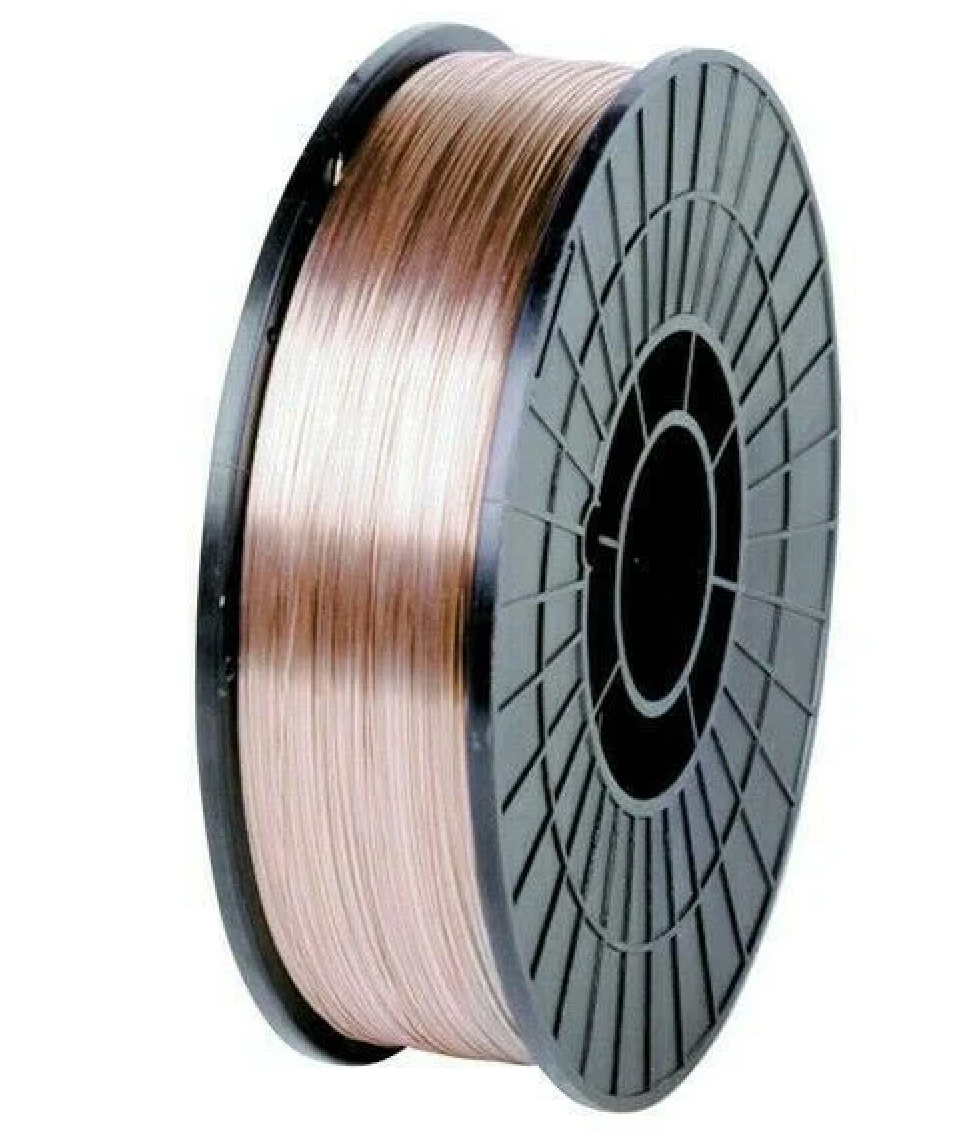

TC 70S-2 08 Washington Alloy .035, 11 Lb. 70S-2 MIG Wire, Pack of (1) is an ER70S-2 solid GMAW wire for mild and low-alloy steel work where stable feeding and weld soundness matter. For buyers and support teams, the main value is straightforward: this is a general-purpose solid wire with deoxidizers, supplied as one 11 lb spool in .035 in (0.9 mm). Use it only after you verify the job requirements, base metal condition, shielding gas, and equipment setup.
Key Takeaways
- ER70S-2 is a solid MIG wire used on mild and low-alloy steels.
- Added deoxidizers help when base metal has light surface contamination, but they do not replace proper cleaning.
- .035 in wire is a common size for general fabrication and repair, but the correct choice still depends on the machine, transfer mode, and joint details.
- Pack size is one spool, 11 lb. Verify spool dimensions and machine fit before purchase.
- Use a verified procedure from the machine, WPS, or qualified welding engineer when code work is involved.
What this wire is for
This product is intended for GMAW on steels where a dependable general-purpose wire is needed. ER70S-2 is commonly selected for shop fabrication, maintenance repair, and production work on carbon steel or low-alloy steel. The exact application still depends on joint design, shielding gas, base metal condition, and the procedure being used. If your job calls for aluminum, stainless, flux-cored, or hardfacing wire, this is not the correct filler metal.
Product and parts review
The available product information identifies this item as one spool of Washington Alloy TC 70S-2 08 in .035 in diameter, 11 lb, pack of one. Beyond that, confirm the following before it is placed into service:
- Wire type: solid MIG/GMAW wire, ER70S-2.
- Diameter: .035 in (0.9 mm).
- Net weight: 11 lb.
- Package quantity: one spool.
- Machine fit: Unknown (Verify) spool hub, spool diameter, and drive-roll compatibility.
- Shielding gas: Unknown (Verify) based on procedure and application.
If you are stocking wire for a maintenance crib, record the spool size, wire diameter, and machine compatibility on the shelf label. Do not assume every .035 solid wire fits every feeder without changes to drive rolls, liners, and contact tips.
Setup checks: inspect before feeding
- Check the spool label. Verify diameter, classification, and lot identification if your quality system requires traceability.
- Inspect wire condition. Look for rust, kinks, or contamination. If the wire is damaged, do not install it.
- Verify feeder setup. Confirm the drive rolls are the correct groove type for solid wire and that liner condition is acceptable.
- Check contact tip size. The tip should match the wire diameter. If not, verify the correct replacement before welding.
- Inspect shielding gas flow. Make sure the gas hose, regulator, and connections are leak-free and set according to the approved procedure.
- Verify polarity. Confirm the machine is set for the wire and transfer mode being used.
Troubleshooting and support
When a MIG wire does not run correctly, start with the feeder and the work setup before blaming the wire itself.
If the wire bird-nests or feeds inconsistently
- Check: Drive-roll tension. Too much tension can deform the wire; too little can slip.
- Inspect: Liner, contact tip, and gun cable routing for blockage or sharp bends.
- Verify: Spool brake setting and feeder alignment.
If the arc is unstable or spatter is high
- Check: Voltage, wire feed speed, and shielding gas flow.
- Inspect: Work clamp placement and base metal surface condition.
- Verify: That the wire classification, polarity, and gas blend match the approved procedure.
If porosity appears in the weld
- Check: Shielding gas coverage and leaks at the torch, hose, and fittings.
- Inspect: Rust, oil, paint, mill scale, and moisture on the joint.
- Verify: Whether the selected wire and gas are suitable for the job and whether the joint prep meets requirements.
How to use filler metal pages as a starting point
When you are selecting wire for a job, use approved filler metal references as a starting point, not as automatic procedure approval. The available internal reference pages on the Weld Support Parts blog can help you compare product categories and related wire types. If a job is outside your normal range, confirm the final selection against the WPS, the machine manual, or a qualified welding authority. Do not rely on product pages alone for code or critical work.
Related internal reference articles:
- Aluminum ER 5554 3/64″ X 5lb. MIG Welding Wire Spool By Washington Alloy – Weld Support Parts Blog
- Washington Alloy 7014 Stick Electrode – Smooth Welding with High Deposition
- Washington Alloy THF-700HT Hard-Face MIG Wire Review (2025): Built for Wear Resistance
- Rocaris 6 Pack Wire Wheel & Pen Brush Set: Carbon Steel for Weld Cleaning & Surface Prep
Buyer guidance for maintenance teams
For maintenance and fabrication buyers, the main checks are not marketing claims. They are feedability, repeatability, and fit with the shop process. Before ordering, verify the following:
- Diameter matches the feeder setup used on the machine.
- Spool size fits the wire feeder or spool gun arrangement. Unknown (Verify).
- Wire classification matches the material and procedure. Unknown (Verify) if the job is not plain carbon or low-alloy steel.
- Shielding gas and transfer mode are approved for the weld being made.
- Your inventory system can identify the spool as ER70S-2, .035 in, 11 lb.
If a team routinely changes between wire sizes or wire classes, label the cabinet and gun setup clearly. That reduces downtime and avoids wrong-wire installation.
Safety notes
- Use approved PPE, including helmet, gloves, jacket, and safety footwear.
- Keep the work area clear of flammables before striking an arc.
- Do not weld on unknown coatings, sealed containers, or contaminated material without proper hazard review.
- Handle the spool carefully. Cut wire ends can cause injury.
- Follow the machine manual and shop procedure for setup, lockout, and maintenance.
FAQ
Is TC 70S-2 08 Washington Alloy .035, 11 Lb. 70S-2 MIG Wire, Pack of (1) the same as ER70S-2?
The product description identifies it as ER70S-2 solid MIG wire. Verify the label on the spool and the supplier listing before use.
Can this wire be used on dirty or rusty steel?
ER70S-2 includes deoxidizers, but that does not replace cleaning. Best practice is still to remove rust, oil, paint, and scale as required by the job.
What shielding gas should be used?
Unknown (Verify). Gas choice depends on the approved procedure, base metal, transfer mode, and weld requirements. Check the WPS or machine documentation.
Will .035 in wire work in every MIG machine?
No. Machine feedability depends on the feeder, liner, drive rolls, gun, and tip size. Verify compatibility before loading the spool.
Sources Checked
- ArcWeld product reference for TC 70S-2 08 Washington Alloy .035, 11 Lb. 70S-2 MIG Wire, Pack of (1)
- Provided internal Weld Support Parts blog links
- No WSP lookup page was provided for this task
- No filler metal finder page was provided for this task
Related Arc Weld Part
[arcbox product=”tc-70s-2-08-washington-alloy-035-11-lb-70s-2-mig-wire-pack-of-1″]Related Weld Support Guides
- Aluminum ER 5554 3/64″ X 5lb. MIG Welding Wire Spool By Washington Alloy – Weld Support Parts Blog
- Washington Alloy 7014 Stick Electrode – Smooth Welding with High Deposition
- Washington Alloy THF-700HT Hard-Face MIG Wire Review (2025): Built for Wear Resistance
- Rocaris 6 Pack Wire Wheel & Pen Brush Set: Carbon Steel for Weld Cleaning & Surface Prep
Leave a Reply