Miller 186419 Contact Tip 0.030" for Spool Gun Welding, Pack of 5 – Copper Tip for Aluminum & Steel
$18.79
In Stock
View Product
$18.79
In Stock
View Product
Spool gun contact tips have one job: carry welding current to the wire without adding feed resistance. If the tip bore, wire diameter, or thread style is wrong, the gun can feed poorly, arc inconsistently, or burn back into the tip.
Start with the wire diameter. A contact tip must match the wire size being run through the spool gun. If the bore is too tight, the wire drags. If it is too loose, current transfer can be inconsistent and the arc may become unstable.
Next, confirm the gun and tip thread style. Different spool guns can use different tip designs, neck styles, or thread patterns. If the exact thread style is not listed, treat it as Unknown (Verify) before ordering.
Also confirm the wire material. Aluminum wire is more sensitive to feed resistance than steel wire. A worn tip, damaged liner, or dirty wire path can show up faster with aluminum.
If the spool gun starts birdnesting, stuttering, or burning back, the contact tip is only one possible cause. Check the full wire-feed path:
For a deeper feed-system check, see MIG Spool Gun Birdnesting Causes: Aluminum Wire Feed, Spool Tension, Drive Pressure, Contact Tip, and Gun Setup.
Miller 186419 Contact Tip 0.030" for Spool Gun Welding, Pack of 5
Use this part only when the gun setup calls for a 0.030 in tip and the thread style/fit is confirmed. Any unverified fitment detail is Unknown (Verify).
Enhance your welding projects with the Miller 186419 Contact Tip, specially designed for spool gun welding. This copper contact tip supports both aluminum and steel applications, making it a versatile addition to your welding toolkit. Crafted from high-quality copper, this contact tip ensures excellent conductivity and durability. It features a bore size of 0.8 mm and is compatible with a wire size of 0.030 inches…
View at Arc Weld StoreCan I use a larger contact tip if the wire is close?
Not as a default. The tip should match the actual wire diameter. Oversizing can affect current transfer and arc control.
Why does a tip wear out faster on a spool gun?
Spool guns often run aluminum wire and short wire paths, so any contamination, heat, or feed drag can show up at the tip quickly.
How often should I replace spool gun contact tips?
Replace them when feed quality drops, the bore is worn, or the tip is damaged. Interval depends on duty, wire type, and contamination. Unknown (Verify).
Is a copper tip always correct for aluminum?
No. Copper is common, but the correct choice depends on the gun design and wire size. Verify the parts list before ordering.
Ordering the wrong replacement part wastes time and can take a machine out of service longer than necessary. The safest way to verify welding part compatibility is to check the machine or torch manual, confirm the exact part number, and compare the old part against the replacement before installation.
Record the manufacturer, model, and serial number if available. For torches and guns, also record the torch model and any neck, liner, or consumable family listed in the manual.
Use the parts diagram, operator manual, or service manual. Match the item number on the diagram to the listed part number. Do not rely on a visual match alone. Many parts look similar but are not interchangeable.
Check the old part for stamped numbers, molded numbers, packaging labels, or service tags. Match all characters exactly. If the part number is incomplete or unreadable, mark it Unknown (Verify) and confirm with the manual or supplier support before ordering.
Verify the details that control fitment and function:
If any of these details are not listed in the source documentation, do not assume compatibility.
Wear can hide the original geometry. If the old part is badly eroded, burned, or deformed, use it only as a reference for mounting style and location. Do not use a damaged part as proof of compatibility.
Some items are sold in packs, while others are single parts. Verify quantity before placing the order so maintenance stock matches demand. The actual service interval depends on duty cycle, material, and setup and is Unknown (Verify) unless documented by the manufacturer.
Possible causes include the wrong revision, a different thread pattern, or a family mismatch between torch variants. Recheck the part number and the equipment model list in the manual.
Poor performance may come from a mismatch in liner length, diffuser style, tip size, nozzle fit, or gas alignment. Confirm that all consumables belong to the same approved family listed in the equipment documentation.
Use the manual, equipment serial record, or supplier support to identify the replacement. If the part cannot be identified with confidence, do not guess.
Similar appearance does not guarantee compatibility. Verify the exact interface dimensions and the intended equipment family before ordering.
For MIG gun support work, one example part is:
Known details from the provided product data:
Anything beyond that description is Unknown (Verify) unless confirmed in the manual or on the product listing.
Use with AccuLock MDX Contact Tips, Nozzles, Liners and Power Pin Caps. Pack of 2. Package of 2
View at Arc Weld StoreThe fastest reliable method is to match the equipment model to the manual parts list and confirm the exact part number.
No. Similar-looking parts can differ in thread style, length, or interface geometry.
Use the parts diagram, machine serial record, or supplier support. If the fitment details are incomplete, mark them Unknown (Verify).
Only if the manual or maintenance plan supports it. Do not assume bundled replacement is required without documentation.
$20.51
In Stock
View Product
Choosing the wrong cover lens creates fitment problems fast. The lens may not seat correctly, may leave the viewing area exposed, or may interfere with the helmet shell or ADF assembly. For welding helmet cover lens replacement, verify the helmet model, lens size, thickness, edge profile, and whether you need an outside/front cover lens or an inside cover lens.
Start with the helmet manufacturer and series. Then check the part number in the helmet manual, on the old lens, or on the replacement packaging. If that information is missing, measure the lens opening and compare it to the replacement part listing. Unknown (Verify) if the lens is a standard size or a model-specific part.
If the lens does not drop into the pocket cleanly, stop. Forcing it can crack the lens or distort the retaining frame. Recheck the part number and dimensions.
This usually points to a worn frame, damaged tabs, or the wrong thickness. Inspect the helmet lens holder before installing another part.
A cover lens will not fix all visibility issues. Check for spatter buildup, scratches, soot, inside fogging, or a damaged auto-darkening filter. See Best Welding Helmet Replacement Lenses for Clear Visibility.
High spatter, grinding debris, and improper storage can shorten lens life. Replace the cover lens sooner if surface damage reduces visibility. A cover lens protects the ADF window, but it is a wear item.
If you are supporting a shop fleet, record the helmet model, lens part number, and replacement interval. That reduces downtime and prevents mixed parts across similar helmets. For model-specific ordering checks, use the helmet manual and the current lens part number before submitting a purchase request.
For related fitment guidance, see 3M Speedglas G5-02 Welding Helmet Support Guide: Fitment, Lens Protection, and Ordering Checks.
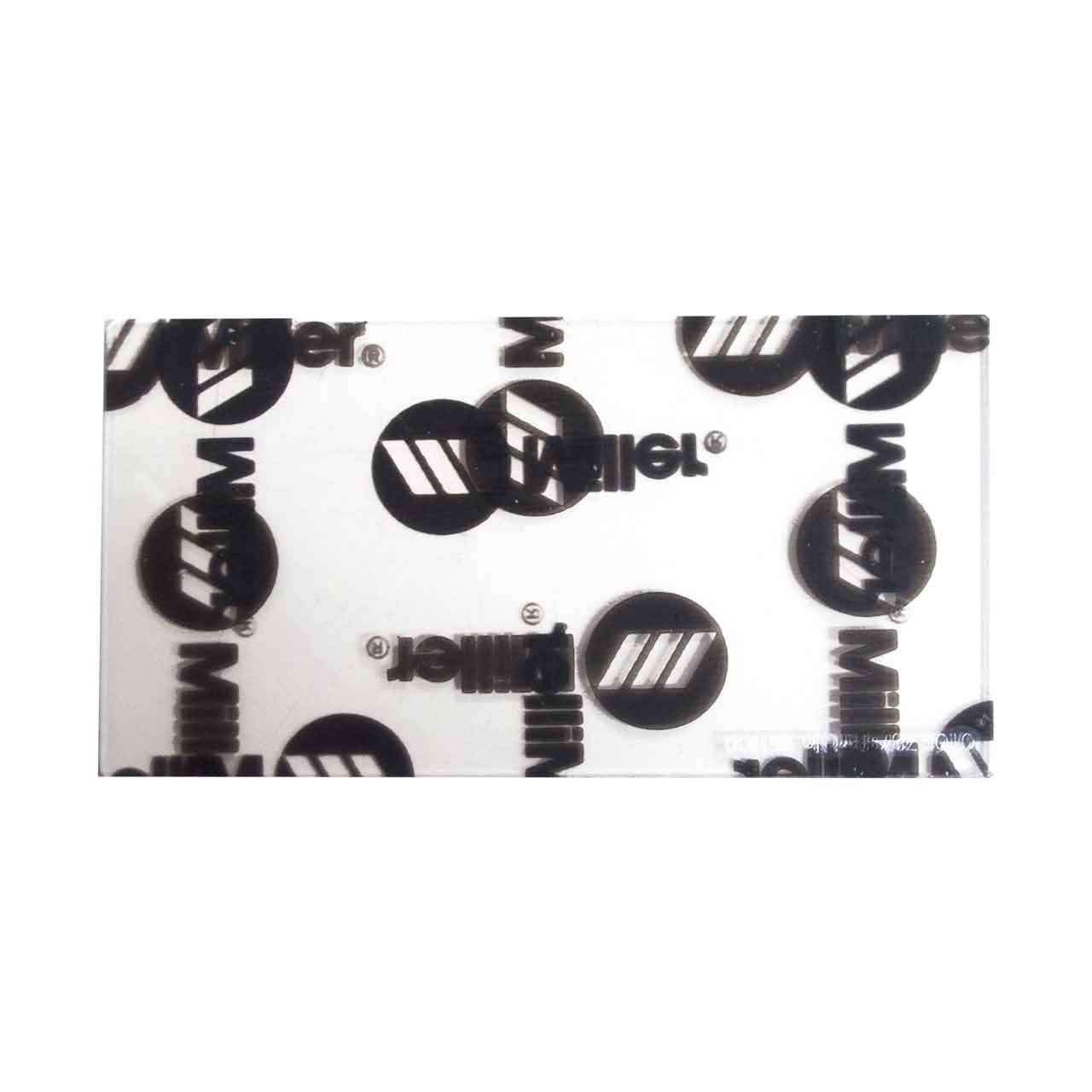
Miller 231411 Pro-Hobby Series Front Cover Lens – Pack of 5 Replacement Lenses for Welding Helmets
This replacement pack is listed for the Miller Pro Hobby and Miller Classic series welding helmets. Use it only if your helmet model matches the listed compatibility. Unknown (Verify) for any other helmet series.
Enhance your welding experience with the Miller 231411 Pro-Hobby Series Front Cover Lens, specifically designed for the Miller Pro Hobby and Miller Classic series welding helmets. This pack of five high-quality replacement lenses ensures that you have the clear visibility you need to perform your tasks effectively and safely. Durable and built to last, these lenses are essential for any serious welder. The Miller…
View at Arc Weld StoreCheck the helmet model, lens part number, and lens dimensions. If any of those are missing, measure the lens opening and verify against the manufacturer listing. Unknown (Verify) if the helmet uses a standard or model-specific size.
Not safely. Similar appearance does not confirm fitment. Use the exact part number or verified dimensions.
Replace both if both are worn, scratched, or contaminated. If only one side is damaged, replace that side after confirming the correct part number.
Sometimes, but not always. If the ADF, battery, or sensor system is the real problem, a new cover lens will not solve it. Inspect the full helmet assembly.
$70.77
In Stock
View Product
Plasma consumables wear out by design. The question is not whether they will need replacement, but when wear starts affecting arc stability, cut quality, or torch protection.
For maintenance buyers and weld support teams, the practical approach is to replace the electrode and nozzle based on condition, not calendar time alone. Inspect the parts after a problem cut, after a tip-up or arc fault, and during scheduled consumable checks.
The electrode carries the cutting current and takes heat load during every cut. Replace it when you see the following:
If the electrode face is no longer uniform, do not keep cutting with it. Continued use can damage the nozzle and reduce torch life.
The nozzle shapes the arc. Wear here changes cut geometry fast. Replace the nozzle when you find:
A worn nozzle often shows up as a poor cut before the torch fails completely. If cut quality drops suddenly, inspect the nozzle first.
If cuts are rough, angled, or heavily drossed, check the consumables first. Then verify:
If the electrode and nozzle are worn, replace them before adjusting process settings further.
Arc-start issues can come from wear, contamination, or torch setup. Inspect the electrode and nozzle for heat damage and verify that the air system is clean and dry. Unknown (Verify) if other torch components are contributing.
Rapid nozzle damage often points to one of three problems: wrong consumable set, poor air quality, or torch contact with the work. Check all three before returning the torch to service.
For reliable cut quality, many shops replace the electrode and nozzle as a set when one part is clearly worn or damaged. This reduces mixed-wear conditions that can make troubleshooting harder.
Record the torch model, amperage, and failure mode before replacement. That helps maintenance teams spot repeat issues and stock the right consumables.
For PT-32 and PC-1500 torch applications, one available consumable is the ESAB Plasma Cutting Nozzle 90A for PT-32/PC-1500 Torch, Pack of 5 Nozzles. Use only if the torch model matches. Unknown (Verify) if your torch or power source requires a different nozzle set.
Internal reference: MIG Nozzle Gel: When It Helps, When It Does Not, and How to Use It Safely
Sometimes, yes. But if the electrode shows wear or heat damage, replace both parts together for cleaner troubleshooting.
Look for visible wear, unstable arc starts, wider-than-normal cut width, and dross that appears after the consumables have been in service for a while.
Use inspection-based replacement first. Scheduled replacement can help in high-use shops, but actual wear should guide the final decision.
Add precision to your welding projects with the ESAB 0558002837 Plasma Cutting Nozzle 90A. This high-quality plasma cutting nozzle is specifically designed for the PT-32 and PC-1500 torch models, ensuring optimal performance and superior cutting results. The plasma cutting nozzle 90A is a crucial component for achieving clean and efficient cuts in various metals. Whether you are a professional welder or an enthusi…
View at Arc Weld Store
Welding consumable replacement is part of normal maintenance, not an emergency task. Consumables wear out from heat, spatter, arc exposure, and mechanical handling. The right replacement interval depends on process, amperage, duty cycle, base material, and operator technique.
Replace a consumable when it no longer supports consistent weld quality or safe operation. Common signs include:
Common wear parts include contact tips, nozzles, diffusers, liners, drive rolls, and gun neck consumables. Replace them when wire feeding becomes inconsistent, the arc becomes unstable, or the tip bore is enlarged, ovaled, or burned. If the wire sticks, shaves, or birdnests repeatedly, inspect the liner and drive system before assuming the torch is at fault.
Replace tungsten electrodes when the tip is contaminated, cracked, severely balled outside the intended process, or no longer grinds to a clean point or taper. Gas cups, collets, collet bodies, back caps, and torch bodies should be replaced if they are cracked, warped, or no longer hold components securely. If shielding is poor, check for leaks, loose parts, or damaged insulators.
Stick electrodes are consumables by design and are used once. Replace unused electrodes if flux is damaged, damp, cracked, or contaminated. For electrode holders and cable connections, replace worn jaws, burned insulation, or damaged lugs if they affect current transfer or safety.
Replace electrodes, nozzles, shields, swirl rings, and retaining caps when cut quality drops or the parts show erosion, double arcing, enlarged orifices, or heat damage. Plasma consumables are often replaced as a set when the wear pattern affects arc shape or kerf consistency.
If the weld or cut quality changes, verify these items before ordering parts:
If the issue remains after these checks, the consumable is likely worn or damaged.
For operators who need a clearer view of the arc and puddle during inspection or setup, the following product is available in the Weld Support Parts catalog:
Experience Unmatched Clarity and Comfort with Miller Digital Infinity The Miller Digital Infinity auto darkening welding helmet features an industry-leading 13.4 sq. in. viewing area. This welding hood is designed to help ensure that welders enjoy unparalleled visibility and precision. You can say goodbye to tunnel vision with a welding shield specially crafted for high-performance tasks. Experience the difference…
View at Arc Weld StoreProduct details not listed above are Unknown (Verify). Verify fit, process coverage, lens requirements, and compliance before purchase.
There is no universal interval. Replace them when wear affects quality, feedability, shielding, or safety. Frequency depends on process and workload.
Sometimes. Plasma consumables are often changed together when wear is advanced. MIG and TIG parts may be replaced individually if only one component is worn.
Not if it affects arc performance or gas coverage. Small wear can quickly become a defect or a shutdown.
Check the consumable, then verify gas, settings, workpiece prep, and cable condition.
$47.87
In Stock
View Product
Use this checklist to decide when a PAPR filter replacement is due and to reduce the chance of restricted airflow during welding. Treat filter condition as a maintenance item, not a guess. If the blower, hose, or face seal is also suspect, check those parts before installing a new filter.
Replace the filter when any of the following are true:
If the unit still alarms after replacement, use the troubleshooting steps in the airflow guide and check the blower, hose, battery, and seals.
For airflow-related problems that look like filter failure, use this guide first:
That article covers common causes of reduced airflow that can lead to unnecessary filter replacement.
If you need the supported replacement part for this topic, use the ArcWeld listing below.
Upgrade your safety gear with the ESAB 0700002403, Savage A40 PAPR Main Filter. This essential component is designed for those who prioritize both health and performance in their workplace. The PAPR main filter replacement is specifically engineered to ensure the highest level of air quality while you work, allowing you to focus on the job at hand without constant concerns about airborne contaminants. With rigorou…
View at Arc Weld StoreProduct note: ESAB Savage A40 PAPR Main Filter Replacement – NIOSH Certified, Pack of 1. Compatibility beyond the listed product name is Unknown (Verify). Use only where the equipment model matches the replacement part specification.
How often should a PAPR filter be replaced?
Unknown (Verify). Replacement interval depends on dust loading, duty cycle, and the equipment manual.
Can I clean a loaded PAPR filter and reuse it?
Usually no. If airflow is restricted or the filter is damaged, replace it. Do not improvise cleaning methods unless the manufacturer allows it.
What if the new filter does not fix the low-flow alarm?
Check the blower, hose, battery, seals, and installation. The issue may not be the filter.
Do I need to replace the prefilter too?
If the system uses one, inspect it at the same time. A blocked prefilter can reduce airflow and shorten main filter life.
Category: PAPR Helmet Support
$52.73
In Stock
View Product
A MIG gun liner is a wear item. When the liner starts to degrade, wire feed problems usually show up before the liner fails completely. A proper mig gun liner replacement is often the fix for inconsistent feed, birdnesting at the feeder, and erratic arc starts.
This guide covers the common signs of liner wear, when replacement is justified, and what else to check before you swap parts.
A liner should be replaced when it no longer guides wire smoothly from the feeder to the contact tip. Common replacement triggers include:
Use the following symptoms as troubleshooting signals:
These symptoms do not prove the liner is the only problem, but they do justify inspection.
Check these items first so you do not replace a serviceable liner unnecessarily:
If the feed system is correct and the problem remains in the gun path, liner replacement is the next step.
Replace the liner if one or more of the following are true:
If the liner condition cannot be confirmed internally, treat it as Unknown (Verify) until the gun is opened and inspected.
If you are servicing a compatible gun assembly and also need related replacement parts, review the part details carefully before ordering.
Upgrade your welding experience with the Miller Electric MDX Trigger Switch, a crucial replacement part for your Miller MDX-100 and MDX-250 Mig Gun Series. This high-quality switch is designed to deliver reliable performance, ensuring your welding tasks are both efficient and effective. When you're in the middle of a project, you need tools that work seamlessly. The Miller MDX Trigger Switch is built to meet the d…
View at Arc Weld StoreNote: This part is a trigger switch replacement. It is not a MIG gun liner. Use the product information to verify fitment before purchase.
Replacement interval depends on wire type, duty cycle, cable routing, and contamination exposure. Exact service life is Unknown (Verify).
Light debris may be cleared in some cases, but a worn, kinked, or heat-damaged liner should be replaced.
Inconsistent wire feed is the most common early sign.
No. Birdnesting can also come from drive roll tension, spool drag, tip blockage, or poor cable routing.
If you are trying to sharpen 5/32 tungsten, the first question is not the grinder itself. It is whether the guide, collet, or holder accepts 5/32 in. tungsten without slop. Many sharpening tools are built around common sizes like 1/16, 3/32, 1/8, and 3/16. If 5/32 is not listed, assume it is unknown until verified.
Most tungsten sharpeners are limited by one of three things:
If the tool was made for 1/8 in. tungsten, 5/32 in. may be too large. If it was made for 3/16 in., 5/32 in. may fit, but that still needs verification. Do not assume fit from visual size alone.
Likely cause: the guide is undersized. Do not grind or force the rod into the opening. Use a tool sized for 5/32 in. or confirm whether the holder accepts a larger range.
Likely cause: the guide is oversized or worn. Wobble makes it harder to keep a consistent point. In that case, grinding quality drops and the rod can overheat unevenly.
Likely cause: the rod is not held square to the wheel or the fixture cannot center 5/32 in. correctly. Recheck the hold method and verify the angle setting.
Likely cause: excessive dwell time, wrong wheel, or poor support. Stop and let the tungsten cool. Overheating can damage the grind and contaminate the tip.
If you do not have a sharpener confirmed for 5/32 in., use a grinder method with controlled support:
If the tungsten is already ground, only touch up the point as needed. Excessive removal shortens the rod and can change performance.
For replacement tungsten stock, see the available ArcWeld part below. Size compatibility for your sharpener still needs to be verified against the holder or guide opening.
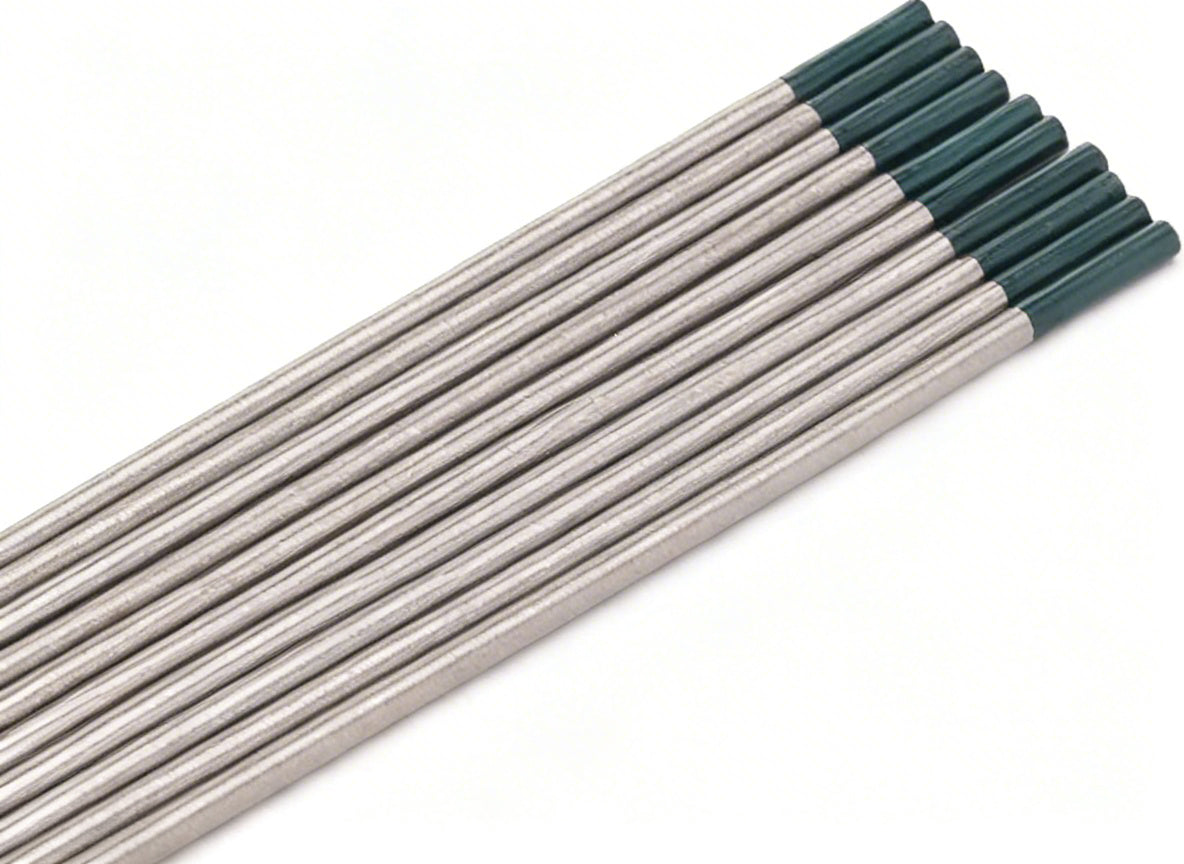
Discover the power and precision of the Anchor Tungsten – 3/16" x 7" 2% Ground Tungsten Red (Part Number: 12345). This high-quality tungsten material is designed for durability and performance, making it an essential addition for professionals and hobbyists alike. Each pack includes five pieces of ground tungsten rods measuring 3/16" in diameter and 7" in length. Constructed with 2% tungsten, these rods offer exce…
View at Arc Weld StoreNo. Many do not list 5/32 in. at all. If the size is not published, compatibility is Unknown (Verify).
Not safely by assumption. A 1/8 sized guide may be too small. Verify the actual bore or clamp range before use.
It is less common than 1/16, 3/32, 1/8, or 3/16 in. For that reason, some sharpeners do not support it directly.
Use a grinder fixture or holder with a verified diameter range, or switch to a method that securely supports the rod without forcing it into the guide.
$37.73
In Stock
View Product
Front-end MIG gun parts wear out in service. A worn nozzle or diffuser can cause poor gas coverage, inconsistent wire feeding, excess spatter, and unstable arc starts. This guide covers when to replace these parts, what to inspect, and how to troubleshoot common front-end problems.
The nozzle directs shielding gas around the weld zone and helps protect the contact tip and diffuser. Replace it when you see any of the following:
If the nozzle is still structurally sound, cleaning may extend service life. If it has lost shape or fit, replace it.
The diffuser routes gas to the nozzle and supports the contact tip. Replace it if you find:
A damaged diffuser can look like a nozzle problem. If cleaning the nozzle does not restore performance, inspect the diffuser closely.
Possible causes:
Start by checking gas flow, contact tip condition, and nozzle cleanliness before replacing more parts.
Possible causes:
If the front end looks good, move upstream to the liner and drive system.
Possible causes:
Confirm gas flow at the source and inspect the gun body before assuming the nozzle is the only problem.
Possible causes:
Burnback can damage the diffuser and tip seat. Replace damaged parts before returning the gun to service.
If you need a replacement nozzle for a large centerfire diffuser, the ArcWeld-listed option is below.
Enhance your welding performance with the Bernard NT-3800C Centerfire Nozzle. Specifically designed as a tapered, MiniFlush accessory for large centerfire diffusers, this nozzle ensures precision and efficiency in every weld. The Bernard NT-3800C is your go-to centerfire welding nozzle, featuring a built-in spatter shield. This essential design element minimizes spatter, promoting a cleaner workspace and reducing…
View at Arc Weld StoreProduct noted: Bernard NT-3800C Centerfire Welding Nozzle – Tapered MiniFlush 3/8″ for Large Diffuser
Use case: Large centerfire diffuser front-end nozzle replacement. Compatibility details beyond the product title are Unknown (Verify).
There is no fixed interval. Replace it when spatter, damage, or poor fit affects gas coverage or weld quality.
Look for stripped threads, burn damage, cracks, gas leaks, or a nozzle that will not seat correctly.
Yes, if the nozzle is still round, undamaged, and maintains proper fit. Replace it when cleaning no longer restores function.
Check the contact tip, liner, drive rolls, gas supply, and torch setup. Front-end wear is only one possible cause.
Note: Exact compatibility, dimensions, and application limits for the listed nozzle are Unknown (Verify) unless confirmed by the equipment manufacturer or the product detail page.
A hot welding ground clamp usually means resistance is too high in the return path. The clamp, jaws, cable connection, or workpiece contact is not carrying current efficiently, so heat builds at the weak point.
This can shorten cable life, damage the clamp, and create poor arc performance. If the clamp is getting hot fast, stop and inspect the circuit before continuing.
A welding ground clamp gets hot when current must pass through a restricted path. The most common causes are:
Clamp directly to clean, bare metal whenever possible. Remove paint, rust, heavy oxidation, and mill scale at the contact point. A clamp attached to dirty material will run hotter.
Look for pitting, discoloration, spring weakness, bent jaws, and burned contact faces. If the jaws do not close firmly or the contact area is reduced, resistance rises.
Check the cable insulation near the clamp and along the lead. Look for stiffness, cracking, darkening, or soft spots. Check the cable lug or connection point for looseness, corrosion, or heat damage.
If the clamp is overheating under load, compare the welding current to the clamp and cable size being used. If the setup is beyond the intended range, heat is expected. Clamp current capacity for your exact setup: Unknown (Verify).
Move the ground clamp closer to the weld area when practical. A shorter return path can reduce resistance and voltage drop. Avoid clamping on painted frames, oily parts, thin sheet edges, or areas with poor metal contact.
If both the clamp and the cable get hot, the problem may be cable sizing, a loose termination, or excessive current. If only the clamp gets hot, the issue is often contact quality or clamp wear.
Replace the clamp if you find any of the following:
If a clamp has already overheated enough to discolor metal or soften adjacent insulation, replacement is usually the correct fix.
For light-duty welding setups, the ArcWeld Lenco EG-300, 300 Amp, Welding Ground Clamp, Pack of (1) is listed as having a large Lenco contact area, steel construction, and copper alloy jaws. It is described as helping extend cable life and reduce energy use. Use case: light duty welding. Exact application limits beyond that description: Unknown (Verify).
The EG-300 welding ground clamp is best used for light duty welding. With its large "Lenco" contact area, steel construction and copper alloy jaws, the EG-300 extends cable life and reduces energy use.
View at Arc Weld StoreSlight warmth can happen during high current use. A clamp that gets hot quickly, becomes uncomfortable to touch, or discolors is not normal and should be inspected.
Yes. High resistance in the return path can cause unstable arc behavior, poor penetration, and inconsistent results.
Often yes. A shorter return path and cleaner contact point can reduce resistance and heat.
Clean it first if the damage is limited to oxidation or surface contamination. Replace it if the jaws are worn, the body is heat damaged, or the connection is loose.