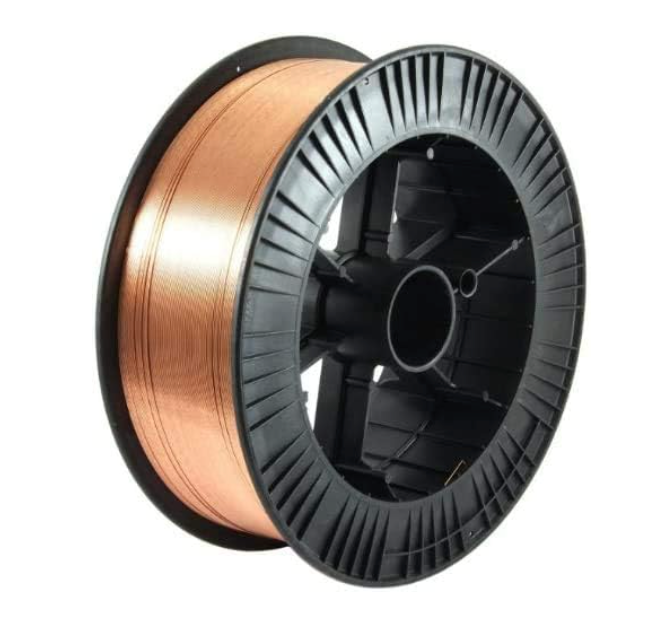

TC 70S-2 104 Washington Alloy .035, 44 Lb. 70S-2 MIG Wire, Pack of (1) is a solid MIG wire intended for mild-steel fabrication, maintenance, and repair. The key points for buyers are straightforward: it is .035 in (0.9 mm) diameter, it is an ER70S-2 class wire, and it is supplied on a 44 lb (20 kg) spool. For welders and maintenance teams, the practical question is not just what the label says, but whether the wire fits the feeder, matches the job, and gives stable performance in the actual work environment.
This breakdown focuses on what to check before purchase and what to inspect after the spool arrives. It does not assume machine settings, procedure approval, or certification details that are not stated on the product page. Where a detail is not confirmed in the provided source, it is marked as Unknown (Verify).
Key Takeaways
- TC 70S-2 104 is listed as a .035 in solid MIG wire for mild steel work.
- The spool size is 44 lb (20 kg), which matters for feeder capacity and shop consumption rate.
- ER70S-2 chemistry is commonly used when welders want a wire that can handle light mill scale or minor surface contamination better than basic clean-steel wire, but the actual base-metal condition still needs inspection.
- Do not assume machine compatibility, polarity, shielding gas, or WPS approval from the product name alone. Verify those items against your equipment and procedure.
What the Product Is Used For
Based on the supplied product information, this wire is aimed at mild-steel fabrication, maintenance, and repair. That makes it relevant to production shops, farm and fleet repair, structural maintenance, and general fabrication work where a solid wire is preferred over flux-cored wire. The triple-deoxidized ER70S-2 chemistry is positioned for cleaner welds on steel that may have light mill scale or minor contamination. That does not remove the need for cleaning, but it may provide a wider practical window than a basic wire on less-than-perfect material.
For buyer guidance, the first decision is whether your work is actually mild steel. If the job is stainless, aluminum, hardfacing, or a specialty alloy, this is not the right starting point. If the job is carbon steel and the feeder can handle .035 wire, it becomes a reasonable candidate for evaluation.
Check Before You Buy
- Check wire diameter: Confirm your feeder, drive rolls, contact tips, and gun setup are intended for .035 in wire.
- Inspect spool capacity: Verify your feeder can physically accept a 44 lb spool. Some machines need an adapter or a different hub. Unknown (Verify).
- Verify base metal: Confirm the job is mild steel or compatible carbon steel work.
- Inspect the weld procedure: If you run controlled fabrication or repair work, verify the wire is allowed under your WPS or internal procedure before use.
- Check shielding gas and polarity: Do not assume from the product name. Verify with your procedure and machine setup. Unknown (Verify).
Troubleshooting and Support: What to Inspect if Feeding or Arc Stability Is Poor
If the wire arrives and the arc is unstable, do not immediately blame the filler metal. Run a basic inspection sequence.
- Inspect the drive system: Check drive-roll size, groove type, tension, and liner condition.
- Check the contact tip: A worn or oversized tip can cause erratic feeding and arc wander.
- Verify spool installation: Make sure the spool turns freely and is not over-tightened on the hub.
- Inspect the gun cable: Look for kinks, tight bends, or internal liner wear.
- Confirm wire cleanliness: If the wire has contamination, rust, or packaging damage, document it before use.
If porosity appears, inspect the work surface, shielding gas flow, leaks in the gas path, and joint prep before changing wire type. If lack of fusion appears, verify voltage, travel speed, and joint prep. If burnback or birdnesting shows up, inspect wire feed tension, tip size, and liner friction first.
WSP Lookup and Filler Metal Finder
Use the Weld Support Parts lookup tools as selection starting points, not guaranteed procedure approvals. They help narrow options, but they do not replace a qualified WPS, procedure test, or equipment verification.
If your team uses filler metal search tools, compare the wire class, diameter, and intended base metal against your actual job. Then verify the final choice against machine limits, spool size limits, and procedure requirements.
Product / Parts Review
The listing provided for this article identifies TC 70S-2 104 Washington Alloy .035, 44 Lb. 70S-2 MIG Wire, Pack of (1). The confirmed details are limited to the wire class, diameter, spool weight, and pack quantity. Other technical details such as country of origin, AWS approval language beyond the ER70S-2 class designation, exact gas recommendation, and machine compatibility are Unknown (Verify).
For maintenance buyers, the main value of a large spool is reduced changeover time. For production or repair work, that can help reduce interruptions. The tradeoff is storage and handling. A 44 lb spool needs a feeder and shop process that can manage the larger package without feed problems.
If you are comparing this wire against another ER70S-2 option, evaluate the following: feeder fit, spool size fit, workpiece condition, and your normal gas and procedure setup. Do not compare only on price or spool weight. Those alone do not tell you whether the wire will run well in your machine.
Safety Notes
- Follow your welding procedure, machine manual, and shop safety rules.
- Verify ventilation and fume control before welding carbon steel.
- Inspect the work area for fire hazards, especially during maintenance and repair work.
- Use proper PPE for arc flash, spatter, and handling the spool.
- Do not rely on product labeling alone for procedure approval or machine setup.
FAQ
Is TC 70S-2 104 Washington Alloy .035 meant for stainless or aluminum?
No. Based on the provided information, it is a solid MIG wire for mild steel and general carbon-steel repair work.
Can I assume it will run on my MIG welder?
No. Verify feeder capacity, spool hub fit, liner condition, drive-roll size, and your machine settings. Unknown (Verify) until checked against your equipment.
Does ER70S-2 mean I can skip metal prep?
No. The chemistry may help with light mill scale or minor contamination, but it does not replace cleaning, fit-up, or procedure control.
Is the 44 lb spool better than a smaller spool?
It can be better for high-use shops because it reduces changeovers. But only if your feeder and storage setup can handle it. Verify before buying.
Sources Checked
- ArcWeld product page: TC 70S-2 104 Washington Alloy .035, 44 Lb. 70S-2 MIG Wire, Pack of (1)
- Provided product source idea and short description in the task data
- Allowed internal links list: reviewed for related Weld Support Parts content
Final check before purchase: verify wire diameter, spool size, feeder fit, and procedure acceptance. If any of those are unknown, treat them as Unknown (Verify) until your team confirms them.
Related Arc Weld Part
[arcbox product=”tc-70s-2-104-washington-alloy-035-44-lb-70s-2-mig-wire-pack-of-1″]Related Weld Support Guides
- Aluminum ER 5554 3/64″ X 5lb. MIG Welding Wire Spool By Washington Alloy – Weld Support Parts Blog
- Washington Alloy 7014 Stick Electrode – Smooth Welding with High Deposition
- Washington Alloy THF-700HT Hard-Face MIG Wire Review (2025): Built for Wear Resistance
- Rocaris 6 Pack Wire Wheel & Pen Brush Set: Carbon Steel for Weld Cleaning & Surface Prep
Leave a Reply