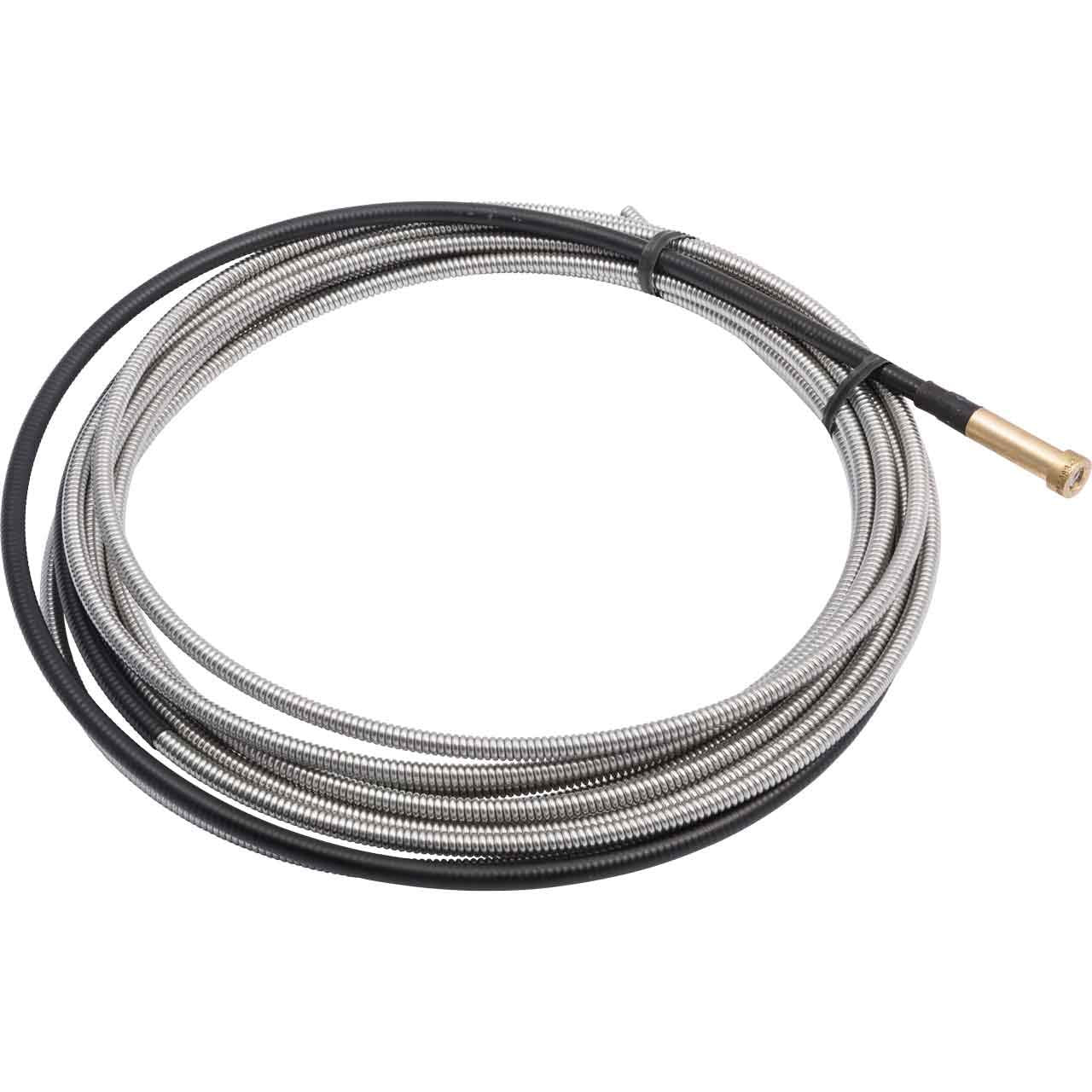

Lincoln Electric KP44-3545-15 is a 15 ft MIG gun liner for 0.035 to 0.045 in wire. In routine service, this type of liner is a wear item. When it becomes contaminated, kinked, or worn, wire feed quality can drop and the operator may see inconsistent feeding, burnbacks, or birdnesting. The practical value of a replacement liner is not complicated: reduce drag inside the cable, restore smoother feed, and remove one variable from the setup.
This article is a buyer guide and maintenance breakdown for shop use. It does not replace the gun manual or procedure qualification. If your gun model, drive rolls, or wire size are uncertain, verify before ordering.
Key Takeaways
- This is a consumable maintenance part, not a performance upgrade by itself.
- Wire feeding problems often trace back to liner condition, but the liner is only one part of the system.
- Match the liner to the gun model and wire diameter range before installation.
- If the feed path is dirty, damaged, or incorrectly assembled, a new liner may not solve the issue.
- Use the liner as part of a complete inspection: drive rolls, inlet guide, contact tip, cable routing, and spool tension all matter.
What This Liner Is Used For
KP44-3545-15 is intended for MIG wire delivery in the stated 0.035 to 0.045 in range. The 15 ft length is a practical detail for service planning, but it does not tell you everything about fit. In MIG guns, liner design must align with the specific gun family and cable assembly. If that information is not confirmed in your maintenance records, mark it as Unknown (Verify) and check the gun manual or parts listing before purchase.
Troubleshooting: When to Suspect the Liner
Use the liner as a suspect when feed problems appear at the gun end rather than at the feeder. Common signs include more drag when pulling wire by hand, erratic feeding that changes as the cable bends, or repeated feed interruptions after other parts have already been checked.
Check: Does the wire feed smoothly with the gun laid out straight?
Inspect: Are there sharp bends, crushed sections, or heat damage along the cable?
Verify: Is the liner size correct for the wire diameter and gun model?
Check: Are there signs of debris, rust, or liner wear at the ends?
Inspect: Remove the contact tip and look for wire shaving, discoloration, or contamination at the exit point.
Verify: Is the inlet and outlet path clean and aligned?
Check: Does feeding improve only when drive roll pressure is increased?
Inspect: Excess roll pressure can mask a liner problem and create more wire deformation.
Verify: Set drive tension only as high as needed to feed consistently.
Support Checks Before You Replace the Part
A liner swap is often justified, but it should not be a blind replacement. Before ordering, walk through the full feed path.
- Drive rolls: Inspect for wear, incorrect groove profile, or contamination.
- Inlet guide: Verify correct alignment and that the wire enters without scraping.
- Contact tip: Check for wear, spatter buildup, and bore size issues.
- Spool condition: Look for rust, birdnesting at the reel, or irregular unwind.
- Cable routing: Verify the gun cable is not twisted, crushed, or bent tighter than normal shop handling allows.
If these items are in acceptable condition and the feed issue remains, liner replacement becomes a logical next step. If several parts are worn at once, replace the worn items together so the diagnosis does not get blurred.
Product and Parts Notes
Product: Lincoln Electric KP44-3545-15, .035-.045 Liner, 15′
Listed application: MIG gun liner for 0.035 to 0.045 in wire
Length: 15 ft
Compatibility: Unknown (Verify). Confirm the exact Lincoln gun and cable series before ordering.
Installation note: Do not force the liner through a bent or obstructed cable. If the liner binds during installation, stop and inspect the cable path. Trimming should follow the gun manual, not guesswork.
Use the product listing as a maintenance reference when the liner part number is already known. If you are cross-checking the full gun assembly, verify the gun model number and compare it against the Lincoln parts documentation used in your shop.
How to Inspect the Liner in Service
Use a simple maintenance routine during downtime.
- Lock out the machine as required by site procedure.
- Remove the contact tip and visually inspect the wire path.
- Feed wire manually and feel for drag or pulsing resistance.
- Check the cable for kinks, crushing, or abrasion.
- Inspect the liner ends for contamination, wear, or misalignment.
- Reassemble and test feed at low speed before returning to production.
If the liner was replaced, record the part number, date, and observed condition of the old liner. That record helps maintenance decide whether the failure was due to normal wear, contamination, or a cable handling issue.
Safety Notes
- Disconnect power and follow site lockout/tagout rules before service.
- Wear gloves and eye protection when handling wire and liner ends.
- Do not assume feed problems are only mechanical; inspect for spatter and hot surfaces after welding.
- Keep fingers clear of drive rolls and pinch points during feed testing.
- Dispose of cut wire and used liner sections to prevent puncture injuries.
FAQ
How do I know if the liner needs replacement?
Look for rising feed resistance, inconsistent wire delivery, birdnesting, or repeated burnbacks after the rest of the feed path has been checked. If the liner is contaminated, kinked, or visibly worn, replace it.
Can I use this liner with any Lincoln MIG gun?
No. Compatibility is Unknown (Verify) unless the exact gun and cable model are confirmed. Match the part number to the correct Lincoln gun series before ordering.
Does a new liner fix every wire feeding problem?
No. Feed issues can also come from drive rolls, contact tips, spool tension, inlet guides, or cable damage. Treat the liner as one part of the system, not the whole diagnosis.
Should I replace the liner on a schedule?
That depends on duty cycle, wire type, contamination, and cable handling. A fixed interval is Unknown (Verify). Replace based on inspection results and feed performance, not only on calendar time.
Sources Checked
- ArcWeld product listing: Lincoln Electric KP44-3545-15, .035-.045 Liner, 15′
- Weld Support Parts internal product data provided in the task
- Internal link used for related wire reference: Aluminum ER 5554 3/64″ X 5lb. MIG Welding Wire Spool By Washington Alloy – Weld Support Parts Blog
Final note: treat the part number as the primary identifier, then verify gun model, wire diameter range, and cable condition before installation. That approach prevents avoidable feed issues and reduces repeat troubleshooting.

Leave a Reply