The Golden Gate Bridge towers are easy to recognize and surprisingly hard to read. From the road they look like solid upright shapes. The closer story is inside the legs: hollow steel cells, repeated joints, and work that had to make sense to people who arrived long after the bridge opened. The paint gives you the outline. The assembly tells you what it took to get there.
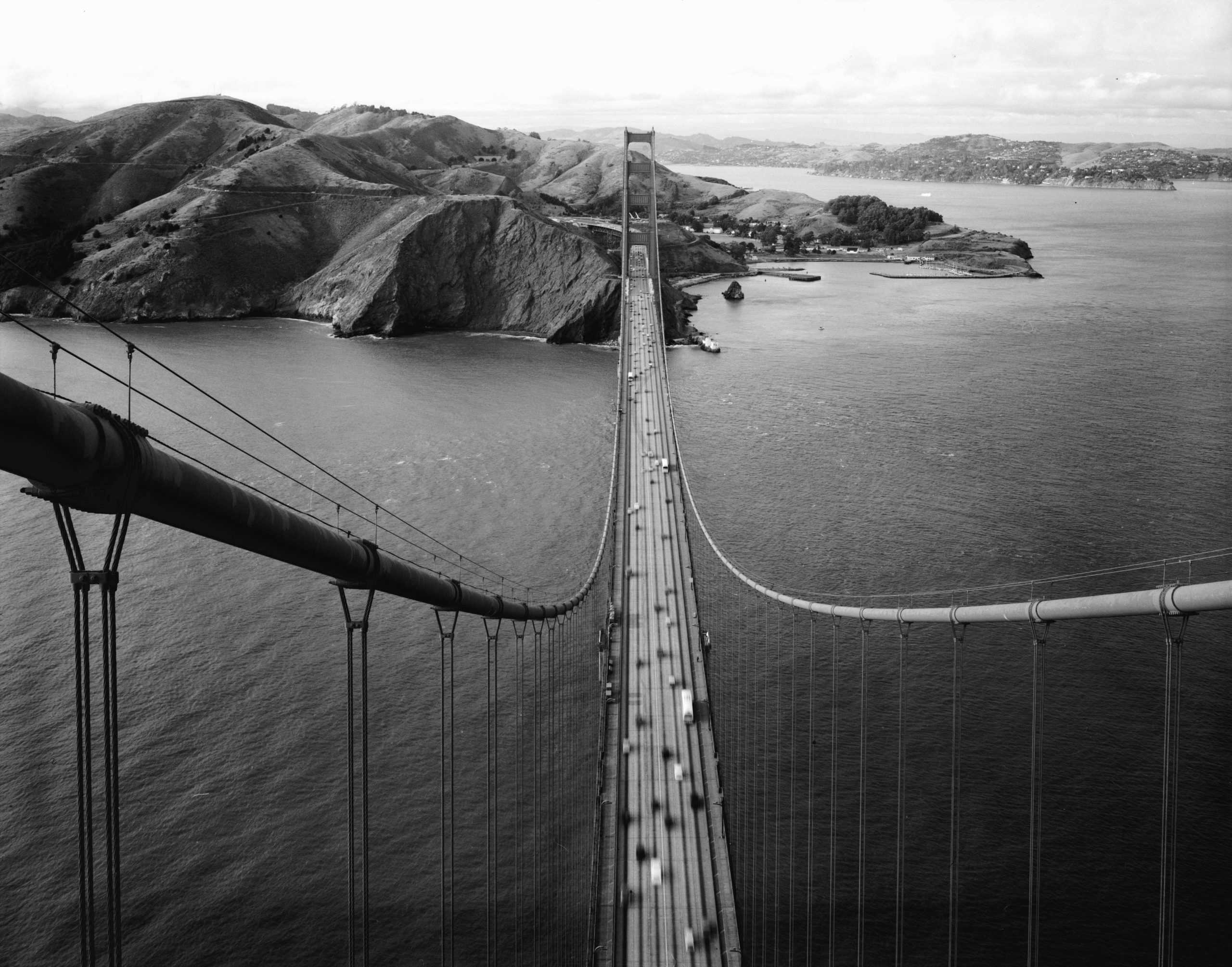

The towers are not solid
The Golden Gate Bridge District’s tower exhibit describes the legs as cellular. Think of a series of enclosed steel spaces rather than a solid bar the size of a tower leg. The District explains that the arrangement let the towers carry the cables’ loads and resist horizontal forces without using the amount of steel a solid shape would take. That is a description of this bridge, not a rule for sizing a shop weldment.
The cross section changes what you notice. A silhouette can tell you what a piece looks like, but it can’t show where the joints are or how workers reach them. On the bridge, some of that work happened inside those steel spaces. The exterior looks continuous because the finished tower reads as one object. Up close, a person who plans fabrication sees many pieces and many places where the pieces had to meet.
The work began long before the pieces reached the water
The District’s construction and maintenance FAQ places the fabrication in several Bethlehem Steel shops in the eastern United States. The fabricated steel traveled by rail to Philadelphia and then by ship through the Panama Canal to reach the construction site. Deliveries were coordinated with the work on the bridge, not treated as a separate problem for someone to figure out after fabrication.
That route makes the shop handoff part of the story. An arriving piece needed to be the piece the crew was ready for, not just something that could eventually be used. There is a big difference between the last piece out of the fabrication shop and the next piece needed at the job. Anyone who has sorted a delivery in a crowded shop has seen a small version of that distinction. A good part at the wrong point in the sequence can still stop the work.
The old joints still matter
The original tower joints were riveted. The District describes hot rivets formed in place to clamp steel pieces together. That is not a description of a welded seam, and it’s worth keeping the distinction clear. The finished tower may read as a smooth line from a distance, but the people who built it were assembling pieces at specific joints, with a specific kind of fastener.
The District describes modern crews replacing corroded rivets with high-strength bolts on maintenance projects. That doesn’t mean every old rivet has been replaced. It means the original way the bridge was put together still affects the work performed on it today. The District also describes ironworkers making access for painters inside some columns and chords. From the outside, painting can look like a matter of reaching a surface. Inside a steel structure, getting a person to the surface is a job in its own right.
The shop lesson is access, not bridge engineering
On an ordinary shop job, the person who builds an assembly may not be the person who inspects, cleans, paints or repairs it. Before a job moves out of the shop, it helps to know which face will be hidden, which pieces can be reached later, and which part numbers or drawing revisions need to stay with the work. Those are handoff questions. They don’t tell you how to design a bridge, but they can save somebody from reconstructing decisions just to find the right piece.
A useful handoff can be as simple as a photo taken before an enclosure goes on, paired with the drawing number and a note about what changed. A future crew can then tell the difference between what the drawing proposed and what was actually delivered. An unlabelled image is harder to use, especially when several jobs look alike. A record that says where to look and what was changed gives the next person a starting point. This is one place where craft shows up off the workbench: the work is better because somebody took the time to make it understandable.
The next time you look at a finished assembly, pick one place you would have trouble seeing or reaching after installation. Ask who will need access and what would help them identify the part later. That’s a more useful question than whether the finished object looks simple. The Golden Gate towers look simple at a distance. Up close, they show how much of good fabrication is leaving the next crew a job it can actually do.
For more about the craft and practical shop paperwork, explore Arc Life.
Leave a Reply