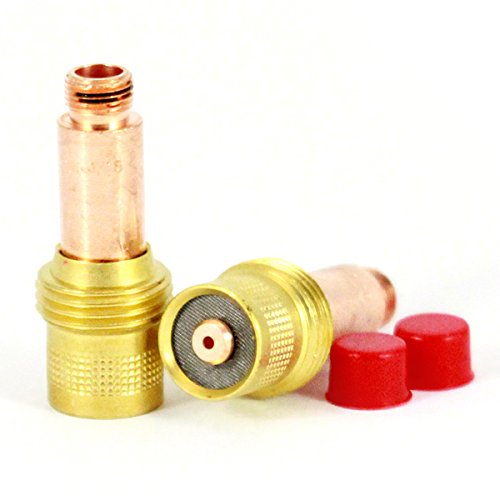

Gas lens collet bodies are small parts, but they control a lot of TIG torch performance. If the fit is wrong, the tungsten may slip, shielding gas flow can be uneven, and the arc can become harder to manage. For buyers and maintenance teams, the main job is not just to order a replacement. It is to confirm the torch family, thread or consumable style, and the wear condition before parts are pulled from stock or installed.
The TIG Gas Lens Collet Body #17, 18, 26 Torch 2PK (45V27-1/8″) is listed as a standard size gas lens collet body for TIG torch #17, #18, and #26. Beyond that, any deeper fitment detail should be treated as Unknown (Verify) unless it is confirmed in the torch and consumable documentation you are using.
Key Takeaways
- Confirm the torch model before ordering. Do not assume all #17, #18, and #26 setups use the same consumables in every torch configuration.
- Check the tungsten retention parts for wear if the tungsten slips, arcs wander, or the cup area looks damaged.
- Verify the gas lens style, thread/series match, and cup compatibility before installation.
- Use replacement as a controlled maintenance step, not just a cleanup task after arc problems appear.
- If any compatibility point is uncertain, mark it Unknown (Verify) and confirm against the torch manual or the supplier listing.
Where this part fits in the torch
A gas lens collet body supports the tungsten and helps shape shielding gas flow through the front end of the torch. In practice, it is part of the consumable stack that includes the collet, cup or cup adapter, and tungsten. When the collet body is worn, dirty, or the wrong style, you may see inconsistent gas coverage, difficulty holding tungsten position, or an unstable arc.
For this item, the title indicates use with torch sizes #17, #18, and #26. That is the first check. The second check is whether your torch uses the same consumable family as the part you are buying. If your shop keeps mixed torch brands or mixed front-end setups, do not rely on torch size alone. Verify the series from the torch body, the old consumable, or the parts sheet.
Buying checks before you place the order
Use the steps below before you approve purchase or pull from stock:
- Check the torch model. Read the torch tag, handle marking, or parts breakdown. Confirm it is a #17, #18, or #26 torch family.
- Inspect the current front end. Remove the cup and look at the collet body for heat discoloration, thread damage, cracks, or contamination.
- Verify the consumable series. Match the old part to the new part. If the old item is worn beyond legible markings, compare dimensions and thread style to the supplier description.
- Check tungsten size and setup. The tungsten diameter and collet size must match the torch setup. If that match is uncertain, mark it Unknown (Verify).
- Confirm gas lens versus standard collet body. This article is about a gas lens style. Do not substitute a standard collet body unless the torch setup is designed for it.
- Check stock handling. Keep consumables clean, dry, and separated by torch series so front-end parts are not mixed during issue.
Troubleshooting: signs the collet body needs attention
If TIG performance has changed, inspect the collet body before replacing other parts at random. Common clues include tungsten slip, poor gas coverage, black soot near the cup, or repeated arc wandering. Those symptoms can also come from contaminated tungsten, poor gas supply, a damaged cup, or loose assembly. Do not assume the collet body is the only fault.
Check: Remove the consumables and look for carbon, spatter, or grinding dust in the gas path.
Inspect: Examine the collet body threads and contact surfaces for deformation, wear, or cross-threading.
Verify: Confirm that the collet, cup, and tungsten are assembled in the correct stack and tightened to normal shop practice. If the part style is unclear, stop and verify against the torch documentation.
Installation and support checks
When installing a new collet body, keep the work clean. Metal chips, lubricant, and abrasive dust can all affect front-end performance. Use a clean bench or a clean tray. Do not force threads. If the part does not start smoothly by hand, back out and verify the match rather than tightening through resistance.
After installation:
- Check that the tungsten seats straight and does not rotate or slip under normal handling.
- Inspect the cup interface for gaps, damage, or misalignment.
- Verify gas flow at the torch before welding on production work.
Related support reading
For more on front-end wear, see TIG Torch Slipping Tungsten? Your Collet Body Is Worn (Here’s the Fix) and TIG Torch Consumable Wear Signs: Cup Cracks, Collet Slip, Gas Lens Clogs, and Dirty Tungsten. If you are evaluating a complete torch setup, the Rocker R-17FV-25R guide may help with general torch support context: Rocker R-17FV-25R TIG Torch Kit Review & Buying Guide (180A, Flex-Head, Valve, 25′ Rubber).
Safety notes
- Depressurize and isolate the torch/gas system before removing front-end parts.
- Let hot consumables cool before handling.
- Do not use damaged threads or cracked consumables in service.
- Keep tungsten and consumables clean; contamination can affect arc stability and weld quality.
- If the torch setup is unfamiliar, verify the parts breakdown before energizing the system.
FAQ
Q: Is this collet body automatically correct for every #17, #18, and #26 torch?
A: No. The title indicates those torch families, but you still need to verify the exact torch series and consumable stack used on your setup.
Q: What are the main signs of a worn gas lens collet body?
A: Tungsten slip, unstable arc behavior, poor shielding gas coverage, thread damage, and visible contamination in the front end are common signs. Other causes are possible, so inspect the full setup.
Q: Can I swap in a standard collet body instead of a gas lens collet body?
A: Not by assumption. Gas lens and standard front-end parts are not interchangeable in every setup. Verify the torch and cup configuration first.
Q: What should I do if I cannot confirm compatibility?
A: Treat the part as Unknown (Verify) until you match it against the torch parts breakdown, the removed consumable, or supplier documentation.
Sources Checked
- ArcWeld product page: TIG Gas Lens Collet Body #17, 18, 26 Torch 2PK (45V27-1/8″)
- Internal support articles on TIG consumable wear and collet body troubleshooting
Related Arc Weld Part
[arcbox product=”tig-gas-lens-collet-body-17-18-26-torch-2pk-45v27-1-8″]
Related Weld Support Guides
- Rocker R-17FV-25R TIG Torch Kit Review & Buying Guide (180A, Flex-Head, Valve, 25′ Rubber)
- TIG Torch Slipping Tungsten? Your Collet Body Is Worn (Here’s the Fix)
- 3M Speedglas G5-02 Welding Helmet Support Guide: Fitment, Lens Protection, and Ordering Checks
- TIG Torch Consumable Wear Signs: Cup Cracks, Collet Slip, Gas Lens Clogs, and Dirty Tungsten
Leave a Reply