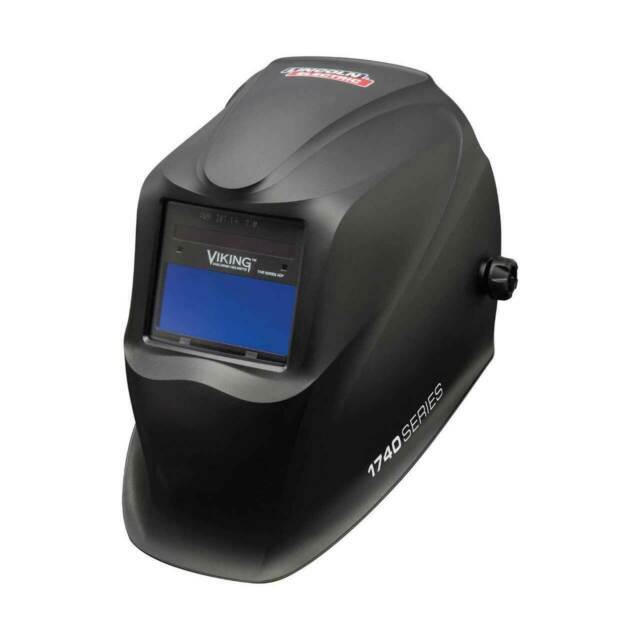

The Lincoln Viking 1740 Auto-Darkening Welding Helmet – K3282-3 is a welding PPE item intended for day-to-day fabrication and repair work where a stable view of the weld zone matters. For buyers and support teams, the main question is not whether the helmet is “advanced,” but whether it fits the job, the user, and the maintenance routine. On a shop floor, consistent lens response, proper fit, and basic inspection discipline matter more than marketing terms.
Key Takeaways
- Auto-darkening helmets are support items for visibility and eye protection, not a substitute for correct process setup.
- Inspect the shell, lens area, headgear, and sensors before each shift.
- Verify that the user can see the joint clearly in the bright state and that the helmet stays positioned during work.
- Replace damaged components early. Small issues in lens cover condition or headgear fit can become reliability problems.
- If a detail is not confirmed in the source material, treat it as Unknown (Verify).
What this helmet is for
Based on the product description provided, this helmet is aimed at general fabrication and repair, shop work, field welding, and common arc processes such as MIG, TIG, and stick. The practical value of an auto-darkening helmet is simple: it lets the welder see the work area clearly before the arc starts, then darkens when the arc is struck. That reduces the need to repeatedly nod the hood up and down and can help reduce eye strain during repetitive work.
For maintenance buyers, the priority is not just the helmet model name. It is whether the unit supports the welders’ actual tasks, how often consumable parts are checked, and whether the team has a repeatable inspection routine. If the application includes grinding, overhead welds, tight access work, or frequent start-stop cycles, the helmet must stay comfortable and reliable enough to avoid operator workarounds.
Product / parts notes
This article is limited to the product listing provided. Specific technical specs, lens sizes, shade ranges, sensor counts, and certification details were not supplied here, so they are Unknown (Verify). Do not assume compatibility with aftermarket headgear, cover lenses, or cartridge-style replacements unless the manufacturer documentation confirms it.
For shop support, verify the following before issue or deployment:
- Shell condition: inspect for heat damage, cracks, warping, and spatter buildup.
- Lens area: check the outer and inner cover surfaces for pitting, clouding, scratches, and contamination.
- Auto-darkening function: confirm the lens transitions properly during arc exposure in a controlled test.
- Headgear: verify adjustment range, locking action, and that the helmet stays in position during head movement.
- Seal and fit: confirm proper coverage around the face and neck area when used with other PPE.
Troubleshooting and support checks
1) Lens does not darken consistently
- Check: confirm the helmet has power, if applicable. Power source details are Unknown (Verify) from the provided source.
- Inspect: the sensors, cover lenses, and front face for dirt, spatter, or obstruction.
- Verify: the arc is within normal working position and the helmet is aimed correctly at the weld zone.
- Action: clean the lens surfaces and retest. If response remains inconsistent, remove the helmet from service until the fault is confirmed.
2) Helmet feels loose or shifts during work
- Check: the headgear adjustment points and tension settings.
- Inspect: worn straps, cracked pivots, or damaged lock points.
- Verify: the operator can tilt, lower, and raise the hood without it drifting out of position.
- Action: replace worn support parts before the next shift. A loose helmet is a job-quality and safety problem.
3) Visibility is poor even when the hood is up
- Check: outer and inner covers for haze, slag impact, smoke film, or grinding dust.
- Inspect: whether the lens is damaged or blocked by residue.
- Verify: the user is not using the helmet in a way that exceeds its intended visibility setup.
- Action: replace scratched cover lenses and clean the shell regularly. If the internal lens is degraded, escalate for replacement or service review.
How to inspect before use
- Visual check: look over the shell for cracks, heat damage, and spatter.
- Lens check: inspect both cover surfaces for scratches, haze, or debris.
- Fit check: put the helmet on and verify secure headgear contact without pressure points that force the user to loosen the hood.
- Function check: perform a controlled arc-response test if shop procedure allows it.
- Record check: note any recurring issue, especially if the same helmet is being reassigned between shifts.
Related support references
If you are comparing this model to adjacent Lincoln helmet support content, these internal pages may help with broader helmet selection and setup context:
- Lincoln Viking 1740 Auto-Darkening Welding Helmet (K3282-4)
- Lincoln K3930-1 PAPR with Black Viking 3350 Welding Helmet
- Lincoln Viking 3350 Welding Helmet Review and Buying Guide
- Lincoln Auto-Darkening Welding Helmet for Beginners
Safety notes
- Do not use a damaged helmet in production.
- Do not rely on a visual appearance alone to confirm auto-darkening performance.
- Inspect the helmet before every shift and after any impact, drop, or spatter event.
- Confirm the helmet is used with the correct companion PPE for the task, including gloves, jacket, and respiratory protection when required.
- If lens response, fit, or shell condition is uncertain, remove the unit from service until verified.
FAQ
Is the Lincoln Viking 1740 K3282-3 suitable for MIG, TIG, and stick welding?
The provided product description says it is intended for daily MIG, TIG, and stick work. Specific duty limits, settings, and procedure approvals are Unknown (Verify).
Can I use this helmet as a direct replacement for other Lincoln Viking models?
Not without verification. Compatibility with other models, covers, headgear parts, or accessories is Unknown (Verify) unless the manufacturer documentation confirms it.
What should I inspect first if the helmet starts acting up?
Start with the basics: lens cleanliness, cover condition, sensor obstruction, headgear fit, and shell damage. In many cases, the issue is a contaminated cover lens or a loosened adjustment point.
How often should the helmet be checked?
At minimum, check it before each use. For shared helmets or high-volume shops, add shift-start and post-incident checks after drops, spatter strikes, or heavy grinding exposure.
Sources Checked
- ArcWeld product listing: Lincoln Viking 1740 Auto-Darkening Welding Helmet – K3282-3
- Internal Weld Support Parts articles linked above
For procurement or support decisions, keep the focus on fit, function, and inspection discipline. If a technical detail is not documented in the available source material, treat it as Unknown (Verify) before buying or issuing the helmet to the floor.
Leave a Reply