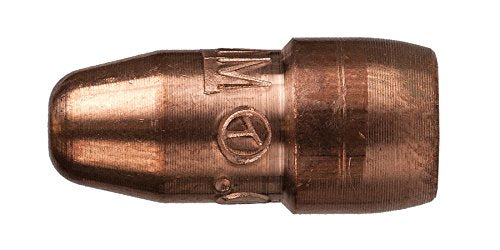

If your MIG contact tip keeps burning back, the problem is usually not just the tip. Burnback happens when the wire stops feeding normally while the arc stays on the wire end. The wire then melts back into the tip and can fuse to it.
This guide covers the common causes that get missed after a tip replacement: wrong tip size, liner drag, spool brake setting, worn drive rolls, and stickout issues.
Key Takeaways
- Burnback is often a wire feed problem, not only a consumable problem.
- A contact tip that is too tight or the wrong size can raise drag and overheat.
- Liner drag, drive roll wear, and spool brake tension can cause intermittent wire slowdown.
- A contact tip held too close to the work can contribute to burnback; verify the required contact-tip-to-work distance rather than automatically moving closer.
- Start with the wire feed path before replacing more tips.
What Burnback Means
In MIG welding, burnback means the wire burns back into the contact tip instead of feeding out at the normal rate. You may see the wire fused to the tip, a cratered wire end, or a tip that overheats quickly after starting the arc.
1) Check the Contact Tip Size
The tip bore has to match the wire size closely enough for stable electrical contact, but not so tight that it creates drag. A tip that is too small for the wire can increase friction and heat. A worn or damaged tip can also cause erratic contact and feeding problems.
Verify the wire diameter and the tip marking before replacing more parts. If the wire size and tip size do not match, correct that first.
2) Check for Liner Drag
A liner that has contamination, sharp bends, wear, or the wrong length can make the wire feed unevenly. When wire speed drops even briefly, burnback can happen fast.
Inspect the liner path for:
- kinks in the gun cable
- dirt or shavings inside the liner
- excessive cable routing bends
- liner wear at the gun neck or feeder end
If the wire feed feels rough when you jog it, suspect liner drag before blaming the tip.
3) Check Drive Rolls
Worn, mismatched, or improperly tensioned drive rolls can slip or flatten the wire. That creates inconsistent feed speed and can lead to burnback at the tip.
Inspect the drive rolls for:
- visible wear or grooving
- wrong groove type for the wire
- incorrect pressure adjustment
- wire dust or debris on the rolls
If the wire feed is unstable at the feeder, fix the drive roll setup before changing the tip again.
4) Check Spool Brake Tension
On spool-fed systems, brake tension that is too tight can overload the drive system. Brake tension that is too loose can let the spool overrun and create feed inconsistency. Either condition can contribute to burnback.
Verify that the spool turns smoothly and stops without freewheeling. If you hear the feeder laboring or see wire birdnesting risk, the spool brake may need adjustment. Exact brake settings are machine-specific and Unknown (Verify).
5) Check Contact-Tip-to-Work Distance
Do not automatically move the gun closer when troubleshooting burnback. Bernard and Tregaskiss identify a contact-tip-to-work distance that is too short, as well as wire feed that is too slow, as possible causes. Compare the actual setup with the gun, wire and machine instructions and the applicable welding procedure before changing it. See the manufacturer’s contact-tip failure and burnback guidance.
Keep the measurements distinct: contact-tip-to-work distance runs from the tip to the workpiece; electrode extension runs from the tip to where the wire melts; stickout is measured from the nozzle to where the wire melts. A recessed tip means the nozzle and contact-tip measurements are not interchangeable. Miller explains these terms and their effect on welding current. Use the distance specified for the actual process and joint rather than a universal closer-or-farther rule.
6) Check Gun Angle and Travel Technique
Steep angles, excessive arc length, or poor gun positioning can make the wire stick or burn back more easily. A stable push angle and consistent travel help keep the arc and wire feed predictable.
If burnback happens only with one operator, review technique before replacing parts.
7) Check Heat and Parameter Balance
Burnback can also happen when the arc is too hot for the wire feed speed, or when the wire feed is too slow for the voltage and current being used. If the arc stays on too long after the trigger is released, postflow and wire retraction behavior may also matter. Machine settings are Unknown (Verify) without the unit model.
If the machine is set for a small wire but the feed path is restricted, the result can look like a tip problem even when it is a system problem.
Support Check Sequence
- Confirm wire size and contact tip size match.
- Inspect the tip for wear, spatter, and overheating.
- Test wire feed by jogging wire with the tip removed.
- Check liner drag and cable routing.
- Inspect drive rolls and tension.
- Verify spool brake tension on spool-fed systems.
- Review stickout, gun angle, and welding settings.
When to Replace the Tip
Replace the contact tip if it is visibly enlarged, burned, fused, or no longer feeds wire smoothly. If tips keep failing right after replacement, stop changing tips and find the feed restriction first.
Product / Parts
For a replacement tip option in 0.030″ wire size, see the following ArcWeld product:
- Check the Tweco VTS30 0.030-inch contact tips at Arc Weld (pack of 10) — match the exact gun and Velocity consumable family before ordering; wire diameter alone does not establish compatibility.
Verify wire size, gun compatibility, and nozzle family before ordering. Compatibility details beyond the provided product data are Unknown (Verify).
Safety Notes
- Shut off the welder and lock out power before servicing the gun or feeder.
- Let hot contact tips and nozzles cool before handling.
- Do not clear a wire jam with the trigger held down.
- Wear eye protection when inspecting or trimming wire.
- Use caution when checking drive rolls and spool hubs; pinch points are present.
FAQ
Why does my tip burn back right after I replace it?
Usually because the underlying feed issue was not fixed. Check tip size, liner drag, drive rolls, spool brake, and stickout.
Can a wrong contact tip size cause burnback?
Yes. A tip that is too small, worn, or damaged can increase drag and heat, which can contribute to burnback.
Can drive rolls cause a contact tip to burn back?
Yes. Slipping or worn drive rolls can slow wire feed enough to cause burnback.
Is burnback always caused by too much heat?
No. Heat is part of it, but unstable wire feed is a common root cause.
Manufacturer References for This Update
- Bernard and Tregaskiss: Understanding and Extending Contact Tip Life — burnback causes and contact-tip-to-work distance.
- Miller: Stickout, Electrode Extension and Contact-Tip-to-Work Distance — measurement definitions and setup considerations.
These references support the distance correction above; they do not establish settings or replacement-part compatibility for an unidentified machine. Use the exact equipment manuals and applicable procedure.

Leave a Reply