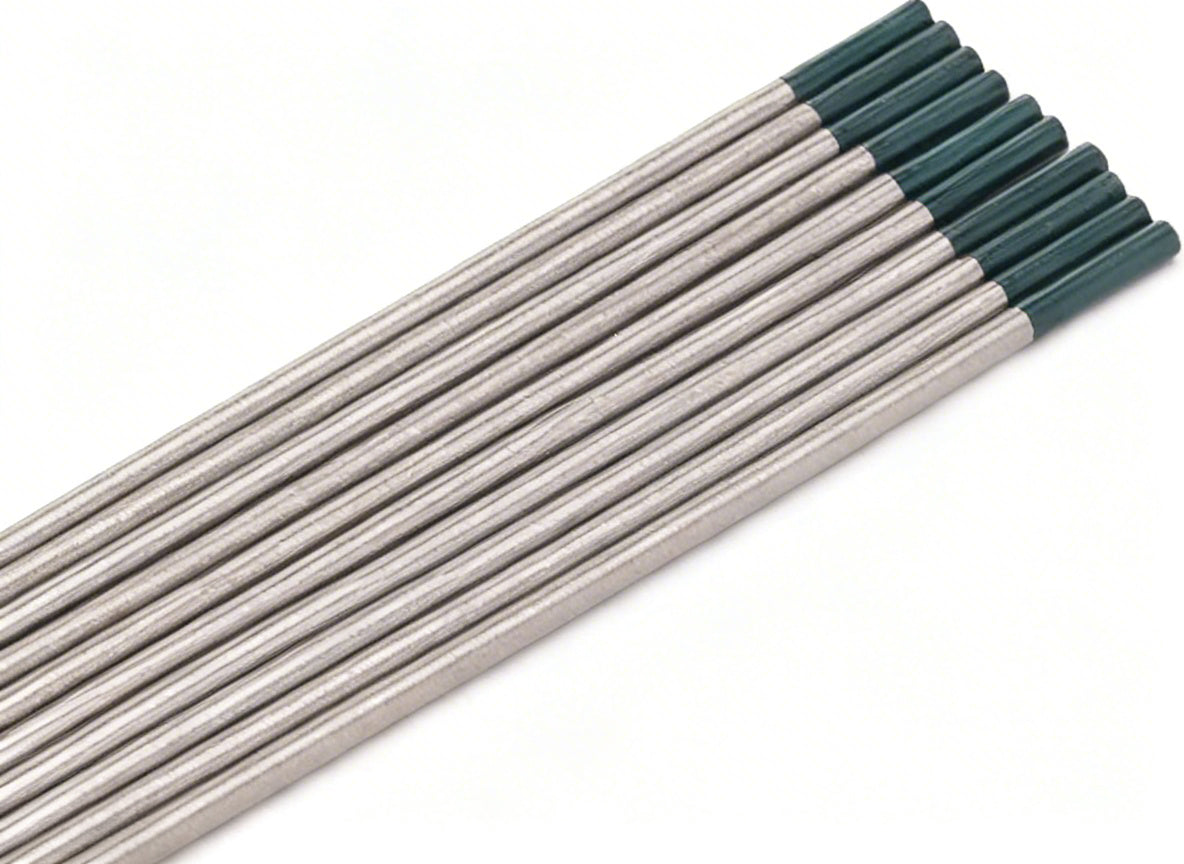

Pure tungsten is still a standard choice when the job calls for AC TIG on nonferrous material and the welder wants a stable, balled end. The CK Worldwide T187G Pure Tungsten Electrode, Green, 1/8 in, 10-Pack is listed as a pure tungsten option for aluminum and magnesium work. This guide focuses on application checks, buying checks, and setup verification so you can confirm whether this electrode fits the job before it goes into service.
Key Takeaways
- Pure tungsten is commonly used for AC TIG where a balled tip is acceptable.
- The source listing identifies the material as aluminum and magnesium. Verify the process and joint requirements before use.
- Diameter matters. A 1/8 in electrode may be appropriate for some AC TIG work, but current range and machine settings must be verified against your procedure.
- Use the electrode as a selection item, not as a substitute for procedure review.
- When fit is uncertain, mark it as Unknown (Verify) and confirm with the welder, WPS, or equipment guide.
What the Source Listing Tells You
The product summary identifies this electrode as pure tungsten, green, 1/8 in, sold in a 10-pack. It also states that pure tungsten forms a clean, balled end when heated and provides good arc stability for AC welding with balanced or unbalanced squarewave or sine wave. The listed materials welded are aluminum and magnesium.
Those points are useful, but they are not the same as a procedure approval. Before buying for production or maintenance use, verify the required tungsten type, diameter, and machine polarity or AC balance settings against the job documents.
Application Checks Before You Buy
Use the following checks to decide whether this electrode belongs in your TIG consumable stock.
- Check the base metal. If the job is aluminum or magnesium, pure tungsten may be a candidate. If the material is something else, verify suitability before purchase.
- Check the power source. The source summary references AC welding with balanced or unbalanced squarewave or sine wave. Verify that your machine supports the required AC output and settings.
- Check the current demand. A 1/8 in electrode is not automatically correct for every amperage level. Match size to the work envelope and the procedure, then verify in-house practice or manufacturer guidance.
- Check the tip condition you need. If your process calls for a balled end, pure tungsten is a practical starting point. If a sharpened, pointed, or alloyed tungsten is required, use the correct electrode type instead.
- Check packaging. This is a 10-pack. Confirm whether your usage rate justifies that quantity for maintenance, repair, or shop issue stock.
Inspect Before Installation
Do not assume any tungsten package is ready to load without inspection. Use this quick receiving check.
- Inspect the package. Look for broken sleeves, contamination, or moisture damage.
- Check the electrode ends. Confirm the tips are intact and not chipped, heavily oxidized, or contaminated from storage.
- Verify diameter. Measure or visually confirm 1/8 in stock against the job requirement. If the size is unclear, treat it as Unknown (Verify) until confirmed.
- Verify material identification. Make sure the package labeling matches pure tungsten, green code, and the listed part description.
Troubleshooting and Support Checks
If the arc is unstable, do not assume the tungsten is the only issue. Work through the problem in order.
- Check gas coverage. Poor shielding can look like a tungsten problem.
- Inspect the tip shape. A contaminated or damaged tip can cause wandering arc behavior.
- Verify electrode size against amperage. If the tungsten is undersized for the application, arc starts and stability may suffer.
- Confirm AC machine settings. Balance, frequency, and amperage need to match the joint and material. If not documented, treat the setting as Unknown (Verify).
- Check for contamination transfer. Aluminum oxide, filler contamination, or dip events can degrade performance quickly.
If the electrode is repeatedly overheating, tapering unexpectedly, or spitting metal into the puddle, stop and verify procedure variables before blaming the consumable.
How to Use WSP and Filler Metal Pages
When a WSP lookup page or filler metal finder is available, use it as a selection starting point, not as a final approval tool. Those pages help narrow options by material and process, but they do not replace welding procedure review, machine limits, or supervisor approval.
For this topic, no WSP lookup page or filler metal finder page was provided. That means you should rely on the job paperwork, the machine manual, and internal consumable standards. If your team later adds a lookup page for this electrode family, use it to confirm the application match before release to the floor.
Buying Checks for Maintenance and Stores
Before adding this item to shelf stock, verify the following:
- Part number and description match the requisition.
- Diameter matches the weld cell or maintenance standard.
- Package count fits consumption rate.
- Procurement notes do not substitute this electrode for a different tungsten family.
- Receiving can inspect storage condition and label integrity.
For mixed-shop environments, keep the tungsten families clearly separated. Do not rely on color alone if the package label is damaged or missing.
Safety Notes
Tungsten electrodes are not hazardous in normal handling, but grinding, contamination, and misuse create risk. Use local shop safety rules and the welding procedure in force.
- Use eye protection when grinding or dressing tungsten.
- Avoid inhaling dust from grinding operations.
- Keep electrodes clean and dry in storage.
- Do not use a damaged or contaminated electrode just to finish a job.
- Verify lockout, ventilation, and hot work controls before live work starts.
FAQ
Is this electrode meant for AC TIG?
Based on the source listing, yes. It is described as pure tungsten with good arc stability for AC welding. Confirm the actual procedure before use.
Can I use it on materials other than aluminum and magnesium?
Unknown (Verify). The provided source only identifies aluminum and magnesium. Use the applicable procedure or manufacturer guidance for other materials.
Does 1/8 in mean it is correct for all aluminum jobs?
No. Diameter must be matched to amperage, machine capability, and weld procedure. Confirm the size before issue to production.
Should the tip be pointed or balled?
The source summary says pure tungsten forms a clean, balled end when heated. If your job requires a different end geometry, verify the electrode choice.
Sources Checked
- ArcWeld product summary for CK Worldwide T187G Pure Tungsten Electrode, Green, 1/8 in, 10-Pack
- Provided internal topic record and descriptive notes
This draft uses only the supplied source summary. Any item not stated there should be treated as Unknown (Verify) until confirmed by the welding procedure, machine manual, or manufacturer documentation.
Related Arc Weld Part
[arcbox product=”ck-worldwide-t187g-pure-tungsten-electrode-green-1-8-in-10-pack”]

Leave a Reply