CGW 45001, Cut-Off Wheel 4″ x 5/8″, Type 27, Pack of (25): Product Breakdown
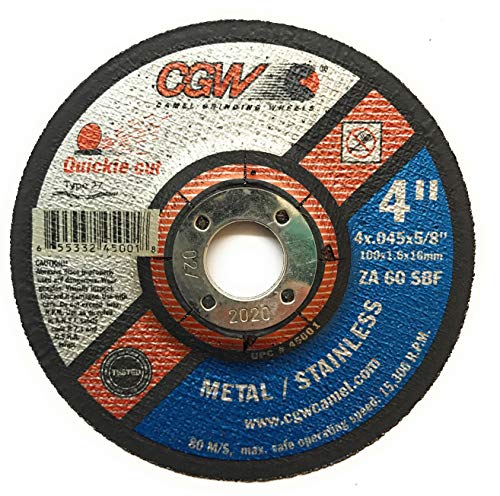

The CGW 45001 cut-off wheel is a small-diameter abrasive wheel intended for cutting tasks in metal fabrication and maintenance work. The listed product data identifies it as a 4-inch wheel with a 5/8-inch center hole, Type 27 form, and pack quantity of 25. The available source data also identifies zirconia aluminum oxide abrasive, 60 grit, medium grade, and a maximum speed of 19,000 RPM. Use those details as the starting point for selection, setup, and inspection. Do not assume more than the source confirms.
Key Takeaways
- Confirm grinder arbor size before buying or mounting. This wheel is listed with a 5/8-inch center hole.
- Confirm wheel type and application. Type 27 is commonly used for angle grinder work, but actual use depends on the tool, guard, and job.
- Do not exceed the listed maximum speed of 19,000 RPM.
- Inspect every wheel before use. Do not install cracked, chipped, or dropped wheels.
- Use the wheel only for the material and cutting method supported by the source data. The listing states carbon and stainless steels. Other applications are Unknown (Verify).
Product Breakdown
The source product listing for CGW 45001, Cut-Off Wheel 4″ x 5/8″, Type 27, Pack of (25) identifies it as a CGW Abrasives wheel built with zirconia aluminum oxide abrasive. The wheel size is 4 inches in diameter with a 5/8-inch center hole. The wheel type is Type 27. Grit is listed as 60 and grade as medium. Maximum speed is listed as 19,000 RPM.
That combination points to a wheel intended for general cutting support in shop and field maintenance work. The source specifically mentions cutting carbon and stainless steels. Anything beyond that is Unknown (Verify).
How to Check Fit Before Use
Before mounting this wheel, verify the grinder and accessory interface. Cutting wheel failures often start with the wrong size, wrong flange setup, or a damaged tool.
- Check arbor size: Confirm the grinder arbor matches the 5/8-inch center hole.
- Inspect the guard: Verify the guard is installed, secure, and positioned for cutting work.
- Inspect flanges: Verify the flanges are clean, flat, and free of nicks or debris.
- Check the speed rating: Verify the grinder’s no-load speed does not exceed 19,000 RPM.
- Check the wheel face: Verify there are no cracks, chips, moisture damage, or edge damage before mounting.
Installation and Setup Checks
Use a simple pre-use routine. This helps reduce runout, wobble, and early wheel damage.
- Disconnect power before changing the wheel.
- Remove the old wheel and clean both flanges.
- Inspect the spindle, nut, and guard for damage.
- Install the new wheel without forcing it onto the arbor.
- Seat the wheel evenly between the flanges.
- Snug the retaining nut to the tool maker’s instructions. Do not overtighten.
- Spin the wheel by hand and verify it clears the guard and does not contact the work support.
- Run the tool briefly at no load and verify no abnormal vibration, noise, or wobble.
Troubleshooting Cutting Problems
If the wheel is not cutting cleanly, do not assume the wheel is defective. Check the setup and the work process first.
Problem: Wheel vibrates or wobbles
- Inspect: Look for a bent flange, dirty mounting surfaces, or a damaged wheel.
- Verify: Confirm the center hole and arbor are the correct match.
- Check: Make sure the wheel is seated flat and the nut is not cocked.
- Action: Replace the wheel if it has been dropped or shows any damage.
For more detail on vibration causes, see Cut-Off Wheel Vibration Troubleshooting: Grinder Wobble, Wheel Runout, Flange Problems, and Unsafe Cutting Symptoms.
Problem: Slow cut or excessive pressure needed
- Inspect: Check whether the wheel is loaded, glazed, or worn down.
- Verify: Confirm the material is actually carbon steel or stainless steel if following the source guidance.
- Check: Reduce side loading and keep the cut straight.
- Action: Replace the wheel if cutting performance drops below acceptable shop standards.
Problem: Wheel wears faster than expected
- Inspect: Verify grinder speed and pressure technique.
- Check: Avoid twisting, binding, or forcing the cut.
- Verify: Confirm the wheel is appropriate for the workpiece thickness and cut method. If not, this is Unknown (Verify).
How to Evaluate Whether This Wheel Fits the Job
Maintenance buyers and supervisors should compare the task to the source data rather than rely on general assumptions. Use this wheel as a candidate when you need a 4-inch Type 27 wheel with a 5/8-inch bore and a 19,000 RPM limit. The source says it is for carbon and stainless steels. If the job involves another alloy, a different grinder class, or a special cutting method, verify compatibility before issue.
If you need help understanding Type 1 versus Type 27 cut-off wheel selection, review Type 1 and Type 27 Cut-Off Wheels: Pros, Cons, and Applications.
Safety Notes
- Wear eye protection, face protection, hearing protection, gloves, long sleeves, and suitable clothing.
- Keep the guard installed. Do not run abrasive wheels unguarded.
- Do not use a damaged wheel.
- Do not exceed the listed maximum RPM.
- Keep hands out of the cut line and avoid side loading unless the wheel and tool setup support it. If uncertain, verify with the tool maker’s instructions.
- Stop immediately if the wheel develops cracking, vibration, or unusual sound.
FAQ
Is the CGW 45001 wheel for stainless steel?
The source listing states it is for cutting carbon and stainless steels. Verify the exact stainless grade and job conditions before use.
What grinder does it fit?
The source provides a 5/8-inch center hole and a 4-inch diameter. Exact tool compatibility is Unknown (Verify). Match the arbor, guard, and speed rating to the grinder manufacturer’s instructions.
Can this wheel be used above 19,000 RPM?
No. The source lists a maximum of 19,000 RPM. Do not exceed that value.
What does Type 27 mean here?
Type 27 is the wheel form listed by the source. Use it only when the grinder, guard, and application are suitable. For a broader breakdown of Type 27 use, verify against the tool and wheel manufacturer data.
Sources Checked
- ArcWeld product listing: CGW 45001, Cut-Off Wheel 4″ x 5/8″, Type 27, Pack of (25)
- Internal article: Type 1 and Type 27 Cut-Off Wheels: Pros, Cons, and Applications
- Internal article: Cut-Off Wheel Vibration Troubleshooting: Grinder Wobble, Wheel Runout, Flange Problems, and Unsafe Cutting Symptoms
Note: All uncertain compatibility and application details are marked as Unknown (Verify). Do not infer approvals or certifications not stated in the source data.
Related Arc Weld Part
CGW 45001, Cut-Off Wheel 4" x 5/8", Type 27, Pack of (25)
CGW Abrasives 45001 Cut-Off Wheel 4" x 5/8" 60 Grit Type 27 Zirconia Aluminium Oxide General purpose cutting wheel. Zirconia grain for faster cutting and longer life. For cutting carbon and stainless steels. Specification: BRAND: CGW Abrasives ABRASIVE MATERIAL: Zirconia Aluminum Oxide GRIT: 60 GRADE: Medium DIAMETER INCHES: 4 CENTER HOLE DIAMETER INCHES: 5/8 MAX RPM: 19000 WHEEL TYPE: Type 27 TOOL COMPATIBILITY:…
View at Arc Weld StoreRelated Weld Support Guides
Help Keep Welding Support Free
If our troubleshooting guides, compatibility information, or repair resources helped you, and you’d like to support Weld Support Parts, you can send a small contribution through Venmo.
Your support helps us continue creating free welding guides, compatibility information, and technical support resources for the welding community.
Support Through Venmo
Leave a Reply