The PORTER-CABLE PCE700 is a corded 14-inch abrasive chop saw for a fixed cutting station, not a carbide-blade cold-cut saw or an all-material fabrication machine. The useful buying question is whether your stock, power supply, work area and wheel-management workflow fit an abrasive cut-off process. If you need a low-burr, cooler carbide-cut workflow, compare a separate machine designed for that process rather than assuming an interchangeable blade.
The exact machine reviewed here is PCE700; the Amazon product reference is B00NI2CF28. Confirm those identifiers and the package when ordering. This guide does not claim firsthand testing, a verified delivery time or a current seller price. It uses the manufacturer’s stated features to organize a practical pre-purchase decision.
As an Amazon Associate I earn from qualifying purchases.
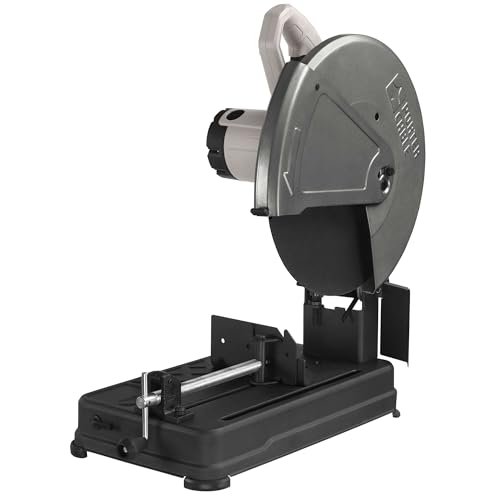
- 15 Amp, 3,800 Rpm Motor With Replaceable Brushes Provides Power And Durability For The Chop Saw
- Quick-Release Material Clamp Of The Metal Chop Saw Allows For Easy Material Cutting And Removal
- Cutting Fence With Miter Adjustment Of The Metal Cutting Saw Allows Up To 45 Degree Angles To Be Cut
- Spark Deflector Provides Safety And Clear Line Of Sight For Cutting

Last update on 2026-10-30 / Affiliate links / Images from Amazon Product Advertising API
Start with the cutting process, not the blade diameter
PORTER-CABLE’s PCE700 product documentation lists a 15-amp motor, 3,800 RPM no-load rating, a 14-inch cutting wheel, a heavy steel base, a miter-adjustable fence and a quick-release clamp. Those figures describe the intended machine and accessories, not an approved choice of abrasive wheel for any possible metal or a duty-cycle guarantee.
An abrasive cut-off saw removes material with a bonded abrasive wheel and produces sparks, heat, dust and wheel wear. A carbide metal-cutting saw uses a different blade and process. Do not install a carbide blade on an abrasive machine because it is nominally the same diameter, or infer wheel compatibility from the size alone. Wheel type, rated speed, arbor, guard and permitted application must match the manufacturer’s instructions.
If the job requires a fine machined finish, immediate weld-ready prep or repeatable precision under a dedicated tolerance, the saw may still need a secondary finishing or inspection operation. A fast cut is not automatically a final dimension. Budget time, wheel consumption and workholding with that distinction in mind.
Confirm the stock shape and actual cut envelope
A ’14-inch chop saw’ designation does not tell you every capacity for pipe, angle, solid rod and rectangular tubing. The same stock dimensions can present different clearances depending on how material sits against the fence. Read the current PCE700 manual’s stock-shape diagrams and angle-specific limits before buying. If that table cannot be obtained, mark the required stock size as Unknown rather than inventing a maximum square or pipe diameter.
For routine shop work, bring two or three real examples to the buying decision: the largest planned tube, the most common angle section and the actual length of stock arriving at the station. Include the required cut angle and whether material can be supported safely on both sides. A saw’s advertised wheel diameter will not tell you if its base, vise and surrounding bench have adequate clearance.
- Record the largest intended stock shape and section, not just its outside dimension.
- Check the owner’s manual for the PCE700 capacity in that shape and at the needed miter angle.
- Verify that the stock can be clamped fully without hand support near the wheel.
- Plan a work surface and appropriate material support to keep stock stable.
- Check the shop’s dust, spark, fire and hot-part controls before establishing the station.
Power, motor and extension-cord planning
The manufacturer’s listed 15-amp motor should be compared with the site’s electrical circuit and the requirements in the owner’s manual. A device nameplate is not permission to use any convenient cord, adapter or shared outlet. Voltage, circuit protection, extension-cord size, cord length and grounding requirements must follow the exact manual and local electrical rules.
A stationary abrasive chop saw may compete with a welder, grinder and dust collection equipment on a small work circuit. Put the station plan in writing rather than assuming that two tools will never run at once. An underperforming circuit can turn an otherwise suitable purchase into a maintenance nuisance or unsafe setup.
What is actually in the carton
The PCE700 manufacturer’s included-items list names the machine, one 14-inch cutting wheel and a wrench. It does not promise a lifetime supply of wheels, extra clamping accessories, stock supports or a wheel suitable for every cutting application. Count what ships in the original model package separately from any seller’s promotional bundle.
For a production workshop, ask about local replacement-wheel supply and authorized replacement parts before buying. Wheel consumption is part of the operating cost, but without verified cut counts and material mix there is no defensible per-cut price to quote. Compare the compatible wheel’s exact type and rated speed against the manual, and include an appropriate inventory and inspection policy.
Fence and clamp details are worth checking
PORTER-CABLE states that the PCE700 has a quick-release material clamp and a fence adjustable for miter cuts up to 45 degrees. A quick-release feature can make repetitive work less cumbersome, but a locked fence and correct workholding are necessary each time. Do not treat the published miter setting as evidence that every stock profile fits at that angle.
Where a fab shop is cutting members for a weldment, the next step may be measuring the cut part against a drawing or fixture. WSP’s measurement tool guide explains why instrument range and the measurement job must match. A stop, pencil mark or cutting scale cannot substitute for whatever inspection the job plan requires.
Safety and shop-layout constraints
Abrasive wheels are rotating consumables and require guarding, inspection and correct use. Before station commissioning, read the PCE700 manual, wheel manufacturer’s safety instructions and applicable OSHA abrasive-wheel and machine-guarding requirements. Workers need training in the approved methods; this article does not supply a wheel-change procedure, freehand cutting technique, PPE list for every hazard or an alternative to the manufacturer’s guards.
Sparks and hot offcuts affect nearby cords, stored material, chemicals, people and finished work. A well-sited chop saw has an area where sparks can be managed according to the shop’s fire-prevention plan. Never assume that because a saw is sold as portable it is suitable for an improvised station next to flammables.
If a shop routinely works on stainless, aluminum or special alloys, do not guess that one wheel is suitable for all of them. Confirm that the machine and the exact wheel are rated for the material and that contamination, dust and customer process restrictions have been considered.
Who should buy the PCE700—and who should not
This machine is worth evaluating for a shop that genuinely needs a corded abrasive chop-saw process, has a compliant cutting station, and can source the correct 14-inch consumables. A buyer who mainly needs low-spark or cold-cut performance, specialized tube-cut accuracy, very limited circuit capacity or a different wheel system should review alternative equipment first.
Abrasive metal cutting should not be conflated with a woodworking miter saw or with a stationary industrial bandsaw. These machines have different operating envelopes, blade types and shop-support needs. The right choice is the one whose exact manufacturer’s specifications match the parts to be cut and the process plan, not the lowest upfront listing price.
Order checklist
- Match model PCE700 and Amazon identifier B00NI2CF28 on the current seller page.
- Verify the manufacturer’s 14-inch abrasive cutting-wheel design and included wheel/wrench.
- Check the manual for stock shape, section size and required angle before assuming capacity.
- Confirm the electrical supply, correct cord arrangement, station supports and wheel availability.
- Specify the required guarding, training, abrasive-wheel inspections and fire controls.
- Record that finishing, deburring or dimension checks after the cut may still be required.
To compare the exact current offer and package, review the PCE700 Amazon listing. The dynamic product box near the start should point to the same ASIN; verify seller variation, wheel and package details before purchase. No price, rating or stock claim here is treated as permanent.
For related equipment and fit questions, WSP’s Makita LC1230 guide illustrates why a different metal-cutting saw family needs its own blade and machine documentation. The Filler Metal Finder supports the downstream welding-consumable decision after stock preparation; neither link authorizes a saw modification or welding procedure.
Bottom line: choose the PCE700 for a verified abrasive-wheel cutting job and a station that can support it. Check capacity and workholding on the actual material, then plan wheel supply, safety, cleanup and inspection rather than buying solely on motor size or the diameter printed in a product title.
Leave a Reply