Tag: Arc Life Media

  • Nobody Starts With a Perfect Bead: What the First Weeks of Welding School Really Build

    Nobody Starts With a Perfect Bead: What the First Weeks of Welding School Really Build

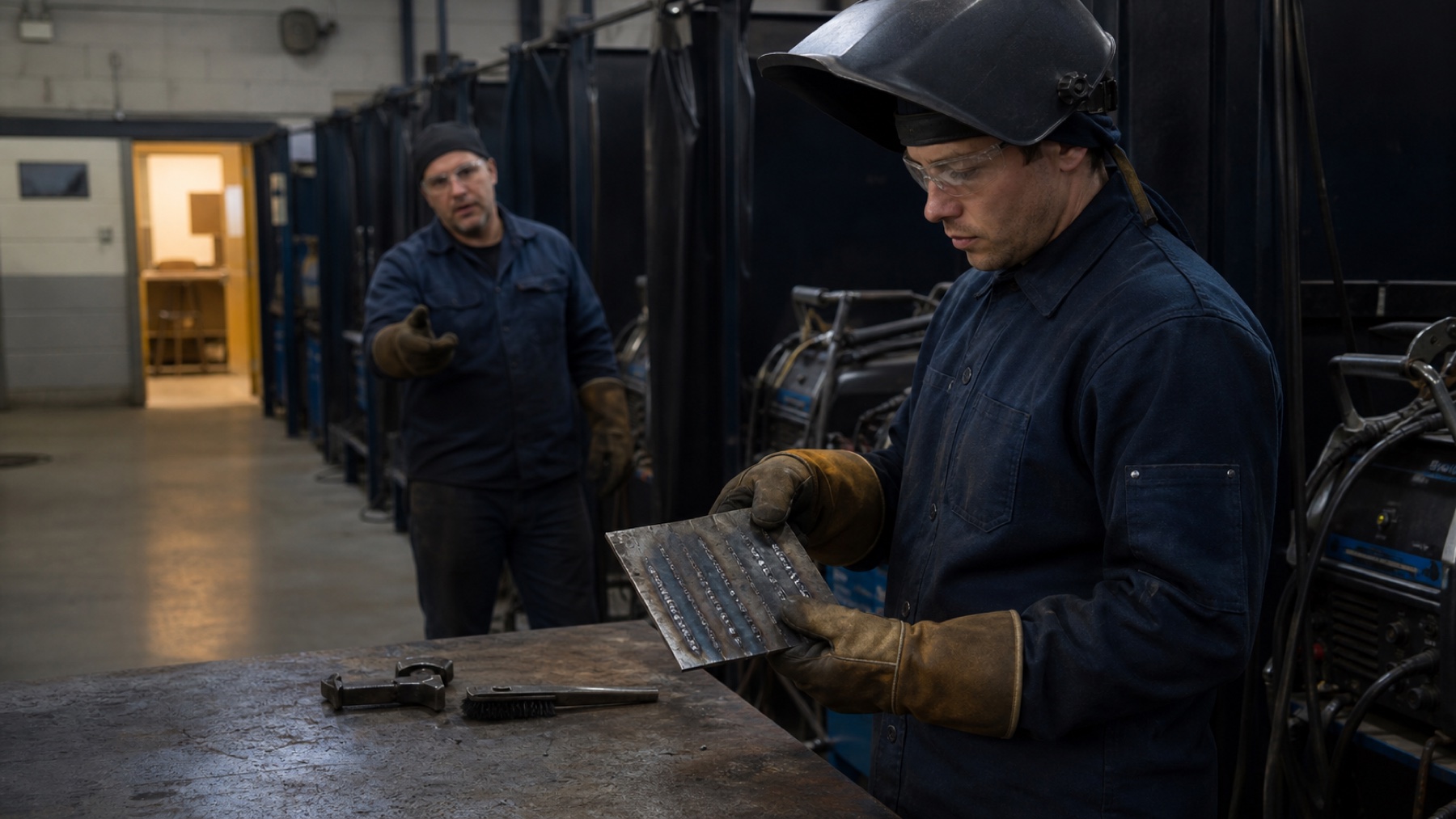
    The first practice plate has a way of telling the truth. The bead wanders. The starts are heavy. The stops leave craters. You lift the hood, look at the coupon, and wonder whether everyone else in the lab understands something you missed.

    They probably do not. They are learning, too.

    The opening weeks of welding school are not a highlight reel. They are an introduction to repetition, observation, safety, and the strange experience of training your hands to follow what your eyes are only beginning to see. Nobody walks into that booth with years of hood time already earned.

    The First Lesson Is Not About Looking Talented

    New welders often arrive carrying an invisible pressure to prove they belong. Maybe a parent welded. Maybe friends already work in the trades. Maybe this is a career change, and starting over feels heavier than expected.

    But the booth does not care about anybody’s backstory. It responds to preparation, position, consistency, and time. That can be humbling, but it is also fair. The work gives immediate feedback. A rough bead is not a verdict on your future; it is information about the next attempt.

    You Begin by Learning to See

    Before a student develops smooth travel, there is a more basic skill taking shape: noticing. You start seeing the difference between clean and contaminated material. You notice how body position changes control. You begin to recognize when the puddle is doing what you intended and when you are simply chasing it.

    This is why an instructor may spend more time asking what you see than telling you exactly what to do. Good feedback teaches a student to diagnose the work instead of waiting for somebody else to rescue every pass. The goal is not to memorize one magic motion. It is to build judgment that travels with you to the next joint, process, and job.

    Safety Becomes Part of the Craft

    Early training can make safety feel like a long list that stands between the student and the arc. Experienced welders understand it differently. PPE, ventilation, fire prevention, cylinder handling, housekeeping, and awareness of the people around the booth are part of doing the work correctly.

    The Occupational Safety and Health Administration’s welding overview organizes welding, cutting, and brazing requirements around recognized hazards and protective measures. A student does not need to memorize every standard in the first week, but the habits start immediately: protect your eyes and skin, understand the space, respect hot material, and ask when something is unclear.

    Feedback Is Where Confidence Actually Starts

    Real confidence is not announcing that you have it figured out. It is being willing to hear why a pass failed, make one deliberate change, and try again. That process can be frustrating because improvement rarely arrives in a straight line. One plate looks better. The next one falls apart. Then something clicks that you could not force the day before.

    The students who keep progressing are not always the loudest or fastest. They are often the ones who stay curious. They compare attempts. They keep notes. They watch a demonstration closely. They ask a specific question instead of hiding a mistake. Humility is not weakness in a welding lab; it is a practical tool.

    There Is More Than One Door Into the Trade

    Welding careers do not begin through one universal route. The U.S. Bureau of Labor Statistics describes a mix of technical education and on-the-job training, with opportunities through vocational programs, community colleges, private schools, military training, employers, and apprenticeships. The American Welding Society’s student resources also include education, certification information, and a school directory.

    That variety matters. A seventeen-year-old in a career center and a forty-year-old changing industries may stand at neighboring booths with different goals and the same assignment. Neither path makes the first plate easier. Both deserve room to learn.

    The Culture Is Being Built Around You

    The first weeks also reveal what kind of shop culture a class will create. Does somebody explain a setup without making the new person feel foolish? Do students clean the booth for whoever comes next? Does the class treat safety as shared responsibility? Can people laugh at a rough practice plate without laughing at the person who made it?

    Those small choices matter because welding is rarely a completely solitary trade. Even when one person holds the torch, the work depends on fitters, inspectors, operators, supervisors, helpers, instructors, and customers. Skill earns respect, but so does being the person others can trust around the work.

    Keep the First Plate

    If the program allows it, keep an early practice coupon. Months later, it becomes evidence—not of where you failed, but of how far repetition carried you. The wandering bead, the ugly restart, and the uneven rhythm are part of the record.

    That is the part of Arc Life worth remembering: pride in the trade does not begin when the work looks perfect. It begins when you decide the work is worth learning. Read more about the community behind Arc Life Co., built around people who keep showing up for the craft.

    Shop question: What did your first practice weld teach you that you still remember?
    Sources and further reading

  • What Arc Life Means: The Culture Welders Carry Beyond the Booth

    What Arc Life Means: The Culture Welders Carry Beyond the Booth

    A clean bead is easy to admire. What most people never see is everything behind it: the early starts, the hood time, the rework, the burnt sleeves, and the quiet satisfaction of leaving a joint better than you found it.

    That is the heart of Arc Life. It is bigger than a welding process and more lasting than a good day in the booth. It is the culture welders carry with them—into the shop, onto the jobsite, and home at the end of a shift.

    The Work Has a Way of Shaping You

    Welding teaches patience in a hurry. You learn that rushing fit-up usually creates more work, that preparation matters, and that a small mistake can announce itself all the way down the joint. You also learn to keep going when the position is awkward, the weather is ugly, or the first attempt does not land the way you wanted.

    Those lessons do not stay under the hood. They show up in how welders solve problems, how they judge their own work, and how quickly they notice when something was built with care—or without it. Pride in the trade is not about pretending every weld is perfect. It is about caring enough to improve the next one.

    Every Process Has Its People

    Ask a group of welders about their favorite process and the conversation rarely stays technical for long. MIG has its production rhythm. TIG rewards control and focus. Stick carries a reputation for going where the work is rough and access is limited. Flux-cored welding has its own loyal crowd, too.

    The differences create plenty of shop talk, but the common ground matters more. Everyone remembers learning to read a puddle. Everyone has lifted a hood and known immediately that a pass was right—or that it was time to grind. Process pride can be fun without turning into a contest. The arc is the shared language.

    Shop Culture Is Built in the Small Moments

    The welding community is not held together by slogans. It is built through small acts: somebody lending a marker, explaining a machine setting without making a new welder feel small, calling out a hazard before it becomes an injury, or staying a few minutes to help finish a difficult fit-up.

    Good crews make room for high standards and good humor at the same time. They know when to give someone a hard time and when to step in. They respect the person doing the work, not just the job title on the badge. That sense of belonging is one reason welding becomes more than a paycheck for so many people.

    Arc Life is the pride of knowing what the work demands—and choosing to do it well anyway.

    Why Welders Wear the Trade

    A welding shirt, hat, sticker, or hoodie can look simple from the outside. To another welder, it can say a lot. It can recognize the process you prefer, the hours you have put in, or the kind of people you want to represent. It can start a conversation in a parking lot or earn a knowing nod across a counter.

    That is the idea behind Arc Life Co.: apparel and gear shaped by shop-floor experience and pride in the craft. The best welding culture does not need to shout. It simply feels familiar to the people who have lived it.

    Beyond the Booth

    When the helmet comes off, the identity does not disappear. Welders bring the trade into garages, side projects, family conversations, and the way they look at anything made from metal. They notice brackets, handrails, trailer repairs, and structural connections that everyone else walks past.

    Arc Life belongs in those off-the-clock moments, too. It is the story behind a toolbox sticker, the reason a process-specific shirt makes a good gift, and the shared pride that connects apprentices, instructors, fabricators, pipe welders, artists, repair technicians, and weekend builders.

    A Standard Worth Passing On

    Trade culture stays healthy when experience is passed forward. A veteran welder who explains the reason behind a habit gives a new hand more than a shortcut. An instructor who demands clean preparation teaches that quality begins before the arc starts. A coworker who treats safety as part of craftsmanship helps set the standard for the whole crew.

    That does not mean everyone has to work the same way or follow the same career path. Welding is broad enough for production, construction, repair, inspection, education, art, and entrepreneurship. The connection is a respect for the skill—and a willingness to leave the trade stronger for the people coming next.

    Keep the Arc Alive

    The strongest version of welding culture is welcoming, skilled, safety-minded, and proud without being closed off. It remembers where it came from while making room for the next person learning to strike an arc. It respects the old hands, encourages the new ones, and never forgets that every expert once had an unsteady first bead.

    If that sounds like your kind of community, explore the current Arc Life collection and find the piece that fits how you live the trade.

  • What Welders Should Wear in Hot Weather: Cotton, FR Gear, and the T-Shirt Problem

    What Welders Should Wear in Hot Weather: Cotton, FR Gear, and the T-Shirt Problem

    Balancing Heat Stress and Arc Protection

    Summer heat introduces a dangerous balancing act for welders, fabricators, and shop personnel. As temperatures inside the shop climb, the temptation to strip off heavy protective gear becomes overwhelming. However, sacrificing personal protective equipment (PPE) to stay cool directly exposes you to ultraviolet (UV) radiation, severe burns, and spatter injuries.

    Understanding what welders should wear in hot weather requires knowing the critical difference between ordinary cotton, flame-resistant (FR) gear, and synthetics. A lifestyle T-shirt is not a protective garment. True welding safety in high temperatures relies on strategic layering, breathable FR fabrics, and rigorous heat-stress management.

    The T-Shirt Problem: Why Ordinary Cotton is Not PPE

    Walk into many fabrication shops in July, and you may see someone welding in a standard graphic T-shirt. That garment should not be treated as protective welding apparel. Everyday lifestyle T-shirts are generally not designed, tested, or labeled for the hazards created by an active arc.

    Safety note: Welding arcs produce intense ultraviolet and infrared radiation. Any exposed skin can burn, so the garment system should provide complete coverage appropriate to the process and position.

    Untreated cotton is generally preferable to common meltable synthetic blends when selecting an underlayer, but an ordinary cotton T-shirt is not automatically welding PPE. Fabric weight, condition, coverage, garment construction, and the amount of sparks or spatter all matter. Polyester, nylon, spandex, and similar fibers can soften or melt when exposed to heat and spatter, increasing the severity of a burn. Follow the employer’s hazard assessment and the garment manufacturer’s instructions.

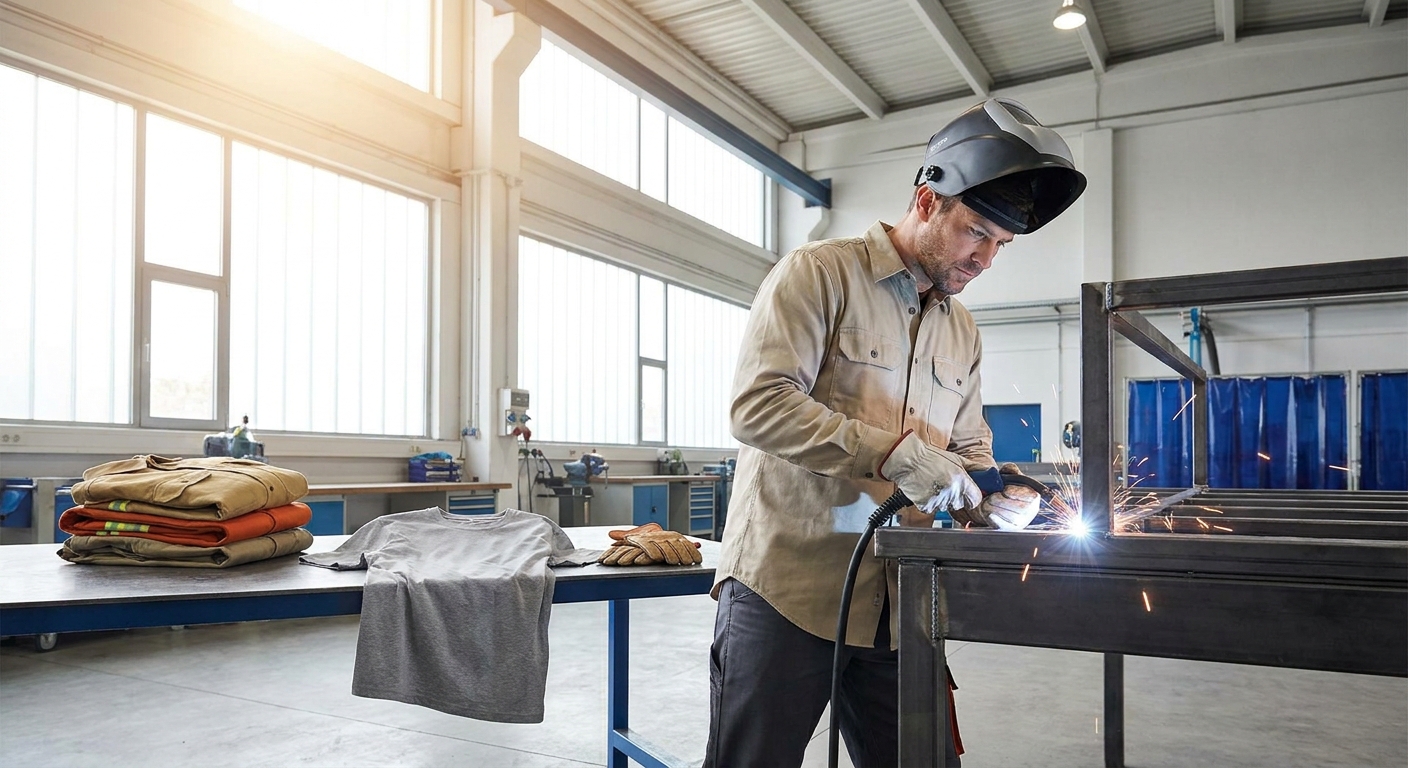
    What Welders Should Wear in Hot Weather: Cotton, FR Gear, and the T-Shirt ProblemChoosing the right FR gear ensures you are protected from sparks and UV rays without adding unnecessary bulk.

    Understanding Your Fabric Options

    When selecting hot-weather gear, welders must choose materials that naturally resist ignition or are chemically treated to self-extinguish.

    Flame-Resistant Workwear

    FR garments are designed to resist ignition or limit continued burning when used and maintained as directed. Lightweight FR shirts and jackets may reduce bulk in summer, but suitability depends on the welding process, position, spatter level, and the garment’s verified rating and instructions.

    Leather Protection

    Leather provides durable protection where heavy sparks and spatter are expected, including many stick-welding and overhead applications. It also adds weight and reduces heat loss, so the coverage should be matched to the hazard rather than treated as a one-size-fits-all solution.

    Common Synthetic Blends

    Many polyester, nylon, and stretch fabrics can melt or shrink when exposed to heat. Do not assume moisture-wicking or athletic clothing is suitable for welding; use garments selected through the workplace hazard assessment and verified for the intended exposure.

    Strategies for Managing Heat Stress

    Instead of stripping down to unsafe clothing, welders should adapt their PPE strategy to the climate. Heat stress can lead to heat cramps, heat exhaustion, and potentially fatal heat stroke. Managing your core temperature involves smart layering and strategic coverage.

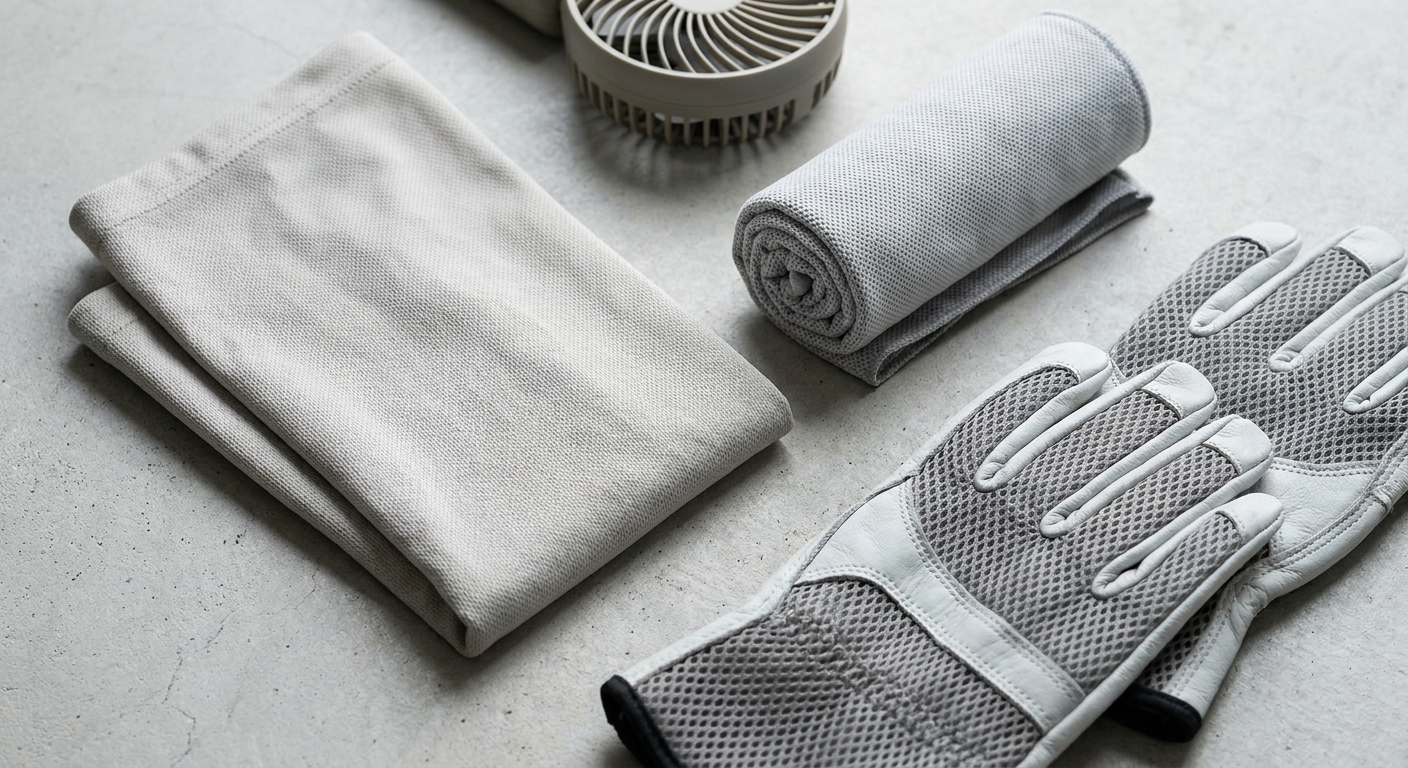
    Do not solve heat stress by removing required protection. Instead, use the lightest protective system that still matches the hazard assessment—for example, verified FR workwear with localized leather coverage where heavy spatter is expected. Employers should also use ventilation, work/rest cycles, hydration, acclimatization, and cool recovery areas. Any head covering worn under a helmet must fit without interfering with the helmet, headgear, or protective seal.

    Summer Welding Clothing Checklist

    Before stepping into the shop during a heatwave, ensure your gear meets fundamental safety requirements. True protective workwear minimizes catching points and covers all exposed skin.

    • Full Sleeve Coverage: Sleeves must extend to the welding glove cuff. Exposed wrists will suffer severe UV arc burns.
    • High Collars: Keep collars buttoned up to protect the neck from stray spatter and intense light bouncing off the table.
    • No Cuffs or Open Pockets: Pants should fall smoothly over the top of leather work boots without cuffs. Shirts should lack open chest pockets, which act as catch-basins for hot slag.
    • Approved Undergarments: Ensure whatever touches your skin directly is 100% natural fiber, like standard heavy cotton, even if covered by an FR jacket.
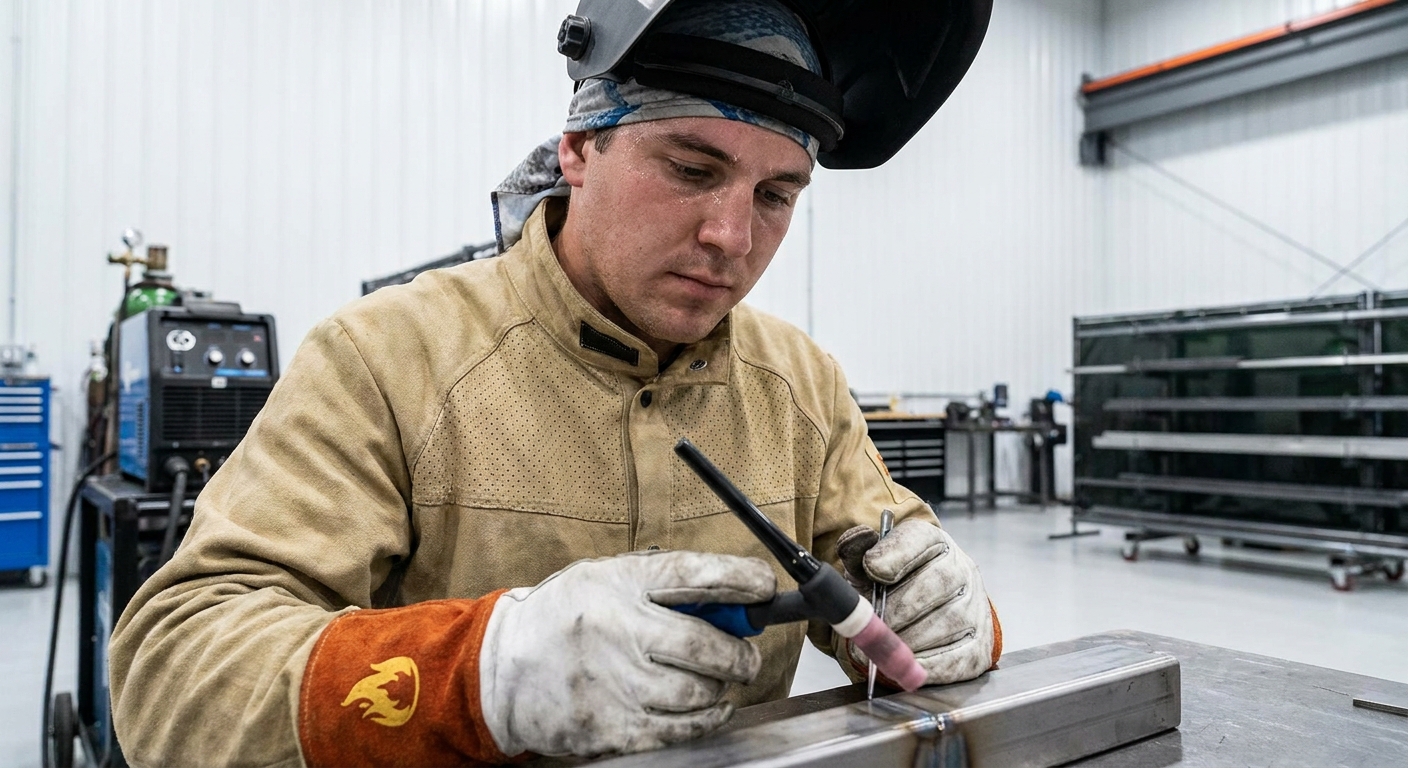
    What Welders Should Wear in Hot Weather: Cotton, FR Gear, and the T-Shirt ProblemBreathable, flame-resistant workwear is essential for maintaining safety and preventing heat stress during summer shifts.

    Changing and Caring for Work Clothes

    Hot-weather gear becomes wet, dirty, and easier to damage. Inspect garments for holes, thin spots, open seams, oil, grease, and other contamination that could reduce protection. Follow the garment manufacturer’s laundering and retirement instructions, especially for treated FR clothing.

    A clean change of clothes can also help keep shop dust and residue out of personal vehicles and living areas. Where the work involves metals or coatings that create hazardous contamination, follow the employer’s hygiene and decontamination program rather than relying on a general home-laundry routine.

    Sources and Safety Guidance

    Protective clothing should be selected through a workplace hazard assessment and matched to the size, nature, and location of the welding work.

    The Practical Rule

    Do not trade away required protection to get cooler. Match the clothing system to the actual welding hazard, then control heat with ventilation, hydration, acclimatization, appropriate rest breaks, and cool recovery areas.

    Arc Life Media Note: A welder’s lifestyle clothing belongs off the arc. Never wear athletic wear, synthetic blends, or untreated thin cotton while welding, cutting, or grinding unless the garment is specifically labeled and verified as protective workwear.

Watch with Prime Video