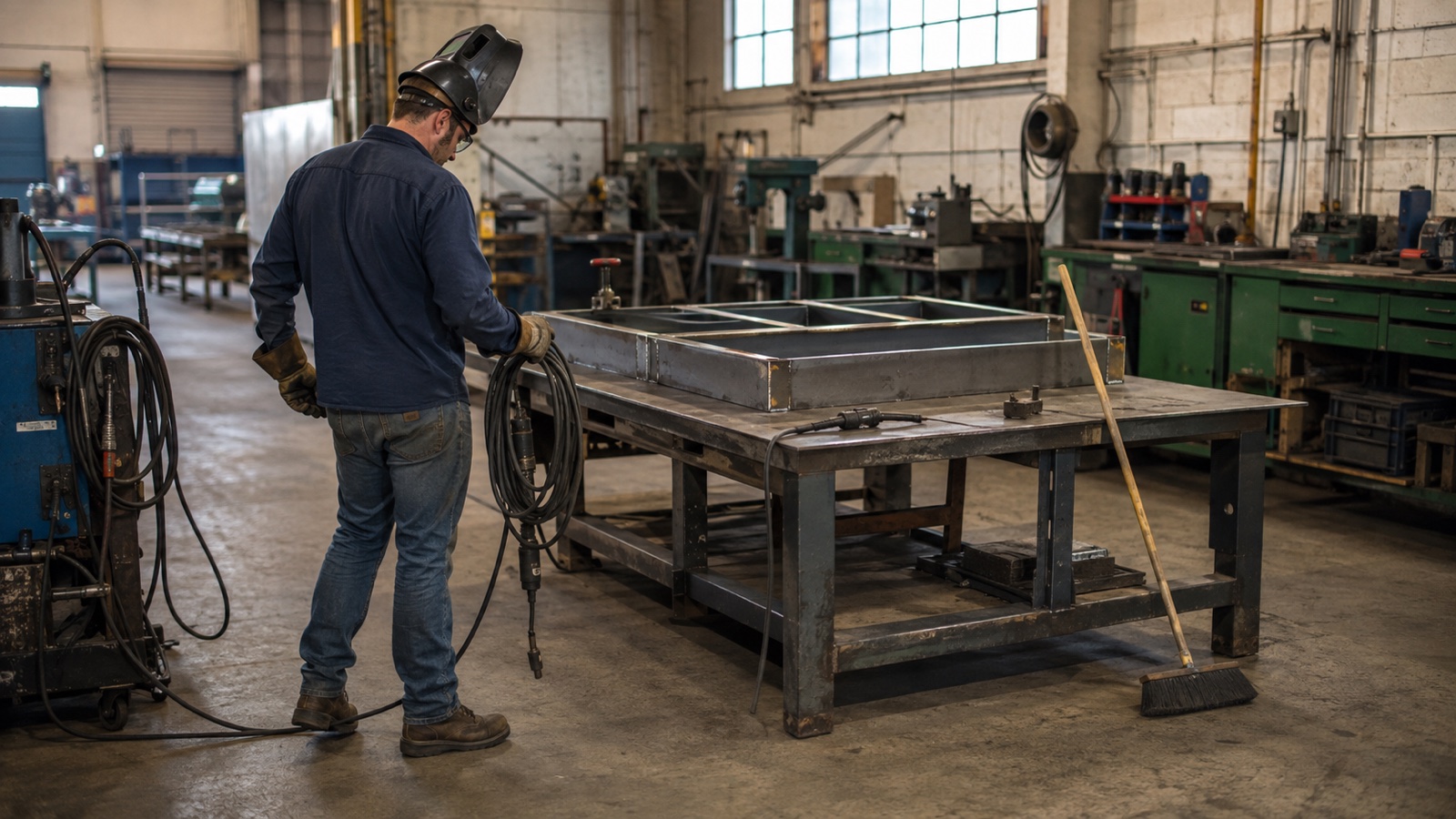
Tag: Arc Life Media

  • The Notes in the Top Drawer: How Welding Shops Keep Knowledge From Walking Out

    The Notes in the Top Drawer: How Welding Shops Keep Knowledge From Walking Out

    There is a certain kind of shop drawer that does not appear on any inventory sheet. It sticks halfway open. Inside are a few shims, a dog-eared setup sketch, maybe a sample coupon with an arrow in soapstone. To a visitor, it looks like leftovers. To the crew, it may be the shortest route to getting a difficult repeat job right.

    That drawer is not a substitute for a drawing, a current procedure or an inspection plan. It holds something different: the memory of how the work actually behaves.

    Every welding shop has knowledge like that. It lives in the order a fixture gets tightened, the place a long assembly wants to pull, the sound that says a worn positioner needs attention, and the customer detail that never seems to make it onto the print. Much of it was earned through rework, long afternoons and the occasional part that taught a lesson the expensive way.

    The risk is obvious. People change shifts, change employers and retire. If the only copy of that knowledge is in one person’s head, the shop loses more than a pair of hands when that person leaves.

    The drawing is the beginning, not the whole conversation

    Welding is often described as a hands-on trade, but the hands are making decisions all day. The U.S. Department of Labor’s O*NET description of welding work includes reading drawings and specifications, aligning parts in fixtures, checking work for conformance, detecting defective equipment or material, and monitoring for distortion. Those responsibilities meet on the floor, where the information on paper has to survive heat, fit-up, handling and production pressure.

    A drawing can define the required result. A qualified procedure can define how a weld must be made. Neither one automatically tells a new crew member that the left stop on an old fixture has a few thousandths of wear, or that a particular assembly is easier to control when the clamps come off in a certain sequence. That is not permission to freelance around requirements. It is a reason to capture practical setup knowledge alongside the controlled documents that govern the job.

    The best shop notes respect that boundary. They do not say, “This is how Joe does it.” They say what was observed: which stop was used, where the first check was taken, what moved, what was adjusted and who approved the change. A useful note can be challenged, corrected and updated. A legend cannot.

    Good handoffs happen beside the work

    Knowledge transfer becomes awkward when it is treated as a farewell project. Someone who has spent 25 years solving problems is handed a blank form two weeks before leaving and asked to write down everything important. That usually produces either a mountain of detail or a page of general advice.

    The better moment is an ordinary repeat job.

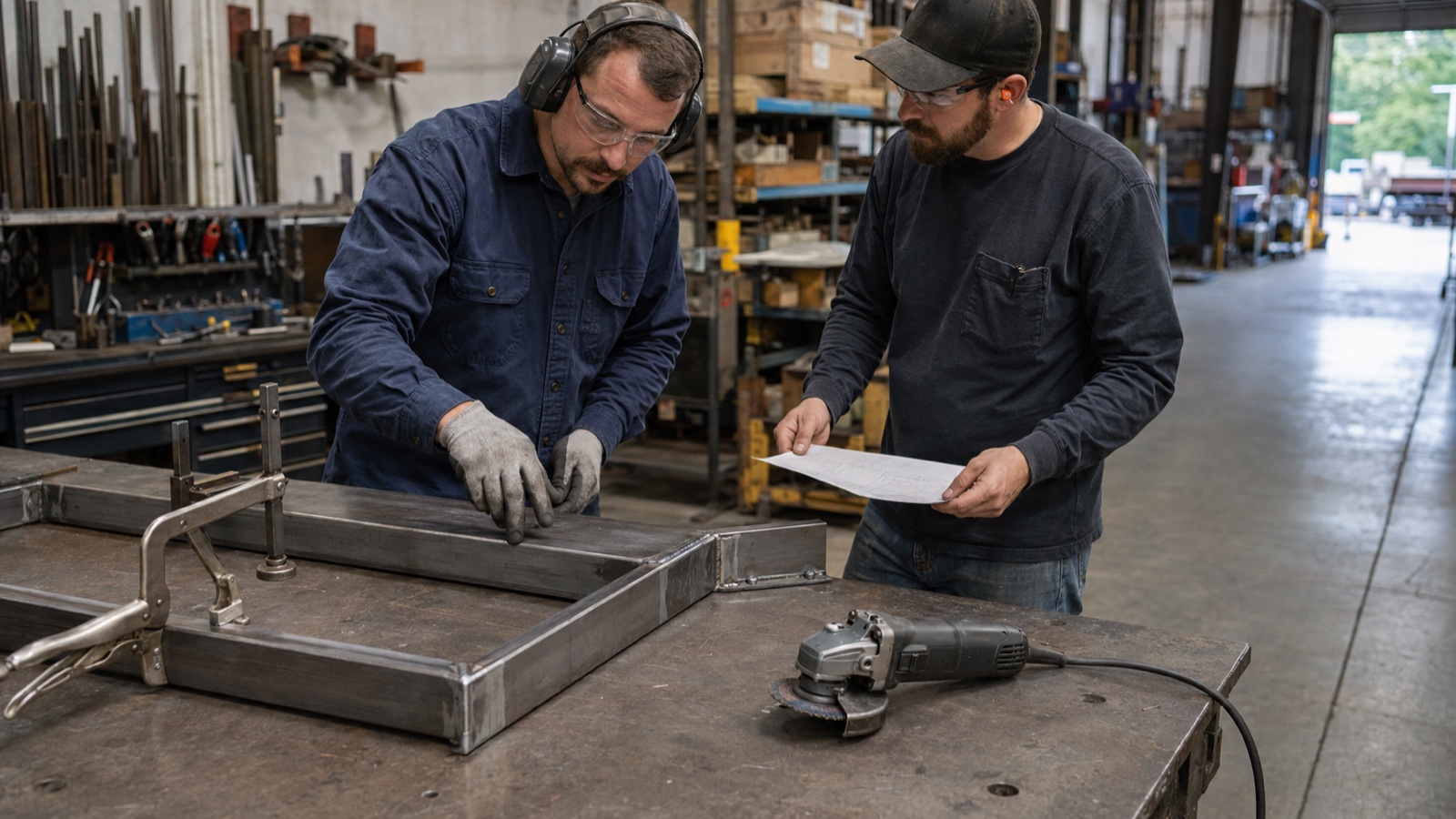
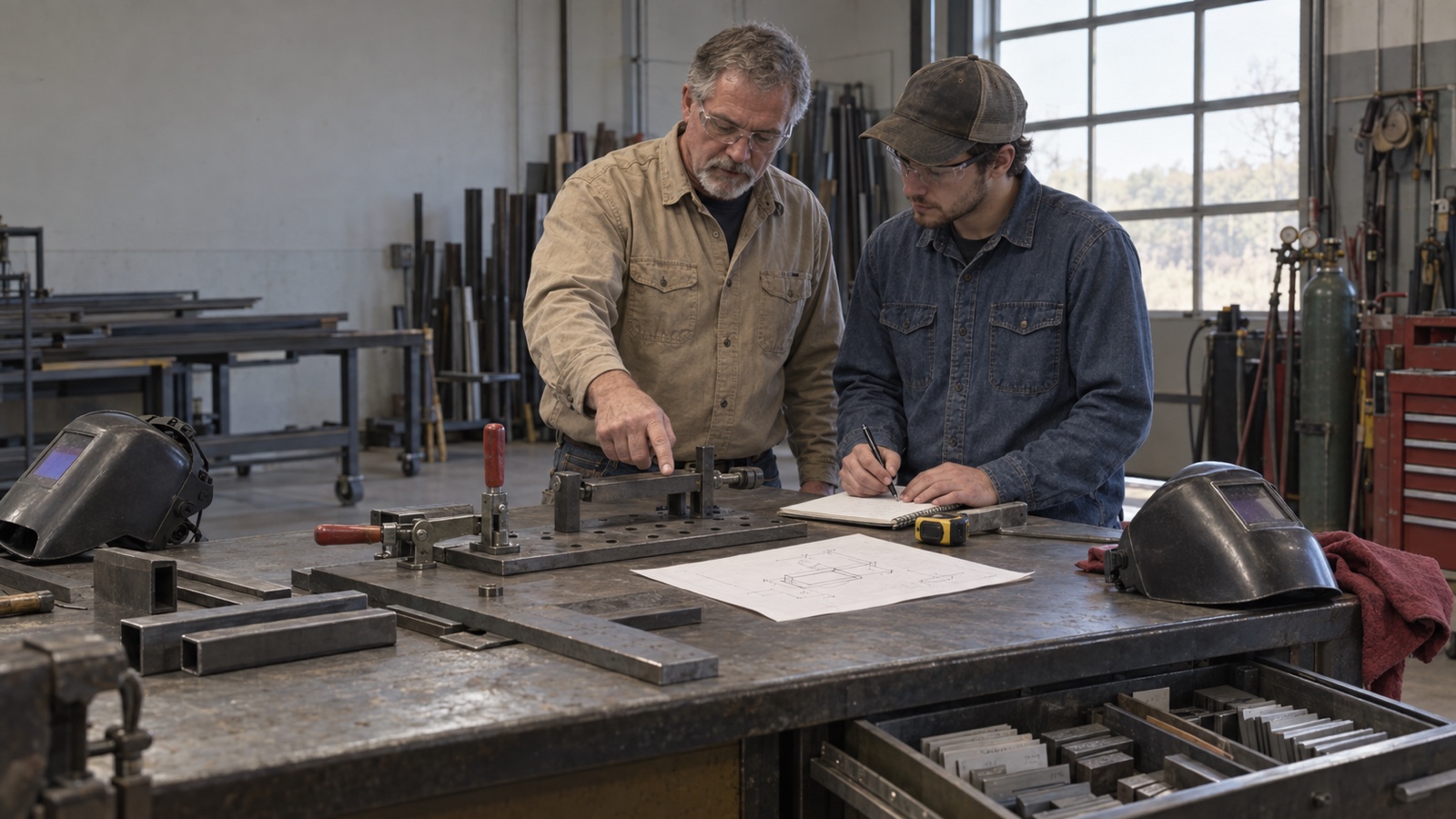
    Pair the experienced hand with the person who will likely run it next. Start with the current drawing, procedure and inspection requirements. Then watch the setup. Ask simple questions while the physical evidence is still in front of both people: Why is that stop set there? Which dimension gets checked before the part comes out? What tends to move? What changed the last time the fixture was repaired?

    The newer worker should do more than take notes. Let that person run the next setup and explain it back. If the explanation falls apart, the gap is visible while there is still time to close it. A five-minute phone video of the fixture, a photograph of the clamp order, or a marked-up setup sheet can help—but only if it is stored where the next shift can find it and dated so no one mistakes an old workaround for current direction.

    This is not nostalgia for the way things used to be. It is how a shop makes experience available to people who were not present when the lesson was learned.

    Write down the exceptions, then fix what should not be exceptional

    Experienced welders often become human routing systems. A question comes up and everyone knows which person to ask. That is flattering until the person is absent and the job stops.

    One practical way to find vulnerable knowledge is to listen for the same questions:

    • Which fixture does this revision use?
    • Where is the known-good sample?
    • Who knows the customer-specific finish detail?
    • What do we check before welding the second side?
    • Why does this machine get set up differently?

    The answers do not all belong in the same place. Some require a drawing revision. Some belong in a controlled work instruction or maintenance ticket. Some are best captured as a clearly labeled fixture note. A few may reveal that the shop has been leaning on an unofficial workaround that needs engineering, quality or safety review.

    That sorting step matters. Documentation should remove ambiguity, not preserve it forever.

    Passing it down is skilled work too

    The need is not theoretical. The Bureau of Labor Statistics projects about 40,300 welding-related openings per year, on average, from 2025 through 2035. Most are expected to come from workers moving to other occupations or leaving the labor force, including retirement. Each opening is a hiring problem. It can also be a knowledge-transfer problem.

    The National Institute of Standards and Technology’s Manufacturing Extension Partnership emphasizes structured onboarding, technical training and consistent instruction as parts of workforce development. The principle fits the shop floor: repeatable teaching is not bureaucracy for its own sake. It gives the next person a fair starting point.

    There is respect in that. The experienced worker’s hard-won judgment becomes part of the shop instead of disappearing with a final timecard. The newer worker receives more than a list of motions; they get the reasons behind the sequence and enough context to notice when conditions have changed.

    And the shop gets something stronger than a single expert. It gets a crew that can carry the work together.

    So open the drawer. Keep the useful shim. Photograph the fixture. Move the approved lesson into the right document. Throw away the note that no longer applies. Then ask the question that tells you where to look next:

    What is one piece of shop knowledge your crew would lose if the most experienced person left tomorrow?

    Arc Life is built around the people, habits and small lessons that give the trade its character. Follow more stories from the welding life and bring your own shop perspective to the conversation.
    Sources

  • The Mudroom Shift: How Welders Leave the Shop at the Door

    The Mudroom Shift: How Welders Leave the Shop at the Door

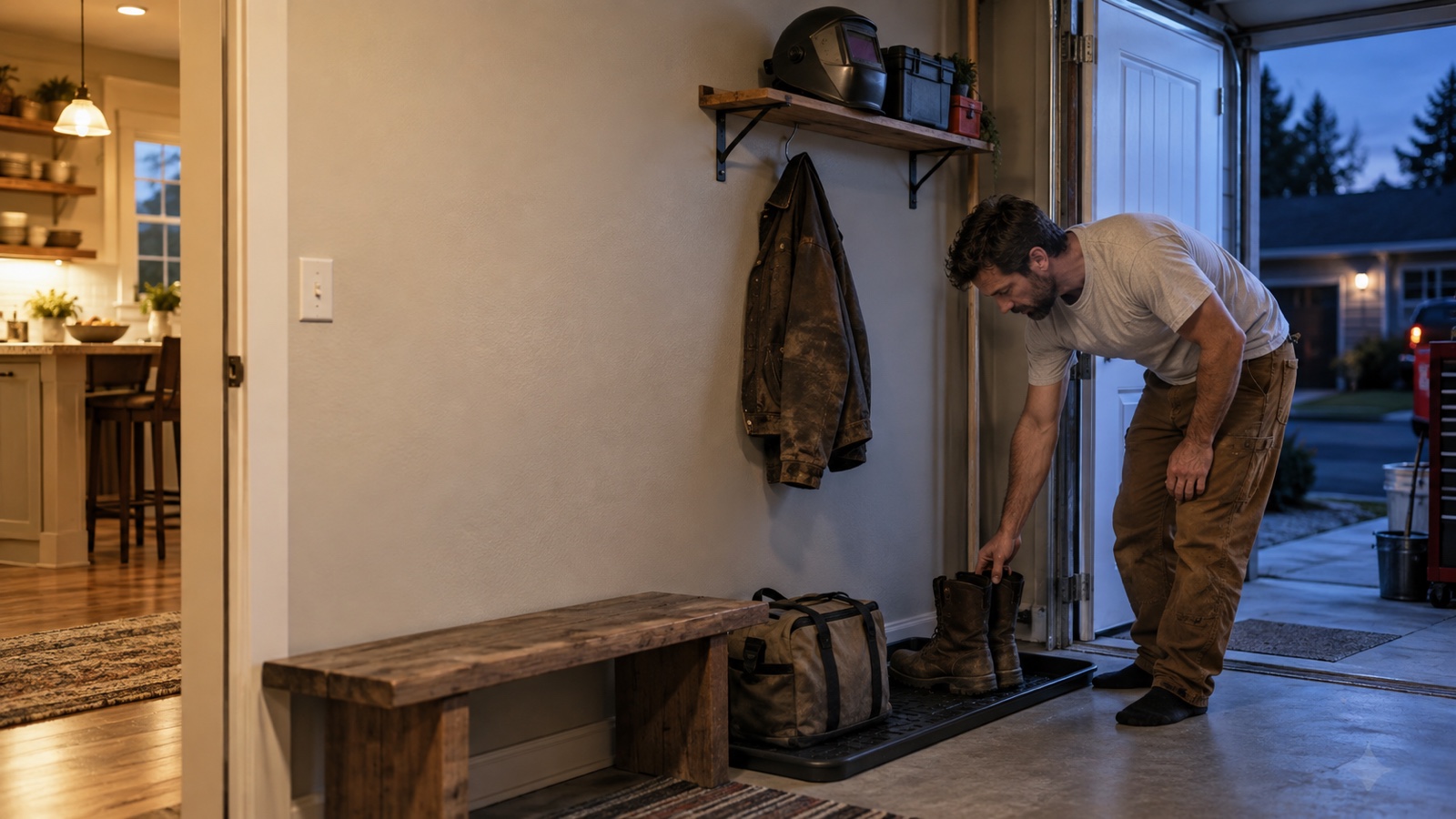
    The shop does not always end at the time clock. Sometimes it rides home in the truck: dust in the floor mat, a jacket behind the seat, the smell of hot steel still caught in the fabric. The last task of the day happens at a different threshold, where work boots meet the doormat and a welder decides what crosses into the house.

    That small routine rarely appears in a job description. It may be a hook in the garage, a separate laundry bag, a change of shoes at work or a pause at the back door. The details depend on the job, the employer’s controls and the hazards involved. The idea underneath them is steady: the shop has a place, and home deserves a boundary.

    For welding families, that boundary is both practical and personal. It protects clean space from dirty gear. It also marks the moment a shift stops asking for a worker’s full attention.

    Work has a way of traveling

    Metalwork leaves evidence. A cuff can catch grinding dust. Boot treads find every corner of a cab. A marker, tape measure or pair of gloves can migrate from the bench to the center console without anyone making a plan for it.

    Not every welding job presents the same exposure. OSHA’s welding, cutting and brazing chemical overview notes that the metals present depend on the material being worked, welding rods, fluxes and related factors; coatings and residues can change the picture, too. That is why the safety data sheet, the employer’s hazard assessment and the site’s procedures matter more than a universal shop-floor rule.

    The larger principle is well established. The National Institute for Occupational Safety and Health explains on its current take-home exposure page that workplace chemicals can travel on skin, hair, clothes and shoes and reach vehicles or living spaces. NIOSH’s first recommendation is to keep contaminants from leaving the workplace, using measures such as protective clothing, changing before departure and keeping dirty workwear separate from clean items.

    That guidance is not a reason to panic over every dusty knee. It is a reason to know what the work involves and treat the boundary deliberately. A home routine cannot replace ventilation, exposure control, training, laundering arrangements or other employer responsibilities. It is the last handoff, not the whole safety program.

    The entryway becomes a tiny piece of shop design

    Welders tend to notice systems that either work or create friction. A fixture is useful because it gives every part a home. A shadow board makes a missing tool obvious. The best mudroom routines follow the same logic.

    The dirty side and the clean side are easy to understand. There is a reliable place for boots, a place for outerwear and a place for whatever should go back to work. Clean clothes do not have to share a pile with the day’s gear. The arrangement is simple enough to follow after a long shift, not only on the day somebody reorganizes the garage.

    That last point matters. A complicated ritual will eventually lose to fatigue, groceries or a doorbell. A useful boundary depends less on a perfect-looking room than on good placement: the boot tray where a person naturally stops, the hook that can take the weight of a jacket, the container that closes, the clean change that is already in the truck or locker.

    Specific controls should come from the hazards and the workplace plan. NIOSH publishes separate, stricter instructions for workers dealing with lead, including guidance to leave contaminated tools, scrap and packaging at work and to keep work clothes apart from household laundry. Those details are for lead exposure, not a slogan to paste onto every welding job. The broader lesson is to avoid improvising once a known contaminant is involved.

    A boundary also helps the person inside the gear

    Workwear has a way of carrying identity. A broken-in jacket fits like a record of the jobs it survived. Boots reveal the floor conditions. A helmet can feel more personal than almost anything else in the truck.

    Taking those things off is not rejecting the trade. It is changing roles.

    At the shop, awareness reaches outward: the arc, the grinder, the forklift lane, the person entering the booth. At home, attention has somewhere else to go. The dog needs out. Dinner is getting cold. Somebody wants to explain what happened at school. A short, familiar transition helps the mind catch up with the body.

    Some people use the drive. Some sit in the truck for one quiet song. Some wash up, change shirts and become available the moment the work clothes come off. None of those habits proves toughness or balance. They simply acknowledge that a person can be proud of the job without asking the whole household to live on shop time.

    There is respect in that separation. The family does not get the leftover version of the welder by default. The welder does not have to perform the shift all evening. Home can be where the shoulders drop.

    The best routine belongs to the real household

    There is no prize for the most elaborate mudroom. A one-bedroom apartment, a farmhouse, a shared rental and a house with three children will not use the same setup. The right questions are more useful than a staged answer: What hazards are actually present? What does the employer provide? Where can gear be stored without mixing it into living space? What routine can the household sustain every day?

    If the answers are unclear, the employer’s safety professional, union representative or a qualified occupational-health resource is the place to start. The point is not to shift a workplace problem onto a worker’s washing machine. It is to make the line between work and home visible enough that nobody has to guess.

    So here is the community question: what is the one end-of-shift habit that tells your household—and your own head—that the shop is staying on the other side of the door?

    Arc Life follows the trade beyond the booth, into the ordinary rituals that make a working life sustainable. Find more welding culture and shop-built perspective at The Welder’s Life.

    Sources

  • Before the Hook Comes Tight: The Trust Between Welders and Riggers

    Before the Hook Comes Tight: The Trust Between Welders and Riggers

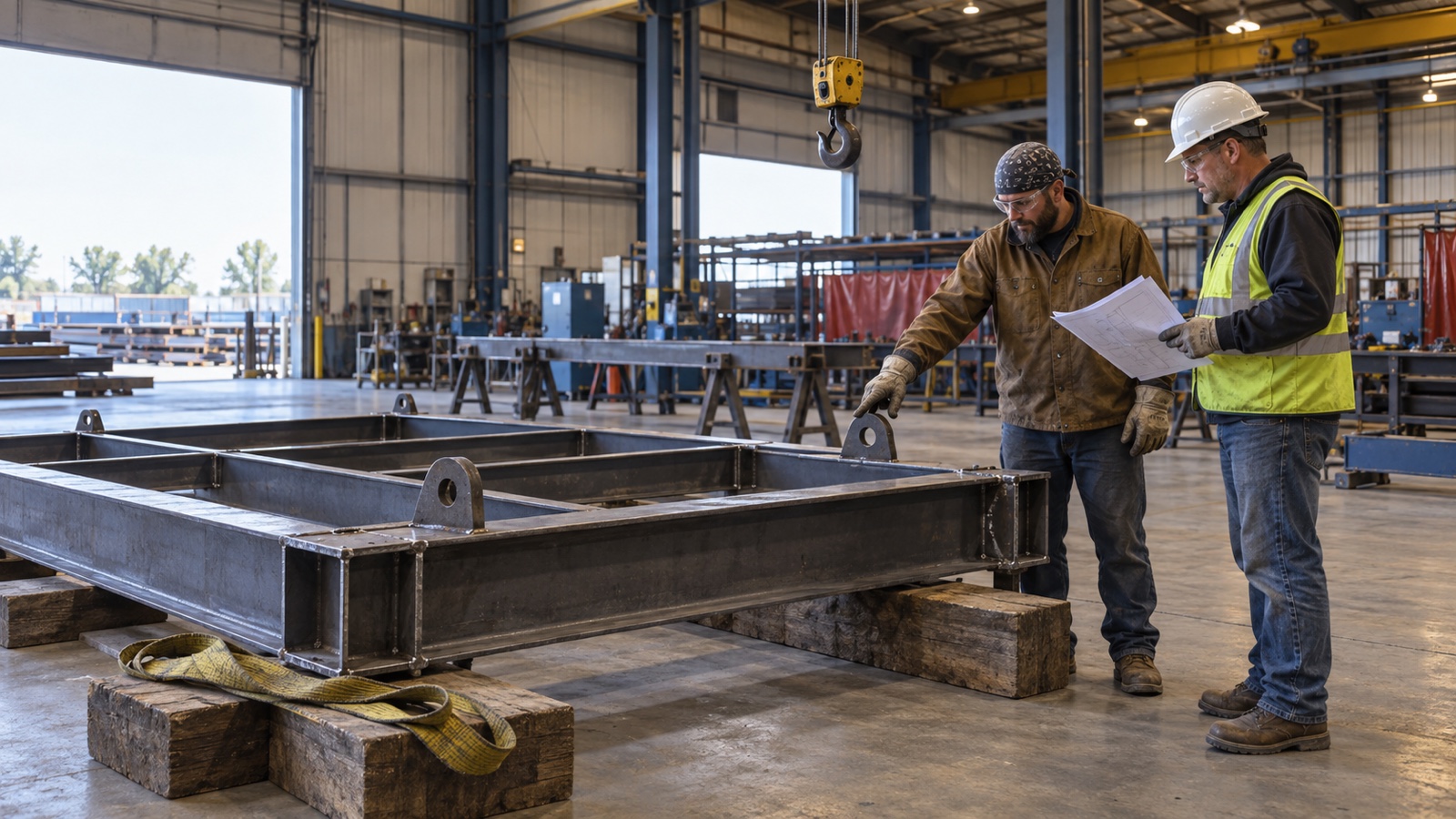
    A fabricated frame can sit on stands for days while it is fitted, tacked, squared, welded and dressed. Then the hook arrives. The room changes.

    The easy conversation thins out. One person watches the pick points. Another watches the hook. Somebody checks the travel path again. A piece that felt like a workbench problem a minute ago is about to become a moving object with weight, balance and consequences.

    That moment belongs to more than one trade. The welder knows how the assembly was built. The rigger knows how it can be handled. The operator sees the machine and the path from a different seat. A good lift depends on all three views meeting before anything leaves the dunnage.

    This is one of the quieter partnerships in fabrication. It rarely gets photographed, and it is hard to reduce to a dramatic shower of sparks. Yet the trust between welders and riggers says a great deal about how serious shop work actually gets done.

    The handoff starts before the lift

    The rigger does not simply arrive at the end and attach hardware to whatever the shop has produced. The work begins with questions the fabrication crew can help answer: Where is the weight concentrated? Is the assembly complete? Are temporary braces still doing a job? Which surfaces can tolerate contact, and which have to arrive without a scar? Is there an obvious place to control the piece once it moves?

    Those questions are not a critique of the weld. They are the bridge between making an object and moving it.

    The U.S. Department of Labor’s current O*NET profile for riggers describes the occupation across construction sites, manufacturing plants, shipyards and other settings. Its core tasks include testing rigging, selecting gear for a load, attaching loads and directing workers during hoisting. The description makes the coordination plain: this is skilled work built around equipment, judgment and communication.

    The fabricator contributes a different kind of knowledge. A drawing may show the finished dimensions, but the person who built the piece remembers the heavy end, the open side, the temporary attachment and the corner that pulled during welding. That shop-floor memory can be useful during the lift discussion. It does not replace an approved plan or a qualified person’s decisions. It makes the conversation better.

    Clear signals beat shop-floor shorthand

    Fabrication has plenty of efficient shorthand. A glance across the table can mean hold that end. A tap on a square can mean check it again. That economy is useful when everyone can see the same work at arm’s length.

    A lift is different. The operator may not share the crew’s sightline. Noise can swallow a shouted word. A familiar gesture can look like something else from a distance. The safest crews do not treat clarity as an insult to experience; they treat it as part of experience.

    Federal rules for cranes and derricks in construction draw a firm line around that responsibility. OSHA’s signal-person qualification standard requires a signal person to understand the signals being used, apply them competently, grasp relevant equipment limitations and demonstrate that knowledge through testing. Those requirements apply to the construction-crane situations covered by the rule, not automatically to every hoist in every shop. Still, the cultural lesson travels well: one clear system is stronger than a circle of people giving improvised directions.

    There is another rule worth noticing. In that same construction-crane context, OSHA says anyone who becomes aware of a safety problem must give the stop or emergency-stop signal. The authority to stop is not reserved for the loudest voice or the longest résumé.

    That principle matters because trust is not the absence of questions. Trust is knowing a question will be heard before the next move.

    The best lift looks almost uneventful

    The most memorable shop stories usually involve a save: the person who caught a bad fit before the root pass, found the reversed detail on a print or heard a bearing change tone before it failed. Those stories deserve their place. But they can make competence sound like a string of last-second rescues.

    Good lifting work is often less theatrical. The piece rises a little and pauses. Balance is confirmed. The route is already clear. People know where they belong. The operator receives one readable direction. The load reaches its next support without becoming a story anyone has to retell at lunch.

    That calm result contains a lot of invisible labor. It reflects preparation, inspected equipment, an understood plan and people willing to say they do not like what they see. It also reflects restraint. A welder who knows the assembly well still respects the rigger’s role. A rigger who knows the lift still listens when the fabricator points out something unusual in the build.

    The relationship works because neither person has to pretend to know the other’s whole job.

    What the hook reveals about a shop

    You can learn something about a shop in the minute before a heavy piece moves.

    Does the crew slow down, or does production pressure make everyone rush the handoff? Are instructions coming from one understood source? Can a newer worker raise a concern without being brushed aside? Does the fabrication team think about handling while the piece is still being built, or only after the truck is waiting?

    These are culture questions disguised as logistics. A clean bead proves that somebody controlled an arc. A calm handoff proves that several people controlled themselves.

    The work also leaves a useful reminder for welders: the finished object will have a life beyond the table. It has to be turned, coated, loaded, installed, inspected, maintained or repaired. Thinking about the next pair of hands is not extra courtesy. It is part of making something that can move through the world.

    So here is the shop-floor question: what does a good welder do during a lift that makes the rigger’s job easier—and what do the best riggers do that earns a fabricator’s trust?

    Arc Life is here for the parts of the trade that live between the formal job descriptions: the habits, handoffs and people that make a shop run. Find more of that welding culture at The Welder’s Life.

    Sources

  • The Second Set of Eyes: Why Good Welding Inspectors Belong to the Work

    The Second Set of Eyes: Why Good Welding Inspectors Belong to the Work

    The frame is finished. The last arc is quiet, the joint has cooled and two people are looking at the same weld from different sides of the table.

    One remembers the fit, the access and the way the puddle behaved around the corner. The other has the drawing, the acceptance criteria and the responsibility to make a decision that can be explained later. Neither view is complete by itself.

    In shops with a healthy inspection culture, that moment is not a showdown. It is the final chapter of a conversation that started before the first tack.

    A good welding inspector is sometimes described as the person who finds what went wrong. That misses most of the value. The better role is a second set of eyes on what the work was supposed to become—and a reliable bridge between the print, the process, the finished joint and the record that follows it.

    Inspection starts before the flashlight comes out

    The popular image of inspection is a finished weld, a bright light and a gauge. Real quality work has a longer timeline.

    Someone has to know which revision controls the job. The shop has to understand the requirement before steel is committed. Hold points, access for examination and the records that will travel with the part are easier to discuss while the work can still be arranged around them. A clear question before welding is usually cheaper, calmer and more useful than an argument after it.

    The Bureau of Labor Statistics description of quality-control inspectors is broader than welding, but its basic duties are familiar in a fabrication shop: read drawings and specifications, monitor work against production standards, inspect or measure material, accept or reject finished items and report the results. That list is a reminder that inspection is not just looking closely. It connects physical evidence to an agreed requirement.

    The same distinction matters on the floor. “I do not like that” is an opinion. “This is the requirement, this is what we observed, and this is the next decision” gives the crew something it can use. The inspector’s credibility grows when that line stays visible.

    Not every welding inspector holds the same credential, authority or assignment. The American Welding Society’s current Certified Welding Inspector program requires qualifying education and experience, a vision test and examinations covering fundamentals, practical inspection and use of a code book. That breadth is the point: welding inspection sits at the intersection of process knowledge, documents, tools, standards and judgment. A credential does not replace the job’s specific requirements, but it shows why the role cannot be reduced to carrying a gauge.

    The inspector is not the welder’s rival

    Most tension between production and inspection begins with a bad frame: one side makes the work, the other side tries to catch it.

    That may create drama, but it is a poor way to build anything. The welder and inspector are not competing for ownership of the part. They own different responsibilities around the same result.

    The welder knows details that may never appear on a final surface: where access tightened, what changed during fit-up, which area demanded a restart and where the job departed from the easy rhythm of the drawing. The inspector brings a separate discipline: compare what can be observed with the applicable requirement, document the result and keep acceptance from becoming a matter of mood or memory.

    Respect works in both directions. A welder should be able to ask what requirement is being applied without the question sounding like defiance. An inspector should be able to identify a concern without turning it into a public judgment of the person who made the weld. The strongest shops make room for both sentences: “Show me what you see,” and “Show me what the requirement says.”

    That conversation gets even better when the inspector is visible before there is a problem. A quick review of access, sequence, documentation or an unusual joint can prevent the inspector from becoming a stranger who appears only with bad news. Familiarity does not mean lowering a standard. It means the crew already knows how to talk when the answer is not the one anybody wanted.

    A rejection is information, not a verdict

    Welders care about their work. That pride is one of the trade’s strengths, but it can make a rejection feel personal—especially when the finding arrives with little explanation or in front of the whole crew.

    Good inspection culture separates the condition from the character of the worker. A finding identifies something about the work under a particular requirement. It does not summarize a career. The useful questions come next: What was observed? Where is it? What controls the acceptance decision? What disposition is authorized? Does the same condition appear elsewhere?

    The Department of Labor’s current O*NET profile for quality-control inspectors includes recording results, writing inspection reports, notifying others about production problems and recommending corrective action. Those are communication tasks as much as measuring tasks. A number without context may satisfy a blank on a form; a clear record helps the next person understand what happened.

    Acceptance deserves that consistency too. An acceptance is not a favor, and a rejection is not punishment. Both should come from the same process. When the decision is traceable, the welder does not have to guess which personality is working inspection that day.

    The second set of eyes protects the story of the job

    A finished assembly can tell several stories at once. The drawing says what was intended. The material and fit-up show what arrived. The weld carries the choices made during production. The inspection record says what was actually checked and how the result was handled.

    When those stories agree, the shop has more than a good-looking part. It has work that can be explained, repeated and trusted. When they disagree, the inspector is often the first person forced to say so out loud.

    That is not a comfortable job. It is an important one.

    The best inspectors do not make themselves the center of the work. They make the requirement clear, the evidence legible and the decision durable. The best welders do not treat a second set of eyes as an insult. They understand that pride in the trade includes work that can stand up to a fair look from somebody else.

    Who was the best welding inspector or quality person you worked with—and what made that person credible on the shop floor? Share the lesson with the Arc Life community. The trade gets stronger when the people making the work and the people verifying it can speak the same language.

    Sources

  • The First Part Is the Fixture: The Hidden Craft Behind Repeat Work

    The First Part Is the Fixture: The Hidden Craft Behind Repeat Work

    A row of matching brackets can make fabrication look easy. The holes line up. The tabs land in the same place. The parts stack neatly on a pallet as if the steel simply agreed to cooperate.

    Off to the side sits the reason: a scarred plate with two stops, a locating pin, three clamps and a handle welded on wherever it balanced best. It may be the ugliest object involved in the job. It may also contain more shop thinking than anything the customer will ever see.

    Before a crew can make the second part match the first, somebody has to decide what “the same” will mean. That decision often becomes a fixture.

    A fixture is a set of decisions made solid

    Shops use the words jig, fixture and setup with plenty of overlap. The terminology matters less here than the purpose: locate the pieces, hold the relationship and give the fabricator a workable way to repeat the job.

    That sounds simple until the real questions arrive. Which face is trusted as the reference? Where can a stop touch without landing on mill scale, a radius or a burr? Can the clamp reach without blocking the joint? Can the completed part come back out? Can a left-handed and right-handed version share the same plate, or will that cleverness make both of them harder to build?

    Each answer leaves a physical clue. A slotted stop admits that stock length varies. A removable pin recognizes that the assembly has to release. A block trimmed low enough for torch access shows that holding the part is only half the job. A fixture is not merely metal around metal. It is the fabricator’s plan for what must stay fixed while everything else happens.

    The Department of Labor’s O*NET profile for welders puts that work squarely inside the trade. Its core tasks include aligning and clamping workpieces with rules, squares, hand tools, fixtures, jigs or vises. It also lists developing templates and models from blueprint information. The arc gets the attention; the setup is part of the occupation.

    The second part grades the first idea

    A one-off setup only has to survive one conversation with the job. A repeat fixture has to answer the same questions again after the table cools, the material lot changes, another person loads it and the original builder is somewhere else.

    That is why the second part is revealing. The first part can be measured, nudged and talked into place. On the second, the shop learns if the stops are clear, if the clamp sequence makes sense and if the part can be checked without dismantling the setup. By the tenth, small annoyances have become either a dependable rhythm or a daily tax.

    Good fixture builders notice the tax early. They see the clamp handle that will hit a finished piece, the spatter pocket that will quietly change a locating surface and the pin that is just similar enough to be installed in the wrong hole. They think about the person who has to load the fixture at 6:15 in the morning without hearing the full story.

    None of that guarantees perfect parts. Material varies, heat moves things and drawings change. A fixture is a controlled starting point, not permission to stop checking. The strongest shop habit is not blind faith in the plate; it is making the intended reference obvious and keeping a practical way to verify the work.

    The principle survives automation. A National Institute of Standards and Technology roadmap on robotic assembly notes that those systems often rely on ancillary equipment such as jigs, fixtures and specialized tooling. Robots may change who loads, senses or moves the part. They do not make workholding disappear. In many cells, the quiet steel surrounding the product is still what gives the process a known place to begin.

    The fixture has a working life, too

    Shop-built tooling deserves the same basic respect as the part it supports. Locating faces collect spatter. Threads get tired. pins get swapped. Stops bend after somebody uses them as a pry point. A fixture that worked last year can return from storage with the confidence of an old solution and the accuracy of a new problem.

    Simple stewardship goes a long way: mark what the fixture is for, keep the drawing or revision connection clear, identify loose components and inspect the contact points before the next run. If the fixture has an intentional shim, offset or loading sequence, record it somewhere more durable than one person’s memory. Retiring obsolete tooling is part of the job, too; yesterday’s fixture should not quietly become today’s wrong answer.

    Powered workholding adds a different responsibility. OSHA’s resistance-welding rule says controls for automatic, air and hydraulic clamps must be arranged or guarded to prevent accidental activation. That requirement belongs to a specific equipment context, but the lesson travels: a faster clamp can create a faster pinch point. Production pressure does not move hands out of danger by itself.

    The fixture builder rarely signs the finished product. Customers do not ask to display the stop block beside the railing or the locating nest beside the machine frame. After a successful run, the tool may be leaned against a wall, rolled under a bench or cut apart for the next idea.

    Still, every matching piece carries a little of it. The spacing, the access, the sequence and the choice of reference travel forward even when the fixture stays behind.

    That is the hidden craft: making a temporary object reliable enough that someone else can do good work inside the decisions you made.

    What is the smartest shop-built fixture you have used—and what small detail made it work? Share the story with the Arc Life community. The trade is full of tools that deserve more credit than they get.

    Sources

  • The Bead Is Not the Finish Line: The Craft After Welding

    The Bead Is Not the Finish Line: The Craft After Welding

    Series: Under the Hood

    The hood comes up, the arc goes quiet, and the weld gets its first honest look. In a lot of welding photographs, that is where the story ends.

    On the floor, it may only be the point where the next craft begins.

    A nearby grinder is waiting. So are a scraper, a file, a wire brush, a deburring tool or a finishing station farther down the line. The part may need spatter removed, an edge eased, a corner blended or a surface prepared for what happens next. Another job may call for the weld to remain exactly as deposited. The difference is not a matter of which finish photographs better. It belongs to the drawing, the service, the shop process and the people responsible for accepting the work.

    That is why finishing deserves more respect than the old joke gives it. The grinder is not simply an eraser for the welder. Used with judgment, it is one of the tools that carries fabricated work from “joined” to “ready.”

    The trade does not divide neatly at the last ripple

    Welding and finishing are often spoken about as separate steps, but the work overlaps in both directions. Edges may be ground so pieces fit before welding. Slag or spatter may be removed afterward. A surface may be cleaned before another operation can begin.

    The current O*NET profile for welders makes that overlap plain. Its core tasks include grinding, cutting, buffing or bending edges to help workpieces fit, as well as chipping or grinding excess weld, slag or spatter. The federal occupation profile is useful because it describes the job people actually recognize on the floor: measuring, fitting, welding, checking and finishing are connected pieces of fabrication, not isolated job titles living in separate rooms.

    The Bureau of Labor Statistics likewise describes welders as workers who read specifications, measure parts, inspect material, join or cut metal and maintain equipment. The arc is central, but it is surrounded by decisions before and after heat enters the part.

    In a small shop, one person may make every one of those decisions. In a production plant, a part may move from fitter to welder to finisher to inspector to coating. Either way, the finished object remembers the handoffs.

    A grinder is not an alibi

    Every shop knows some version of the line about a grinder and paint making a welder what they are not. It survives because everybody has seen grinding used to disguise hurried work.

    The joke misses the harder truth: good finishing is controlled work in its own right.

    Removing metal is a decision. So is leaving it alone. A person finishing a visible rail, a painted frame, a repaired machine component or a stainless counter may be aiming at very different conditions. The correct result cannot be guessed from personal taste. A polished transition may be right on one job and an unauthorized change on another.

    That puts restraint at the center of the craft. A strong finisher knows where the tool belongs, how the surface is changing and when the job has reached the required condition. They also know when the next move is not another pass, but a question for the lead, drawing, procedure or inspector.

    That last choice matters. Speed can hide uncertainty for a few minutes. Steel keeps the evidence much longer.

    The work is read through the hands

    Finishing has its own kind of attention. The sound changes as the tool crosses an edge. Resistance shifts when it leaves weld metal and reaches the surrounding surface. Reflected light makes a low spot or an uneven blend visible. A gloved hand can follow the shape after the tool is stopped and the part is safe to handle under the shop’s process.

    None of those signals replaces the job requirements or a proper inspection. They are the close-range feedback of a person learning how material responds.

    That learning is easy to underestimate because a finished surface can look simple. The best work often removes the signs of effort along with the sharp edges and tool marks. A customer sees a clean corner. The crew remembers the awkward access, the sequence that kept the frame square and the patient minutes that made the transition feel intentional.

    This is one reason experienced fabricators notice finishers. They understand how quickly an aggressive pass can create a new problem, how long a careless scratch can travel through polishing, and how much discipline it takes to make several surfaces look like one decision.

    Familiar tools still demand full respect

    Grinding is so common that it can disappear into the background noise of a shop. The hazards do not disappear with familiarity.

    A CDC/NIOSH abrasive-wheel safety checklist points shops toward required guards on portable grinders and eye protection for abrasive-wheel operators. It also calls for checking wheel fit and the machine’s spindle speed before use. The exact tool, abrasive, guarding, clothing and protection belong to the manufacturer’s instructions, the workplace hazard assessment and the applicable rules—not to a photograph or a habit carried over from a different job.

    There is a cultural point inside that safety language. Respect for finishing includes respect for the energy in the tool. A good crew does not treat removed guards, questionable abrasives, poor positioning or a shower of sparks aimed across a shared aisle as proof that somebody is tough. It treats the setup as part of the work.

    The best finish is a good handoff

    The welder helps the finisher by leaving honest work and clear information. The finisher helps inspection by knowing which condition must be seen before it changes. Inspection helps the next operation by settling the requirement instead of leaving the crew to argue from memory. Coating, assembly and installation all benefit when the surface arrives in the condition the job actually calls for.

    That chain is not glamorous, but it is where a shop builds trust. Nobody has to pretend that every weld should remain untouched. Nobody has to pretend that grinding can rescue any decision. The crew can treat finishing for what it is: a skilled step with limits, consequences and a visible effect on the final object.

    The bead may be the moment people photograph. The part still has somewhere to go.

    Shop question: What finishing job taught you the most about restraint—and what do new welders usually misunderstand about grinder work?

    Arc Life tells the stories around the arc: the people, habits and overlooked skills that make the trade whole. Visit Arc Life for more welding culture and shop-life stories.

    Sources

  • The Tool You Put Back: How Welding Shops Build Trust

    The Tool You Put Back: How Welding Shops Build Trust

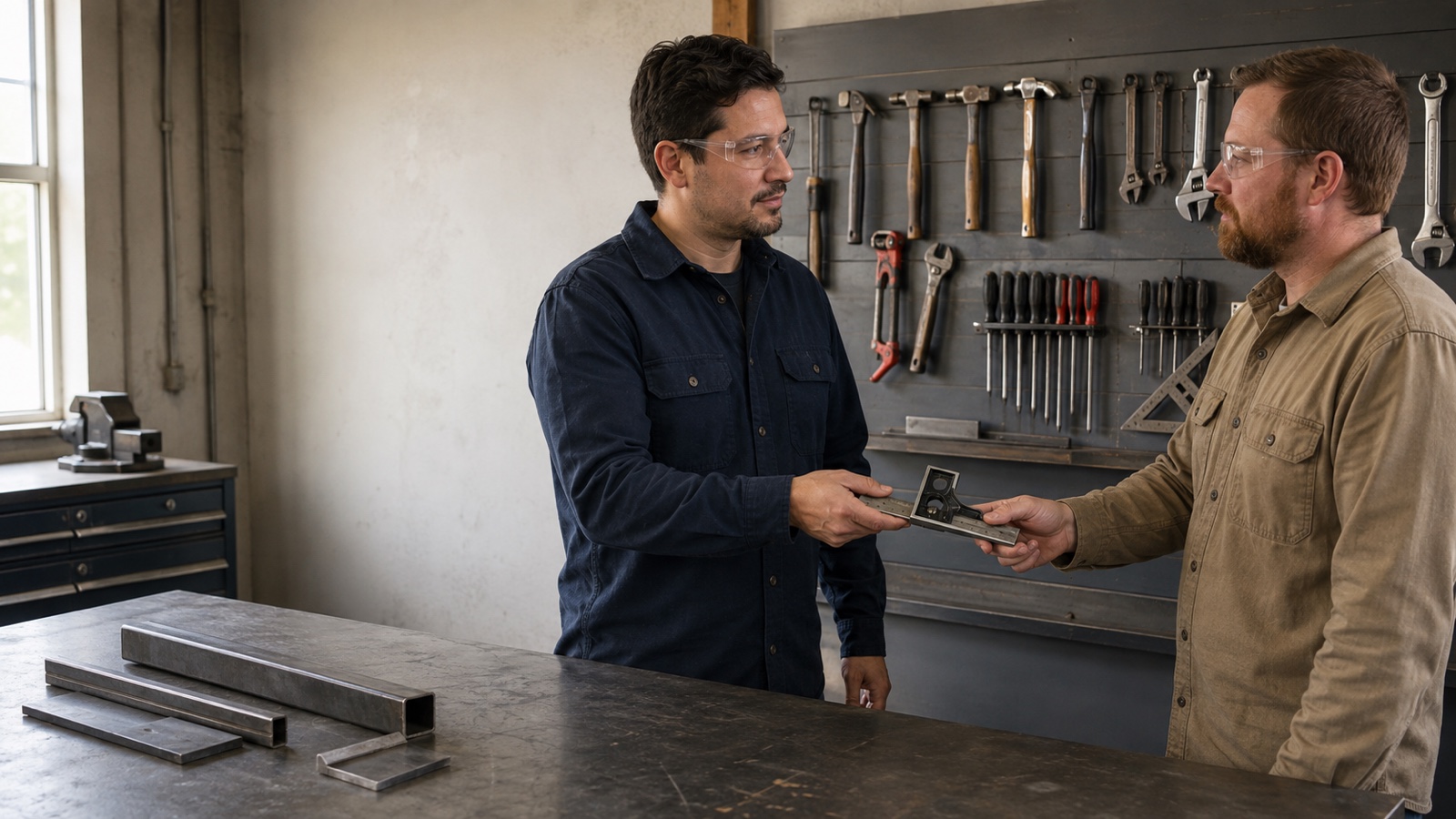
    A missing combination square rarely shuts down a welding shop. It does something more irritating. A fitter checks the table, opens the same drawer twice and looks beneath a stack of prints. Someone walks to the saw. Someone else checks the inspection bench. The job has not stopped, exactly, but useful minutes are leaking out of it.

    Then comes the question every shop recognizes: “Who had it last?”

    The answer matters less than what happens next. A tool returned to its place says the next person’s time counts. A borrowed grinder brought back with a worn wheel and no warning says the opposite. Long before a crew talks about trust in a meeting, it measures trust through hundreds of exchanges this small.

    Borrowing Is Part of the Work

    Welding is not one tool and one motion. The federal O*NET description for welders includes recognizing and operating hand and power tools, aligning work with squares and clamps, positioning pieces in fixtures or vises, detecting faulty equipment and maintaining cooperative working relationships. That list sounds formal. On the floor, it often looks like one person asking, “Can I use that for a minute?”

    Good shops make room for that exchange because fabrication is fluid. The right clamp may be at the next table. A tape gets left beside a layout. The socket needed to adjust a fixture belongs to the person working two bays over. Nobody can carry an entire tool crib on a belt.

    Borrowing is not the problem. Uncertainty is.

    If a tool has a known home, a known condition and a known route back, the exchange is almost invisible. If any of those are missing, the next task begins with a search. That search is not just an inconvenience. It interrupts concentration, makes people improvise and turns a shared resource into a private mystery.

    The Unwritten Rule Has Several Parts

    “Put it back” is the short version. The real shop rule is more exact.

    Ask before taking a personal tool. Return it to the place it came from, not to the nearest open surface. If it is dull, damaged, empty or behaving differently, say so. Do not quietly replace someone’s carefully chosen setup with the version you prefer. A precision tool, specialty clamp or modified fixture deserves more care than an anonymous shop broom.

    The rule also changes with ownership. A company tool crib, a shared fabrication cell and a road welder’s personal box are not the same system. Some shops use shadow boards and sign-out tags. Others depend on labeled drawers and a crew that has worked together long enough to know where everything lives. New people should not be expected to guess. The shop has to make the boundary visible.

    There is a useful limit to the old advice about returning a tool cleaner than you found it. Basic cleanup is courtesy. Unapproved sharpening, adjustment or calibration is not. If a tool appears unsafe or damaged, the responsible move is to take it out of use according to the workplace process and report the condition—not perform a mystery repair and slide it back into the drawer.

    Courtesy Cannot Carry the Whole System

    It is tempting to treat missing tools as a character problem. Sometimes they are a systems problem wearing a familiar face.

    If six people share one square, the square will travel. If damaged tools have no marked holding area, they drift back into circulation. If replacements require a week of signatures, people protect worn equipment because it feels irreplaceable. If every flat surface becomes temporary storage, “I left it right there” stops meaning anything.

    The federal rules draw a harder boundary than shop etiquette. Under 29 CFR 1910.242, employers are responsible for the safe condition of tools and equipment used by employees. The housekeeping requirements in 29 CFR 1910.22 call for work areas to be maintained in a clean, orderly and sanitary condition. Those obligations do not disappear because a crew has strong unwritten rules.

    A dependable shop supports the courtesy rule with a visible system: clear homes for shared tools, a place for damaged equipment, a simple replacement path and enough common tools for the work being asked of the crew. That is not bureaucracy for its own sake. It keeps a small problem from becoming a hunt, an argument or an unsafe shortcut.

    What the Habit Says About a Person

    The most trusted person in a shop is not always the fastest welder or the one with the fullest box. Often, it is the person whose movements leave the next job ready.

    They return the square. They wind the lead without trapping a kink. They tell the owner that the clamp screw felt wrong. If they moved a fixture, they explain why. None of this is glamorous enough for a highlight reel. It is still part of professional craft.

    For a new welder, this is good news. Reliability does not begin after years of experience. It begins with observable habits. Ask. Use the tool for its intended work. Notice its condition. Bring it back. Speak up if something changed.

    For experienced hands, the same rule carries another responsibility: make it possible for the new person to succeed. Point out which tools are shared, which are personal and where questionable equipment goes. A shop cannot demand an unwritten rule from someone who has never been shown the map.

    That is how a borrowed tool becomes more than a borrowed tool. It becomes a small test of how the crew treats time, equipment and one another as shared concerns.

    What is the borrowed-tool rule in your shop—and which tool is always the one nobody can find?

    For more stories about the habits, humor and people that shape the trade, visit Arc Life.

    Sources

  • The Last Clean Look: Why Fabricators Photograph Their Work

    The Last Clean Look: Why Fabricators Photograph Their Work

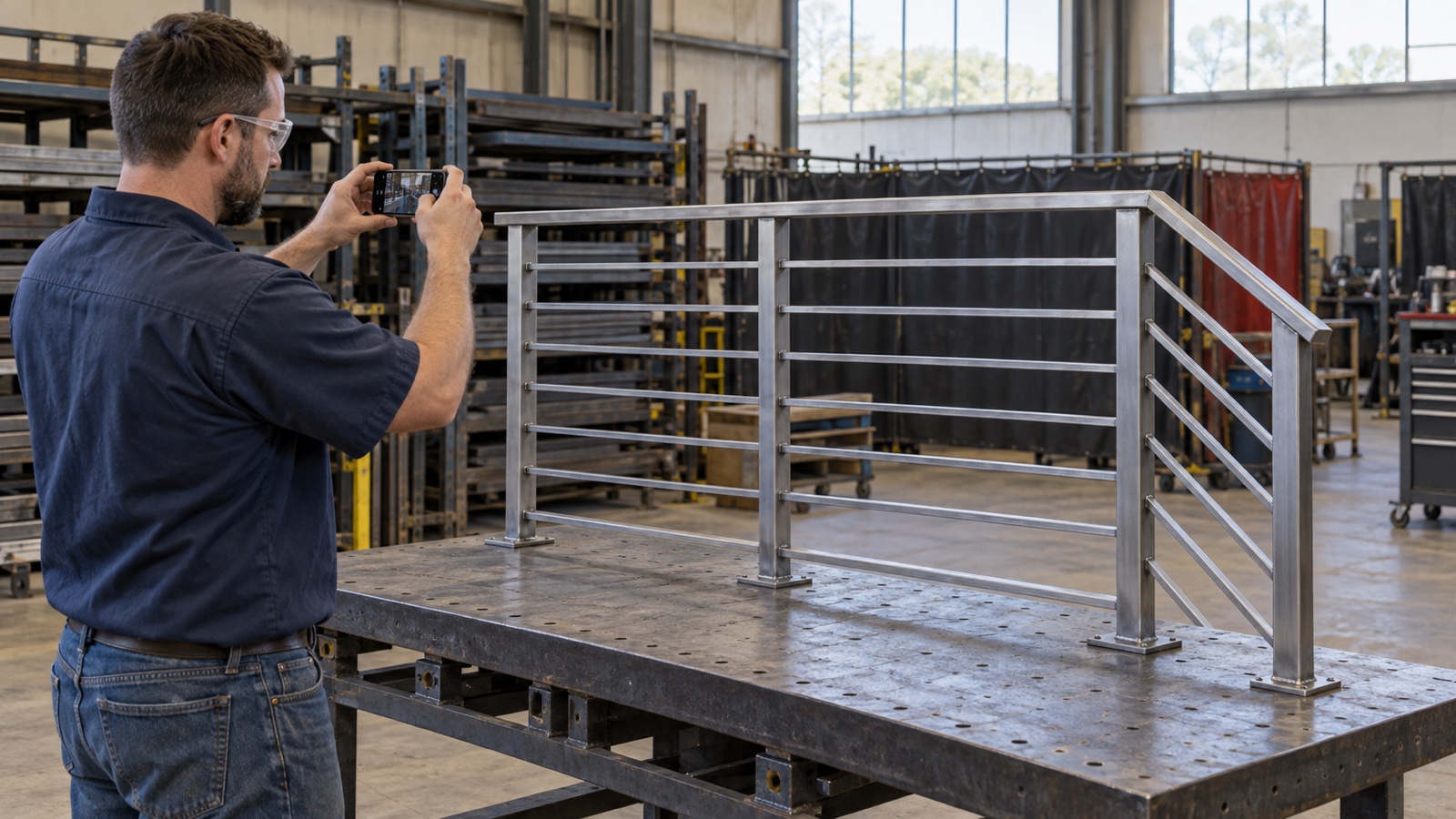
    A bare-steel railing can tell its whole story. The fit-up marks are still visible. The miters have not disappeared under primer. You can see where the fabricator had room to work, where access tightened up and how the assembly came together. Then the piece is painted, wrapped, shipped and installed. The public sees the finished rail. Much of the work that made it possible is gone from view.

    That is why a phone comes out before the job leaves the table.

    The shop photo is easy to dismiss as a little vanity: one more picture of a bead, a cart or a stair stringer headed into the camera roll. At its best, though, it does something useful. It preserves a stage of the job that will never exist again. It gives the person who made the piece a record, gives the crew something concrete to discuss and gives the trade a way to show its work without pretending the arc is the only interesting moment.

    A photograph can hold the work that disappears

    Welding is physical, but it is also an information job. The U.S. Department of Labor’s O*NET profile for welders lists examining workpieces for defects, measuring for conformance and marking material with job or piece identifiers among the occupation’s core tasks. The same profile includes communicating with coworkers, evaluating information and documenting or recording information among the broader work activities.

    That does not turn every welder into a photographer. It does explain why a useful shop picture is rarely just a beauty shot.

    A wide frame can preserve the overall arrangement. A side view can show proportion and access. A close detail can capture a joint before coating covers the edges. A final frame of the job number or piece mark can keep the images from becoming four anonymous chunks of steel six months later. None of those pictures replaces a drawing, inspection report, weld map or customer-required record. They are memory aids, not a homemade quality system.

    The distinction matters. A sharp photograph can show what was visible from one angle at one moment. It cannot establish what happened inside a joint, prove a procedure was followed or stand in for an inspection the job requires. Good shops know the difference between a useful picture and a controlled record.

    For the individual fabricator, the value is more personal. Some jobs leave before anyone has time to look twice. Months later, the photo brings back the sequence: the fixture that made the repeat parts possible, the clamp that finally reached, the order that kept the assembly from pulling itself crooked. It also captures progress. A person scrolling back through two years of work can see changes in layout, restraint and judgment that were too gradual to notice during a shift.

    The camera roll can become a teaching tool

    The best shop-photo conversations are not built around a row of fire emojis. They start with a question.

    Why was this side welded first? How did you hold that return? What would you change if the opening were two inches tighter? A finished assembly gives the question a common reference. An apprentice does not have to imagine the fit-up from a verbal description, and an experienced hand can point to a real decision without turning the conversation into a lecture.

    The same photograph can also make the invisible parts of craft visible to people outside the trade. A customer may never see the temporary bracing. A family member may not understand why a small landing took most of a day. A clean, honest frame can show that fabrication is a chain of choices—not a shower of sparks followed by a finished object.

    Old industrial photographs make the point at a larger scale. A 1942 Library of Congress image records a welder at Higgins Industries examining a bead on a steel ramp boat. The picture cannot certify the weld or tell us everything about the job. It does preserve a worker’s posture, the scale of the structure and the act of stopping to look. Eight decades later, those details still carry meaning because somebody made the frame.

    Today’s phone photo may never enter an archive. It can still preserve the working life of a shop for the people who were there.

    Take the picture without getting in the way

    There is a right moment for the camera, and it is not while someone else is striking an arc.

    Federal welding rules require protection for people adjacent to arc-welding areas through appropriate screens, shields or eye protection. They also require hot metal to be marked or otherwise identified after welding so other workers are warned. Those provisions in 29 CFR 1910.252 are a useful reality check: the photograph is secondary to the work area. Do not step around a screen for a dramatic angle, distract an operator, handle a hot part or create a trip hazard for a better post.

    The cleaner habit is simple: stop the work, make the area safe, get permission and take only the frames that have a purpose. A practical four-shot set is usually enough:

    • one wide view of the complete assembly
    • one angle that shows depth, access or proportion
    • one close detail worth remembering or discussing
    • one identifier that ties the set to the correct job, when company policy allows it

    Permission matters beyond the shop floor. Customer names, drawings, serial numbers, computer screens, addresses and unreleased projects can sit quietly in the background of an otherwise innocent picture. Company rules and customer agreements come before a personal feed. Crop deliberately, review the whole frame and ask before sharing. Keeping the photo for your own work record is not the same as having permission to publish it.

    That restraint makes the pictures better. Less clutter. Less staged drama. More attention on the object and the decisions inside it.

    The finished piece will have another life after it leaves: painted, installed, loaded, repaired, leaned on, driven over or forgotten behind a wall. The shop photo catches the brief moment when the work is complete but its evidence is still exposed. It is not proof of perfection. It is a record that someone looked closely and thought the work was worth remembering.

    What is the one job in your camera roll that still teaches you something? If you have a story behind it—not just the finished bead—bring it into the Arc Life community. The trade deserves to be remembered in more than sparks.

    Sources

  • A Welder Never Just Sees a Handrail

    A Welder Never Just Sees a Handrail

    Series: Beyond the Booth

    There is a point in learning a trade when the ordinary world stops looking ordinary.

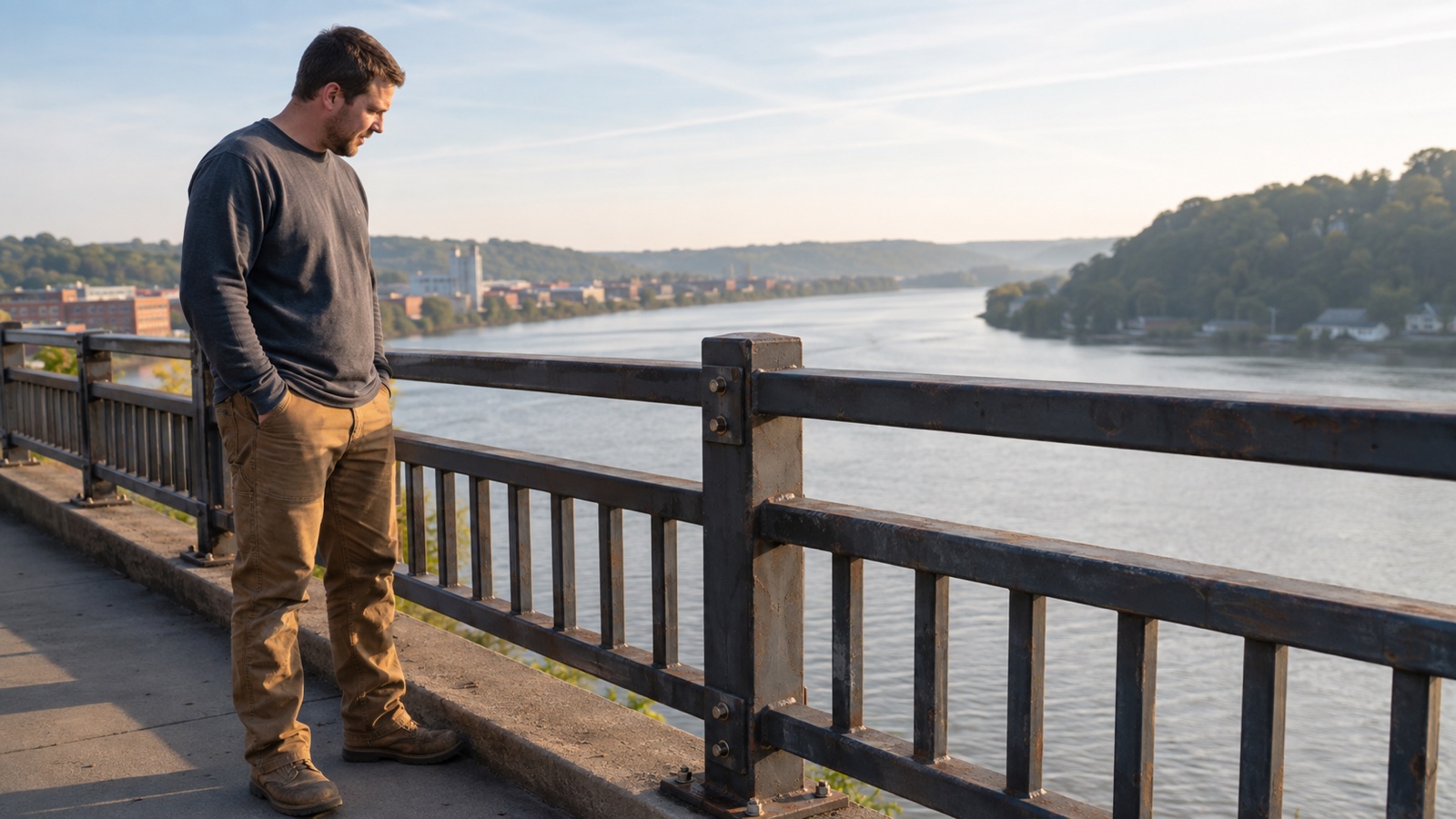
    A handrail is no longer just a handrail. It becomes tube, plate, fasteners, finish and a sequence of decisions. A trailer in the next lane carries clues about how it was laid out. A restaurant table has a base somebody had to fixture. Even a backyard gate can make a welder slow down for half a second—not to pass judgment, but to follow the work.

    This habit has no time clock. It follows people into ballparks, boat ramps, parking garages and weekend hardware-store runs. The hood is at home, yet the trade is still switched on.

    That changed way of seeing is one of welding’s quiet rewards. It can also become an annoying little talent if every family outing turns into an unsolicited fabrication review. The trick is learning how to notice the built world without pretending a glance makes you its inspector.

    First you see the object. Then you see the choices.

    Before the trade, a steel stair may register as one thing. After time in a shop, it breaks into parts: stringers, treads, landings, connections, anchors and a finish that has to survive shoes and weather. The eye starts tracing how material arrived as stock and became something people trust with their weight.

    That is not just weld watching. Fit-up leaves its signature. So does access. You can imagine the clamp that would not fit, the joint that had to be reached out of position, or the order of assembly that made one side easy and the other side miserable. A clean transition might say more about planning than the most visible bead.

    The Bureau of Labor Statistics describes welders as people who join, repair or cut metal parts and products using hand-held or remotely controlled equipment. It also notes that the work ranges from indoor production to outdoor jobs and confined areas. That breadth matters: the trade is built into far more of daily life than the dramatic spark photographs suggest.

    A welder learns to see not only the joining process, but the manufacturing problem around it.

    Good work is often the work nobody notices

    Public metalwork has a strange assignment. It must do its job repeatedly while fading into the background. A railing should guide a hand without demanding attention. A bench frame should sit square and stay quiet. A sign bracket should hold its load while everybody reads the sign.

    When those objects feel inevitable, somebody probably made a long chain of competent choices. Material was measured. Corners were handled. Distortion was managed. Sharp edges were addressed. Drainage, coating and installation had to make sense for the setting. Not every part was necessarily welded, and the visible weld is only one piece of the result.

    That is why experienced tradespeople often admire restraint. The best detail may be the one that solved a problem without advertising the struggle. The public sees a place that works. The person who has built things sees evidence of another crew thinking ahead.

    There is generosity in that recognition. Most fabricators will never meet the people who use what they made. Most users will never know who stood at the table, ran the machine, checked the drawing, moved the assembly, coated it or installed it. Trade vision restores some of those invisible people to the picture.

    Noticing is not inspecting

    The experienced eye can spot an odd transition, corrosion, damage or a detail worth a second look. It cannot establish serviceability from the sidewalk.

    Formal inspection lives inside criteria, records, access, measurement and responsibility. The American Welding Society’s Certified Welding Inspector program tests welding fundamentals, practical inspection work and the ability to use an applicable code book. For highway bridges, the Federal Highway Administration’s National Bridge Inspection Standards set qualification, training and program requirements for the people who perform and lead inspections.

    That is a useful boundary for every off-duty expert. A photograph does not reveal the drawing, procedure, material, loading, history or acceptance criteria. A smooth-looking bead is not proof of hidden quality. An ugly-looking surface is not, by itself, a complete engineering conclusion.

    If a member of the public sees obvious fresh damage or an immediate hazard, the responsible move is to keep clear and report it to the property owner or appropriate authority—not climb, strike, scrape or test the structure. Curiosity is valuable. Freelance destructive testing at the park is not.

    The mature version of shop eyes is observant and humble at the same time.

    The trade comes home with you

    This way of seeing changes conversations. A child asks how a bridge was made, and a parent who welds can explain that no single person “built the bridge.” Engineers, detailers, mill workers, fabricators, inspectors, painters, drivers, operators and field crews all left fingerprints on the result.

    It changes travel, too. Industrial towns stop looking like anonymous stacks and sheds. A ferry landing becomes a lesson in wear, water and maintenance. A farm trailer at a gas station becomes a compact history of repairs. A steel sculpture makes you wonder which parts were bent hot, which were rolled, and how the artist controlled the sequence.

    The habit can even soften shop pride. Once you start seeing how many people solve hard physical problems in public, your own process becomes part of a much larger language. Pipe hands, structural crews, production welders, sheet-metal fabricators and repair people may work differently, but they all turn decisions into objects that have to survive contact with the real world.

    There is no need to announce that knowledge every time. Sometimes the best response is simply to notice, appreciate the unknown crew and keep walking.

    The world is full of metalwork that most people pass without a thought. Learning to weld makes some of it visible. Learning the trade well teaches you how much remains unseen.

    Shop question: What everyday object do you look at differently now that you weld or fabricate?

    Arc Life follows the work, people and habits that travel beyond the booth. Read what Arc Life is about, then visit the Arc Life collection for more of the culture around the trade.

    Sources

  • The Shift Isn’t Over When the Arc Goes Dark

    The Shift Isn’t Over When the Arc Goes Dark

    Series: Shop Floor Stories

    The last arc goes out. The blue-white reflection disappears from the wall. A fan keeps turning, a steel assembly keeps holding heat, and somewhere near the time clock somebody is already thinking about the long weekend.

    But the shop is not finished just because the welding is.

    The final minutes of a shift rarely make the photograph. Nobody frames a shot of a welder returning a square, separating usable drops from trash, marking a hot piece, or writing down that a machine behaved strangely on the last joint. Yet those minutes tell the next crew what kind of shop they have walked into.

    Ahead of Labor Day, it is worth noticing this quiet part of the work. The U.S. Department of Labor describes the holiday as a celebration of workers’ social and economic achievements. In a welding shop, some of that achievement lives in the finished fabrication. Some of it lives in the condition of the floor, table and information left behind.

    Quitting time has its own sound

    During production, a shop announces itself: wire feeds, grinders bite, clamps ring against plate. At the end of the shift, the sounds get smaller. A lead slides across concrete. A drawer closes. Somebody calls out that a piece is still hot.

    These are not glamorous motions, and they should not be treated as unpaid favors performed after the clock. A proper shutdown and handoff belong inside the scheduled work. They are part of making the shift complete.

    Experienced crews understand the difference between cleaning for appearance and leaving an area ready to trust. A table can look neat while hiding a damaged lead under it. A floor can be swept while a sharp cutoff remains where a boot will find it. A machine can be silent while the next operator has no idea that the feed hesitated twice during the last hour.

    The useful question is not, “Does this booth look good?” It is, “What will the next person need to know before starting?”

    A finished weld is not always a finished area

    Hot work has a long tail. Steel does not cool on the time clock, and sparks can reach places the person under the hood never saw. OSHA’s welding standard requires fire watchers in specified higher-risk conditions and says that, when a fire watch is required, it must continue for at least 30 minutes after welding or cutting ends. That is not a universal timer for every weld. It is a reminder that the job-site plan—not impatience—decides when an area is clear.

    The ordinary floor matters, too. OSHA’s walking-working-surface rule requires work areas to be kept clean and orderly and free of hazards such as sharp or protruding objects, leaks and spills. In a fabrication shop, that language becomes concrete: offcuts do not belong in a travel path, leads should not surprise the next set of boots, and an uncertain hot piece needs the shop’s approved warning method.

    None of that turns a welder into the maintenance department or the safety manager. It does mean that a person who sees a problem owns the next honest step: make the immediate area safe within their role, then report what needs somebody else’s authority or skill.

    The handoff is written in small things

    A strong handoff does not require a speech. It often fits into a few observable facts.

    The assembly is complete through this joint. The next piece is staged here. This drop is saved for a reason; that pile is scrap. The machine fault appeared after the last changeover. The cylinder, lead, gun, torch or fixture needs attention according to the shop’s process. The metal near this mark may still be hot.

    Notice what is missing: guesswork dressed up as certainty. “It acted weird” leaves the next person with a mystery. “The wire hesitated twice on the last two starts; I stopped and reported it” gives them something real. Good crews do not pass along a diagnosis they have not earned. They pass along evidence.

    That habit is a form of respect. The next shift should not have to reconstruct the last ten minutes from a half-empty box, a moved clamp and a machine left in an unexplained state.

    The clean booth is a promise, not a personality test

    Shop culture can get foolish about neatness. One person treats a spotless bench as proof of character. Another acts as if cleanup is beneath the people who produce. Both miss the point.

    The goal is not to make every booth look identical. The goal is to leave the work understandable and the shared space dependable. A veteran may arrange tools differently from an apprentice. A pipe station will not reset like a production MIG cell. The standard is functional: hazards addressed, tools where the crew expects them, material identified, equipment concerns reported, and the next operation clear.

    That standard also protects the worker who is leaving. A written note or tag prevents an unfinished issue from becoming somebody’s foggy memory on Tuesday morning. A deliberate shutdown draws a clean line between what was completed and what still belongs to the job.

    Labor Day was built to recognize work and the people who do it. In the welding trade, the visible bead deserves pride. So does the less visible discipline that keeps a shared shop from becoming a collection of other people’s surprises.

    The arc going dark is a moment. Finishing the shift is a craft.

    Shop question: What is one end-of-shift habit that tells you the person before you cared about the crew coming in next?

    Arc Life tells stories about the people, habits and identity behind the hood. Read what Arc Life is about, then visit the Arc Life collection if you want to carry a little of that shop culture beyond the booth.

    Sources

Stream with Amazon Music