Series: Beyond the Booth
There is a point in learning a trade when the ordinary world stops looking ordinary.
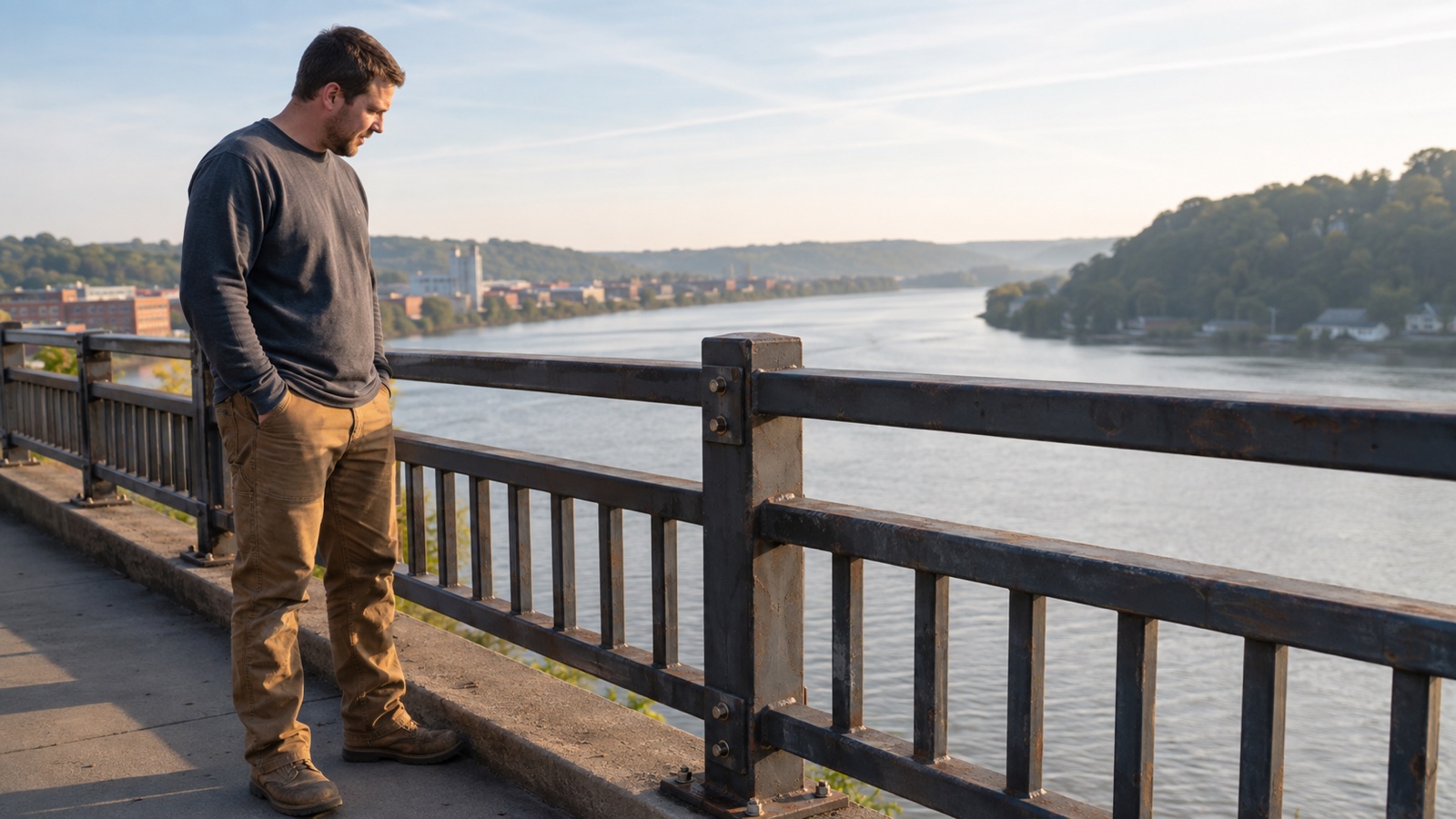
A handrail is no longer just a handrail. It becomes tube, plate, fasteners, finish and a sequence of decisions. A trailer in the next lane carries clues about how it was laid out. A restaurant table has a base somebody had to fixture. Even a backyard gate can make a welder slow down for half a second—not to pass judgment, but to follow the work.
This habit has no time clock. It follows people into ballparks, boat ramps, parking garages and weekend hardware-store runs. The hood is at home, yet the trade is still switched on.
That changed way of seeing is one of welding’s quiet rewards. It can also become an annoying little talent if every family outing turns into an unsolicited fabrication review. The trick is learning how to notice the built world without pretending a glance makes you its inspector.
First you see the object. Then you see the choices.
Before the trade, a steel stair may register as one thing. After time in a shop, it breaks into parts: stringers, treads, landings, connections, anchors and a finish that has to survive shoes and weather. The eye starts tracing how material arrived as stock and became something people trust with their weight.
That is not just weld watching. Fit-up leaves its signature. So does access. You can imagine the clamp that would not fit, the joint that had to be reached out of position, or the order of assembly that made one side easy and the other side miserable. A clean transition might say more about planning than the most visible bead.
The Bureau of Labor Statistics describes welders as people who join, repair or cut metal parts and products using hand-held or remotely controlled equipment. It also notes that the work ranges from indoor production to outdoor jobs and confined areas. That breadth matters: the trade is built into far more of daily life than the dramatic spark photographs suggest.
A welder learns to see not only the joining process, but the manufacturing problem around it.
Good work is often the work nobody notices
Public metalwork has a strange assignment. It must do its job repeatedly while fading into the background. A railing should guide a hand without demanding attention. A bench frame should sit square and stay quiet. A sign bracket should hold its load while everybody reads the sign.
When those objects feel inevitable, somebody probably made a long chain of competent choices. Material was measured. Corners were handled. Distortion was managed. Sharp edges were addressed. Drainage, coating and installation had to make sense for the setting. Not every part was necessarily welded, and the visible weld is only one piece of the result.
That is why experienced tradespeople often admire restraint. The best detail may be the one that solved a problem without advertising the struggle. The public sees a place that works. The person who has built things sees evidence of another crew thinking ahead.
There is generosity in that recognition. Most fabricators will never meet the people who use what they made. Most users will never know who stood at the table, ran the machine, checked the drawing, moved the assembly, coated it or installed it. Trade vision restores some of those invisible people to the picture.
Noticing is not inspecting
The experienced eye can spot an odd transition, corrosion, damage or a detail worth a second look. It cannot establish serviceability from the sidewalk.
Formal inspection lives inside criteria, records, access, measurement and responsibility. The American Welding Society’s Certified Welding Inspector program tests welding fundamentals, practical inspection work and the ability to use an applicable code book. For highway bridges, the Federal Highway Administration’s National Bridge Inspection Standards set qualification, training and program requirements for the people who perform and lead inspections.
That is a useful boundary for every off-duty expert. A photograph does not reveal the drawing, procedure, material, loading, history or acceptance criteria. A smooth-looking bead is not proof of hidden quality. An ugly-looking surface is not, by itself, a complete engineering conclusion.
If a member of the public sees obvious fresh damage or an immediate hazard, the responsible move is to keep clear and report it to the property owner or appropriate authority—not climb, strike, scrape or test the structure. Curiosity is valuable. Freelance destructive testing at the park is not.
The mature version of shop eyes is observant and humble at the same time.
The trade comes home with you
This way of seeing changes conversations. A child asks how a bridge was made, and a parent who welds can explain that no single person “built the bridge.” Engineers, detailers, mill workers, fabricators, inspectors, painters, drivers, operators and field crews all left fingerprints on the result.
It changes travel, too. Industrial towns stop looking like anonymous stacks and sheds. A ferry landing becomes a lesson in wear, water and maintenance. A farm trailer at a gas station becomes a compact history of repairs. A steel sculpture makes you wonder which parts were bent hot, which were rolled, and how the artist controlled the sequence.
The habit can even soften shop pride. Once you start seeing how many people solve hard physical problems in public, your own process becomes part of a much larger language. Pipe hands, structural crews, production welders, sheet-metal fabricators and repair people may work differently, but they all turn decisions into objects that have to survive contact with the real world.
There is no need to announce that knowledge every time. Sometimes the best response is simply to notice, appreciate the unknown crew and keep walking.
The world is full of metalwork that most people pass without a thought. Learning to weld makes some of it visible. Learning the trade well teaches you how much remains unseen.
Shop question: What everyday object do you look at differently now that you weld or fabricate?
Arc Life follows the work, people and habits that travel beyond the booth. Read what Arc Life is about, then visit the Arc Life collection for more of the culture around the trade.
Leave a Reply