Railroad welding is a reminder that the welding trade is larger than the work that fits on a fabrication table. Joining rail calls attention to the whole job: the rail profile, the joining method, alignment, process control, records and the railway’s requirements. The finished joint is important, but it is only one part of a system that other people must be able to trust.
This is not a guide to making a rail weld. It is a look at documented rail-welding technology and what it reveals about craftsmanship. Railway access, equipment operation, joining procedures and acceptance belong to properly authorized personnel working under the applicable railway requirements—not an improvised repair based on general welding experience.
Not every welding job begins with an arc torch
Pandrol describes aluminothermic rail welding as a process in which an exothermic reaction produces molten steel that is cast into a mould around a rail gap. Its rail-welding range includes equipment for alignment, preheating, shearing and process support. That is a different production system from choosing a wire spool and setting up a familiar shop gun.
Holland’s rail-welding work provides another example: mobile electric flash-butt welding. The existence of these different methods is a useful corrective to the idea that welding is a single hand skill performed with different brand names. The work changes, and the required knowledge changes with it.
The shape of the rail is part of the craft
Pandrol’s rail-welding documentation distinguishes standard flat-bottom rail, grooved rail and special profiles. It also describes moulds matched to the rail section. The practical lesson is familiar to any fabricator: identifying the workpiece is not administrative decoration. It changes what can be used to join it.
A photograph of a successful joint does not communicate all that information. It cannot, by itself, establish the material identification, process choice or acceptance requirement. Appreciating a rail weld means appreciating the decisions that surround it, including the decisions that are no longer visible once the job is finished.
Automation does not erase responsibility
Holland’s Intelliweld documentation describes password-protected qualified weld programs and digital records for individual welds. The recorded information includes current, force and platen position. These are specific examples of how a welding operation can combine machine control with evidence that people can review.
That does not make the operator irrelevant. A controlled program still has to be appropriate to the job, and a record still has to be associated with the correct work. Automation can change where skill is applied: less emphasis on reproducing a motion by hand, more emphasis on preparation, correct selection, monitoring and understanding when something is not right.
The useful question is not whether a machine or a person deserves credit for the joint. It is whether the complete operation is controlled and whether the responsible people have the information needed to judge the result. Treating automation as magic is no more professional than treating experience as a substitute for instructions.
Records are part of workmanship
A process record gives the next person something more useful than a verbal assurance. It can connect the physical joint to information about how it was made. That is why data capture belongs in a discussion of craftsmanship rather than being dismissed as work performed after the real work.
The same principle appears in ordinary fabrication. A clearly identified part, the correct drawing revision and an understandable inspection record make another person’s work easier to evaluate. The scale of a railway is different, but the cultural choice is recognizable: leave evidence that helps the next person, not a mystery that requires them to reconstruct what happened.
A rail joint belongs to a larger system
The Federal Railroad Administration’s 2026 Track and Structures Compliance Manual collection includes track safety, roadway worker protection and other railway subjects. Its scope is a reminder that the welding operation is not isolated from access, maintenance and the condition of the surrounding infrastructure.
This article does not summarize those rules or prescribe an inspection interval. The important boundary for readers is simpler: a shop welding qualification or a successful practice coupon should not be treated as permission to perform track work. Learn the actual role, training and authorization requirements from the railway or specialist employer responsible for the work.
Questions worth asking about the specialty
- Which rail-joining processes does the employer use, and how is training provided?
- Who identifies the rail, selects the approved process and verifies the required setup?
- How are weld records associated with the work and reviewed?
- What responsibilities belong to the welding crew, inspection personnel and railway authority?
Those questions do not replace training. They help a prospective worker recognize that the specialty is a coordinated operation, not simply a different place to strike an arc. No current job opening, wage, training duration or employment outcome is promised here.
The lesson that travels back to the shop
Railroad welding makes the less visible parts of the trade easier to appreciate. Correct identification, preparation, controlled methods and useful records are not competing with craftsmanship. They are ways of making craftsmanship repeatable and understandable to other people.
For related shop perspectives, read The WPS on the Table and The Label Follows the Weld. For welding-inspired gear and practical resources built around the trade, visit The Welders Life.
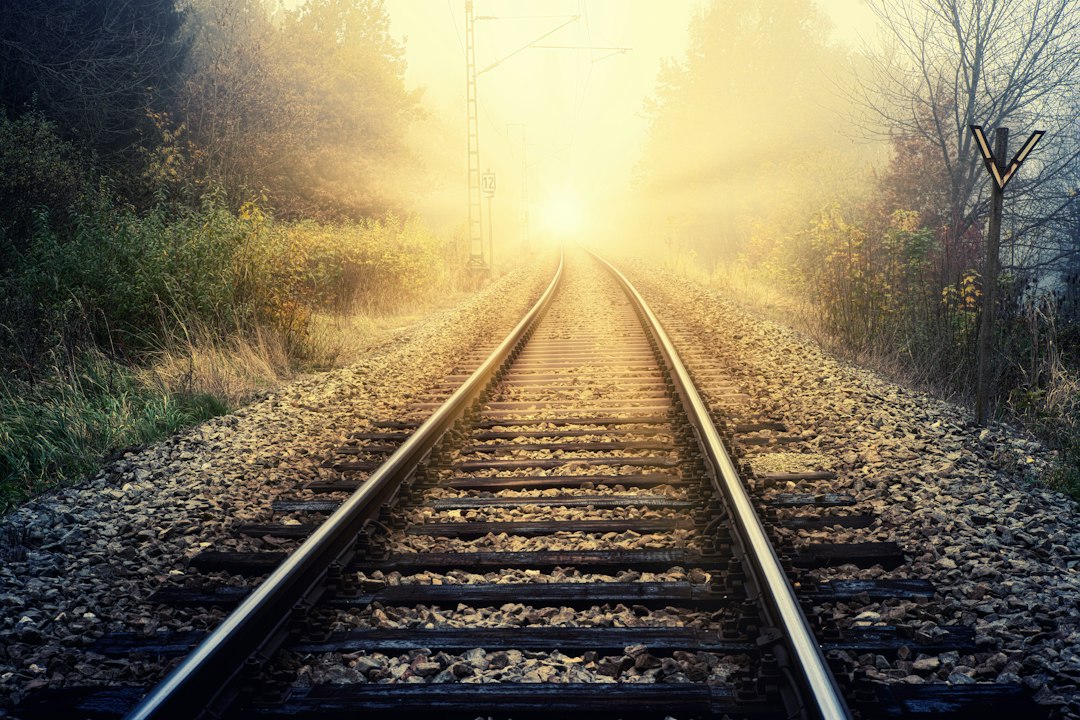
Featured photograph: railway tracks by Johannes Plenio via Unsplash. This is contextual railway imagery, not a photograph of a documented rail-welding job or a location readers are being invited to access.
Leave a Reply