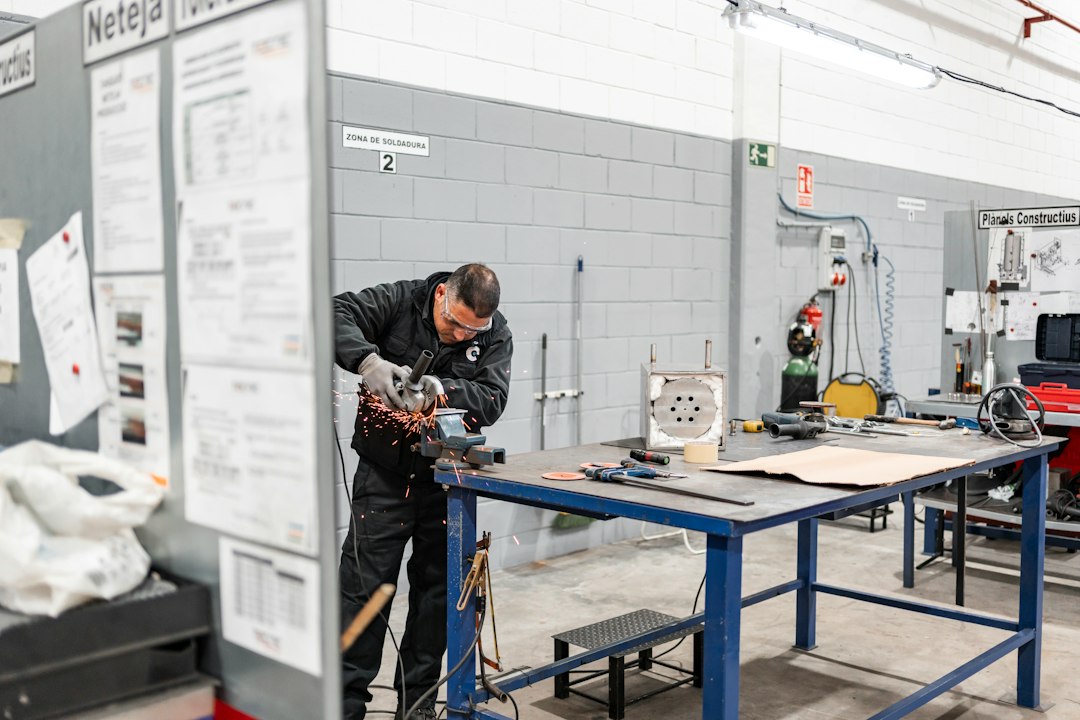
A welding procedure can look like the opposite of craftsmanship: a document full of variables, ranges, materials, positions and instructions. In practice, following a welding procedure specification is one of the places where craftsmanship becomes visible. The skilled part is not improvising around every rule. It is making good work repeatedly while staying inside the requirements that define the job.
The WPS is part of the work, not paperwork beside it
In a production shop, field crew or training booth, the WPS connects engineering intent to the person holding the torch, gun or electrode holder. It tells the welder which process and essential variables belong to that application. A strong welder still has to read the joint, control the puddle, maintain position, manage starts and stops, and recognize when something is wrong. The procedure does not replace those abilities; it gives them a defined operating envelope.
The American Welding Society’s Standard Welding Procedure Specification program makes the same principle concrete. AWS says SWPSs are developed from successful service experience and must meet the qualification rules of AWS B2.1 before approval. The value is repeatability: the procedure is not merely someone’s preferred machine setting written on a piece of paper.
Procedure discipline is a skill
There is a difference between a welder who can make one attractive bead and a welder who can make acceptable work repeatedly under a defined procedure. The second person has to control more than hand motion. Fit-up, assembly, positioning, consumable identity and the allowed setup all matter before the arc starts.
AWS’s Certified Welder program reinforces that point. During performance testing, the candidate’s ability to adhere to the WPS includes fit-up, assembly and positioning. That matters culturally because it pushes back against a narrow idea of welding skill. Craft is not just what happens after the arc is lit. Preparation and procedural discipline are part of the craft.
Good welders learn where judgment belongs
A procedure does not eliminate judgment. It changes where judgment belongs. A welder may have choices inside qualified ranges, but those choices are not permission to change a filler classification, ignore joint preparation, substitute shielding gas, alter preheat requirements, or move outside an allowed position because another setup “usually works.”
The useful judgment is recognizing the condition in front of you. Is the fit-up outside the drawing? Is the base metal different from what the traveler says? Is the consumable label wrong? Has the joint cooled below a required preheat? Is the machine behaving differently from the validated setup? Experienced tradespeople know that stopping for one of those questions can be more professional than welding through it.
The procedure also protects the handoff
Welding rarely exists as a one-person activity. Fitters, material handlers, inspectors, supervisors, engineers and the next shift all touch the work. A procedure gives those people common reference points. When a welder records the correct consumable, follows the joint details, and stays within the approved setup, the next person does not have to reverse-engineer what happened from the finished bead.
That is especially important when knowledge moves between generations. Shop knowledge is valuable, but “this is how I have always done it” is strongest when it can be connected to a drawing, procedure, manufacturer recommendation or code requirement. The document preserves the required method; experienced hands teach how to execute it well.
Craftsmanship includes restraint
One of the hardest professional habits is knowing when not to improvise. Fabricators solve problems all day, and that problem-solving instinct is part of why the trade works. But a code or customer-controlled weld is not always the place to prove creativity. Sometimes the highest-skill move is to stop, verify the procedure, and get the right answer before changing anything.
That restraint does not make welding less human. It makes the result more dependable. The welder still owns torch angle, travel, puddle control, tie-in, cleaning, sequencing within the procedure, and the ability to recognize defects or abnormal conditions. Procedure discipline simply keeps those skills connected to the job that was actually specified.
What younger welders can learn from procedure-driven shops
For a new welder, a WPS can be a practical learning tool. It forces attention onto variables that are easy to ignore when the goal is only “make a bead.” Process, filler, joint details, position and preparation stop being background information and become part of the task. Over time, that habit helps a welder separate personal preference from a requirement that belongs to the job.
For an experienced welder, the same document can keep accumulated habit from drifting away from the approved method. Experience is most valuable when it sharpens execution without quietly rewriting the rules.
A culture worth carrying forward
The best shop culture does not put procedure and craftsmanship on opposite sides. It expects both. The procedure establishes what must be controlled; craftsmanship is the disciplined, practiced ability to deliver within those controls. That combination is what lets good work survive different shifts, different hands and different years.
For more stories about the people, habits and culture around welding, visit Arc Life at TheWeldersLife.com.
Primary references: AWS Standard Welding Procedure Specifications and the AWS Certified Welder Program. This story discusses trade culture and procedure discipline; it does not create or modify a WPS.
Featured image: contextual fabrication-shop photo by TECNIC Bioprocess Solutions via Unsplash.

Leave a Reply