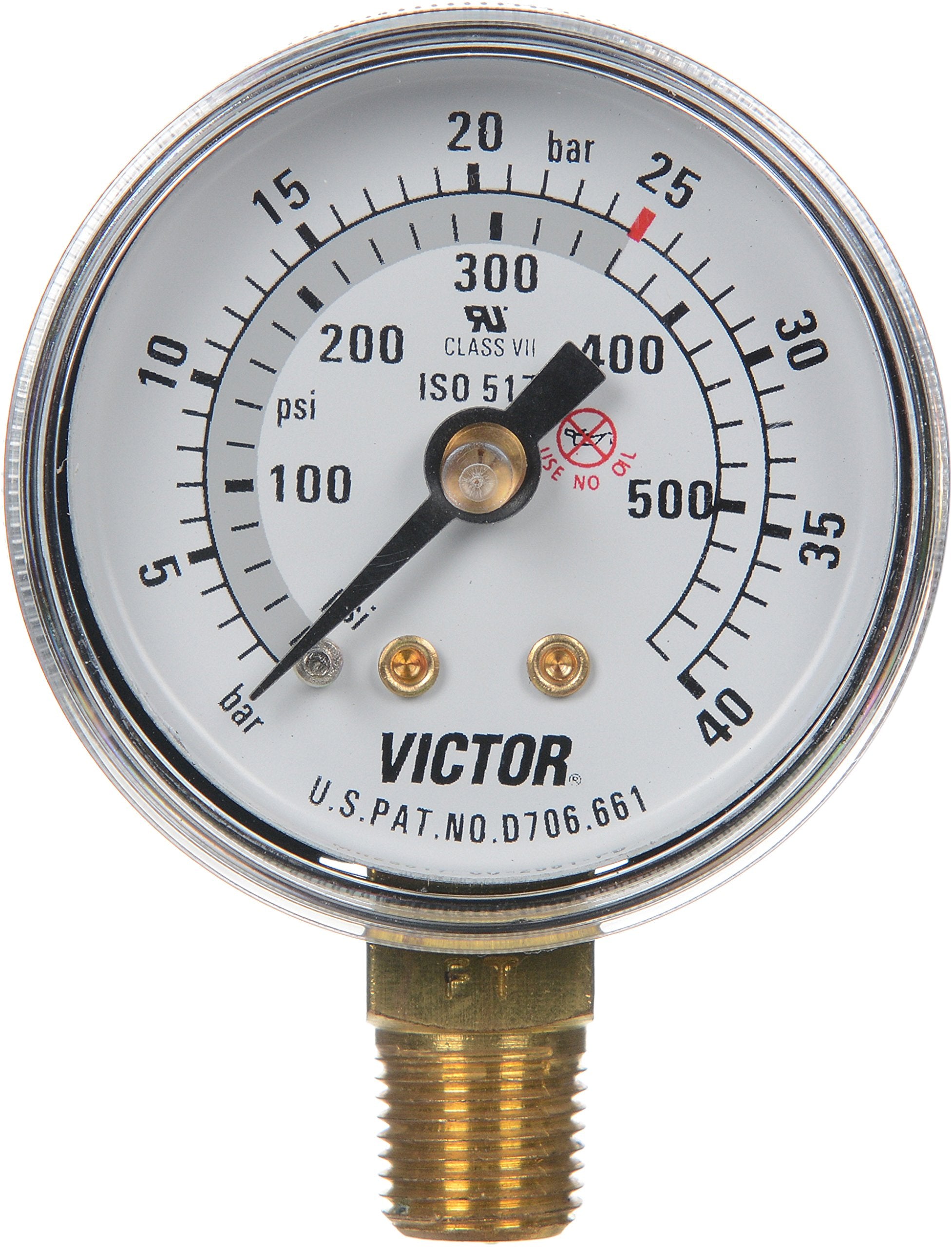

If you are replacing a gauge on an AR/CO2 gas setup, the main job is not just finding a part that looks similar. You need to confirm the pressure range, gas service, mounting style, and sealing condition before the unit goes back into use. The Victor 1435-0093RP Replacement Gauge, 1.5 25L/m(50CFH), AR/CO2 is listed as a replacement gauge for this service, but the final fit still needs to be verified against the regulator or flow device in the field.
This article is a practical buying and inspection guide for maintenance buyers, welders, and support teams. It focuses on what to check before ordering, what to inspect on arrival, and what to verify during installation.
Key Takeaways
- Confirm the gauge range and service marking before purchase.
- Do not assume thread, case size, or connection style without verification.
- Inspect for shipping damage, lens damage, pointer movement, and visible leaks after installation.
- For gas service parts, the safest approach is to match the replacement to the existing assembly details, not to the name alone.
What this replacement gauge is for
The product name indicates a replacement gauge intended for AR/CO2 use and a 1.5 / 25 L/m (50 CFH) indication. Beyond that, the exact mechanical fit, connection style, and instrument details are Unknown (Verify) from the supplied record. That means the buying decision should be based on the existing assembly, not only on the label.
If your current gauge is faded, cracked, fogged, or physically damaged, take the old part off the machine only after the regulator or flow system is isolated and depressurized. Record any markings on the old gauge body, including the scale, thread evidence, orientation, and whether the gauge is a direct replacement or part of a larger assembly.
Pre-buy checks: verify before you order
Use these checks before approving the purchase:
- Check the service gas. Verify the system is actually used for AR/CO2 service. A gauge marked for one gas application should not be assumed suitable for every gas-related use.
- Check the scale. Confirm that 1.5 / 25 L/m (50 CFH) matches the operating range you need. If your process requires a different delivery range, a visually similar gauge may still be wrong.
- Check the assembly style. Compare the failed part to the replacement location on the regulator or flow device. Inspect case diameter, mounting method, and visible connection style. If these details are not clearly identifiable from the part in hand, mark them as Unknown (Verify).
- Check the current regulator or torch system documentation. Use the machine or regulator reference data from your site records. Do not rely on memory when replacing gas control components.
- Check whether the gauge is a standalone replacement or part of a larger repair path. If the body, lens, or internal movement is damaged, the gauge may be only one part of the repair.
On-arrival inspection: check, inspect, verify
Before the gauge is installed, perform a basic incoming inspection:
- Check the lens. Look for cracks, clouding, or loose retention.
- Inspect the pointer. It should rest smoothly at its zero position when not under pressure. If it binds or sits off position, do not force it into service.
- Inspect the face markings. Confirm that the scale and service marking match the intended use.
- Verify body condition. Look for dents, corrosion, tool damage, or signs of impact from transport.
- Verify sealing surfaces. Threads, seats, and O-rings, if present, must be clean and undamaged. Replace any worn seal component as required by the assembly design.
If any of these checks fail, stop and verify the part against the existing regulator or system record before installation.
Installation support: verify fit and function
After the gauge is mounted according to your shop procedure, perform a controlled test. Use the same safe practices you would use on any pressurized gas repair.
- Open the gas system slowly.
- Watch the gauge for pointer response and stability.
- Check the connection area for leaks using the approved leak-check method used at your site.
- Verify that the gauge reading is consistent with the rest of the system and the intended flow setting.
- Close down and recheck if the pointer fluctuates, hisses, fogs, or drifts abnormally.
If the gauge behavior is unstable, remove it from service and inspect the assembly. A gauge that appears correct on the bench can still fail if the connection or sealing interface is not correct.
Troubleshooting common replacement problems
Problem: The gauge does not fit the regulator.
Check the thread, seat, and mounting pattern against the removed part. Verify the assembly number and any service markings. If the interface is not obvious, the detail is Unknown (Verify) and should be matched by the manufacturer documentation or a qualified parts source.
Problem: The pointer does not return smoothly.
Inspect for shipping damage, internal binding, or contamination. Do not tap or bend the gauge body. Replace the unit if the pointer movement remains inconsistent.
Problem: The gauge fogs or shows moisture inside.
Inspect the lens seal and housing for damage. Moisture intrusion can indicate impact damage or failed sealing. Remove from service and verify the replacement path.
Problem: The reading does not match expected system behavior.
Verify the application first. Compare the system’s actual gas use, flow setting, and regulator condition. If the system has other issues, the gauge may be reading correctly while the upstream components are not.
Safety notes
- Do not service a pressurized gas assembly without isolating and depressurizing it first.
- Do not substitute a gauge based on appearance alone.
- Do not force threads or use excess sealant unless the assembly design specifically calls for it.
- If the replacement affects gas control accuracy, have the final setup reviewed by qualified personnel before use.
Related support reading
If you are working through a broader setup or torch-related repair, these internal guides may help with adjacent inspection work:
- Lincoln Viking 3350 Welding Helmet Review and Buying Guide
- Victor 0381-1621 ST900FC Torch Assembly: Review & Buying Guide
FAQ
Is the Victor 1435-0093RP gauge a direct replacement for every AR/CO2 regulator?
No. The service label alone is not enough to confirm direct replacement. Verify the mounting style, connection details, and gauge range against the existing assembly.
What should I inspect first when the part arrives?
Start with the lens, pointer movement, face markings, body condition, and sealing surfaces. If any of those checks fail, stop and verify the fit before installation.
Can I use this gauge if the original part number is unreadable?
Only after you verify the assembly details on the regulator or system and confirm the gauge range and connection style. If those details cannot be confirmed, the fit is Unknown (Verify).
Should I rely on the product name alone when buying?
No. Use the product name as a starting point, then confirm the actual assembly requirements from the equipment in service and your maintenance records.
Sources Checked
- ArcWeld product record for Victor 1435-0093RP Replacement Gauge, 1.5 25L/m(50CFH), AR/CO2
- Provided internal links list for related support articles
Related Arc Weld Part
Victor 1435-0093RP Replacement Gauge, 1.5 25L/m(50CFH), AR/CO2
Victor 1435-0093RP Replacement Gauge, 1.5 25L/m(50CFH), AR/CO2
View at Arc Weld Store
Leave a Reply