A finished weld is not always a finished fabrication. A railing, frame, bracket or machine guard may still need surface preparation, coating, inspection, assembly and careful handling before it reaches the customer. The crew doing that work often notices details that the welding booth could not see from its own workstation. A sound handoff between welding and coating is therefore part of workmanship, not an administrative step after the “real” work ends.
The coating crew should receive the current drawing and finish specification along with a part whose required welds, edge details and inspections have been properly signed off. In return, finishers can explain which features are difficult to access, protect or coat consistently. That conversation does not mean every welder must qualify as a painter or that a coating technician can approve a weld. It means each trade can identify what its next teammate needs before the part becomes expensive to rework.

A seam has another life after welding
A weld may satisfy the approved inspection criteria yet still leave a surface with difficult geometry for finishing. A corner can be hard to reach, a narrow gap may be hard to prepare, and a required identification mark may disappear if the project has no plan for preserving traceability through the coating stages. Those are reasons to clarify the print and fabrication sequence early. They are not reasons to grind a weld below its specified contour or change a coating system without engineering direction.
AMPP’s QP 3 Shop Coating Application program identifies management procedures, quality control, specification review, surface preparation, process control and inspection as parts of professional shop-coating capability. That is a useful framework for how many handoffs a project has. It does not mean every small shop must hold a particular accreditation: contractual requirements and project scope determine what is applicable.
What the finisher wishes the weld booth knew
A finisher’s questions are often practical: which surfaces are functional, which areas require a specified finish, and whether an edge can be touched without altering a tolerance? Some surfaces are meant to be machined after welding. Others are locating faces, grounding points, labels or thread features that may need appropriate protection under the approved finishing plan. The coordinator needs to know these distinctions before a part enters a surface-preparation or coating operation.
The same applies to lifting and handling. Coated or uncoated parts may need documented lifting locations, handling protection and staging space. Decisions about weight, lifting methods and storage belong to the site’s approved safety plan and the responsible personnel. A welder can contribute by marking a potential interference point or showing where a fixture attaches; a finisher can explain where access is limited. Neither role should invent an unsupported handling method during a rushed handoff.
Questions that deserve a written answer
- Is the current drawing and revision attached to the part or job traveler?
- Are welding inspection hold points complete before a finish operation begins?
- Which surfaces, holes, threads, labels and datums must remain identifiable or protected?
- Does the coating specification call for preparation of a particular grade or profile, and who verifies that requirement?
- Have the finish color, coating system, application environment and curing obligations been approved by the project authority?
- Who owns the final inspection, packaging, transport and customer acceptance records?
A note that says “finish per print” is useful only when the person receiving the work can locate the correct print, revision and finish schedule. The best traveler is not the longest one. It is the one that tells the next trade what has been verified, what remains open and who has authority to resolve a conflict.
The craft is visible in the questions
Many strong shop habits come from people who are willing to ask questions that sound small. An apprentice might ask whether a weld can be inspected before blasting or whether an identification tag should be transferred. An experienced operator might notice that the coating booth will not have access to a recess once another component is assembled. The benefit is not a heroic last-minute save; it is a visible feedback path that helps the team correct a sequence before rework becomes normal.
WSP’s estimating-to-welding handoff guide makes the same point at the beginning of a job. The fabrication shipping-crew article describes another downstream handoff. Both are reminders that fabrication work continues through stages beyond the arc. Confirm exact URLs against the live site when using these links; if a legacy slug has changed, the job traveler should not rely on a dead reference.
Inspection is not the same as appearance
An attractive coating can hide a process defect as easily as a rough coating can draw attention to a surface that needs clarification. Finish appearance, protective performance, weld integrity and dimensional acceptance are separate requirements. A finishing crew cannot establish weld acceptance by observing a shiny final surface. Likewise, welding inspection alone cannot prove the coating met its own specification. Each discipline needs traceable evidence appropriate to its part of the job.
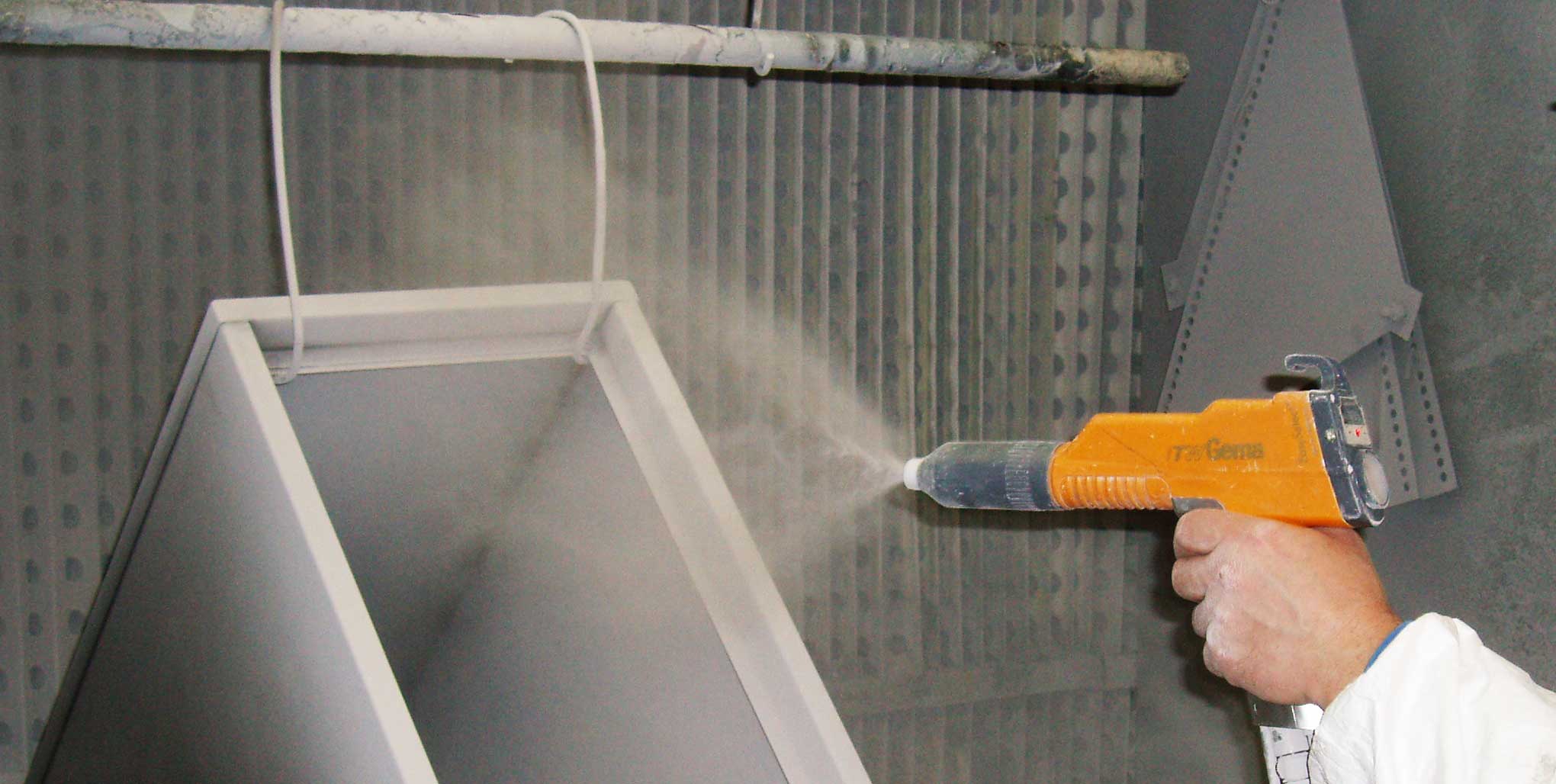
Where powder coating, liquid coating or industrial surface preparation is involved, employee training, ventilation, electrical/ignition controls and chemical-safety requirements belong to the actual site procedures and applicable regulations. The photograph above is a contextual example of powder application, not permission to reproduce the setup. Do not derive a spray distance, protective-equipment selection or curing schedule from a picture.
The best end-of-job habit
Before declaring fabrication complete, ask what happens to the part next. A short conversation with the coating lead about drawings, access, approved surface requirements and hold points often prevents confusion that the next crew would otherwise inherit. After the coating process, the same logic continues into packaging and delivery. This is the thread connecting a good shop: people protect the next person’s ability to do the job correctly.
For more perspectives on the work, people and craftsmanship behind fabrication, explore Arc Life. For material-grade questions, the WSP alloy reference and Filler Metal Finder provide separate technical starting points. They do not replace governing drawings, coatings specifications or qualified review.
Leave a Reply