A David Smith sculpture can give a welder a different reason to look closely at a piece of steel. The question is no longer only whether the joint is sound or the part meets a drawing. It is also what the joined forms make a viewer notice: a line, a gap, a familiar tool used unexpectedly, or light changing across a finished surface. Smith’s history connects those artistic questions to real industrial work.
Born in Decatur, Indiana, in 1906, Smith worked as a welder and riveter before developing his sculpture practice. The Smithsonian American Art Museum’s biography describes how he carried factory skills into constructions made from metal scraps. His career is not evidence that every fabrication job is art. It is a documented example of a trade skill becoming useful in another demanding kind of work.
Factory skills did not disappear at the studio door
The Smithsonian identifies an automobile plant as part of Smith’s early working life. Its later account of his sculpture names the Studebaker plant in Indiana. He moved to New York in 1926 and studied at the Art Students League. Welded constructions by Pablo Picasso and Julio González helped point him toward three-dimensional metal work.
That combination matters. Smith’s work was not simply a factory task moved into a gallery, nor was it an artistic idea untouched by practical experience. The record brings together training, exposure to other artists and familiarity with joining metal. For readers in the trade, it is a reminder that knowing how material can be worked can expand the questions a person is able to ask of it.
Recognizable parts became something else
Smith’s 1935 Reclining Figure offers a concrete example. The museum identifies discarded tools and metal sheet in the iron construction: piston shafts became arms, forceps became feet, and a toothed bar became a spine. It also records a rust-colored coating that changed the appearance of the metallic body.
A fabricator may recognize a component’s former purpose before noticing its new role. That double reading is part of what makes the example interesting. The material does not have to become unrecognizable to participate in a new composition. Its old shape and associations can remain visible while the arrangement asks the viewer to see something different.
This is also where sculpture differs from an ordinary repair. In a repair, preserving function may be the central obligation. In an artwork, changing what a component means can be the point. Neither kind of work excuses careless joining, but the criteria for judging the finished result are not identical.
The studio had an industrial name
According to the Smithsonian biography, Smith moved to a former farm near Bolton Landing, New York, in 1940 and named his studio Terminal Iron Works. There he worked with farm tools, machine parts and fabricated steel. The name makes the connection between studio and workshop unusually direct, without requiring an invented story about what he said at a welding bench.
The Smithsonian’s account of Agricola IV places discarded agricultural tools and machinery within a larger series. It also describes Smith arranging elements on the studio floor, joining them with tacks and then bringing the developing construction upright. The account makes composition visible as a sequence rather than a single moment of inspiration.
For a shop reader, the familiar part is the need to consider an assembly in more than one state. Parts laid out flat do not present the same relationships as parts standing upright. The comparison is about observation and planning, not permission to copy an undocumented assembly or lifting method. A historical description is not a fabrication procedure.
The finish changed the experience of the steel
The National Gallery of Art identifies Cubi XXVI, dated 1965, as stainless steel. Its description emphasizes the geometric forms and the burnished surfaces that reflect the surrounding light and color. This is a different material experience from recognizing a discarded tool inside an earlier construction.
The useful lesson is that surface treatment is not always an afterthought. In a working component, finish may be controlled by service, fit or a customer requirement. In this sculpture, the museum’s account makes reflected light part of how the object is experienced. A welded assembly can be structurally present while its appearance changes as the viewer moves.
How to look at a David Smith sculpture
Start with the museum’s own images and object descriptions rather than an unattributed social-media photograph. Look at the outline, then the openings between elements. Notice whether a recognizable component carries its old identity into the new arrangement. Compare those observations with the listed material and the account of the surface.
A photograph cannot establish weld quality, hidden connections or load paths. It can, however, support a discussion about form and material when the work is correctly identified. Keep those two kinds of observation separate. Technical familiarity can deepen appreciation without turning a distant photograph into an inspection report.
A broader place for pride in the trade
Smith’s history offers something more useful than the claim that welders are secretly artists. It shows that practical knowledge can travel. Joining, arranging and finishing metal can serve a production drawing, a repaired machine or an artistic idea, while each field keeps its own requirements. The skill gains another application without making the original work less valuable.
There is room in welding culture to respect the precise replacement part and the sculpture that changes how someone sees steel. Both can reward close attention, but they need not be judged by the same outcome. Smith’s documented path from industrial work to sculpture makes that distinction worth discussing.
For related shop perspectives, read Before the Arc and The WPS on the Table. Explore welding-inspired gear and resources at The Welders Life.
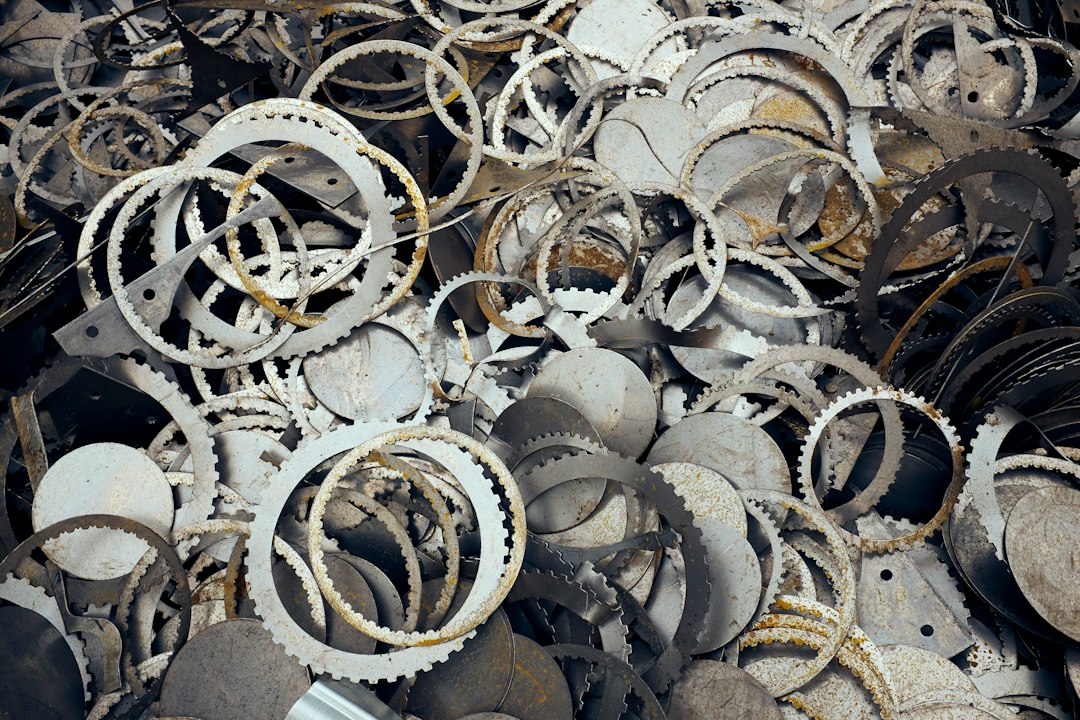
Featured photograph: scrap metal by David Hofmann via Unsplash. It is contextual material imagery, not David Smith’s studio or an image of his artwork. The museum links provide the identified works discussed above; no museum or artist-estate endorsement is implied.
Leave a Reply