A fabrication shop can lose its rhythm in two sounds: a drive motor changes pitch, then everything goes quiet.
The hood comes up. Somebody taps a control twice, even though everybody heard the same silence the first time. The cut list keeps growing. A half-finished assembly sits in the fixture, and the schedule suddenly feels less like a plan than a dare.
Then maintenance arrives.
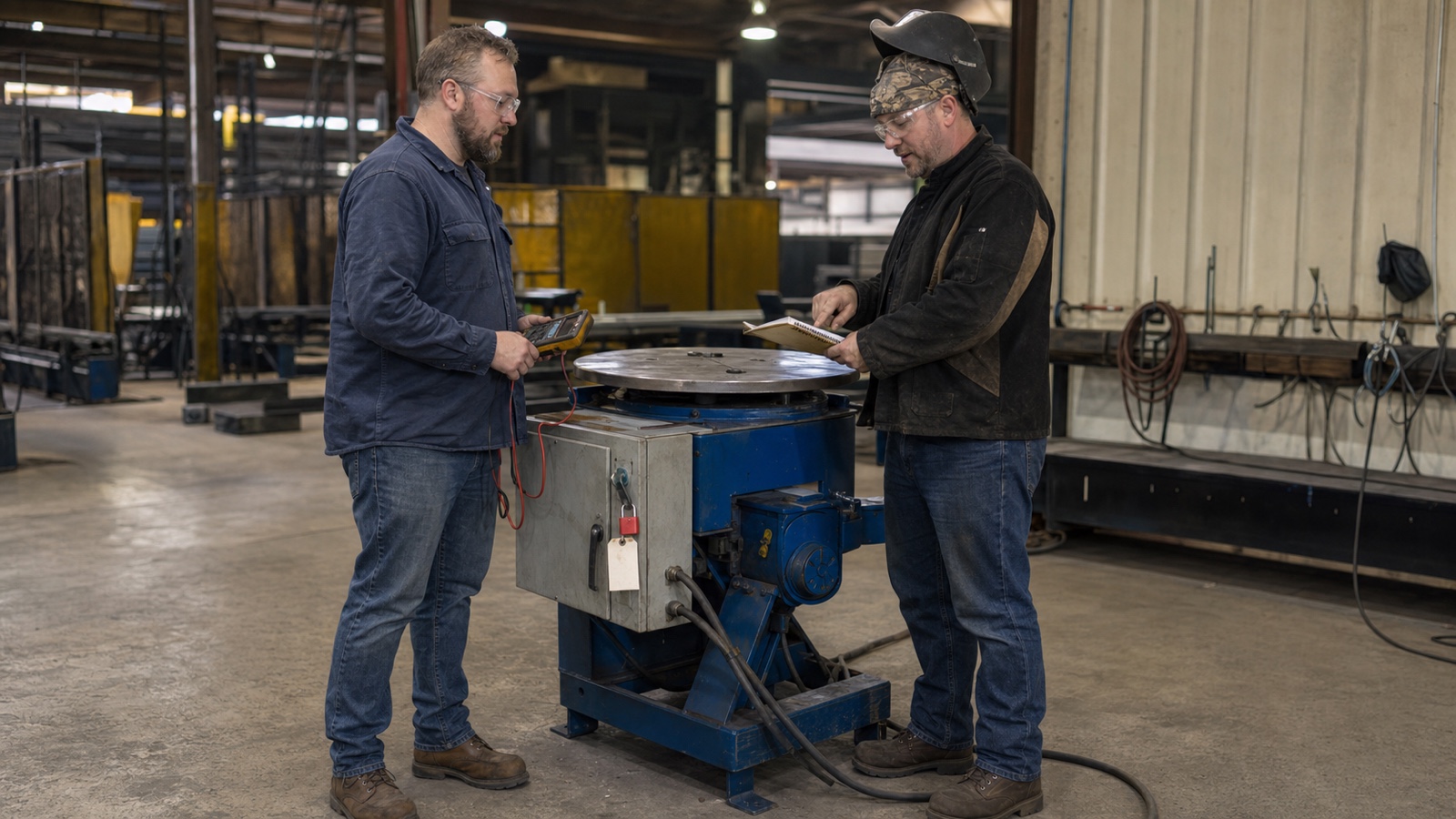
Sometimes that means one industrial mechanic with a meter and a notebook. Sometimes it is a millwright, an electrician, a controls technician, or the veteran fabricator who knows every stubborn machine in the building. In a small shop, several of those jobs may belong to the same person. The title changes. The role does not: turn a dead stop into a safe, useful answer.
The arc gets photographed. The repair usually does not. That is exactly why the people behind the repair deserve a closer look.
The breakdown has an audience
A stopped machine creates an instant crowd. The operator wants the job back. The lead wants a time estimate. Production wants to know what can move around it. Somebody is already asking if there is a workaround.
Maintenance has a different first question: what changed?
That question sounds simple, but the answer can be buried in the last hour of shop life. Did the feeder begin surging before it stopped? Did the positioner hesitate under load but run normally empty? Was the fault sudden, or has the crew been living with a new vibration for three shifts? Did anything get adjusted, struck, moved, cleaned, or replaced?
Good operators notice those details. Good maintenance people know how to separate a useful symptom from shop folklore. The handoff between them is one of the least celebrated skills in manufacturing.
The U.S. Bureau of Labor Statistics describes industrial machinery mechanics, machinery maintenance workers, and millwrights as the people who install, maintain, diagnose, adjust, and repair factory equipment. Their work can include everything from conveyors and hydraulic lifts to robotic welding systems. BLS projects employment across the group to grow 13 percent from 2024 to 2034, with about 54,200 openings a year on average. More automation does not eliminate maintenance; it gives maintenance more systems to understand.
The best repair is often the one nobody sees
Breakdown work gets the stories. Preventive work keeps stories from happening.
It is the inspection that catches a loose connection before heat makes the damage obvious. The lubrication done on schedule instead of after a bearing complains. The worn cable support replaced before it becomes a production interruption. The fan intake cleaned before dust turns a cooling problem into an expensive one.
None of that produces a heroic photo. It produces another ordinary shift, which is the real product of good maintenance.
That quiet success can make the trade easy to undervalue. If a machine starts every morning, the care behind it disappears into the background. When it stops, every minute becomes visible. Maintenance lives between those two conditions: judged by emergencies, defined by the work that prevents them.
There is craft in that work. A strong mechanic listens before reaching for a wrench. A strong millwright sees alignment in the way a machine carries load. A good controls technician can follow a fault without turning the first plausible idea into a conclusion. The habits resemble good welding: observe the evidence, respect the procedure, and do not confuse speed with control.
Help without becoming the repair
Operators and welders can make maintenance faster without pretending to be maintenance.
Start with the last known good cycle and the first bad one. Keep the failed part, fault code, or odd sample available if the shop’s procedure allows it. Clear carts, scrap, leads, and personal tools from the access area. Say what was changed before the failure, including the quick adjustment that seemed too small to matter.
Then give the authorized person room to work.
That boundary is not shop politics. OSHA’s control-of-hazardous-energy standard requires an energy-control program when servicing could expose employees to unexpected startup, energization, or stored energy. The standard calls for isolation, documented procedures in covered situations, employee training, and verification that isolation and de-energization have actually been achieved before work begins.
A red lock is not an invitation to ask, “How long will it be?” from inside the work zone. It is a line.
The same goes for guards. OSHA requires guarding against hazards such as points of operation, ingoing nip points, rotating parts, flying chips, and sparks. A removed guard, bypassed interlock, or improvised reach-around is not a clever way to save a shift. It transfers the problem from production to somebody’s body.
The most useful thing a welder can bring to a repair is not a shortcut. It is accurate information and respect for the person who owns the procedure.
A shop remembers what it reports
There is one more handoff after the machine runs again: what did the shop learn?
If the same cable keeps getting crushed, the same dust path keeps plugging, or the same fixture impact keeps knocking something out of line, the repair is not the whole story. Recurring failures are the shop talking about layout, training, housekeeping, protection, or the way production is being asked to flow.
That is where maintenance culture becomes shop culture. The operator reports the early warning instead of nursing it through one more part. The lead protects scheduled service instead of trading it away every week. The repair gets documented clearly enough that the next shift does not have to rediscover it. The crew stops treating the mechanic as the person who appears after bad luck and starts treating maintenance as part of how good work gets made.
The next time a machine returns to its normal hum, notice the handoff behind it. Somebody listened to the operator, controlled the hazards, found the cause, and returned the equipment to the crew. The arc may be the visible part of the trade, but it depends on a lot of skilled work that happens before the hood drops.
Who keeps your shop moving—and what is one habit your crew has learned that makes maintenance easier? Give that person, or that habit, its due.
Arc Life tells the stories of the people and routines that make welding culture recognizable. You can also visit the Arc Life collection, but the point here is simpler: the person who gets the machine running belongs in the story of the work.
Leave a Reply