If your main requirement is “fits under my hood,” the LPR-100 is one of the few half masks designed specifically around that constraint. The filter layout stays tight to the face to reduce interference with the helmet shell and bib.
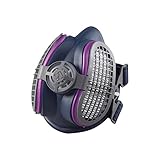
- Comfortable Breathing Experience: Breathe easier with Miller LPR-100 Half Mask Respirator with Nuisance & OV Relief; Our respiratory mask with carbon filters helps to minimize your exposure to harmful substances while reducing breathing resistance
- High Filtration Power: Our P100 respirator mask with filters boast an impressive 99.97 percent filtration of airborne particles, including oil-based & non-oil-based aerosols; From solid dust particles to metal fumes and mists, we’ve got you covered
- Low-Profile Design: Maximize your field of vision without sacrificing safety; Our low-profile welding respirator mask won’t interfere with your protective eyewear; Lets you work without interruptions so you can focus on amping up your productivity
- Ergonomic Half Mask Respirators: Engineered to fit under most welding helmets & our Weld-Mask 2, our filter mask’s design helps reduces heat buildup & user fatigue with minimal dead air space; Keeps you comfortable while maintaining its efficiency
- Safety You Can Trust: Crafted with medical-grade materials, our half face respirator P100 mask is free of latex & silicone to ensure that it is odor-free & non-allergenic; Wrap-around spark guard protects filter media from sparks & other debris.
Last update on 2026-10-20 / Affiliate links / Images from Amazon Product Advertising API
Manufacturer-sourced specs (verify exact variant/size)
- Filter type: P100 particulate filter
- Filtration efficiency: 99.97% (P100 class)
- Design intent: low-profile to fit under most welding helmets
- Sizes: S/M and M/L (choose for seal, not “what you usually wear”)
Best for
- MIG and stick welding in shops where you need a practical under-hood solution
- Anyone who keeps abandoning bulky respirators because they won’t clear the helmet
Watch-outs
- Fit is everything: do a seal check every time you don it. If it leaks, it doesn’t matter what the label says.
GVS Elipse P100 (SPR457 M/L)
The Elipse is popular for one reason: it’s compact. The filters sit close to the cheeks, which can reduce the “mask hits the hood” problem compared to many cartridge-style respirators.
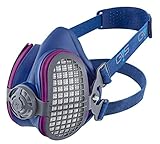
- This mask is recommended for dust and fumes containing substances such as micro-organisms, marble, gypsum, titanium oxide, soapstone, rock wool, wood, detergents, textile fibres, spices, salt, animal feeds, etc.. Protects against dust that can cause lung disease. In particular, protects against coal, silica, cotton, iron ore, graphite, kaolin, zinc, aluminium dusts. Protects against harmful dusts such as asbestos, bauxite, coal, silica, iron, and against toxic dusts.
- Extremely lightweight and compact to give the wearer as much comfort as possible. It offers a full range of vision without interfering with other eye or ear protection which users are required to wear.
- Low breathing resistance to reduce the risk of user fatigue and to add additional comfort. Filters last up to 5 years and can be easily replaced.
- Made from soft thermoplastic odorless elastomer that is hypoallergenic (without latex and silicone) and an easy-to-adjust headband
- NIOSH Approval number: P100 TC-84A-6949. Elipse P100 respirator has met the requirements of 42CFR84 (Code of Federal Regulations).

Last update on 2026-10-20 / Affiliate links / Images from Amazon Product Advertising API
Manufacturer-sourced specs (verify exact model)
- Approval: NIOSH P100
- Intended protection: harmful dusts and metal fumes (per manufacturer wording)
- Filter type: pleated HESPA P100 style (manufacturer terminology varies by region)
- Form factor: compact twin-filter half mask
Best for
- Tight-clearance helmets and welders who need a slim profile for fitment
- Grinding + welding workflows where you want one compact half mask (with correct filters)
Watch-outs
- Comfort is user-specific. If the seal pressure points you, you’ll stop wearing it—size correctly.
3M 7502 Half Facepiece (7500 Series)
This is the “build a system” option. The 7500 series facepiece is known for comfort, and the bayonet connection opens up a wide range of 3M filters/cartridges—useful if you switch between particulate-only and nuisance/OV situations (based on your hazard assessment).

Last update on 2026-10-20 / Affiliate links / Images from Amazon Product Advertising API
Manufacturer-sourced specs (series-level; verify exact configuration)
- Facepiece material: silicone
- Connection: 3M bayonet-style filter/cartridge interface
- Suspension: drop-down style (helps doff without removing hard hat/hood in some setups)
- Size: 7502 = Medium (in the 7500 series sizing)
Best for
- Welders who prioritize comfort and want flexible filter options
- Shops standardized on 3M cartridges/filters
Watch-outs
- Cartridge/filter choice changes profile. Some combinations will fit under a hood; some won’t. Keep it low-profile if “under helmet” is the goal.
TOP PICK (plain text callout)
TOP PICK: Miller LPR-100 Gen II — If your #1 requirement is “fits under my welding helmet,” start here. It’s purpose-built around low-profile clearance, which is the usual deal-breaker with half masks.
Buying Guide: how to choose a respirator that fits under a welding helmet
- Prioritize seal over brand
A perfect “under-helmet” shape that leaks is a fail. Choose the size that seals on your face, then solve clearance. - Keep the filter profile tight
Under-hood fit usually fails at the cheeks. Compact filters (or low-profile P100 designs) reduce helmet interference. - Match filters to the job (don’t guess)
- Welding fume and grinding dust often point you toward P100 particulate filtration.
- If you have solvents/paint/cleaners in the area, you may need additional cartridge capability (follow your shop’s safety program).
- Don’t ignore ventilation and capture
A respirator is not a substitute for fume extraction. If you can add local capture, do it—less exposure, less filter loading, better visibility. - Do a quick fit check every time
Negative/positive pressure checks take seconds and prevent hours of exposure.
FAQ
Q1) What’s the best welding respirator that fits under a helmet?
For most people, it’s the one that seals correctly and stays low-profile at the cheeks. Purpose-built low-profile designs (like the LPR-100 style) are often the easiest starting point.
Q2) Do I need P100 filters for welding?
Many welding and grinding exposures are particulate-based, where P100 is commonly used. Your exact needs depend on the materials, coatings, ventilation, and your shop’s safety requirements.
Q3) Why does my respirator break seal when I drop my hood?
Usually the helmet shell contacts the filter area and shifts the mask. Fix it by switching to a lower-profile filter design, adjusting headgear, or changing helmet clearance.
Q4) Can I wear a half-mask with safety glasses under a hood?
Yes, but fogging and seal interference are common. Anti-fog eyewear, proper hood ventilation, and correct strap routing help. If glasses break the seal, address that first.
Q5) When should I step up to a PAPR?
If you can’t get a reliable seal, you have high fume loads, or you need higher comfort for long shifts, a PAPR may be the practical solution (shop policy and budget permitting).
Safety Notes (ANSI/ISEA Z87.1 + PPE reminders)
- Wear ANSI/ISEA Z87.1 compliant eye protection under the hood when required by your environment and task.
- Respiratory protection only works when it seals and is worn consistently. Facial hair can prevent a proper seal on tight-fitting respirators.
- Use fume extraction when possible, maintain adequate ventilation, and follow your shop’s hazard assessment and PPE program.
- Replace filters per manufacturer guidance and when breathing resistance increases or filters are damaged/loaded.
Leave a Reply