Tag: Arc Life

  • Who Gets the Shop Radio? The Unwritten Rules of a Welding Shift

    Who Gets the Shop Radio? The Unwritten Rules of a Welding Shift

    Before the first helmet goes down, somebody usually settles one of the day’s smaller questions: what are we listening to?

    The answer might be country before breakfast, old rock after the first break, or a station nobody loves enough to defend. A phone connects. A speaker crackles awake. Somebody asks for one song and gets an entire afternoon of somebody else’s playlist.

    The shop radio looks like background noise. It rarely stays that simple. In a shared workspace, music becomes a daily test of judgment: how loud is too loud, who gets a turn, which songs do not belong, and when the radio needs to disappear behind the work.

    That is why the person holding the phone is not just picking music. For a little while, they are reading the room.

    One Speaker, a Dozen Opinions

    A welding crew can agree on a fit-up and disagree completely on the next song.

    That disagreement is part of the fun when the crew handles it well. The radio gives people something harmless to argue about between real decisions. Somebody knows every word. Somebody groans at the opening riff. The newest person discovers that one unlikely song can get three generations singing the same chorus.

    Nobody has to share a taste in music to share a shift. The better rule is rotation without ceremony. The person who connected first does not own the speaker until clock-out. The loudest opinion does not automatically win. A request is not a challenge to the entire identity of whoever built the playlist.

    This is basic give-and-take, but small habits reveal a lot. A shop that can pass control of the radio without turning it into a contest has usually learned something useful about sharing space.

    Music Gives the Shift Its Edges

    Shop work has its own sounds before the radio joins in: ventilation moving air, a grinder starting and stopping, clamps hitting a table, carts crossing seams in the floor, and short conversations rising above it all.

    Music sits inside that rhythm. It marks the quiet setup at the beginning of the day, the middle hours when everybody settles into their work, and the cleanup stretch when tools start finding their way home. A familiar song can make a long repetitive task feel less solitary. A bad selection can make three minutes seem impressively long.

    The radio does not make difficult work easy, and it does not create a good crew by itself. It gives the day edges. Years later, a song can bring back a particular shop more quickly than a photograph: the light, the smell of steel dust, the bench you worked at, and the people who were there.

    That connection is worth something. So is knowing when nostalgia should stay at a reasonable volume.

    The Operator Is Not the Owner

    The fairest shop-radio rules are rarely posted. They are demonstrated.

    The person running the playlist watches for reactions instead of assuming silence means approval. They skip the song that clearly changes the room. They do not treat every request like an interruption. They understand that lyrics booming across a shared workplace land differently than the same song played alone in a truck.

    They also leave room for the coworker who wants less sound, not more. Some people concentrate better without music. Others may be carrying a headache, learning a new task, listening for instructions, or simply tired of the same twenty songs. A respectful crew does not make somebody present a courtroom case to get the volume turned down.

    The practical standard is simple: the radio belongs to the room. Whoever touches the controls is taking a turn, not claiming territory.

    There Are Times the Radio Loses

    The best song of the day still comes second to a job briefing, a handoff, an alarm, a spotter, or a coworker trying to warn somebody. Site rules come first. Required hearing protection stays in place. Personal audio does not get to isolate somebody from the signals and communication the job depends on.

    This is not just an etiquette question. The Occupational Safety and Health Administration says employers in general industry must implement a hearing-conservation program when worker exposure reaches an eight-hour time-weighted average of 85 dBA. OSHA points employers toward measuring workplace sound and controlling exposure; guessing by the position of a volume knob is not a noise assessment.

    A radio may be the least powerful sound source in the room, but it is still part of the sound environment. If music has to fight the shop to be heard, turning it higher is not proof that the mix is working. It may be proof that the radio has already lost.

    Good crews know how to enjoy music without asking it to overpower the work. They turn it down before the conversation becomes a shouting match. They shut it off when clarity matters. Then, when the moment passes, somebody reaches for play again.

    Small Rules Build a Shared Place

    Shop culture is often described through the big things: standards, output, skill, safety, and the way a crew handles pressure. Those matter most. The smaller customs show how that culture feels on an ordinary Tuesday.

    Who gets the radio is one of those customs. The answer says something about seniority, hospitality, patience, and how much room a crew makes for different people. A good setup does not require identical taste. It requires enough awareness to keep the music from becoming another machine one person operates and everybody else endures.

    The radio is at its best when it stays in the background but still belongs to the memory of the shift. It carries a little personality through a hard room. It gives people a reason to laugh, complain, request a track, and discover that the quietest welder in the bay knows every word.

    So here is the Arc Life shop question: what is the unwritten radio rule where you work—and who actually gets the final pick?

    Arc Life covers the habits, personalities, and shared details that make welding more than a process. Read the story behind the community on About Arc Life, or explore the current Arc Life collection.

    Source

  • The Name That Sticks: How Shop Nicknames Earn Their Place

    The Name That Sticks: How Shop Nicknames Earn Their Place

    The timecard has one name. The payroll system has the same one. Out on the floor, a completely different name may answer when somebody needs a hand.

    Shop nicknames rarely arrive with a ceremony. A last name gets shortened. A hometown follows somebody through the gate. A harmless moment becomes a two-word story. Somebody says the name twice, the right person laughs, and by the end of the month even the supervisor has to pause before remembering what is printed on the paperwork.

    That kind of name can be one of the warmest pieces of shop culture. It can also go wrong fast. Cleverness is not the deciding factor. What matters is how the person carrying it feels: included or reduced.

    A Nickname Is Compressed Shop History

    Good shop nicknames usually carry more information than they appear to. They may point to where someone came from, the job they were known for, a habit everybody recognizes, or a story the crew still tells because it was genuinely funny the first time.

    The name becomes shorthand, but it is also a little record of time spent together. A customer or new hire hears one word. The crew hears the backstory.

    That history is why some names sound ordinary outside the shop and perfect inside it. They do not need to be tough, loud, or especially creative. They only need to fit. Often the best ones are simple enough that nobody remembers the exact day they started.

    There is something practical about them too. Welding and fabrication shops can be noisy places full of repeated first names, hoods, partitions, and people working across different stations. A distinct name cuts through. It belongs to the same world as marks on water bottles, initials on tools, and names written inside gear: small ways of knowing what belongs to whom.

    The Person Wearing It Gets the Final Say

    A nickname earns its place when the person wearing it accepts it. That may be obvious because they introduce themselves with it, write it on their own gear, or answer without hesitation. It can be just as obvious when they do not.

    The person does not have to deliver a speech. A correction, a flat reaction, or a direct “don’t call me that” is enough. Once that line appears, the name is finished.

    Good crews understand this without turning respect into a complicated rulebook. The joke is not more important than the coworker. A name that only works when the person is not in the room is not a sign of belonging. It is just something being said behind their back.

    The same test applies when the shop changes. A nickname that felt fine among longtime friends may land differently with a new apprentice, a contractor, or somebody who has not heard the whole story. Nobody is required to inherit another crew’s joke.

    A Good Name Can Shorten the Distance

    Workplaces have ranks, departments, certifications, and job titles for good reasons. Nicknames operate on another level. Used well, they can take a little stiffness out of the day.

    An experienced welder and a new helper may be separated by years of skill, but a familiar name can make the first question easier to ask. A supervisor who answers to the same shop name they had before the promotion may feel more approachable. Someone moving between departments carries a piece of recognition with them.

    None of that guarantees a healthy shop. A nickname is not proof that the crew communicates well or treats everybody fairly. It is only a small signal. The stronger evidence is what happens when a mistake is made, help is needed, or someone speaks up.

    Still, language matters. Being called by a name you actually like can say: people know who you are here. In a trade where faces are often behind helmets and the work can be loud enough to swallow conversation, that recognition has weight.

    The Line Is Respect, Not Toughness

    Shop culture sometimes excuses bad behavior by calling it thick skin. That is a poor standard. A person can handle heat, deadlines, inspection, and hard physical work without volunteering to be somebody else’s target.

    The U.S. Equal Employment Opportunity Commission says offensive jokes, slurs, epithets, name-calling, ridicule, and mockery can be part of unlawful workplace harassment when the unwelcome conduct is tied to a legally protected characteristic and meets the applicable legal threshold. The agency also notes that petty slights and isolated annoyances generally do not reach that threshold unless extremely serious. That legal distinction matters, but a crew does not need to wait for conduct to become unlawful before deciding it is disrespectful.

    The everyday rule is simpler: do not build a nickname around race, sex, religion, national origin, age, disability, or another personal trait that turns a coworker into a category. Do not keep using a name after somebody says it is unwelcome. Follow workplace policy and raise a concern when conduct crosses the line.

    Respect does not drain the humor out of a shop. It keeps the humor from becoming lazy.

    Some Names Follow the Work

    A shop nickname can stay in one building, or it can travel through years of jobs. It may survive a move from school to the first employer, from the floor to the field, or from one crew to the next. Sometimes the name disappears when the old job ends. Sometimes it becomes the name everybody in the trade knows.

    Either way, the names that last usually attach themselves to real connection. They remind people of who taught them, who worked beside them, and which season of their career a certain crew shared.

    That is why the best shop names feel earned without sounding like awards. They are small, informal evidence that somebody was not merely present. They became known.

    So here is the Arc Life shop question: have you ever had a shop nickname that actually fit—and did you choose it, or did the crew find it for you? Keep the real answer respectful. The story behind the name is usually the best part.

    Arc Life covers the personalities, habits, and human details that make welding a culture as well as a trade. Read more about the community on About Arc Life, or explore the current Arc Life collection.

    Source

  • What the Lunchbox Knows About a Welding Shift

    What the Lunchbox Knows About a Welding Shift

    Before the hood goes down, before a machine gets turned on, before the first piece of steel moves across the table, a lunchbox usually gets parked somewhere.

    It might be a hard cooler with one good hinge left, a soft bag wedged behind the truck seat, or a plain grocery sack in the break-room refrigerator. It is not the most impressive object in the shop. Nobody asks what amperage it can handle. Nobody compares duty cycles. Still, that lunchbox can tell you a surprising amount about the shift ahead.

    A long day requires more than skill. It requires enough fuel, a place to reset, and a routine that can survive changing jobs, weather, overtime, and the occasional schedule that falls apart before 9 a.m. The lunchbox belongs to that less visible side of welding—the part that keeps the person behind the hood ready for the next pass.

    A Small Piece of the Day You Can Control

    Shop work is full of variables. Material arrives late. Fit-up takes longer than the drawing suggested. A repair reveals another problem underneath. The next department needs the part sooner than expected. Even a well-run day can turn quickly.

    Packing a lunch is a modest counterweight to all that. It is one part of the shift decided before the first interruption. The food may be simple, but the act of bringing it says something practical: this day will ask for energy, and somebody thought ahead.

    That kind of preparation is not glamorous. Neither is laying out extra gloves, checking consumables before a job, or filling a water bottle before the heat builds. Trades run on hundreds of ordinary decisions made before they become urgent. The lunchbox fits naturally among them.

    There is also no single “welder’s lunch.” A night-shift fabricator, a pipe hand moving between sites, an instructor with twenty students, and a maintenance welder waiting on a shutdown all work different days. Some people pack carefully. Some grab whatever can be eaten in ten minutes. Some carry enough for unexpected overtime because experience has taught them that the promised quitting time is only a proposal.

    The common thread is not what is inside. It is that the bag has been packed for the reality of the work.

    Break Time Has Its Own Shop Language

    The break area is one of the few places where the crew can see each other without a helmet, face shield, screen, or machine between them. The conversation changes there.

    Sometimes it is shop talk: a strange print, a stubborn fit, a better way to stage the next assembly. Sometimes it has nothing to do with welding. There are ball scores, home projects, fishing reports, family logistics, and the kind of running jokes that would make no sense outside one particular crew.

    That pause matters even when nobody says much. Sitting down for a few minutes can be a reset after a noisy morning. The apprentice who has been concentrating hard gets a chance to breathe. The experienced hand who has answered questions all shift gets a quiet minute. People who work different processes or stations share the same table.

    The break does not erase rank, responsibility, or pressure. It does reveal the people carrying them. That is part of how a workplace turns into a community instead of a collection of job titles.

    Keep the Lunch Away From the Work

    There is one boundary worth stating plainly: the lunchbox does not belong beside the welding table, grinding dust, coatings, chemicals, or other contamination.

    OSHA’s general-industry sanitation standard says food and beverages cannot be consumed or stored in areas exposed to toxic material. The same standard requires potable water for drinking and washing, sanitary washing facilities, and appropriate waste containers where employees eat. A designated clean area is not a fussy extra. It separates lunch from the dirt and hazards the job creates.

    The practical version is familiar: wash up, leave contaminated gloves and work gear out of the eating area, and keep food and drink protected. The shop can be gritty without putting grit in somebody’s sandwich.

    The Marks on the Outside Tell a Story Too

    Lunchboxes age like other working objects. Corners wear white. Zippers get replaced with wire rings or short pieces of cord. Names are written in marker because three people bought the same model. Stickers fade. Handles get repaired instead of admired.

    None of that makes the cooler sacred. It does make it recognizable.

    A bag that has ridden to the same plant for five years carries a different kind of history than a welding hood or a favorite square. It has been present for early starts, long shutdowns, first days, last days, and the shifts that were completely ordinary. It may have held a note from home, an extra snack for a coworker, or the last cold drink at the end of a hot afternoon. Those details rarely make the job report, but they belong to the working life all the same.

    The trade is often represented by its loudest moments: bright arcs, heavy steel, sparks, cranes, and finished structures. The lunchbox is a reminder that the work is also built around quieter things—planning ahead, taking care of yourself, sharing a table, and getting ready to go back out there.

    Packed for the Next Half

    After break, lids close and chairs scrape back. The crew separates. Hoods come down again. Machines start. Whatever was difficult before lunch is probably still waiting.

    But the second half of the shift begins with a little more fuel and, on a good day, a clearer head.

    That is the question for the Arc Life community: what is the one thing that always earns a place in your lunchbox on a long welding shift? Not the ideal answer—the real one. The dependable sandwich, the giant water bottle, the hot sauce, the piece of fruit that sometimes makes it home untouched, or the backup snack reserved for overtime.

    Arc Life pays attention to the whole working life, not only the moment the arc is lit. Read more about the people and purpose behind the brand on About Arc Life, or explore the current Arc Life collection.

    Source

  • The Hood Becomes Yours One Job at a Time

    The Hood Becomes Yours One Job at a Time

    Series: Shop Talk

    A new welding hood has no history. The shell is clean. The lens is unmarked. The headgear still feels like it belongs to the box it came in.

    Then work starts.

    The hood gets set on a table that was not quite clean. A glove leaves a dark print near the lens. The first small scar appears along an edge. Someone adjusts the headgear three times before it finally lands in the right place. Nothing dramatic happens. The tool simply begins its working life.

    Months later, that same hood can be recognized from across the shop.

    Not because it is expensive, loud, or covered in somebody else’s logo. It is recognizable because use has given it a shape and a story. A welding hood is safety equipment first. It is also one of the few tools in the trade that sits close enough to the person to become part of how they work.

    No Two Honest Hoods Age the Same Way

    Look around a welding school, fab shop, maintenance department, or field trailer and the differences show up quickly. One hood stays almost factory-clean. Another carries careful paint marks, a name written where it will not interfere with safe use, or a small sticker from a place that mattered. Some are plain on purpose. Some have clearly been through years of tight corners and awkward positions.

    None of that tells you who lays the best bead. A spotless hood is not proof of inexperience, and a beat-up shell is not proof of mastery. What the hood can reveal is habit.

    You can see the welder who wipes the cover lens before putting it away. The person who knows exactly where the sensitivity control sits without looking. The student still searching for the headgear setting that will hold when they nod down. The veteran who keeps the outside plain because the work is enough decoration.

    These are small choices, but welding culture is full of small choices that add up.

    Protection Comes Before Personality

    The romance has a limit. A cracked shell, damaged headgear, light leak, or lens that no longer works properly is not character. It is a reason to stop and inspect the equipment.

    OSHA describes welding helmets as protection for the eyes and face from optical radiation, heat, and impact. Its guidance also says the helmet is not meant to replace primary eye protection; suitable safety glasses or goggles belong underneath it, and filter selection depends on the process and operating conditions. OSHA further calls for PPE to be maintained to the manufacturer’s specifications and damaged equipment to be removed from service. That is the line that matters: wear can tell a story, but the hood still has a job to do.

    The best-looking helmet in the shop is the one that protects the person wearing it. Everything else is secondary.

    The Small Window Changes the Work

    Lowering a hood removes most of the room from view. The shop noise is still there, but the useful world becomes a joint, a line, a puddle, and the next few inches of travel.

    That narrowed view is one reason the hood carries so much identity. It is where a welder learns to shut out the crowd and pay attention to evidence. Travel speed shows itself. Fit-up stops being an abstract measurement. A bad angle becomes obvious. The job answers back in real time.

    Outside the hood, people can argue about process loyalty, machine color, or the right way to organize a cart. Under it, the metal is less interested in opinions. It responds to what the hand is actually doing.

    That can be humbling. It can also be freeing. The hood creates a small private work space inside a busy trade—a place where skill is built one correction at a time.

    Personal Does Not Have to Mean Loud

    There is a whole market built around making welding hoods look aggressive. Flames, skulls, flags, slogans, and glossy graphics are easy to find. Some welders genuinely like that style. Others would rather wear a plain shell until every mark on it came from work.

    Both can belong in the trade.

    The stronger line is authenticity. A hood feels personal when the choices make sense for the person using it. Maybe that is a restrained paint job. Maybe it is a familiar flag sticker, a union decal where permitted, a school mark, or nothing at all. Maybe it is simply the headgear, lens setup, and shell profile that help someone work comfortably and see clearly.

    Personalization should never cover controls, viewing areas, safety markings, vents, or damage that needs attention. Beyond that, the hood is one of the few places where a welder can carry a little identity directly into the job.

    The Hood Is Not the Skill—But It Sees the Skill Being Built

    A welding hood cannot make decisions. It cannot read a drawing, correct a wandering line, or know when a joint needs to be stopped and cleaned. Buying a better one does not transfer experience into the hands.

    Still, the hood is present for nearly every lesson that sticks. It is there for the bead that finally ties in the way it should. It is there for the ugly pass that sends someone back to a practice plate. It is there for long production runs, one-off repairs, school booths, field work, and the first job that feels bigger than the person doing it.

    That is why an old hood can be hard to throw away even after it has been retired from service. The useful life may be over, but the object still marks a stretch of a welder’s life: where they worked, what they learned, and how their standards changed.

    What Does Yours Say?

    Take a look at the hood you reach for now. Is it clean and deliberate, scarred from access work, marked by a school or crew, or plain because that is exactly how you want it? Which part is preference, and which part came from the work itself?

    That is today’s shop question: what is the one mark, adjustment, or detail that makes your welding hood unmistakably yours?

    Arc Life is built around details like these—the ordinary objects, habits, and stories that make welding more than a process. Read more about the community on About Arc Life, or see the current Arc Life collection.

    Source

  • Four Arcs, Four Ways of Working

    Four Arcs, Four Ways of Working

    You can usually tell what part of a welding shop you have walked into before you see the machine.

    One bay carries the steady urgency of wire feeding through a gun. Another has the quieter concentration of a TIG welder waiting on a puddle that cannot be rushed. Somewhere else, a stick electrode scratches, catches, and settles into its familiar crackle. Flux-core brings a heavier rhythm, followed by the scrape and knock of slag coming off.

    The processes sound different because they work differently. They also ask the person behind the hood to think differently.

    That does not mean MIG welders, TIG welders, stick welders, and flux-core welders belong in separate personality boxes. Plenty of people move among all four in the same week. But every process changes the pace of the work, the feedback coming through the hands, and the decisions that demand attention.

    The machine does not decide who you are. It does reveal how many ways there are to practice the same trade.

    A Process Is Not a Personality Test

    Shop talk likes a clean rivalry. TIG is precise. Stick is tough. MIG is fast. Flux-core is built for serious work. Those descriptions contain a little truth and a lot of missing context.

    The job still decides what matters. Material, joint design, position, environment, procedure, production demands, and required quality all shape process selection. A beautiful process used in the wrong application is still the wrong process.

    The useful question is not which arc has the most status. It is what kind of attention each process asks the welder to bring.

    MIG Rewards Flow—Not Autopilot

    Gas metal arc welding, commonly called MIG, uses a continuously fed consumable wire electrode and external shielding gas. That continuous feed changes the rhythm immediately. There is no rod to replace every few inches and no separate filler hand to coordinate.

    From the outside, that can make MIG look automatic. From inside the hood, it is anything but absent-minded.

    The process rewards a steady relationship among travel speed, gun position, stickout, fit-up, and machine settings. In production, it also rewards the ability to repeat a good decision without letting repetition turn into carelessness. The pace can be quick, but the welder still has to notice when the joint, sound, puddle, or fit stops behaving like the last one.

    MIG’s personality is momentum with awareness. It suits people who enjoy finding a rhythm, then protecting it.

    TIG Puts More of the Conversation in Your Hands

    Gas tungsten arc welding uses a nonconsumable tungsten electrode to create the arc. Filler metal, when needed, is added separately. Depending on the setup, amperage may also be managed with a foot pedal or torch control.

    That separation gives the welder more individual inputs to coordinate. Miller’s current comparison of MIG and TIG describes the difference less as a contest of difficulty and more as a difference in control: TIG puts amperage, filler addition, and torch movement more directly in the operator’s hands.

    The result is a process that makes small changes feel immediate. A little extra heat, a hurried filler dab, or a drifting arc length can alter the puddle in front of you. TIG does not reward drama. It rewards patience, positioning, and the willingness to listen to feedback that arrives in fractions of an inch.

    Its personality is deliberate control. That does not make it superior. It makes it honest about how much coordination the welder has taken on.

    Stick Makes Every Restart Part of the Work

    Shielded metal arc welding uses a covered consumable electrode. The electrode coating helps provide the shielding the weld needs, so the process does not depend on an external shielding-gas cylinder in the same way MIG and TIG commonly do.

    Stick has interruptions built into it. Electrodes burn down. Stubs come out. New rods go in. Arc length is maintained by the welder as the electrode gets shorter. Starts and restarts are not side issues; they are part of the process.

    That creates a direct kind of work. You feel the electrode through the holder. You manage the arc instead of letting a wire feeder maintain the supply. On repair and field jobs, that compact, adaptable setup has kept stick relevant for generations.

    Its personality is self-reliance with no room for pretending. The process may be forgiving in some working conditions, but it is never an excuse for weak preparation or casual technique.

    Flux-Core Carries Momentum—and Housekeeping

    Flux-cored arc welding also uses a continuously fed consumable electrode, but the wire is tubular and filled with flux. Some versions are self-shielded; others add external shielding gas. The process leaves slag that must be respected and removed.

    The American Welding Society describes FCAW as combining wire-fed productivity with the penetration and deposition needed for heavy-duty applications. That is why its natural habitat often includes structural work, heavy fabrication, shipbuilding, equipment repair, and long seams where deposited metal matters.

    Flux-core can feel muscular, but its real personality is disciplined momentum. The wire keeps arriving. The puddle moves. The slag follows. The welder has to manage all three, then clean thoroughly enough that the next pass is built on weld metal rather than wishful thinking.

    It is productive work with a cleanup bill attached.

    Good Welders Learn More Than One Gear

    Process loyalty is understandable. People take pride in the work they have earned the right to do well. A pipe welder may feel at home with a stinger or TIG torch. A production welder may know a MIG arc so well that a small change in sound stands out across a noisy bay. A structural welder may read flux-core slag almost as closely as the puddle beneath it.

    That familiarity is valuable. The trouble begins only when pride turns into contempt for work done another way.

    MIG is not a shortcut. TIG is not a crown. Stick is not proof of toughness. Flux-core is not simply MIG with more smoke. Each process carries its own limits, advantages, habits, and applications. Each can produce excellent work in qualified hands and poor work when judgment goes missing.

    The strongest process identity is not “mine is better.” It is knowing what your process asks from you—and recognizing when the job asks for another one.

    That is one of the quiet pleasures of the trade. There is more than one way to hold an arc, more than one rhythm that feels like home, and always another way of working worth understanding.

    Shop question: Which welding process feels most natural to you—and what does it ask you to notice that the others do not?

    For more stories about the people, habits, and culture behind the hood, visit About Arc Life or explore the Arc Life collection.

    Sources and Further Reading

  • The Arc Gets the Attention. The Crew Gets the Job Done.

    The Arc Gets the Attention. The Crew Gets the Job Done.

    The arc is the easiest part of the job to notice.

    It throws light across the shop. It makes the sound people recognize. When somebody takes a photograph, the welder under the hood usually lands in the center of the frame.

    Just outside that frame, the rest of the job is still moving.

    Somebody found the material and checked the piece marks. Somebody cut, formed, and fitted the parts. Somebody moved the assembly without damaging the work already finished. Somebody will inspect what was built, record what matters, and decide whether the next operation can begin. Depending on the shop, one person may wear several of those hats. On a larger job, each may belong to a different crew.

    The bead can belong to one welder. The result rarely belongs to one person.

    A Bright Arc Can Hide a Whole Job

    Welding culture has good reasons to respect individual skill. The person holding the gun, torch, or stinger has to read the puddle and make the decisions. There is no committee inside the hood.

    But individual control is not the same as individual ownership of the entire job.

    The U.S. Department of Labor’s 2026 O*NET profile for welders includes much more than depositing metal. The work includes inspecting material, marking parts with job and piece identifiers, preparing surfaces, aligning and clamping work, detecting defective material, and communicating problems. The same profile treats face-to-face discussion and contribution to a work group as ordinary parts of the occupation.

    That is closer to the shop most people know. A welder may spend part of the day fitting, moving material, reading a print, helping a coworker hold an awkward piece, or explaining why something needs to stop before the next bead. Job titles create lanes. Work still crosses them.

    Fit-Up Is the First Handoff

    A good fit-up is not a favor delivered to the welder. It is part of the finished work.

    The fitter makes a series of choices the arc will reveal later: alignment, gap, orientation, sequence, access, and the stubborn question of whether the pieces in front of the crew actually match the drawing. The Bureau of Labor Statistics describes structural metal fabricators and fitters as workers who cut, align, and fit structural parts and may help weld or rivet them together. That word “help” can sound smaller than the responsibility feels on the floor.

    When fit-up is thoughtful, the welder receives a joint that can be approached with a plan. When it is unclear, the professional move is not to silently weld around the uncertainty. It is to stop and bring the right people back to the work.

    That conversation can take thirty seconds or half an hour. Either way, it is cheaper than pretending the handoff was complete when it was not.

    The Jobs That Keep the Hood Down

    Every experienced welder knows the value of the person who brings the right piece before the machine goes idle.

    Material handlers, saw operators, helpers, crane operators, maintenance crews, and leads all influence the rhythm of a welding station. They keep steel arriving in the right order. They clear completed work. They replace what is empty, address what is broken, and make sure a welder is not improvising a lift because the proper support never appeared.

    The work changes by industry. A small repair shop may have one person answering the phone, fitting the part, welding it, and cleaning the floor. A production plant may divide those steps across departments. A field crew has its own mix of rigging, access, weather, permits, and watch responsibilities. The titles are less important than the handoffs.

    Good crews make those handoffs visible. They say what is ready, what is not, and what changed. They do not make the next person discover a problem through heat and noise.

    Inspection Is Part of the Crew, Too

    The old shop joke casts the inspector as the person who appears after the hard work and finds fault with it. The joke survives because tension between production and quality is real. It is also incomplete.

    An American Welding Society editorial published in 2026 argues that the relationship between production and quality is pivotal and that inspection knowledge can help welders catch potential nonconformances before an inspector is called. Its better point is cultural: inspection is not an outside attack on craft. Done well, it is one of the ways a crew protects the work and the people who depend on it.

    A strong inspector asks questions clearly and applies the required criteria. A strong welder does not treat every question as disrespect. A strong lead makes room for both to solve the actual problem instead of staging a contest over who knows more.

    Trust is not agreement on every first look. It is confidence that everybody at the table is trying to leave behind work that can be defended.

    Credit Should Travel Backward Through the Job

    The finished assembly usually moves forward. Credit should be able to move backward.

    Back to the person who caught the wrong piece mark. Back to the fitter who asked for a second look. Back to the helper who staged the next joint before the line stopped. Back to maintenance for getting the machine stable. Back to the inspector who explained the requirement instead of only pointing at the failure.

    This does not reduce the welder’s skill. It puts that skill in its real setting.

    The trade is full of individual tests, individual certifications, individual hoods, and individual names written on toolboxes. The work still becomes useful through cooperation. Even a one-person shop depends on drawings, material suppliers, customers, code requirements, and the next set of hands that will install, operate, repair, or live with what was made.

    The arc deserves attention. It is bright, difficult, and worth learning. The crew deserves attention, too, because the bead is only one moment in the longer act of building something right.

    Shop question: Who is the person outside the hood who makes your work better—and what do they do that most people never notice?

    For more stories about the people and culture that keep the trade moving, visit About Arc Life or explore the Arc Life collection.

    Sources and Further Reading

  • Before the Heat Arrives: Why the Summer Shift Starts in the Dark

    Before the Heat Arrives: Why the Summer Shift Starts in the Dark

    Before sunrise, an industrial parking lot has a different kind of honesty.

    Headlights move across steel racks. Coolers land beside lunchboxes. A roll-up door climbs into the dark, and for a few minutes the building holds onto the night’s cooler air. Nobody needs to announce why the shift is starting early. By midafternoon, the concrete will be throwing heat back at everything above it.

    Summer changes the shape of a workday. For some crews, that means moving the clock. For others, production cannot move, so the people do: more water staged close, breaks taken with purpose, work sequenced around the hardest hours. The details vary from shop to shop and site to site. The principle is older than any heat advisory—respect the conditions before the conditions make the decision for you.

    The First Hour Feels Borrowed From the Day

    An early summer shift has a sound of its own. Fans are already turning, but the grinders have not yet taken over. Fitters can hear a tape snap back into its case. The first arc of the morning feels brighter because the rest of the shop is still blue with dawn.

    That quiet hour is not romantic when the alarm rang at three-thirty. It is useful.

    The American summer has always moved some trades toward the edges of daylight: roofers, concrete crews, road workers, farm crews, utility workers, and welders whose work sits inside a hot building or out in the open. The schedule is a practical response, not proof that one crew is tougher than another. The National Institute for Occupational Safety and Health recommends scheduling heavy work for the coolest part of the work shift when possible. An early start is one way a crew can put that guidance into practice.

    But the clock only creates an opportunity. What a crew does with the cooler hours still matters.

    Cool Air Does Not Make the Work Easy

    At five in the morning, the hood, jacket, gloves, and boots weigh the same as they will at noon. The joint still has to be cleaned. The lift still needs a plan. A rushed fit-up made before breakfast can create just as much trouble as one made after lunch.

    Welding adds a complication that people outside the trade can miss: much of the clothing and protective equipment needed for the job also holds heat near the body. NIOSH specifically notes that protective clothing and personal protective equipment can increase the risk of heat-related illness. That does not make PPE optional. It means heat has to be managed with the real job and real protection in mind.

    This is why “start early” is not a complete heat plan. Current NIOSH workplace guidance also calls for accessible drinking water, appropriate rest breaks, cooler recovery areas, acclimatization for workers who are new to the heat, and a buddy system so people watch for signs of heat-related illness in one another. OSHA likewise emphasizes gradually increasing heat exposure for new workers instead of treating the first hot day like a test of character.

    The strongest crews understand the difference between grit and denial. Grit keeps the work deliberate when conditions are uncomfortable. Denial ignores what the body and the people nearby are saying until the job makes the correction for you.

    The Shift Starts the Night Before

    Anyone who has worked an early call knows the morning is usually won or lost before bed.

    Water gets chilled. Food gets packed. Clean gloves are put where they can be found without turning on every light in the house. Fuel is checked. The alarm is set with enough margin to arrive awake instead of sliding into the parking lot already behind.

    That preparation is ordinary, which is exactly why it matters. A trade is built on thousands of small decisions that never make a highlight reel. Showing up with what the day requires is one of them.

    The shop has its own version of the same ritual. Leads decide what should be fitted before the building heats up. Material is moved so the crew does not spend the best hour searching for it. Water is close enough to be used. New people are not left to guess the pace. When conditions change, the plan can change with them.

    None of this looks dramatic. It looks like a crew that intends to finish the day with the same judgment it brought to the first joint.

    Heat Changes What Professionalism Looks Like

    On a mild day, a coworker taking an extra minute at the water cooler may barely register. On a hot day, noticing changes in pace, coordination, or behavior can be part of looking after the crew. The person beside you may see the problem before you do.

    That kind of awareness is not softness, and it is not somebody else’s department. Shops run on people catching things early: a lead that has been dragged too close to an edge, a cylinder that needs securing, a dimension that does not match the print. Heat deserves the same attention.

    Professionalism in summer can mean making the unpopular call to pause. It can mean giving a new hire time to acclimatize instead of measuring them against someone who has worked through hot weather for years. It can mean accepting that the plan made yesterday needs adjustment today.

    The work still has standards. So does the way a crew gets there.

    What First Light Reveals

    By the time sunlight reaches the back wall, the shop is no longer quiet. The first assemblies have moved. The radio is on. Somebody has already asked where the ten-millimeter socket went, even if the shop works mostly in fractions.

    What remains from that early hour is a certain clarity. Nobody beat the heat; they made room to work before its hardest stretch. Nobody proved invincible; they prepared, paid attention, and kept the people around them in the plan.

    That is a version of trade pride worth carrying. Not the loud kind. The kind that gets the door open, the water staged, the material ready, and the first joint right while most of the road is still dark.

    Shop question: What changes on your summer shift—start time, break rhythm, crew handoff, or nothing at all?

    For more stories about the people, habits, and culture behind the hood, visit About Arc Life or explore the Arc Life collection.

    Sources and Further Reading

  • When the Booth Gets Quiet: What a Weld Test Really Measures

    When the Booth Gets Quiet: What a Weld Test Really Measures

    There is a particular kind of quiet inside a weld-test booth.

    The coupon is fitted. The machine is set. The hood is down. Outside the booth, a new job, a certification, or the next step in a career may be waiting. Inside, none of that can run the puddle for you.

    Many welders remember that moment more clearly than they remember the paperwork that followed. A test turns a familiar process into a concentrated hour when every habit feels louder: how you clean, how you tack, where you start, when you stop, and what you do after something does not feel right.

    That is why a weld test measures more than the bead left on the coupon. It measures the welder who arrived to make it.

    The Coupon Only Records the Final Answer

    In the American Welding Society Certified Welder program, testing is performance-based. A candidate follows a specified Welding Procedure Specification, completes the required fit-up, assembly, positioning, and welding, and the result is evaluated to the applicable acceptance criteria. The test is about demonstrated ability, not a written explanation of what the welder intended to do.

    That distinction matters. Shop knowledge can be broad, but a performance test narrows the field. The coupon cannot show how many good parts someone made last month. It cannot award points for a difficult repair finished on night shift. It records what happened this time, under this procedure, in this position.

    That can feel severe. It is also honest.

    The coupon does not care about confidence, reputation, or how good the practice piece looked yesterday. It holds the evidence of travel, heat, angle, tie-in, restarts, and preparation. The test gives a welder one clear question: can you put the required decisions together when the result counts?

    Preparation Becomes Visible

    The arc may be the dramatic part, but the test begins before it is struck.

    A prepared welder knows the procedure, checks the joint, gets comfortable with the position, and removes small uncertainties before they can become large problems. None of that guarantees a passing result. It does reduce the number of preventable surprises competing for attention once the hood goes down.

    This is where practice either becomes a routine or remains a collection of lucky beads. Repetition is useful, but purposeful repetition is better. The welder who can explain what changed between two practice coupons is building a process. The welder who only knows that one looked better is still chasing the result.

    Under test pressure, reliable routines create room to think. Cleaning is not rushed. Body position is chosen before the puddle demands an awkward correction. Consumables and settings are checked instead of assumed. The work starts with fewer loose ends.

    Composure Is a Welding Skill

    Nerves do not mean a welder is unprepared. Often they mean the opportunity matters.

    The useful question is not whether the nerves disappear. It is whether the welder can keep them from rewriting the process. Test-day adrenaline tempts people to move faster, hold tighter, skip a check, or keep welding through a moment that should have triggered a stop and reset.

    Good composure is not swagger. It is staying close to the work. Watch the puddle. Listen to the arc. Follow the sequence. Make the next correct decision instead of mentally inspecting a coupon that is not finished.

    The best welders are not people to whom nothing unexpected ever happens. They are people who notice early, respond within the procedure, and avoid turning one imperfect moment into three more. Recovery is not an excuse for poor preparation; it is what disciplined preparation makes possible.

    Passing Is Specific, and Failing Is Information

    An AWS Certified Welder test qualifies a welder for particular variables—such as process, material, position, and the procedure used. It is meaningful because it is specific. A passing test is not a declaration that someone can weld everything. It is evidence that the welder demonstrated the required ability for that qualification.

    The same specificity makes a failed test useful, even when it is expensive or disappointing. The result points back toward something that can be examined: fit-up, preparation, parameter control, technique, restart discipline, or another part of the sequence. AWS allows candidates to retest, and many job tests also become part of a welder’s learning history whether or not a formal credential is involved.

    Failure should not be romanticized. A missed opportunity can hurt. But it does not erase the work that came before it, and it does not have to become an identity. A test is a result from a defined set of conditions. The professional response is to find the lesson without inventing an excuse, practice the weak part, and return with a better process.

    The Habit That Leaves the Booth

    The lasting value of a weld test is not the few inches of weld metal deposited that day. It is the standard the welder carries into ordinary work afterward.

    A job rarely announces every important moment with a test inspector standing nearby. Most of the trade happens on normal Tuesdays, when the schedule is full and nobody applauds clean prep, a careful restart, or the decision to grind something out before it becomes someone else’s problem.

    The test booth concentrates those habits, but the shop is where they become character.

    That is the part worth remembering. A credential can open a door. A successful job test can put a name on the schedule. The deeper proof comes later, in the steady work: reading the procedure, respecting the joint, catching trouble early, and leaving behind something the next person can trust.

    Shop question: Who taught you how to handle the pressure of a weld test—and what part of their advice still comes back when the hood goes down?

    For more stories about the people, habits, and culture that keep the trade moving, visit About Arc Life or explore the Arc Life collection.

    Source and Further Reading

  • The Hand Behind the Hood: What a Good Welding Instructor Really Passes On

    The Hand Behind the Hood: What a Good Welding Instructor Really Passes On

    The first lesson in a welding booth is usually obvious: how to strike an arc, hold an angle, and keep the puddle moving. The lessons that stay with a welder for years are harder to name.

    They show up later, when a print is incomplete, a joint does not fit the way it should, or the sound under the hood changes by half a note. That is when an old instructor’s voice comes back—not as a slogan, but as a question: What is the metal telling you?

    A good welding instructor teaches a process. A great one teaches a person how to notice. As schools and apprenticeship programs settle into another term, it is worth looking at what really moves from one generation of the trade to the next.

    More Than Moving the Puddle

    Welding instruction has a wider job than demonstrating hand position. The American Welding Society’s Certified Welding Educator program covers teaching methods and lesson planning alongside welding processes, symbols, blueprints, metallurgy, and material science. That range matters. A student is not just learning to make a bead look right; they are learning to understand why the work is being done, how it will be judged, and what happens after it leaves the booth.

    The best instructors keep those pieces connected. They can explain why a joint was prepared a certain way, what a procedure is controlling, and why a clean stop and restart matters. They do not turn every correction into a lecture. Sometimes they change one variable, hand the coupon back, and let the next pass make the point.

    An Instructor Lends You Their Eyes

    Early on, a student often sees only two categories: good weld and bad weld. An experienced instructor sees evidence. Travel speed. Heat. Fit-up. Arc length. A hesitation at the edge of the joint. The place where the welder stopped watching the puddle and started hoping.

    That ability to read the work is not magic, and it cannot be transferred in one demonstration. It develops through repetition with useful feedback. A strong instructor does more than point at the flaw. They help the student connect the mark on the coupon to the decision that made it. Over time, the student begins making that connection alone.

    This is one of the quietest gifts in trade education: borrowed judgment slowly becomes personal judgment. The student who once needed somebody at their shoulder learns when to stop, clean, reset, ask a question, or start over. That independence is the real destination.

    Standards Before Style

    Every shop has personalities. Every experienced welder has preferences. Good instruction separates preference from requirement. It makes room for more than one effective technique while staying firm about procedure, inspection criteria, and safe practice.

    That distinction protects students from learning the trade as a collection of shop legends. The instructor can say, “This is how I like to do it,” without pretending that personal habit is the only acceptable method. They can also say, “This part is not optional,” and explain the reason.

    AWS describes welding educators as people who teach processes, blueprint reading, symbols, metallurgy, proper equipment use, PPE, and job readiness across high schools, technical colleges, apprenticeships, and training centers. That official career profile makes the responsibility plain: the job is not to produce copies of the instructor. It is to prepare welders who can work safely, read requirements, accept inspection, and keep learning.

    The Correction That Builds Confidence

    Welding exposes mistakes quickly. That can make a booth a rough place to learn if every failed coupon is treated like a verdict on the person who made it. Good instructors do not lower the standard. They make the path back to the standard visible.

    Useful feedback is specific enough to act on: shorten the arc, watch the leading edge, clean the restart, steady the travel, check the fit-up before blaming the machine. The student leaves with a next move instead of a vague feeling that they are not cut out for the work.

    That matters because confidence in a skilled trade should not mean believing every weld is good. It should mean trusting that you can examine the result honestly, find the cause, and improve the next one. An instructor who teaches that kind of confidence is building more than test-day performance.

    A Trade Survives by Being Passed On

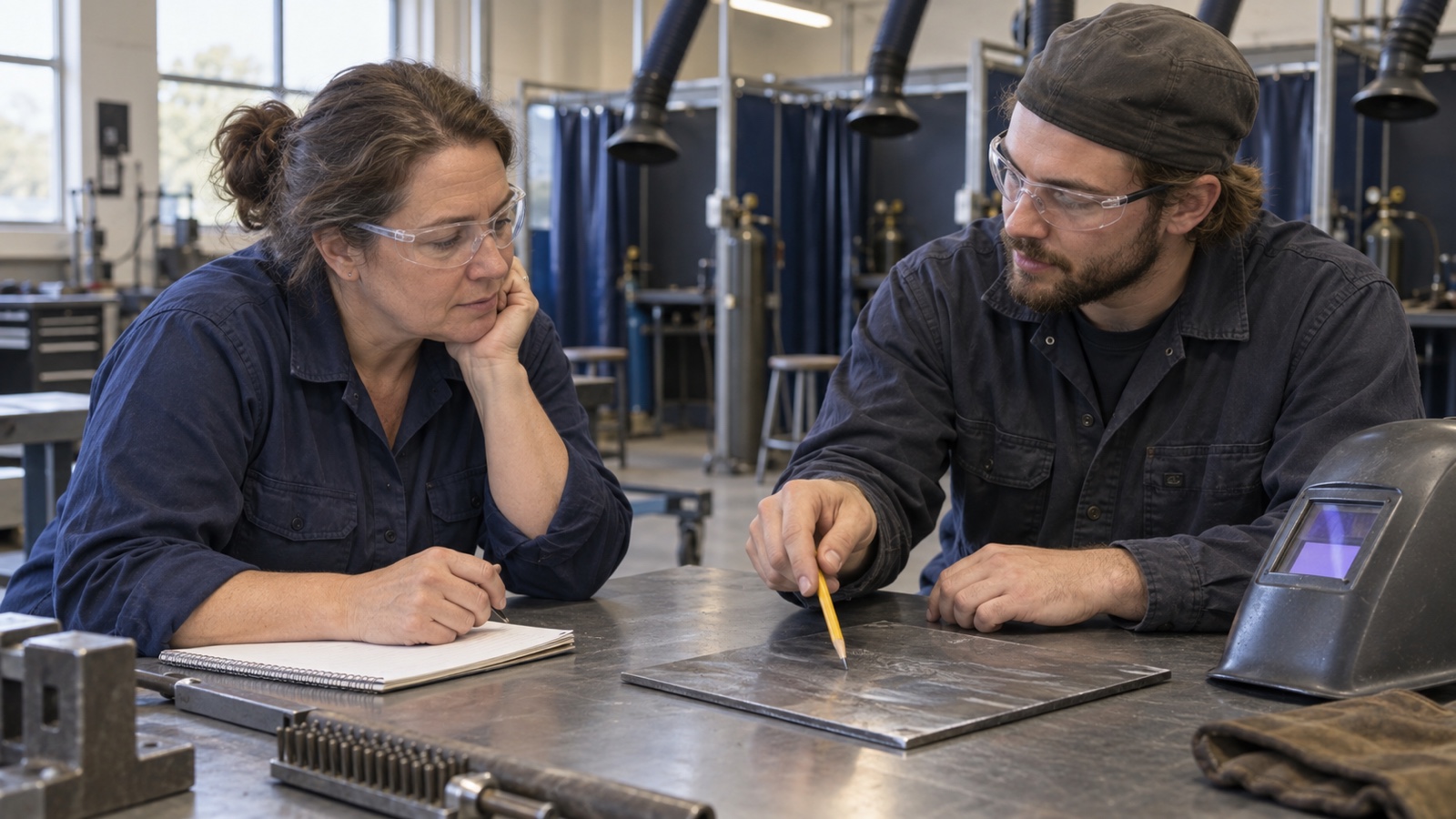
    The welding trade is full of knowledge that lives between the lines of a textbook: how a shop communicates under pressure, how to hand off work cleanly, how to ask for help before a bad decision becomes expensive, and how to give a newer welder room to think. Those habits travel person to person.

    Not every excellent welder wants to teach, and not every excellent teacher has the loudest voice in the room. The instructors who last tend to combine technical credibility with patience, consistency, and the humility to keep updating their own knowledge. They remember that the goal is not to be the most impressive person in the lab. It is to make the lab produce capable people.

    Years later, students may forget the exact coupon, amperage, or day. They remember who made them slow down and look again. They remember the person who held the line on safety, explained the “why,” and treated improvement as something earned rather than something granted.

    Who Helped You See the Work?

    What did a welding instructor, foreman, journeyman, or patient coworker teach you that still shows up in your work? Was it a technique, a standard, a habit, or simply a better question? Tell us about the person—and the lesson—that you still carry into the booth.

    Arc Life tells the stories behind the trade: the people, habits, and hard-earned judgment that keep welding knowledge moving forward. You can also visit the Arc Life collection for gear built around that working culture.

    Sources: American Welding Society, Certified Welding Educator Program and Welding Educator Career Profile, accessed August 14, 2026.

  • The Shift Ends. The Making Doesn’t: Why Welders Keep Building After Hours

    The Shift Ends. The Making Doesn’t: Why Welders Keep Building After Hours

    Beyond the Booth

    The workday ends, the boots come off, and a lot of welders still find themselves staring at something that could be built better.

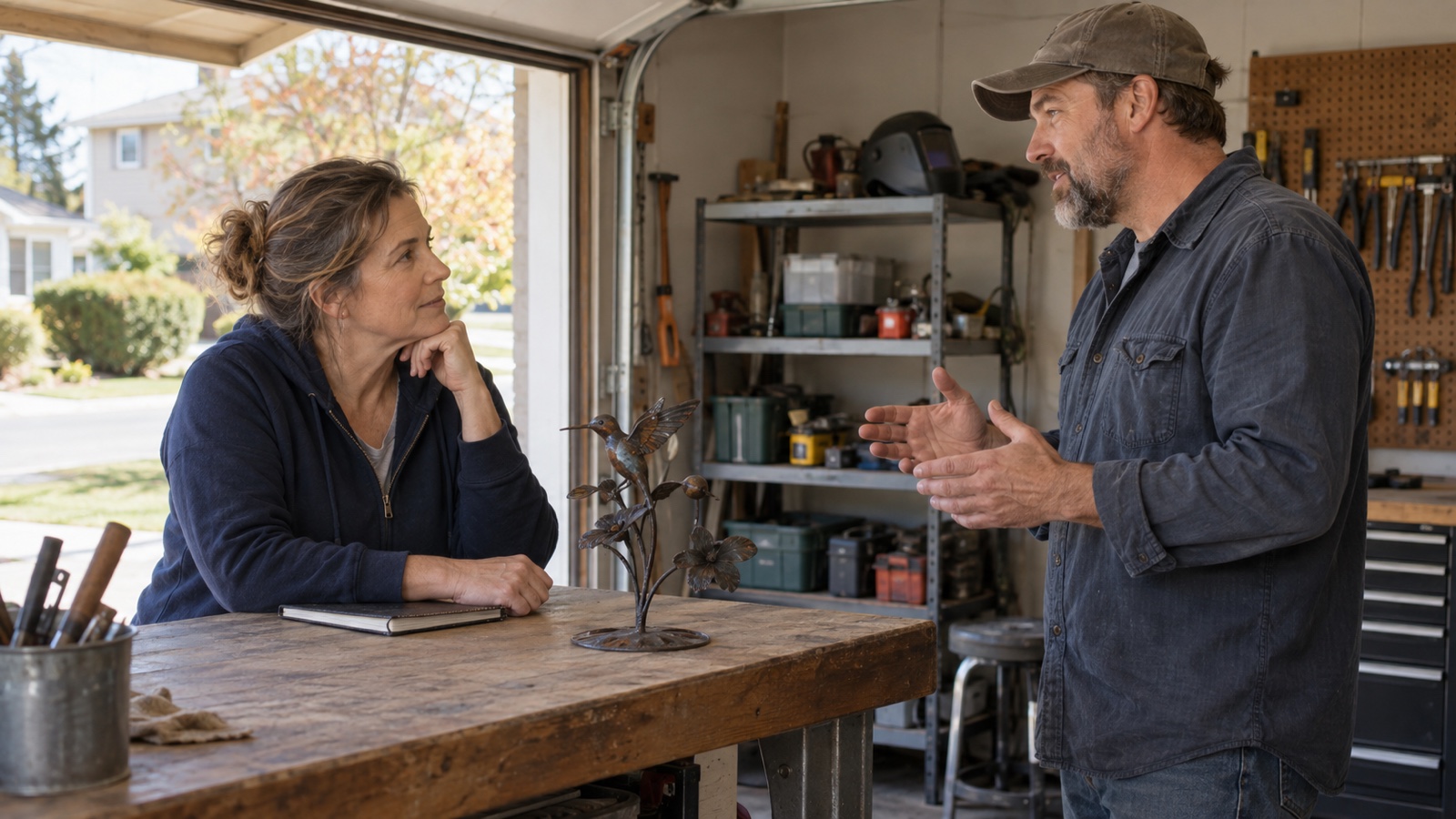
    It might be a loose gate, a cracked mower deck, a firewood rack that exists only as a sketch, or a piece of scrap that has been waiting six months to become useful. Nobody assigned it. There is no traveler, inspection stamp, or production clock. Still, the tape measure comes out.

    That is one of the quieter ways the trade follows people home. Welding is a job, but making can become a way of moving through the world. After enough time around steel, broken things stop looking finished. Empty corners start looking like project space. A pile of drops starts looking less like clutter and more like inventory with an uncertain future.

    The freedom of a job without a traveler

    Shop work has a purpose before the first tack. The material, dimensions, sequence, and deadline usually belong to someone else. That structure matters; it is how real work moves. But an off-hours project offers a different kind of satisfaction.

    You get to decide what “done” means.

    A backyard rack can be overbuilt because the extra gusset makes you happy. A small repair can take an hour because there is time to clean the old fracture properly. A practice piece can be cut apart and tried again without anyone asking why it is not on the next pallet. The pressure changes, and so does the attention.

    That freedom does not always make the work easier. It can expose every habit the production pace normally hides. When there is nobody else to blame for the fit-up, the cut list, or the crooked caster, the project becomes an honest conversation between the builder and the material.

    Small projects keep the eye awake

    After-hours building is not automatically about side income. Sometimes it is simply a place to stay curious.

    A production welder may spend a shift repeating a proven joint and then use a weekend project to think about proportion, movement, or finish. A pipe welder may build a plain shelf. An instructor may test a fixture idea before bringing it into class. An apprentice may finally have enough time to make the ugly bracket twice and understand why the second one sits square.

    The object does not need to be impressive. In fact, the ordinary projects often say more: the cart that rolls without rattling, the repaired hinge that closes cleanly, the stand that puts a grinder exactly where the hand expects it. These are not showpieces. They are evidence that craft has worked its way into daily life.

    The trade becomes part of the household

    Off-clock projects also change how other people understand welding. A family member may never see a structural assembly leave the shop, but they will use the repaired chair, the garden trellis, or the smoker cart. A neighbor may not know the difference between processes, but they know who can look at a broken latch and see a path forward.

    That visibility matters. Trades can look distant from the outside—specialized work behind curtains, inside plants, or on jobsites most people never enter. A useful object built at home makes the skill legible. It shows that welding is not only sparks and heavy plate. It is planning, patience, measuring, correcting, and taking responsibility for what will carry weight after you walk away.

    Sometimes the best explanation of the trade is not an explanation at all. It is something solid that works.

    Off the clock does not mean outside the rules

    A home project may feel relaxed, but hot work does not become casual because the customer is yourself. The same sparks that behave predictably in a designated shop can find cardboard, fuel, dry grass, wall cavities, or a rag on a garage floor. OSHA’s hot-work guidance emphasizes controlling fire hazards and inspecting the work area, including adjacent spaces. NIOSH also notes that welding-fume exposure varies with the process, consumables, base metal, and environment, and that confined spaces can increase exposure.

    The practical point is simple: bring the standards home with the skill. Clear the area. Think about what is on the other side of the wall or below the bench. Use appropriate PPE and ventilation. Keep cylinders, leads, hoses, and equipment in sound condition. If the space cannot support the work safely, the project can wait or move somewhere that can.

    A project can be rest without being easy

    There is a particular kind of rest in choosing your own difficult thing.

    It is not the same as doing nothing. It is a change in ownership. The pace belongs to you. The mistakes cost material and time, but they also stay private long enough to teach something. The finished piece does not need to impress a foreman, an inspector, or the internet. It only needs to do its job and meet the standard you decided it should meet.

    That is why some welders keep building after a full shift. The project gives the hands a familiar problem and the mind a different reason to solve it. It turns training into usefulness, leftovers into possibility, and a few free hours into an object that was not there before.

    What are you still building?

    Every shop has people who go home and keep making—sometimes for family, sometimes for practice, sometimes because a good piece of steel refuses to be ignored.

    What is the best thing you have built off the clock, and what did it teach you that paid work did not?

    Arc Life exists for the trade people carry beyond the booth. Read more about the community on About Arc Life, or explore the current Arc Life collection.

    Sources and further reading

Read with Kindle Unlimited