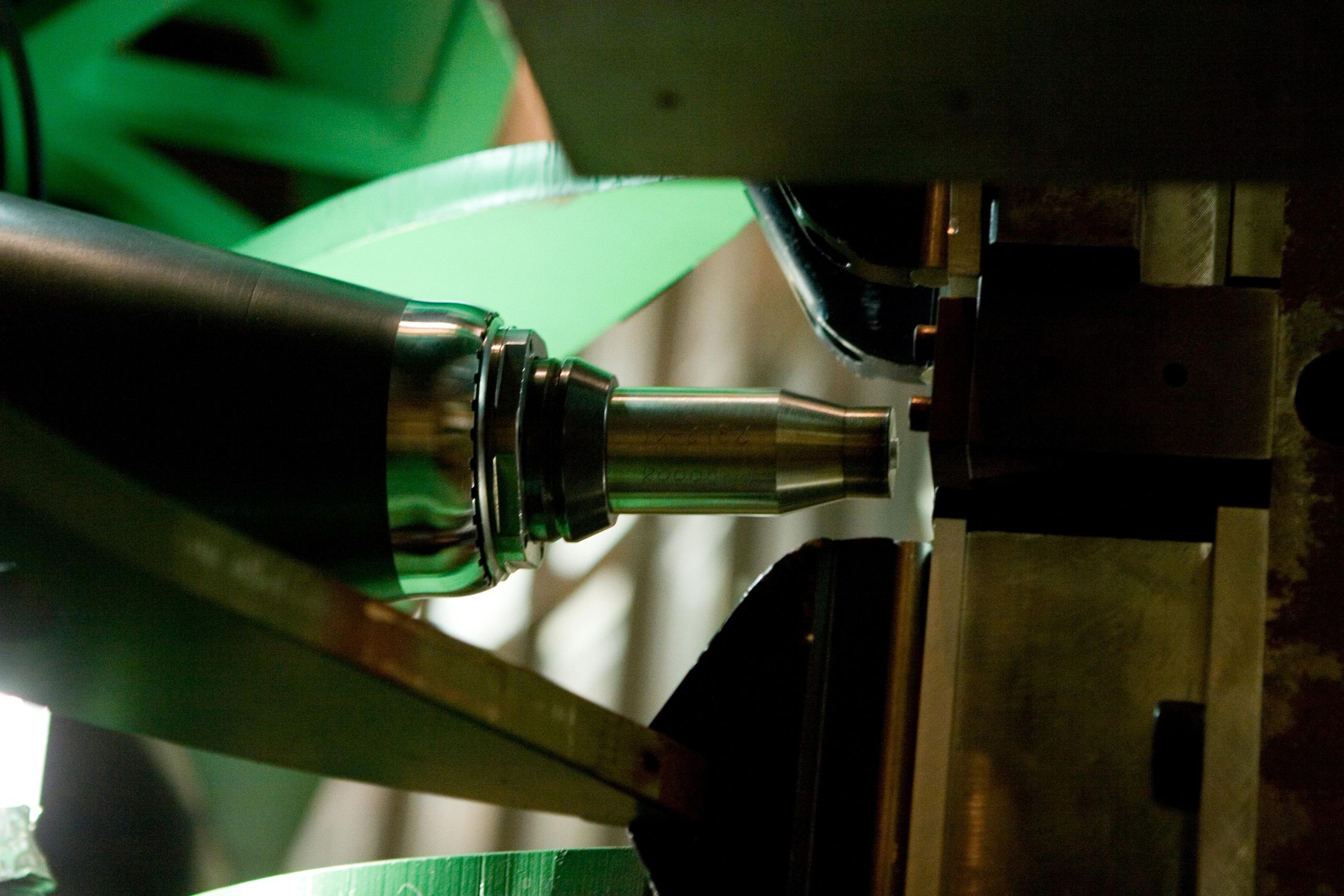
Friction stir welding shows why welding craftsmanship cannot be reduced to the appearance of an arc or a bead. NASA’s documented work on Space Shuttle external tanks and Orion manufacturing puts the spotlight somewhere else: the tool, the joint setup, practice hardware, controlled operations and the evidence left for the next person. The work is still welding, even when the familiar arc is absent.
This story concerns manufacturing on Earth for aerospace hardware. It is not a description of welding in orbit, a current mission-status report or instructions for constructing a welding machine. The historical examples show how skilled work can move between hand operations, tooling and machine-controlled processes without becoming less dependent on human judgment.
A different way to join metal
In its October 2009 friction-stir article, NASA describes using a rotating pin with friction and pressure to join aluminum alloys for Space Shuttle external-tank work without melting the materials. That solid-state distinction separates the process from the molten weld pool many shop welders first learn to control.
The photograph accompanying this article belongs to that documented tank-manufacturing work. It shows a friction-stir tack-welding tool rather than a person holding an arc torch. It is not a photograph of the later Orion pressure vessel. Keeping that identification straight matters: a visually impressive industrial image should not be used as interchangeable evidence for a different project.
The tooling becomes part of the conversation
When a process depends on a rotating tool and controlled contact with a joint, the surrounding manufacturing arrangement deserves attention. The craft is not visible only at the instant the material is joined. It also appears in choosing an appropriate process, preparing the work and understanding how the operation will be verified.
That is a familiar idea in a conventional fabrication shop. A fixture can make an operation more repeatable, but it cannot decide whether the drawing is current or the workpiece is the correct one. A machine can reproduce a motion, but someone still has to establish that the motion belongs to this job. Automation changes the task; it does not turn preparation into an optional extra.
Practice hardware has a professional purpose
NASA’s May 2015 Orion pathfinder report describes a full-scale structure used to demonstrate manufacturing and assembly methods before building flight hardware. NASA reported that welding began on May 7 and that the pathfinder would help refine the manufacturing approach and tooling. It was deliberate preparation, not a substitute being presented as the finished spacecraft.
The lesson is useful beyond aerospace. A representative practice piece can expose questions before they become expensive mistakes on the final component. The point is not merely to repeat an operation; it is to learn something relevant about the planned work and carry that knowledge forward.
A practice operation only becomes useful evidence when people understand what it represents. Which features match the intended job? What is being evaluated? What differences remain? Calling something a test does not make it a qualification, and an attractive sample does not establish every requirement of the finished part. The responsible procedure determines what the evidence can support.
A completed structure is more than its final joint
In January 2016, NASA reported completion of Orion’s pressure vessel from seven aluminum sections. The account describes a months-long joining sequence and instrumentation associated with the manufacturing work. It is a historical example of a structure assembled through planned stages, not a claim that a single successful weld proves the whole vehicle ready.
That sequence helps explain a less visible side of workmanship. Completing an operation includes knowing what information must accompany it. The next team should not have to reconstruct the work from a photograph, an informal recollection or a note that simply says it looked good.
The expert does not disappear when the machine takes over
It is tempting to divide the trade into skilled manual work and automatic work. The distinction is too simple. A controlled process can demand expertise in a different place: tooling, setup, monitoring, inspection or interpreting an unexpected result. A person may spend less time repeating a hand motion while taking more responsibility for whether the complete operation is appropriate.
This does not make manual skill unimportant. It broadens the picture. The welder who reads the setup carefully, the technician who notices an abnormal condition and the person who makes the records usable are contributing to the same goal. A sound manufacturing culture should recognize those contributions rather than judging professionalism only by what photographs well.
What a shop can take from these examples
- Define the intended result before choosing the process or equipment.
- Use representative practice work for a stated purpose, without confusing practice with formal qualification.
- Keep the workpiece, drawing and process information connected.
- Treat tooling and setup as part of workmanship rather than background equipment.
- Leave records that help the next responsible person understand what was done and what still needs checking.
These are questions about work organization, not a friction-stir procedure. Aerospace examples do not authorize a shop to weld an unspecified alloy, build pressure hardware or copy a machine setup from an image. The actual process instructions, qualification requirements and acceptance criteria remain specific to the job.
Craftsmanship includes work that the camera misses
The visible joining operation is only one moment in a longer chain of decisions. NASA’s historical examples make that chain easier to see: develop the tooling, learn from appropriate practice hardware, carry out the planned sequence and preserve useful information. None of those steps is less real because the finished photograph cannot show all of them.
For related perspectives, read The WPS on the Table and The Label Follows the Weld. For welding-inspired gear and practical resources centered on the trade, visit The Welders Life.
Image credit: NASA, 2009, friction-stir tack-welding tool for Space Shuttle external-tank barrel panels. The image is historical, not an Orion manufacturing photograph. NASA does not endorse WSP, Arc Life or the products linked by these sites.
Leave a Reply