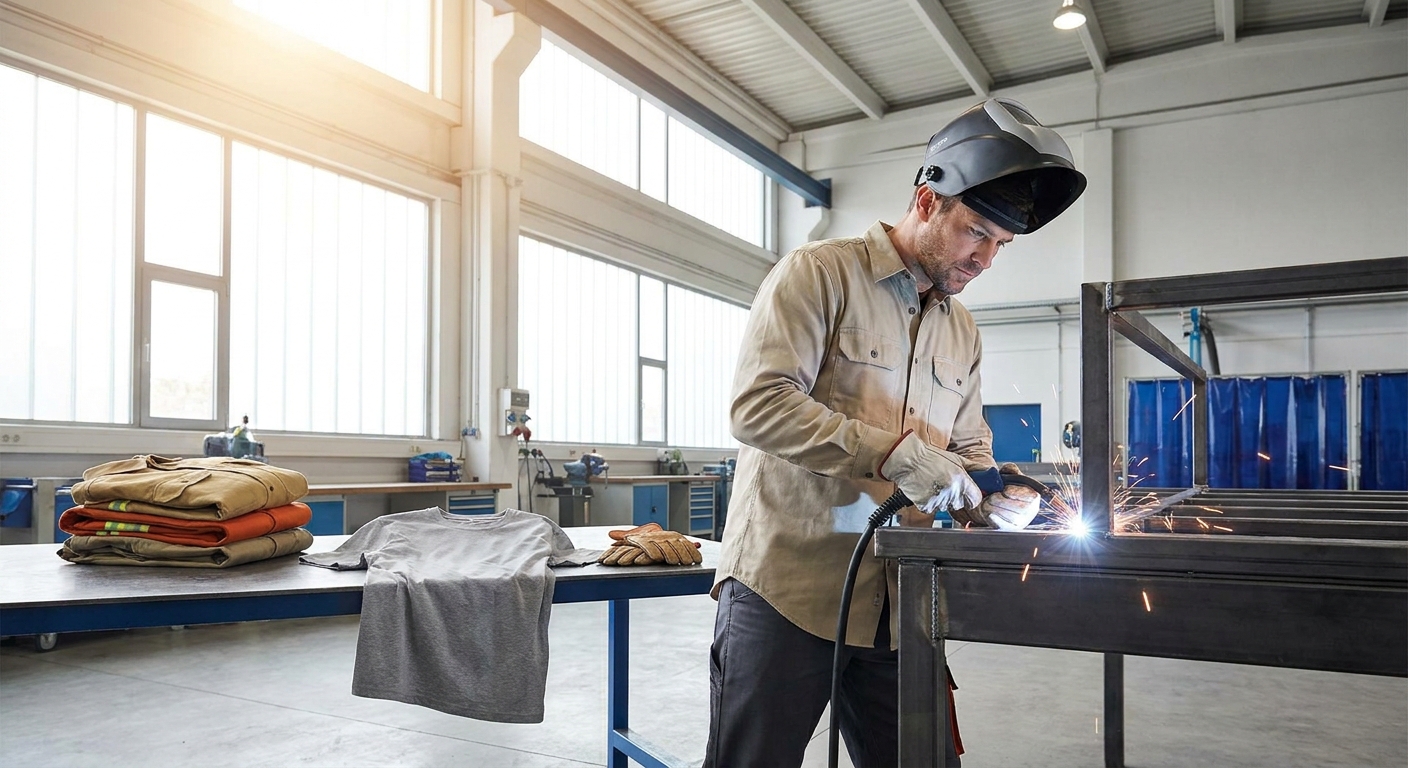
Balancing Heat Stress and Arc Protection
Summer heat introduces a dangerous balancing act for welders, fabricators, and shop personnel. As temperatures inside the shop climb, the temptation to strip off heavy protective gear becomes overwhelming. However, sacrificing personal protective equipment (PPE) to stay cool directly exposes you to ultraviolet (UV) radiation, severe burns, and spatter injuries.
Understanding what welders should wear in hot weather requires knowing the critical difference between ordinary cotton, flame-resistant (FR) gear, and synthetics. A lifestyle T-shirt is not a protective garment. True welding safety in high temperatures relies on strategic layering, breathable FR fabrics, and rigorous heat-stress management.
The T-Shirt Problem: Why Ordinary Cotton is Not PPE
Walk into many fabrication shops in July, and you may see someone welding in a standard graphic T-shirt. That garment should not be treated as protective welding apparel. Everyday lifestyle T-shirts are generally not designed, tested, or labeled for the hazards created by an active arc.
Untreated cotton is generally preferable to common meltable synthetic blends when selecting an underlayer, but an ordinary cotton T-shirt is not automatically welding PPE. Fabric weight, condition, coverage, garment construction, and the amount of sparks or spatter all matter. Polyester, nylon, spandex, and similar fibers can soften or melt when exposed to heat and spatter, increasing the severity of a burn. Follow the employer’s hazard assessment and the garment manufacturer’s instructions.
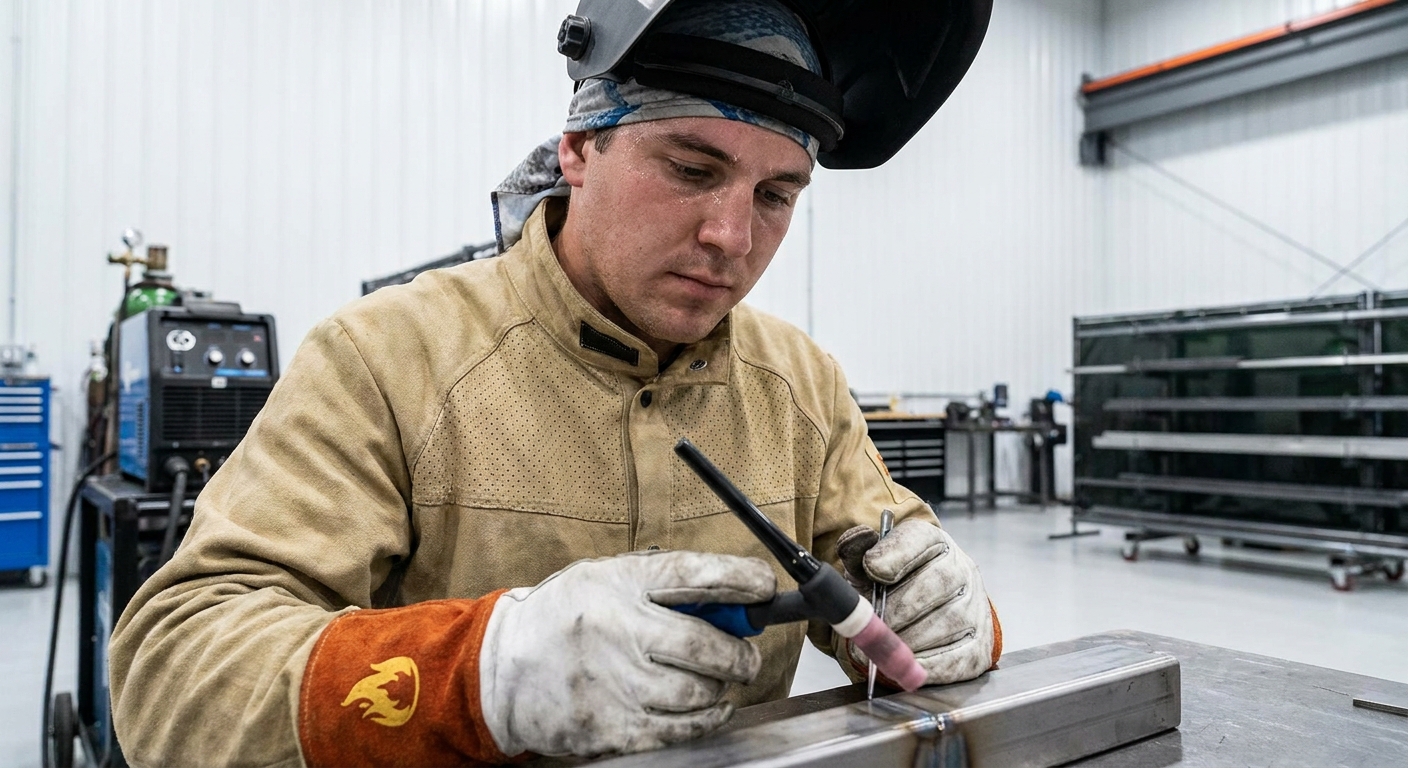 Choosing the right FR gear ensures you are protected from sparks and UV rays without adding unnecessary bulk.
Understanding Your Fabric Options
When selecting hot-weather gear, welders must choose materials that naturally resist ignition or are chemically treated to self-extinguish.
Flame-Resistant Workwear
FR garments are designed to resist ignition or limit continued burning when used and maintained as directed. Lightweight FR shirts and jackets may reduce bulk in summer, but suitability depends on the welding process, position, spatter level, and the garment’s verified rating and instructions.
Leather Protection
Leather provides durable protection where heavy sparks and spatter are expected, including many stick-welding and overhead applications. It also adds weight and reduces heat loss, so the coverage should be matched to the hazard rather than treated as a one-size-fits-all solution.
Common Synthetic Blends
Many polyester, nylon, and stretch fabrics can melt or shrink when exposed to heat. Do not assume moisture-wicking or athletic clothing is suitable for welding; use garments selected through the workplace hazard assessment and verified for the intended exposure.
Strategies for Managing Heat Stress
Instead of stripping down to unsafe clothing, welders should adapt their PPE strategy to the climate. Heat stress can lead to heat cramps, heat exhaustion, and potentially fatal heat stroke. Managing your core temperature involves smart layering and strategic coverage.
Do not solve heat stress by removing required protection. Instead, use the lightest protective system that still matches the hazard assessment—for example, verified FR workwear with localized leather coverage where heavy spatter is expected. Employers should also use ventilation, work/rest cycles, hydration, acclimatization, and cool recovery areas. Any head covering worn under a helmet must fit without interfering with the helmet, headgear, or protective seal.
Summer Welding Clothing Checklist
Before stepping into the shop during a heatwave, ensure your gear meets fundamental safety requirements. True protective workwear minimizes catching points and covers all exposed skin.
- Full Sleeve Coverage: Sleeves must extend to the welding glove cuff. Exposed wrists will suffer severe UV arc burns.
- High Collars: Keep collars buttoned up to protect the neck from stray spatter and intense light bouncing off the table.
- No Cuffs or Open Pockets: Pants should fall smoothly over the top of leather work boots without cuffs. Shirts should lack open chest pockets, which act as catch-basins for hot slag.
- Approved Undergarments: Ensure whatever touches your skin directly is 100% natural fiber, like standard heavy cotton, even if covered by an FR jacket.
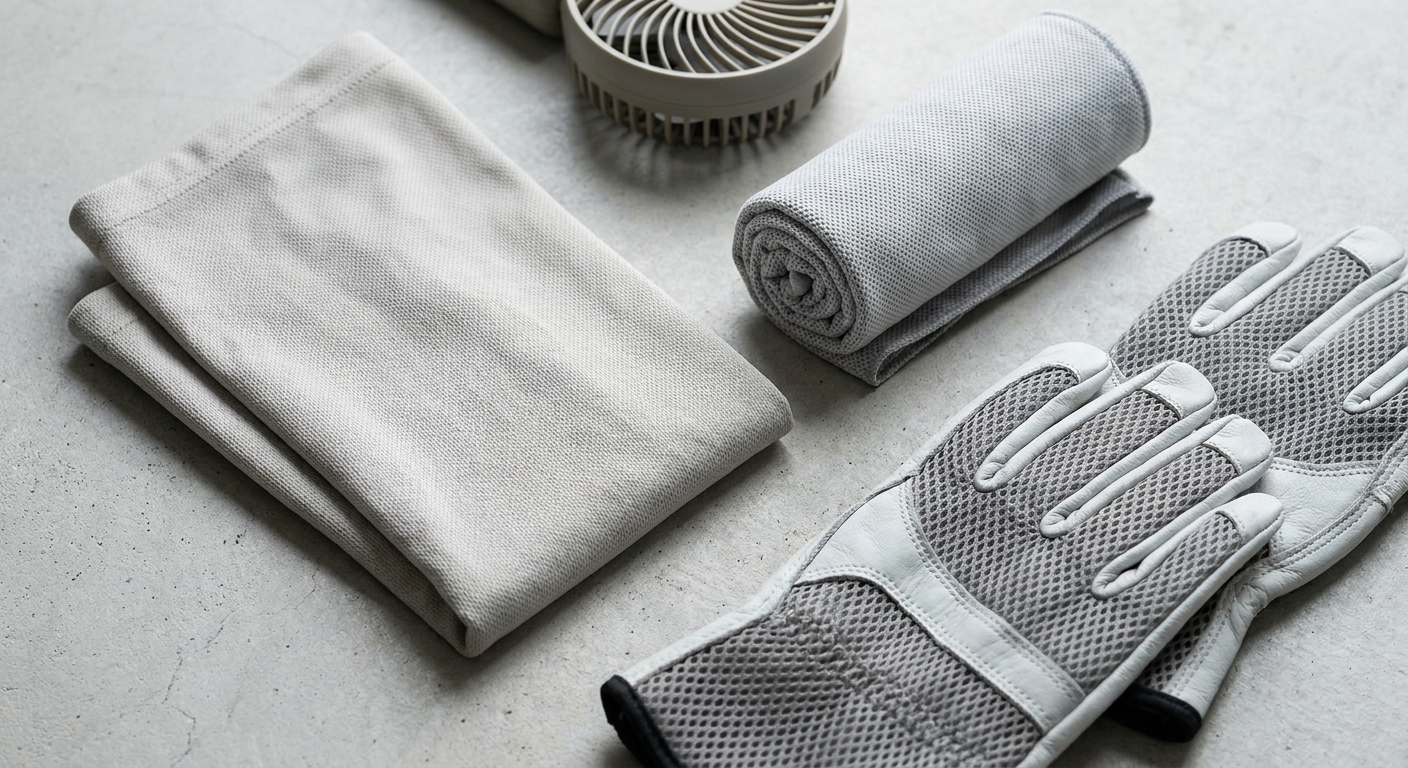 Breathable, flame-resistant workwear is essential for maintaining safety and preventing heat stress during summer shifts.
Changing and Caring for Work Clothes
Hot-weather gear becomes wet, dirty, and easier to damage. Inspect garments for holes, thin spots, open seams, oil, grease, and other contamination that could reduce protection. Follow the garment manufacturer’s laundering and retirement instructions, especially for treated FR clothing.
A clean change of clothes can also help keep shop dust and residue out of personal vehicles and living areas. Where the work involves metals or coatings that create hazardous contamination, follow the employer’s hygiene and decontamination program rather than relying on a general home-laundry routine.
Sources and Safety Guidance
Protective clothing should be selected through a workplace hazard assessment and matched to the size, nature, and location of the welding work.
- OSHA 29 CFR 1910.252: Welding, Cutting, and Brazing
- NIOSH: Heat Stress and Workers
- NIOSH: Workplace Heat-Stress Recommendations
- Garment manufacturer instructions: Verify the garment’s intended use, limitations, care requirements, and replacement criteria before relying on it for protection.
The Practical Rule
Do not trade away required protection to get cooler. Match the clothing system to the actual welding hazard, then control heat with ventilation, hydration, acclimatization, appropriate rest breaks, and cool recovery areas.
Arc Life Media Note: A welder’s lifestyle clothing belongs off the arc. Never wear athletic wear, synthetic blends, or untreated thin cotton while welding, cutting, or grinding unless the garment is specifically labeled and verified as protective workwear.

Leave a Reply