A bridge often looks like one finished object. To the people who build and maintain it, however, it is a collection of materials, connections and decisions that age at different rates. That difference is visible at Roebling’s Delaware Aqueduct, a nineteenth-century structure preserved by the National Park Service. It offers a lesson for fabricators today: the value of a component is not just how it looks when the job leaves the shop, but how well another person can understand and care for it later.
A canal above the river
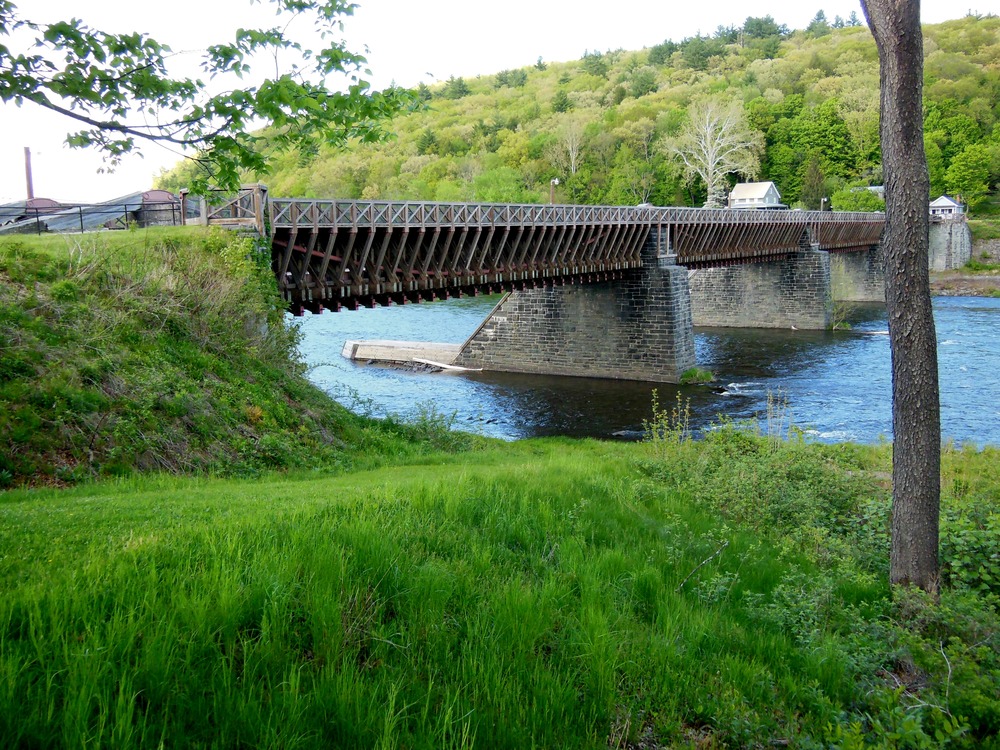
The Delaware and Hudson Canal carried coal from northeastern Pennsylvania toward Hudson River markets. At its Delaware River crossing, the movement of canal boats competed with timber rafts traveling downstream. The National Park Service describes the crossing as a significant bottleneck. In 1847 the canal company accepted John A. Roebling’s plan for a suspension aqueduct, which would carry the canal across the river itself. The design addressed the needs of transportation and the people who depended on the river, not simply the desire to build a larger structure.
There is something familiar about that design brief to anyone who has worked in a repair or fabrication shop. A customer brings in a problem, and it is tempting to treat the object in front of you as the entire problem. But the object belongs to a larger system. Equipment may have to be moved, accessed, cleaned or inspected. Someone else has to operate it when the installer leaves. Good work begins by finding out what the completed assembly must accomplish in its surroundings.
Where the metalwork outlasted the timber
The aqueduct employed wrought iron suspension cables. As the National Park Service explains, the iron wires were assembled into the cables at the site in 1847. The preserved structure still includes much of its original metalwork, including the cable saddles and suspenders. The wooden portions had a different service history, with repeated replacements during the canal years. The point is not that metal always lasts longer than wood, but that different materials and assemblies can have different maintenance needs.
This is a useful distinction when you look around a modern shop. A fixture’s main frame, wear pads, removable stops and bolted hardware are not necessarily expected to last the same length of time. The same is true of a machine cabinet, its replaceable consumables, and the surrounding equipment. The person who built the assembly may understand all those distinctions intuitively. A future owner or maintenance worker will have to discover them from drawings, labels and inspection records unless that information is deliberately preserved.
The contribution of the people who repair
The Delaware Aqueduct continued to serve after the canal closed in 1898, eventually becoming a vehicle bridge. According to the Park Service, it acquired changes during that period. The National Park Service purchased it in 1980; in the following years, its original ironwork was examined, the cable wrapping was replaced, and wooden elements were reconstructed using surviving historical documents.
That story should change the way we look at the person asked to repair a piece of equipment rather than build a new one. Finding a cracked or worn item is only the beginning of the work. A repairer must identify the original design, understand what has already been changed, and determine whether the available information is adequate. A rebuilt assembly that appears new is not automatically equivalent to the original. Maintenance depends on evidence and the appropriate engineering decisions, not on appearance.
For a shop making a new part, the lesson is to make the next person’s job easier. A legible drawing reference, the actual revision, an unambiguous identification mark and the recorded material or component designation may be more valuable in the future than another photograph of the completed job. If the requirements call for inspection results or other traceability, keep them connected to the actual assembly. Do not leave an ambiguous note that could be mistaken for approval of a different configuration.
What the story teaches a new fabricator
An apprentice can learn something from studying finished structures without trying to copy their historical construction methods. Start by distinguishing the permanent pieces from the features intended to be replaced or maintained. Ask what information a qualified inspector or maintenance worker would need to make a decision later. Consider which pieces would be difficult to identify once they were removed from their original location. Those questions help you recognize that fabrication includes more than forming and joining material.
It also helps to separate a job well done from a job that simply looks good. The visible portions of a structure are only part of its story. On a real industrial assembly, material identity, documented acceptance criteria and inspection requirements must be respected even when those things are not visible to the person admiring the finished product. Historical longevity is not a substitute for a modern engineering assessment. It is a reminder that workmanship and responsible stewardship belong together.
Make a useful record today
There is no need to turn every small shop project into an archive. But for the things that someone will maintain, repair or reorder, take the time to ask what information will be important after the job changes hands. Record the information required by the work order, preserve the correct drawings, and acknowledge any unknowns. A good handoff allows the next person to start with reliable evidence instead of guessing what another fabricator intended.
Roebling’s Delaware Aqueduct illustrates the difference between forgetting a structure and understanding it well enough to care for it. The preserved ironwork is part of that history, but so are the notes, plans, examinations and generations of work associated with it. Each contributed to a structure’s ongoing story. That is a heritage every modern trade can recognize.
Read the National Park Service’s account of Roebling’s Delaware Aqueduct for the documented history and preservation details. The related NPS biography of John A. Roebling provides additional context. For more resources celebrating the trades, explore Arc Life.
Leave a Reply