A shop can keep an impressive pile of old work without keeping much of what it learned. A bracket sits on a shelf because somebody remembers it was hard to get right. A bent part stays under a bench because it once helped explain a shape. Then the person who knows the story takes a different shift, and all that’s left is a piece of metal nobody wants to throw away.
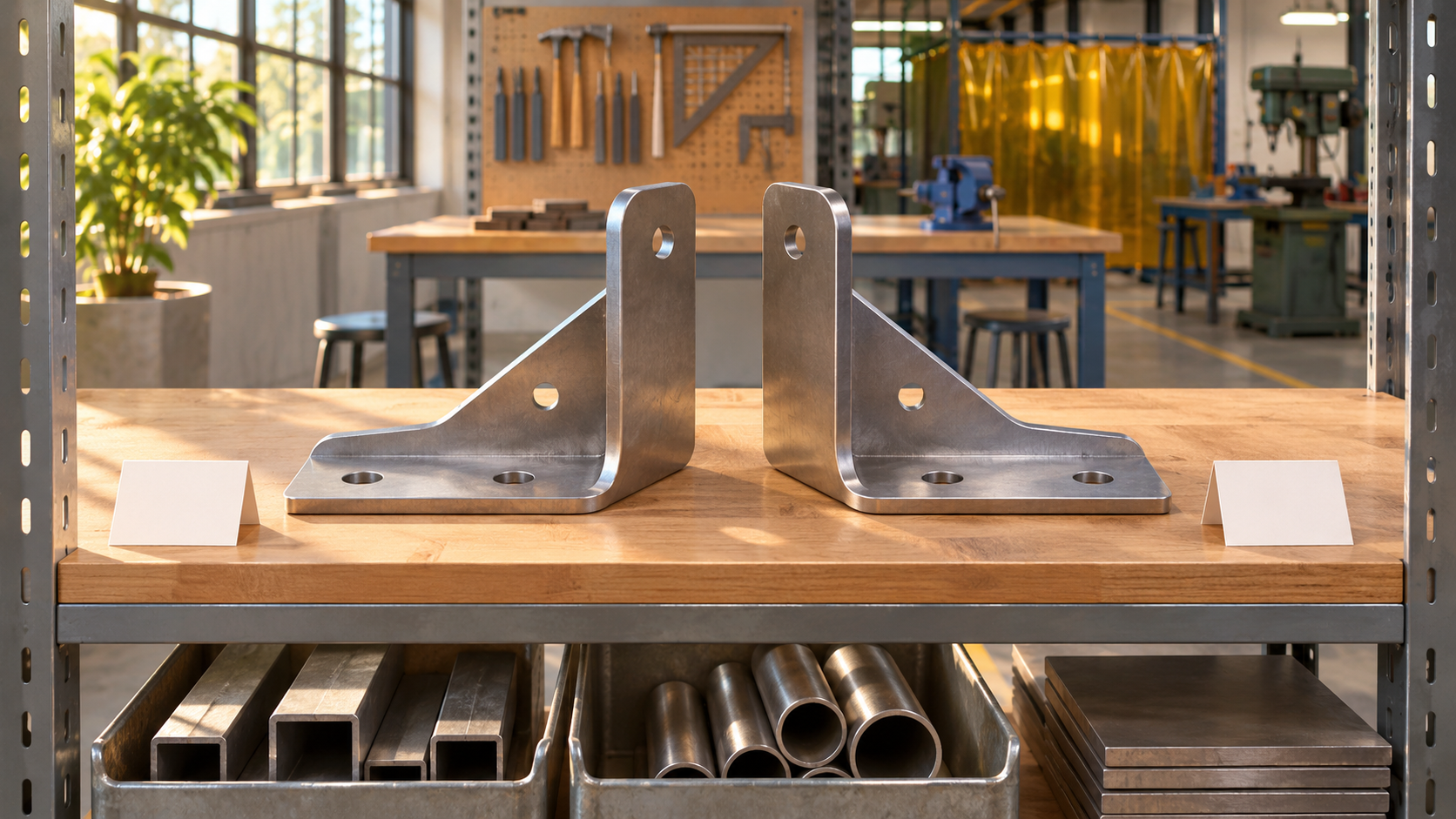
The piece becomes useful again when somebody can say what to look at. It might show which face was easy to confuse with its mirror image, or why two parts that look alike are not interchangeable. The value isn’t the object by itself. It’s the question the object helps the next person ask.
Keep the lesson, not just the piece
Imagine two sample brackets from a fictional shop. One is a handy way to show what “left-hand” means when the part is held in the orientation shown on a drawing. The other looks nearly identical until you set it next to the first. The pair can teach the idea faster than another round of pointing at a sketch. Without a note, though, the next person might assume both were kept because either one is acceptable.
A useful label can be short: “Training reference. Shows the difference between left-hand and right-hand orientation. Not an acceptance standard.” If a controlled drawing or shop reference explains the distinction, identify the document and revision the sample illustrates. The note gives a newcomer somewhere to look without treating the sample as the source of authority.
The same idea applies to a piece kept because it shows a mistake. A flawed example can be a better teaching aid than a flawless one, but it has to be marked for that purpose and kept apart from anything that could be picked as production stock. If nobody can explain what it demonstrates, it probably isn’t earning its space.
Give each example one job
The temptation is to save every odd part from a memorable job. A smaller collection takes less explaining. Pick a few examples that answer questions that keep coming back: Which side are we looking at? What is the difference between these two shapes? Which detail on the drawing would settle that question?
A plain tag can carry four things: what the sample shows, what it does not establish, the source it illustrates if there is one, and who can answer questions about it. Keep outdated pieces only if the older version is part of the lesson, and label the difference clearly. When the governing documents change, check the reference or remove it from the teaching shelf. Don’t count on someone remembering that a tag refers to an older version.
Use it as a conversation starter
When someone brings over a question, hand them the example and ask what they notice. Give them a moment before pointing out the answer. They may be looking at a different face or thinking about the part in a different orientation. That’s useful information for the person explaining it. It tells you what needs to be made clearer.
The conversation should end back at the current approved document, not at the shelf. A teaching sample can make a distinction easier to see. It can’t set a tolerance, approve a substitution or override a drawing, inspection requirement or shop procedure. If the piece and the current instructions seem to disagree, ask the person responsible for resolving the discrepancy. Don’t pick whichever one looks more familiar.
Make the lesson easy to hand off
A training sample is more useful if a second person can teach from it without asking the person who made it. Write one question on the tag, such as “What feature tells you which bracket is left-hand?” Then put the answer or drawing reference on the back. A person can try the question first, then use the reference to check whether they were looking at the right feature.
If the sample is used at a morning huddle, put it back on the training shelf afterward rather than leaving it by the job. The shelf and the production bin should not ask the next person to make a judgment about which piece is safe to use. The tag should make the status plain even when the sample is sitting by itself.
One quick way to check whether the collection works is to hand a coworker a tagged sample and ask them to explain it back without coaching. If they can tell you what it shows, where the current instruction lives and why the sample is not a substitute for it, you’ve kept a lesson, not just a souvenir. If they can’t, fix the tag while the confusion is still fresh.
Try it with one piece
Start with the sample people already reach for. Ask someone who didn’t work on the original job what they think it shows. If they can’t tell, write the missing sentence and put it with the piece. If nobody agrees on the lesson, put that piece aside until the shop can explain it consistently.
The goal isn’t to build a museum. It’s to keep a good explanation available on the day the person who usually gives it isn’t there.
Explore Arc Life for shop tools and gear inspired by the welding trade.
Leave a Reply