The Klein Tools 11055 is a copper wire stripper and cutter for limited conductor sizes—not a universal tool for welding leads, steel wire or every electrical job. Klein lists stripping ranges of 10–18 AWG solid copper and 12–20 AWG stranded copper. It can be useful for appropriate de-energized shop electrical projects when the person doing the work is qualified for the task. It is not insulated, and it should never be treated as protection from live electrical circuits.
Why a wire stripper belongs in a welding-shop buying guide
Fabrication and maintenance shops use more than welding cable. Benches may have low-voltage control wiring, replacement cord components, equipment panels and other conductors that require preparation during an authorized repair. Incorrectly stripping a conductor can nick strands, shorten the connection area or create a weak termination. A dedicated hand stripper is designed to make consistent cuts within its stated wire-size range; it does not determine whether the circuit is safe to service.
The important distinction is between wire preparation and electrical diagnosis. Knowing the right pliers to use does not authorize someone to open a welding power source or work on energized equipment. Lockout/tagout, circuit verification, suitable PPE and the manufacturer’s service documentation remain separate requirements.
Klein 11055: what the model actually does
The manufacturer identifies catalog 11055 as a solid-and-stranded copper wire stripper/cutter. The stripping openings are sized for 10–18 AWG solid and 12–20 AWG stranded copper. The tool also includes a cutting feature and a mechanism for shearing 6-32 and 8-32 screws. These are specific capabilities, not evidence that it is intended for high-strand welding electrode cable, steel safety wire or large power conductors.
- Solid copper: use only appropriately sized conductors within Klein’s 10–18 AWG solid stripping range.
- Stranded copper: the listed 12–20 AWG range is for ordinary stranded copper conductors in the indicated sizes, not a guarantee for every fine-strand construction.
- Cutting: follow the manufacturer’s material limitation. Do not use the cutters on steel wire.
- Fastener shearing: Klein lists 6-32 and 8-32 screw-shearing locations; these are not generic bolt cutters.
- Electrical rating: this tool is not insulated, even if the grip has a protective-looking coating.
The biggest mistake: using the wrong hole
A wire stripper can damage a conductor when the stripping opening does not match the actual wire. Gauge numbers differ between solid and stranded copper applications on this model, and the markings matter. A stripping notch that is too small can cut into the copper or remove individual strands. A notch that is too large can leave the insulation partially attached and lead to pulling or twisting the wire. Both problems defeat the reason for using a dedicated tool.
Before starting, identify the actual conductor size from the cable marking, equipment documentation or approved work instruction. Check whether the conductor is solid, stranded, fine-strand, tinned or specialty wire. Specialty insulation or conductor construction may require a different stripping method specified by the connector or equipment manufacturer.
What it cannot replace in a shop
The 11055 is not a welding cable lug crimper, a high-strand cable cutter, a connector installation kit or a multimeter. Cutting and stripping a wire is only one step in making a reliable electrical connection. Terminal selection, strip length, crimp tooling, torque, strain relief, circuit isolation and post-repair inspection must follow the applicable instructions. A damaged welding lead needs a correctly rated repair or replacement—not an improvised splice based on what a small stripper can grip.
- Do not use it on conductors outside the manufacturer’s published size range.
- Do not use it on energized wiring or to test whether a circuit is live.
- Do not rely on its handle covering as an insulating rating.
- Do not cut steel wire, welding filler, stick electrodes or abrasive material with its copper-wire cutting edge.
- Do not assume every cable labeled AWG can be prepared with this tool; flexible welding and battery cables can use different strand constructions.
How to inspect the tool before buying or using it
Look for the exact Klein catalog number 11055. Other Klein wire strippers have different gauge ranges, spring features, cutting mechanisms or insulation ratings. On a used tool, check that the jaws close evenly, the stamped gauge marks remain legible and the cutting edges are not chipped or burred. Do not force damaged jaws through a conductor. If precision termination matters, use a test piece and inspect whether the stripped strands remain intact before preparing the installed wiring.
Shop workflow: plan the complete electrical repair
Start by identifying the machine and reviewing its approved service documentation. The qualified person performing the work should isolate the appropriate power sources and address stored energy as required. Then identify the conductor type and the termination specifications. Only after the wire size and material agree with the tool’s rated stripping openings should the 11055 be selected. This sequence is more dependable than reaching for whatever stripper happens to be lying on a welding table.
For welding shops, that often means a small electrical hand tool is useful alongside—not instead of—the correct machine parts diagram, electrical tester, crimp tooling and insulation supplies. If the work requires opening an inverter power source, examining a high-voltage section or diagnosing stored energy, stop and use qualified service personnel. A hand-tool purchase cannot remove those hazards.
Amazon model and buying checks
The exact Amazon product identifier researched for this article is ASIN B00080DPNQ, corresponding to the Klein Tools 11055 stripper/cutter. Verify that the current listing still identifies model 11055 and the solid/stranded ranges before ordering. Listing images, seller information, availability and package contents can change. No fixed price, review score or stock level is assumed in this guide.
As an Amazon Associate I earn from qualifying purchases.
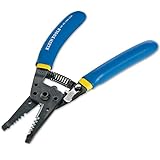
- Cuts, strips, and loops 10-18 AWG Solid and 12-20 AWG Stranded wire and cleanly shears 6-32 and 8-32 screws
- Precision ground stripping holes
- Strong-gripping serrated nose for easy bending, shaping, and pulling of wire
- Holes for looping and bending wire
- Made in USA

Last update on 2026-10-08 / Affiliate links / Images from Amazon Product Advertising API
When another tool is the better answer
If the conductor is a larger flexible welding lead, use the welding cable preparation and lug crimping method specified by the cable and connector manufacturers. If the job involves heavier building wire, aluminum conductors, coaxial cable, specialized insulation or precision fine-strand signal cable, verify an appropriate dedicated tool. If a worker simply needs to establish whether an electrical component has failed, choose diagnostic equipment and qualified procedures before thinking about strippers.
Bottom line
Klein 11055 is a specific, practical copper-wire stripper for the conductor sizes it lists. It earns its place in the shop when the work is a permitted de-energized wiring task and the wire gauge and strand type actually match. It should not be sold or used as an all-purpose welding cable service tool, an insulated electrical tool or a substitute for the relevant service procedure.
Sources
- Klein Tools — Solid and Stranded Copper Wire Stripper and Cutter, catalog 11055 (model, conductor ranges and limitations).
- OSHA — Control of Hazardous Energy / lockout and tagout (isolation and hazardous-energy context).

Leave a Reply