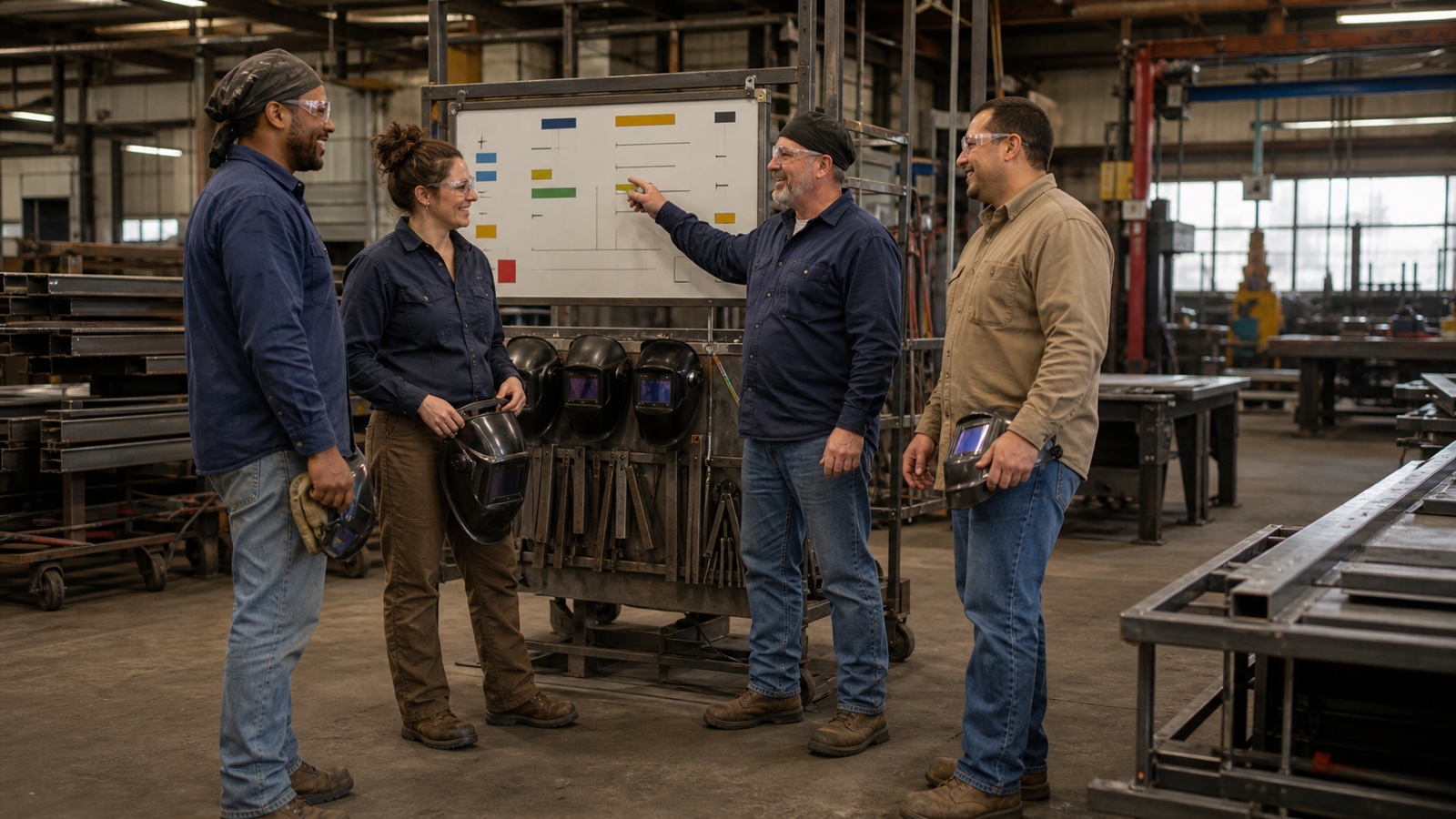
The timecard has one name. The payroll system has the same one. Out on the floor, a completely different name may answer when somebody needs a hand.
Shop nicknames rarely arrive with a ceremony. A last name gets shortened. A hometown follows somebody through the gate. A harmless moment becomes a two-word story. Somebody says the name twice, the right person laughs, and by the end of the month even the supervisor has to pause before remembering what is printed on the paperwork.
That kind of name can be one of the warmest pieces of shop culture. It can also go wrong fast. Cleverness is not the deciding factor. What matters is how the person carrying it feels: included or reduced.
A Nickname Is Compressed Shop History
Good shop nicknames usually carry more information than they appear to. They may point to where someone came from, the job they were known for, a habit everybody recognizes, or a story the crew still tells because it was genuinely funny the first time.
The name becomes shorthand, but it is also a little record of time spent together. A customer or new hire hears one word. The crew hears the backstory.
That history is why some names sound ordinary outside the shop and perfect inside it. They do not need to be tough, loud, or especially creative. They only need to fit. Often the best ones are simple enough that nobody remembers the exact day they started.
There is something practical about them too. Welding and fabrication shops can be noisy places full of repeated first names, hoods, partitions, and people working across different stations. A distinct name cuts through. It belongs to the same world as marks on water bottles, initials on tools, and names written inside gear: small ways of knowing what belongs to whom.
The Person Wearing It Gets the Final Say
A nickname earns its place when the person wearing it accepts it. That may be obvious because they introduce themselves with it, write it on their own gear, or answer without hesitation. It can be just as obvious when they do not.
The person does not have to deliver a speech. A correction, a flat reaction, or a direct “don’t call me that” is enough. Once that line appears, the name is finished.
Good crews understand this without turning respect into a complicated rulebook. The joke is not more important than the coworker. A name that only works when the person is not in the room is not a sign of belonging. It is just something being said behind their back.
The same test applies when the shop changes. A nickname that felt fine among longtime friends may land differently with a new apprentice, a contractor, or somebody who has not heard the whole story. Nobody is required to inherit another crew’s joke.
A Good Name Can Shorten the Distance
Workplaces have ranks, departments, certifications, and job titles for good reasons. Nicknames operate on another level. Used well, they can take a little stiffness out of the day.
An experienced welder and a new helper may be separated by years of skill, but a familiar name can make the first question easier to ask. A supervisor who answers to the same shop name they had before the promotion may feel more approachable. Someone moving between departments carries a piece of recognition with them.
None of that guarantees a healthy shop. A nickname is not proof that the crew communicates well or treats everybody fairly. It is only a small signal. The stronger evidence is what happens when a mistake is made, help is needed, or someone speaks up.
Still, language matters. Being called by a name you actually like can say: people know who you are here. In a trade where faces are often behind helmets and the work can be loud enough to swallow conversation, that recognition has weight.
The Line Is Respect, Not Toughness
Shop culture sometimes excuses bad behavior by calling it thick skin. That is a poor standard. A person can handle heat, deadlines, inspection, and hard physical work without volunteering to be somebody else’s target.
The U.S. Equal Employment Opportunity Commission says offensive jokes, slurs, epithets, name-calling, ridicule, and mockery can be part of unlawful workplace harassment when the unwelcome conduct is tied to a legally protected characteristic and meets the applicable legal threshold. The agency also notes that petty slights and isolated annoyances generally do not reach that threshold unless extremely serious. That legal distinction matters, but a crew does not need to wait for conduct to become unlawful before deciding it is disrespectful.
The everyday rule is simpler: do not build a nickname around race, sex, religion, national origin, age, disability, or another personal trait that turns a coworker into a category. Do not keep using a name after somebody says it is unwelcome. Follow workplace policy and raise a concern when conduct crosses the line.
Respect does not drain the humor out of a shop. It keeps the humor from becoming lazy.
Some Names Follow the Work
A shop nickname can stay in one building, or it can travel through years of jobs. It may survive a move from school to the first employer, from the floor to the field, or from one crew to the next. Sometimes the name disappears when the old job ends. Sometimes it becomes the name everybody in the trade knows.
Either way, the names that last usually attach themselves to real connection. They remind people of who taught them, who worked beside them, and which season of their career a certain crew shared.
That is why the best shop names feel earned without sounding like awards. They are small, informal evidence that somebody was not merely present. They became known.
So here is the Arc Life shop question: have you ever had a shop nickname that actually fit—and did you choose it, or did the crew find it for you? Keep the real answer respectful. The story behind the name is usually the best part.
Arc Life covers the personalities, habits, and human details that make welding a culture as well as a trade. Read more about the community on About Arc Life, or explore the current Arc Life collection.

Leave a Reply