Beyond the Booth
Learn to weld and a handrail stops being just a handrail.
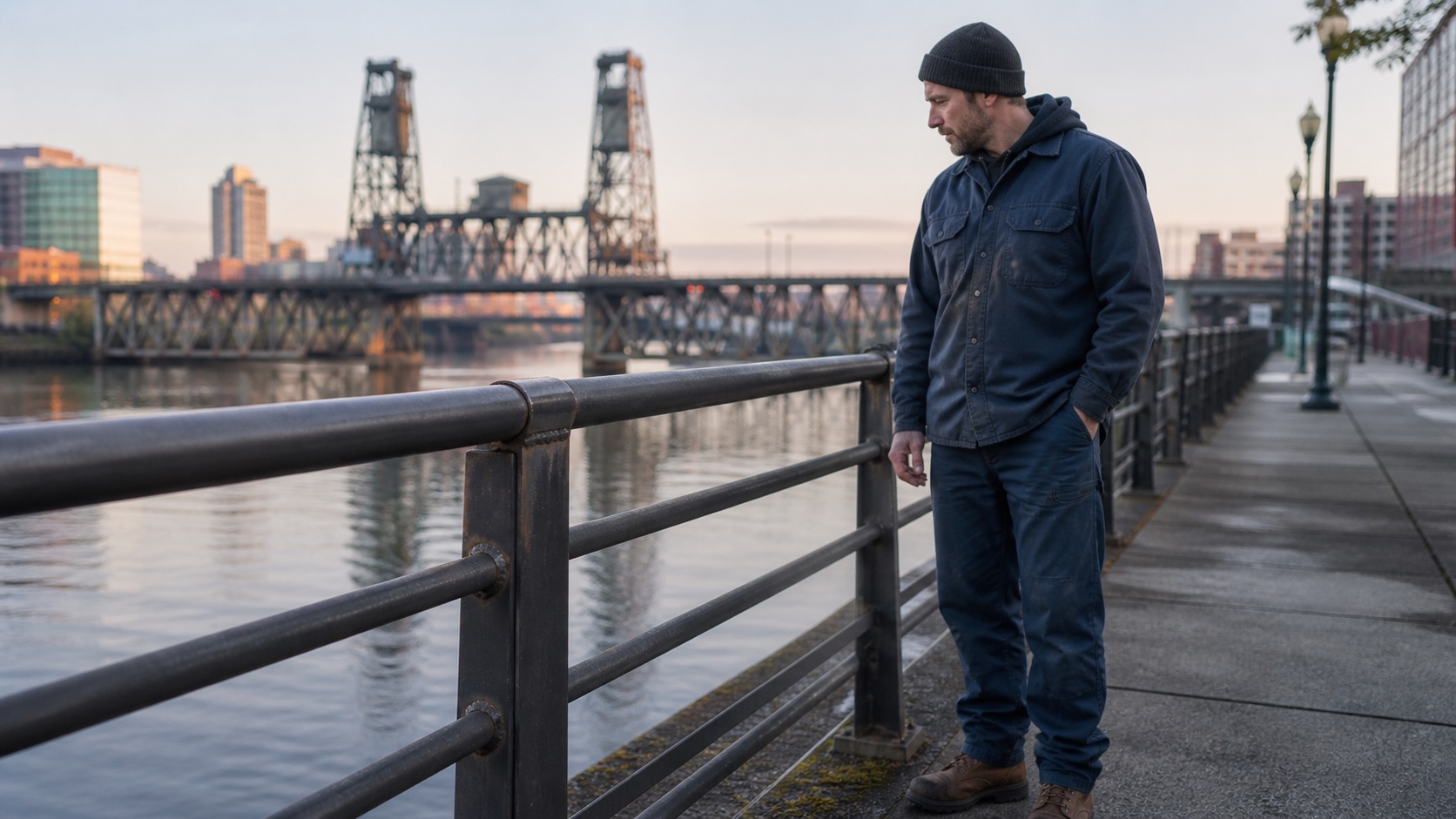
You notice where the posts meet the top rail. You wonder how the fabricator reached the back side. You catch the places where the finish changes around a repair. A trailer passes on the highway and, for half a second, you are looking at the frame instead of the load. A gate closes and your eyes follow the joints before your brain remembers that you are supposed to be off the clock.
That habit is one of the quiet changes the trade makes in a person. Welding teaches the hands, but it also trains attention. The built world starts leaving clues everywhere.
The Trade Teaches a Second Way of Looking
Most people see an object by what it does. A railing keeps people back. A cart carries material. A staircase gets someone to the next level. A welder can see the same purpose while also noticing the choices that made the object possible.
Was it built in sections or assembled in place? Where could a torch, gun, or electrode actually reach? Which joints were designed to disappear under paint, and which ones were left visible? What had to be held square before anything permanent happened?
This is not a superpower and it is not reserved for veterans. It starts early. Once an apprentice has fought a gap, chased distortion, cleaned mill scale, or tried to position a part that looked simple on paper, ordinary metalwork stops looking accidental. Even a plain bracket carries a sequence of decisions.
Curiosity Is Not Condemnation
There is an important line between noticing a weld and judging a structure from the sidewalk. Surface appearance can invite questions, but it does not reveal the entire joint, the design requirements, the procedure, the material, or what testing may have been performed.
The Federal Highway Administration’s Bridge Welding Reference Manual treats welded construction as a system involving design, fabrication, constructability, quality control, quality assurance, and inspection. The agency’s guidance on ultrasonic testing also explains that sound-based examination can detect internal conditions such as cracks, porosity, and lack of fusion. In other words, a glance is not an inspection report.
The better habit is curiosity without the instant verdict. Ask what the builder may have been solving. Notice the access, the joint, and the finish. Respect the fact that important work is rarely understood from one angle.
Ordinary Objects Become Small Lessons
A city block can turn into an open-air shop notebook. Handrails show repetition and alignment. Gates reveal how a frame carries its own weight after the clamps come off. Restaurant furniture puts fit and finish inches from the customer. Utility trailers show what happens when fabrication has to survive weather, movement, loading, and years of use.
Public art can be even more interesting. The finished shape may look effortless, but a welder sees the problem hiding behind it: how to support an awkward form, how to join curved pieces, how to make the structure strong without letting the structure swallow the idea.
The range is part of the appeal. The American Welding Society’s mobile education program points to welding across infrastructure, agriculture, heavy equipment, and manufacturing. Those are not abstract sectors when you know the trade. They are places full of joints, sequences, repairs, and people whose work is holding up somebody else’s day.
You Start Reading the Choices
The most interesting part is not sorting every weld into good or bad. It is learning to read the decisions around it.
- Access: Could the builder get into position, or did the design make a simple joint difficult?
- Sequence: Which pieces likely had to be joined first, and how might heat have moved the assembly?
- Fit: Where did parts meet cleanly, and where did the fabricator have to solve a mismatch?
- Finish: Was the weld meant to remain part of the visual language, or disappear beneath grinding, coating, or trim?
- Service: Does the object live a quiet indoor life, or take vibration, weather, impact, and constant handling?
Those questions make the world more interesting. They also make a person less casual about the labor inside familiar objects.
The Habit Follows You Off the Clock
Welders joke about checking beads in parking lots, underneath restaurant tables, or along the trailer at the gas pump. The joke lands because the habit is real. Once the eye has been trained to see how separate pieces become one useful thing, it does not shut down neatly at the time clock.
That can be a good thing. The habit connects the trade to everyday life. It turns a walk across a bridge into a reminder that someone detailed it, someone fitted it, someone welded it, and someone inspected it. It replaces the idea of a faceless “built environment” with thousands of specific acts of skill.
It can also build humility. The closer you look at work outside your own lane, the easier it is to see how much you do not know about the constraints behind it. Respect grows when attention is paired with questions instead of swagger.
The World Is Full of Somebody’s Work
There is a lot of invisible labor in plain sight. A clean rail in a public building does not announce the hours spent measuring, cutting, fitting, controlling heat, finishing corners, and making repeated sections agree with one another. It simply does its job.
Knowing the trade makes that silence easier to hear. You may never know the fabricator’s name, but you can recognize that a person was there. That awareness is bigger than welding technique. It is a way of seeing craftsmanship, responsibility, and human effort in the things everybody else walks past.
Arc Life is about that wider life around the arc—the habits, observations, and shared language welders carry beyond the booth. Read more about the idea on About Arc Life, or see the current Arc Life collection.
Community question: What everyday object do you inspect without meaning to?

Leave a Reply