Some welding gear earns a place in the cabinet. Other pieces earn a place in the story.
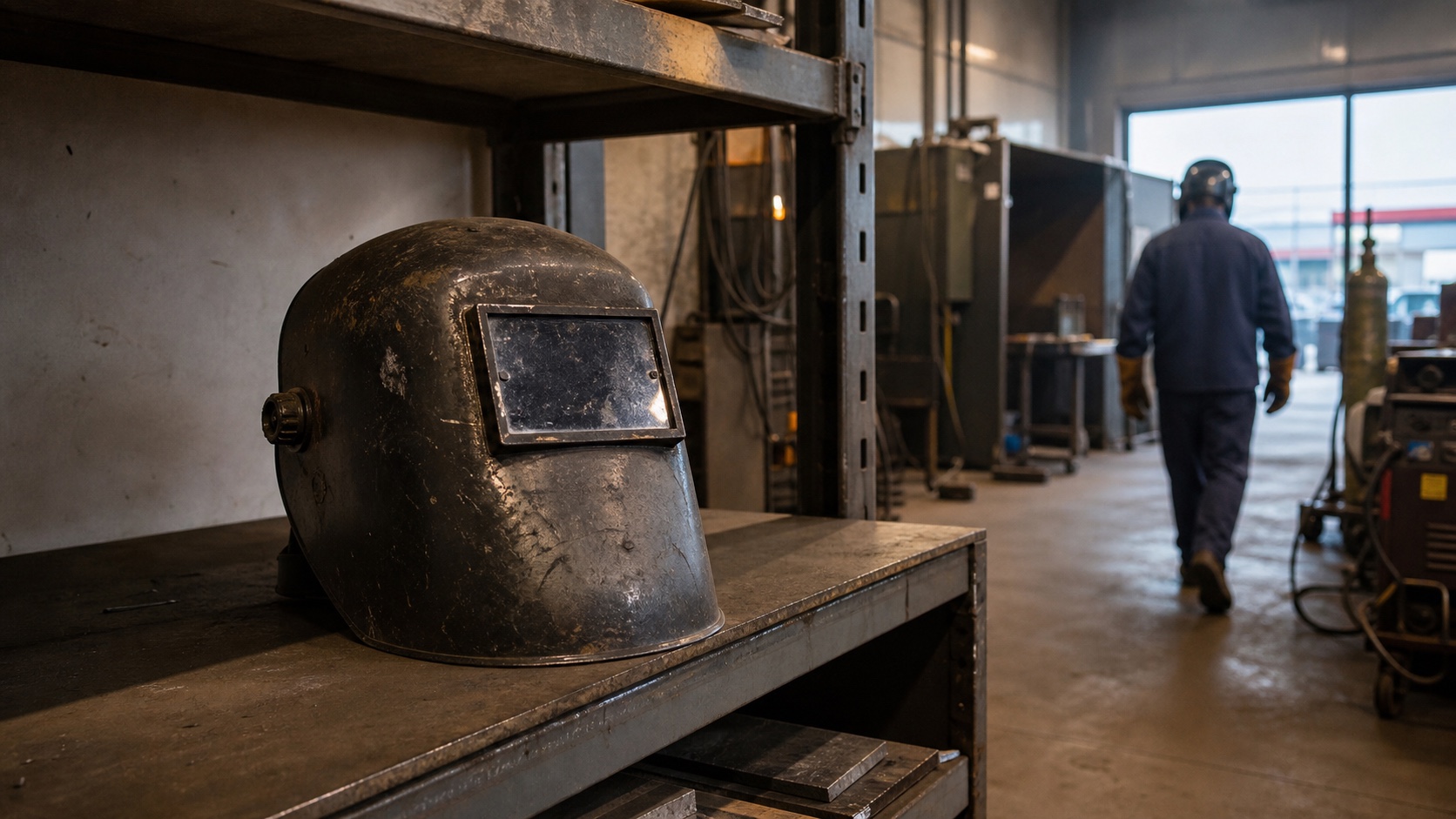
There is an old welding hood sitting on a shelf somewhere right now. The headgear may be tired. The cover lens is probably marked by a thousand small sparks. A clean replacement hangs beside it, ready for work, but the old one never quite makes it to the trash.
That is not always laziness or clutter. Sometimes a hood stops being equipment and becomes a record. It remembers the first job that felt real, the shift when the puddle finally slowed down, the crew that taught more through a nod than a speech, and the version of the welder who was still learning how to see.
Welding is full of consumables. Wire burns. Rods disappear. Discs get smaller. Gloves stiffen, sleeves scorch, and lenses collect scars. Most of it moves through the shop without ceremony. A hood is different because the work has always happened through it. For hours at a time, it is the small dark room between the welder and the arc.
When Gear Becomes a Timeline
A new hood begins as a piece of safety equipment. It has clean edges, fresh headgear, and none of the small adjustments that make it feel personal. Then the shop starts writing on it.
The first scratches may come from setting it down too close to a fixture. A nick on the crown might mark the day a tight corner won. The headgear gets tuned one click at a time until the hood drops with the exact motion the welder expects. Even without stickers, paint, or a name across the side, it begins to look like it belongs to one person.
That history is not visible to everyone. A visitor sees a worn shell. The welder sees time: training days, production nights, road boxes, shutdowns, repairs, mistakes, and the slow accumulation of confidence. The hood did not create the skill, but it was there while the skill was being built.
The Unofficial Resume Nobody Hangs on a Wall
Tradespeople rarely need a trophy for every hard week. The evidence is already around them. It is in a square that finally came out square, a fixture that still repeats, a repair that held, or a younger welder who now knows what to watch for. Old gear can become part of that evidence.
A retired hood can carry the memory of a first paycheck made under the lens. It can mark the move from school coupons to parts that mattered. It may remind someone of the booth where they learned to stop chasing speed and start trusting preparation. None of that turns the hood into a magic object. It simply makes it a witness.
This is one reason shop culture lives in ordinary things. The trade does not exist only in procedures, certifications, and finished welds. It also lives in the objects people reach for every day and the meanings those objects gather without anyone planning it.
Memory Does Not Make Old PPE Serviceable
There is an important line here: sentimental value is not a safety inspection.
A hood can matter deeply and still belong on the shelf. The Occupational Safety and Health Administration explains that welding eye and face protection must use the appropriate filter shade for the work, and that flying-particle hazards can require safety glasses or goggles with side protection under the helmet. The American Welding Society likewise notes that helmets protect against ultraviolet and infrared radiation, sparks, and flying particles, while fit, shade, viewing area, and condition all matter.
A cracked shell, unreliable filter, damaged headgear, badly obscured lens, or questionable protection is not made safe by a good story. Retiring a hood does not disrespect the work done in it. It respects the person who did that work enough to protect the years ahead.
The best use for some old equipment is no longer use. Clean it, store it, photograph it, hang it above the bench, or let it start a conversation—but put a dependable hood on your head when the arc starts.
What the Old Hood Can Still Teach
Kept for the right reason, a retired hood can do something useful without ever returning to service.
It can remind an experienced welder that competence once felt awkward. That matters when an apprentice is fighting fit-up, travel angle, or nerves. The cleanest hand in the shop was not born with a steady puddle. Every practiced motion was once a conscious one.
It can also preserve a piece of a crew. Shops change. People move, retire, and take different calls. Equipment gets rearranged. A familiar hood can bring back the rhythm of a place: who arrived early, who kept the table clean, who could hear a bad setup before seeing it, and who made a long shift lighter without turning everything into a joke.
Most of all, it can keep the trade human. Welding is precision, heat, metallurgy, preparation, and control. It is also people building a working life one job at a time. The objects left behind help tell that part of the story.
The Story Worth Asking
If there is an old hood in your shop, ask why it is still there. The answer may be practical. Maybe it is waiting for parts or kept as a training example. But it may open a door to a story that would otherwise disappear: a first job, a hard lesson, a mentor, a road crew, a turning point, or simply the season when someone realized the trade had become theirs.
What piece of retired welding gear have you kept, and what happened while you were using it?
Keep the Story, Keep Building
Arc Life is interested in the part of welding that does not fit on a spec sheet—the identity, memory, humor, pride, and community that travel with the trade. If that sounds like your side of the booth, visit About Arc Life and keep the conversation moving.
If the story belongs on more than the shelf, see the “The Hood Earned Its Rest” welding tee from Arc Life Co.
Safety note: Follow your employer’s hazard assessment, the helmet manufacturer’s instructions, and applicable standards. This article is about trade culture, not a substitute for PPE selection or inspection guidance.

Leave a Reply