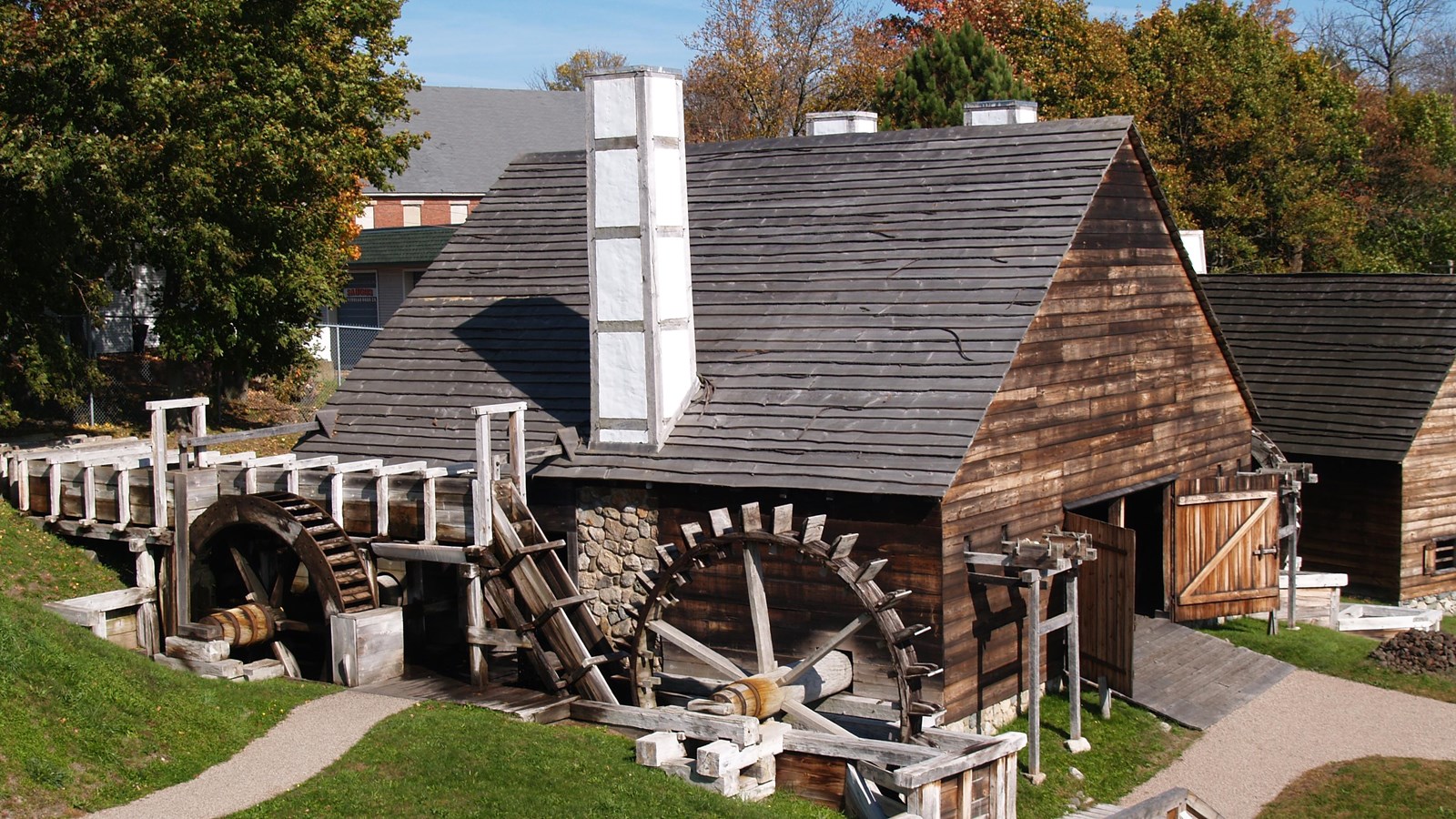
A waterwheel beside a wooden forge can look like scenery until you follow what it powered. At Saugus, Massachusetts, water helped move air and drive a heavy hammer through a chain of work that turned furnace iron into stock a blacksmith could use. The interesting part for a modern fabricator is that chain: power, material, skilled handling and a product prepared for somebody else’s next operation.
The National Park Service describes Saugus Iron Works as a reconstruction of an integrated ironworks that produced cast- and wrought-iron products from 1646 to approximately 1670. The buildings shown today should therefore be read as an interpretation of an earlier industrial site, not as an untouched seventeenth-century shop. That distinction makes the story clearer rather than less impressive.
Follow the material through the works
In the NPS account, the blast furnace, forge and rolling and slitting mill had different jobs. The furnace made cast iron. The forge refined and hammered that material into wrought iron. Some wrought-iron stock then went through another operation to become forms suited to particular uses. Calling the whole place a blacksmith shop would hide much of its organization.
The forge’s main saleable product was the merchant bar. A bar was useful precisely because another tradesperson could do more with it. Blacksmiths bought that stock and made finished objects. The ironworks did not need to make every hinge, tool or other item itself to be central to the work of those trades.
There is a familiar idea here for anyone who buys plate, tube or a prepared component. A shop often receives the result of somebody else’s process and becomes responsible for the next stage. The historical comparison is about the division of work. It does not make old wrought iron interchangeable with a modern specified steel or establish how an unidentified piece should be welded.
The hammer belonged to a process
The NPS description of the forge explains that workers used finery hearths to reduce excess carbon in the furnace iron. Hand hammering and a 500-pound trip hammer helped consolidate and shape the heated material. Reheating at the chafery hearth supported the later shaping steps. These are historical descriptions, not directions for recreating the operation.
The hammer is easy to remember because it gives the work a visible center. But a powerful blow could not replace the earlier refining or the worker’s handling of the material. Looking only at the hammer would be like looking only at a welding machine and overlooking the material preparation, fit-up and decisions that determine what reaches the work station.
The water-powered equipment also makes an important point about craft. Skilled work and mechanical power were already connected here. The presence of a machine does not tell us that the surrounding work was simple. The useful questions are what the machine supplied, what people still had to judge and how the separate operations depended on one another.
One product could take another route
The NPS teaching account describes the rolling and slitting mill as a further stage for part of the forge’s output. Rollers flattened bars, and slitters divided flats into narrow stock used for nails. A millwright coordinated the water-powered machinery. The result was material that another worker would turn into a finished fastener.
That sequence gives the visitor something more specific to notice than the age of the buildings. The same industrial site could produce stock for different downstream jobs. Changing the form of the product changed what a customer could do with it. The work mattered both where it happened and where the material went next.
For a modern shop, that is a useful way to talk about suppliers and neighboring trades. Ask what arrives, what condition it must be in and what the next person needs. WSP’s article on learning between the lathe and weld booth considers that exchange in a different setting. The processes differ, but taking the next operation seriously remains a practical habit.
Read the reconstruction honestly
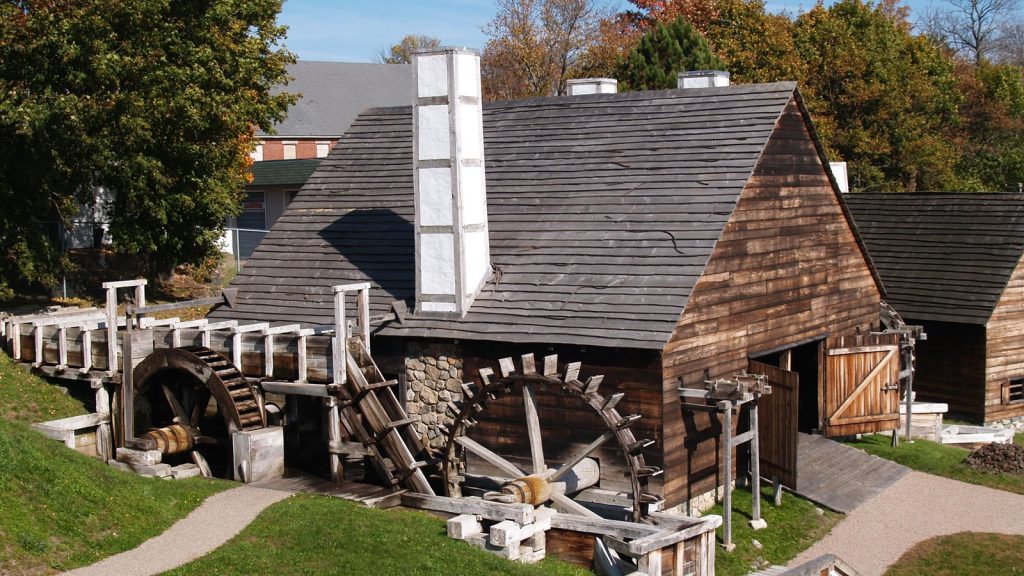
The park’s history account says archaeological work beginning in the 1940s preceded reconstruction of the main industrial elements. The restoration opened as a private museum in 1954, before National Park Service administration. The photograph accompanying this article shows that reconstructed forge and its waterwheels; it is not a photograph of colonial-era workers or equipment in use.
A reconstruction can help explain relationships that are difficult to see in a written description. It also deserves careful labels. Which parts are based on recovered evidence? Which details are an interpretation? What does the picture show directly, and what comes from the historical account? Those questions make a visit more useful without demanding that the site answer questions it was never meant to settle.
The labor history needs the same care. The NPS account identifies English freemen, Puritans and Scots prisoners among the people connected with the works. An appreciation of skill should not turn that complicated history into a story in which everyone had the same freedom or experience. Nor should the demanding conditions of early ironmaking be offered as a model for a safe shop today.
A useful question to carry home
After looking at the forge, ask one question about a current job: what work had to happen before this material reached the bench? Then ask what the next person will need from it. That is a modest way to connect an industrial history visit with everyday fabrication, without pretending the tools, materials or working conditions are the same.
For another view of preparation and responsibility, read The WPS on the Table. For welding-inspired interests beyond a single job, explore Arc Life. The useful inheritance from an old ironworks is curiosity about the whole process and respect for the people whose work comes before and after yours.
Sources: National Park Service, Forge; Saugus History & Culture; and Saugus Iron Works: Life and Work at an Early American Industrial Site. Sources checked November 10, 2026. No current demonstration schedule or visitor-service availability is claimed.
Photo: Reconstructed forge at Saugus Iron Works National Historic Site. National Park Service photo, from its Forge page. No claim to original U.S. Government works.
Leave a Reply