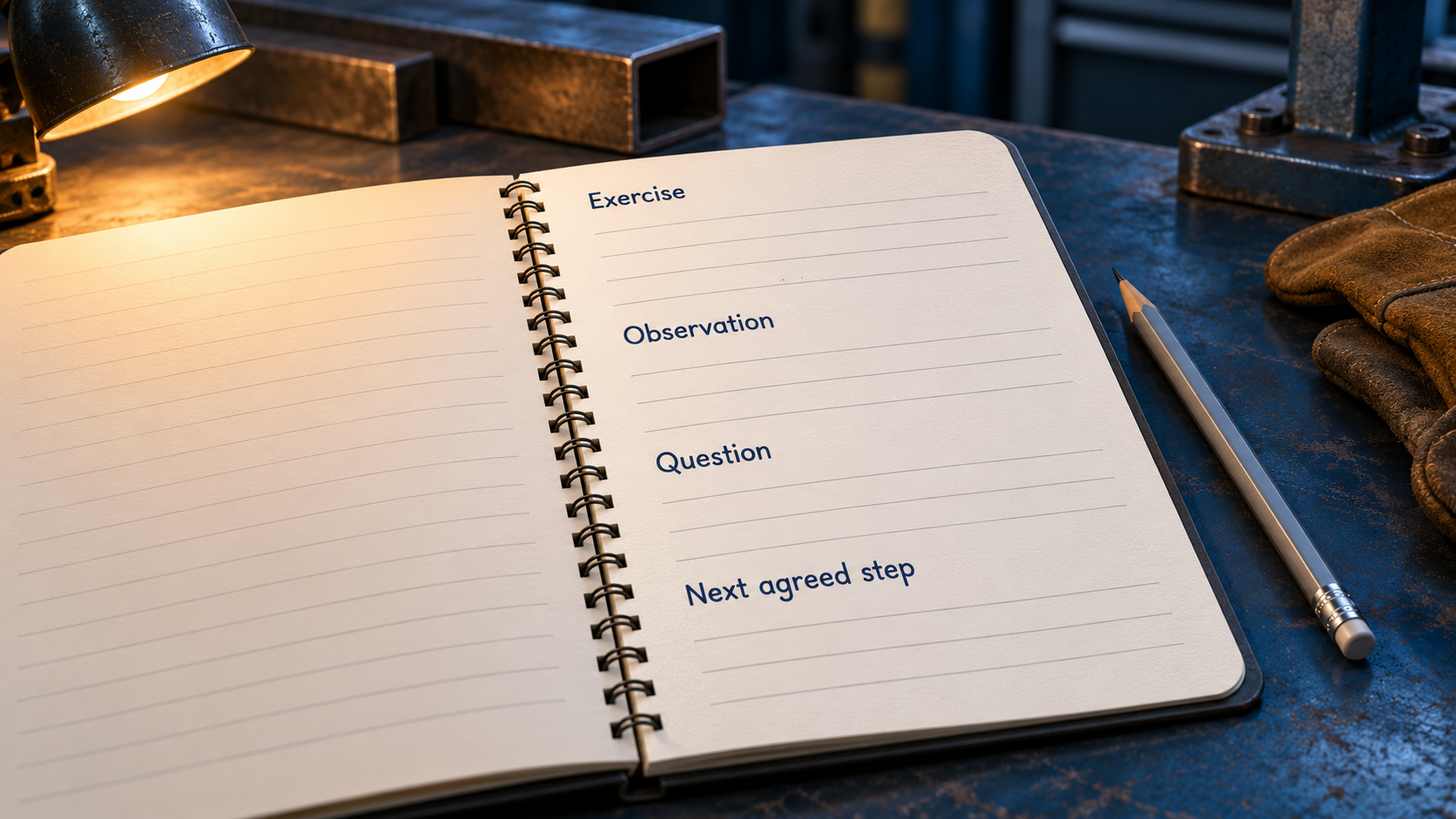
A practice session can end with a useful question that disappears by the next class. You remember being frustrated. You remember that one attempt looked different. What you cannot remember is which instruction you were following when the difference showed up. The next conversation starts over, and the person helping you has to reconstruct the whole session before offering a useful correction.
A short practice note gives that conversation somewhere to begin. It does not need a special notebook, a paid app or a photograph worth posting. It needs enough context to connect the attempt, your observation and the question you want answered. The aim is to make the next few minutes with an instructor easier to use.
Give each attempt a name you can find again
Start with a simple identifier that makes sense in your training setting: the date, exercise and attempt number. Ask the instructor how practice pieces should be identified before putting anything on them. If marking or keeping the piece is not allowed, use the class record or another approved method. A note that cannot be connected to its example is much less useful a week later.
Keep the identifier boring. A short label you can repeat accurately works better than a nickname that only made sense at the time. If you have permission to take a photograph, put the matching identifier in the note. Follow the school's or employer's rules about cameras and information. A personal learning record should not turn customer work into public content.
Record the assignment before judging the result
Write down what you were actually asked to practice. That may be one part of a larger exercise rather than a complete demonstration of your ability. A person working on a restart has a different question from someone trying to maintain a consistent position. The assignment gives the reviewer a fair starting point and keeps the conversation tied to the lesson.
Record the process, material description and setup information supplied for that exercise. Do not fill gaps from memory later and make them look like observations. If you do not know a detail, leave a visible question. Your instructor can help decide which information matters. This is a record of the session, not permission to invent or change a procedure.
Separate what you saw from what you think caused it
Try writing two short sentences. The first says what you noticed. The second says what you want help understanding. For example: “The end of this attempt looks different from the beginning. Which part should I compare first?” That gives the instructor something specific to examine without making you defend a diagnosis you have not established.
Avoid turning every entry into “good” or “bad.” Those words describe your reaction but leave out the useful evidence. You can be honest about frustration and still be precise. “I lost track of the instruction halfway through” is a better starting point than a long explanation of why the machine must be wrong. It also gives the instructor a chance to check your understanding before changing anything.
Keep the correction in the instructor's words
After the conversation, write the next instruction as plainly as you can. Read it back if there is any uncertainty. A small misunderstanding can survive several practice sessions when both people assume they agreed. The note creates a chance to catch that misunderstanding while the explanation is still fresh.
Do not turn one instruction into a rule for every future job. Keep it attached to the exercise and circumstances in which it was given. Manufacturer resources such as Miller's weld-setting calculators are organized by process; a saved number without its context tells only part of the story. Use your class instructions, equipment manual and required supervision to decide what belongs in the next attempt.
Come back with a comparison
On the next attempt, record whether you followed the agreed instruction and what you observed. You do not have to announce that the problem is solved. A useful return conversation can be as simple as: “I tried the change we discussed. Here is the earlier example and here is this one. Am I comparing the right feature?”
That question keeps feedback connected across sessions. It also makes room for an instructor to say that the first explanation needs adjustment. Learning does not require every correction to work perfectly the first time. It does require an honest account of what was tried. A short note can help you give that account without rebuilding the entire day from memory.
Make the habit small enough to keep
Leave room for four things: the exercise, your observation, the question and the next agreed step. If you add more fields, make sure they help an actual conversation. A record that takes longer to complete than you can reasonably spare will soon become another unfinished project in the bottom of the bag.
Review the notes before the next lesson. Circle the question that still needs an answer and close the ones your instructor has addressed. Keep required school or shop records in their proper system; a personal notebook should not replace them. The same boundary applies to inspection and qualification. These notes help you learn. They do not certify a weld or establish a qualification.
Leave yourself a better starting point
The value of a practice note is in what it lets you do next. It can help you explain a concern, remember a correction and use a short conversation well. It can also show that an unanswered question has been carried forward honestly rather than hidden under a fresh page.
What is one question you wish you had written down during your first month of welding? Bring it to the next appropriate training conversation. For welding-inspired gear and practical shop tools, visit The Welders Life.
Source
Miller weld-setting calculators provide process-specific reference tools. The note-taking format above is an editorial suggestion, not a manufacturer's training or qualification procedure.
Leave a Reply