A good welding shop is not defined only by what comes off the table. It is also defined by the habits people build around the work. One of the least glamorous—and most professional—habits is controlling welding fumes instead of treating haze in the air as proof that the crew is busy.
Craftsmanship includes the space around the weld
Welders talk constantly about fit-up, travel angle, arc length, cleanliness, machine setup, and inspection. Those details matter because repeatable work comes from controlling variables. Fume control belongs in the same conversation. OSHA’s general-industry welding standard says local exhaust or general ventilation must be arranged to keep toxic fumes, gases, and dusts below applicable limits. In construction, OSHA likewise describes general mechanical ventilation and local exhaust systems, with local hoods placed as close as practicable to the work.
That language is regulatory, but the shop lesson is cultural: do not normalize a condition just because everyone is used to seeing it.
The plume is part of the job setup
Welding fume is not one uniform material. Its composition depends on the process, base metal, filler, coatings, surface contamination, and other job conditions. That is why “we have a fan” is not a complete plan. Airflow can help, but placement matters. A fan that pushes the plume through another worker’s breathing zone can trade one problem for another.
Local exhaust is different because the goal is to capture contaminants near the source. OSHA’s construction rule describes movable hoods positioned close to the work, and the general-industry rule also recognizes local exhaust hoods and booths. The exact control strategy depends on the work and exposure assessment, but the principle is straightforward: manage the plume intentionally.
Good shop culture makes controls easy to use
Equipment only works when the workflow makes it practical. If a fume arm is hard to move, blocked by scrap, parked across the shop, or treated as something that slows production, people will work around it. The better system is the same one shops use for clamps, grinders, consumables, and fixtures: put the tool where the work happens, keep it functional, and make its use normal.
- Keep extraction equipment accessible instead of buried behind material.
- Train people to position capture devices without interfering with the weld.
- Keep airflow paths from pushing contaminants toward coworkers.
- Know when coatings, stainless alloys, confined spaces, or other conditions change the hazard.
- Use respiratory protection only as part of the employer’s applicable respiratory-protection program when required; a respirator is not a casual substitute for required engineering controls.
The experienced welder sets the tone
New welders learn more from what a shop tolerates than from what a poster says. If experienced people move the fume hood, clean coatings properly, ask what material is actually being welded, and stop when ventilation is inadequate, that becomes the local definition of professional behavior. If everyone shrugs at a blue haze hanging over the table, that becomes the lesson instead.
Ventilation is not a substitute for understanding the job
Different materials and spaces can trigger different requirements. OSHA has specific provisions for confined spaces and for metals such as zinc, lead, cadmium, chromium, mercury, and beryllium. The point for day-to-day shop practice is not to memorize every paragraph at the table; it is to recognize when the work has moved beyond routine conditions and needs the correct procedure, exposure control, and supervision.
Pride in the trade should include invisible work
Some of the best shop habits are barely visible in the finished part: checking a drawing twice, replacing a damaged lead before it fails, labeling material correctly, keeping gas cylinders secured, and setting up fume control before the arc starts. None of those steps makes the weld bead prettier. They make the operation more disciplined.
That is a useful definition of craftsmanship: not only making the weld, but building a work environment where the next person can make a good weld too.
For welding-inspired shop culture, practical trade gear, and tools built around the routines of welders and fabricators, visit The Welders Life.
Sources
- OSHA 29 CFR 1910.252 — General welding requirements and ventilation
- OSHA 29 CFR 1926.353 — Ventilation and protection in welding, cutting, and heating
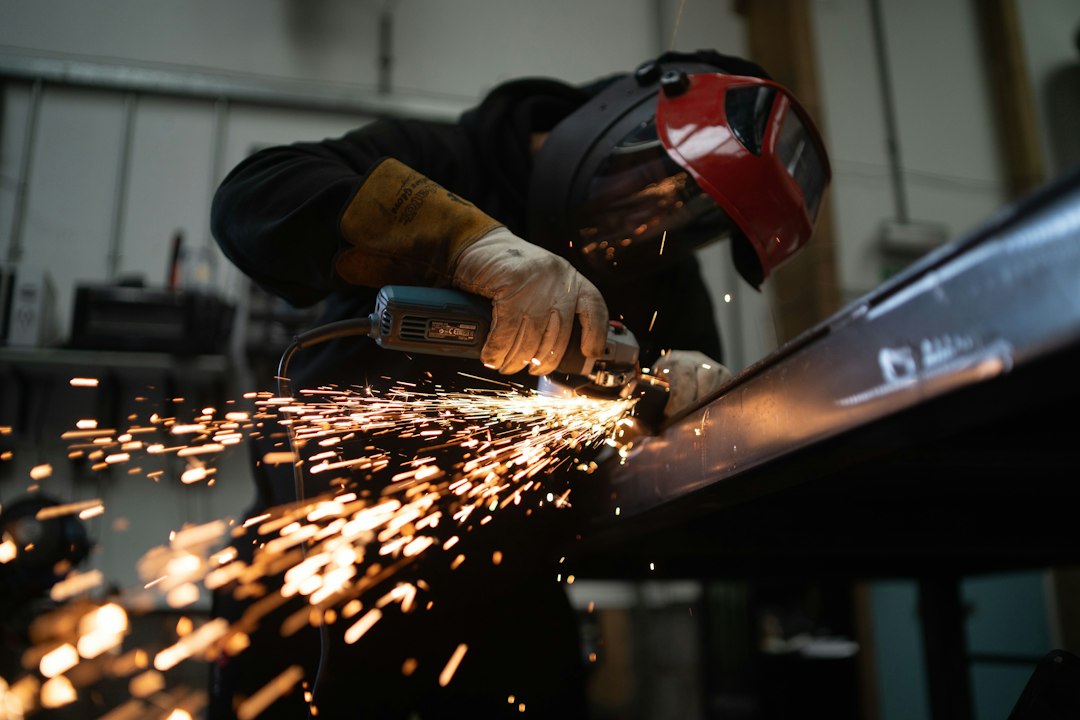
Featured image is contextual shop imagery and is not presented as a specific OSHA inspection, employer, or identified welding event.

Leave a Reply