3M PELTOR EEP-100 for welding shops is worth considering when the problem is not simply “make the shop quieter,” but “protect hearing without constantly removing protection to communicate or monitor what is happening around you.” The EEP-100 is an industrial electronic earplug system with external microphones, rechargeable earpieces and interchangeable eartips. The important buying decision is not whether it is electronic; it is whether the eartip, fit, noise exposure and other PPE make it appropriate for the job.
This guide focuses on fit, attenuation, communication and welding-shop PPE checks. It is not a substitute for a workplace hearing-conservation program, exposure monitoring or individual fit testing.
3M PELTOR EEP-100 for welding shops: what it actually does
According to 3M’s EEP-100 product information, the system is designed to help provide hearing protection in hazardous-noise environments while external microphones allow the wearer to hear communication and environmental sounds. That distinction matters in fabrication and maintenance work. The electronic function is intended to improve situational awareness; it does not remove the need for a correctly fitted hearing protector.
3M identifies the product as EEP-100, 3M ID 7100193144, UPC 00051131277434. The earpieces use one-button operation and a rechargeable lithium-ion system with a charging/storage case. 3M also markets the unit for industrial and occupational use and notes compatibility with many other head-worn PPE systems such as hard hats, eyewear and face shields.
Do not treat the earplug system as one fixed NRR
The EEP-100 can be used with multiple compatible eartip styles, and the attenuation rating depends on the eartip and the fit. That means the useful question is not “What is the EEP-100 NRR?” in isolation. The better question is “What is the rated protection of the exact eartip I am using, and can I achieve that fit on my own ear?”
3M specifically recommends individual fit testing for hearing protectors. This is especially important in a welding shop because a poor seal can turn a high-rated protector into a much weaker one. Ear canal size, insertion depth, dirty or worn eartips, facial motion and repeated removal can all affect real-world protection.
For comparison, our recent guide to the 3M PELTOR X5A earmuff and shop noise covers the same core lesson from an over-the-ear perspective: the printed NRR is not a direct promise of the decibel reduction any individual worker will receive in the field.
When electronic earplugs can make sense around welding
- Work moves between quiet and noisy areas and workers are tempted to remove conventional plugs repeatedly.
- Face-to-face communication and awareness of alarms, vehicles or nearby activity are important.
- A welding helmet, grinding shield or hard hat makes a bulky earmuff difficult to combine comfortably.
- The shop already has a hearing-protection program and wants an in-ear option that can be fit-tested.
- Noise is intermittent or variable rather than a steady background level.
None of those conditions automatically means the EEP-100 is the right answer. The device should be selected as part of the overall exposure-control plan, not as a replacement for engineering controls or administrative controls where those are required.
The welding-helmet fit check
One practical advantage of an in-ear protector is clearance. An earmuff cup and headband can interfere with some welding helmet suspensions, hard-hat adapters or face shields. An in-ear system avoids that large outer cup, but you still need to verify the complete PPE stack.
- Put the hearing protection on first and establish the seal before lowering the welding helmet.
- Move the helmet through its full up/down travel and make sure the suspension does not disturb the earpiece.
- Add safety glasses, hard hat or face shield exactly as they will be worn on the job.
- Check whether cables, straps, collars or respirator components contact the earpieces.
- Repeat the fit check after several minutes of normal head movement, not just while standing still.
Electronic situational awareness is not “open hearing”
The microphones are useful because the worker does not have to remove the plugs just to hear ordinary communication. But it is important not to confuse that feature with having unprotected hearing. The system is still hearing PPE. Environmental sound is processed through the electronics, and the hearing protector still depends on an effective physical seal.
That can be valuable around intermittent grinding, air-arcing, hammering, gouging, plasma cutting and other fabrication-shop noise. It also means supervisors should train users on the controls before relying on the device in an active work area.
OSHA exposure rules still drive the decision
Under OSHA 29 CFR 1910.95, general-industry employers must use a continuing hearing-conservation program when employee noise exposure equals or exceeds an 8-hour time-weighted average of 85 dBA. The standard also addresses monitoring, audiometric testing, hearing protectors, training and recordkeeping. A product purchase does not replace those obligations.
If a shop has not measured exposure, the first gap is exposure information—not a different earplug. Welding itself is only one noise source. Grinding, carbon-arc gouging, compressed air, saws, material handling, impact tools and nearby equipment can dominate the exposure.
Buying checklist for the EEP-100
- Confirm the exact model: 3M PELTOR EEP-100, not a different PELTOR communication product.
- Confirm the kit contents: verify the included eartips and charging components against the current listing.
- Plan for fit testing: do not choose an eartip only because it has the highest printed rating.
- Check the PPE combination: welding helmet, hard hat, eyewear, face shield and respirator can all change comfort and fit.
- Check the work pattern: electronic environmental listening is most useful when communication and situational awareness are genuine job needs.
- Maintain the system: inspect and replace eartips as needed and keep the charging/storage case clean.
As an Amazon Associate I earn from qualifying purchases.
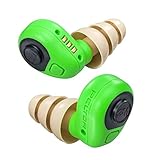
- PROTECT YOUR HEARING: Helps provide hearing protection in environments with hazardous noise
- EXTERNAL MICROPHONES: Helps you hear communication and your environment without earplug removal (speaker limited to 82 dB). Ambient sounds can be heard at a level below 82dB.
- COMFORTABLE: The small and lightweight design helps improve overall comfort and user experience
- EASY TO USE: Intuitive one button operation powers earpiece on/off and selects volume level
- RECHARGEABLE LI-ION BATTERY: Provides up to 16 hours of continuous operation; Rechargeable via micro USB
Last update on 2026-09-27 / Affiliate links / Images from Amazon Product Advertising API
Bottom line
The 3M PELTOR EEP-100 can be a strong fit for welding and fabrication environments where workers need hearing protection plus better awareness of nearby speech and activity. The buying decision should still start with measured noise exposure, the exact eartip rating, individual fit and the complete PPE combination. If those checks are skipped, the electronics do not make up for a poor seal or an inadequate hearing-protection plan.

Leave a Reply