
3M PELTOR X5A welding shop hearing protection is a high-attenuation earmuff option for noisy fabrication work, but its 31 dB Noise Reduction Rating does not mean every wearer automatically gets 31 dB of real-world reduction. The X5A is the over-the-head version of 3M’s X5 series, and the practical buying question is whether that headband style, fit, and attenuation level match the noise exposure and the other PPE you need to wear.
As an Amazon Associate I earn from qualifying purchases.
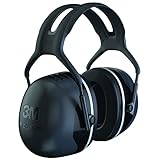
- HIGH ATTENUATION: Very high attenuation earmuffs recommended for high-noise exposure applications – NRR 31 dB CSA Class AL*
- ADVANCED TECHNOLOGIES: High attenuation as a result of newly designed spacers, specially formulated earcup liners and innovative foam contained in the cushions
- COMFORTABLE: Wide, soft foam ear cushions and earcup tilting pivot points designed for high comfort and an effective acoustic seal with the head
- EXTENDED COMFORT: Internal stainless steel wire in headband helps maintain consistent force over an 8-hour period for extended comfort. Twin headband design helps reduce heat buildup
- DURABLE: ABS plastic cups create a rigid, high-strength and impact-resistant earmuff to handle tough environments
Last update on 2026-09-27 / Affiliate links / Images from Amazon Product Advertising API
What the 3M PELTOR X5A is
3M identifies the X5A as an over-the-head X5-series earmuff with a 31 dB NRR. The manufacturer lists slow-recovery high-density foam in the earcups, pivot points intended to help the cups seat against the head, replaceable ear cushions and foam liners through the HYX5 hygiene kit, and compatibility with 3M’s E-A-Rfit dual-ear fit-validation system. The exact Amazon product used in this article is ASIN B00CPCHBCQ, which the current Amazon page identifies as the 3M PELTOR X5 Series.
The X5A is not a welding helmet, hard-hat attachment, or electronic communications headset. It is the headband-style passive earmuff. That distinction matters because the same X5 family includes other mounting styles, while this exact ASIN is the over-the-head product.
What NRR 31 means—and what it does not mean
The Noise Reduction Rating is a laboratory-derived label used for hearing protectors sold in the United States. It is useful for comparing products, but it is not a promise that a worker will receive the full labeled number in every shop. Fit, hair, eyewear, headwear, cup position, wear time, and the actual noise spectrum can all change the protection that reaches the ear.
OSHA’s hearing-protection guidance requires employers to evaluate whether hearing protectors provide adequate attenuation for the specific noise environment. OSHA also provides methods for estimating attenuation from an NRR rather than simply subtracting the label value from a sound-level reading without adjustment. For an individual welder or fabricator, the practical takeaway is simple: start with measured exposure and required attenuation, then choose and fit the protector. Do not reverse the process by buying the highest number and assuming the problem is solved.
Where X5A can make sense in a welding shop
Welding itself is only one noise source in a fabrication area. Grinding, carbon-arc gouging, chipping, hammering, cutting, air tools, material handling, nearby equipment, and other operations can drive the exposure. A high-attenuation passive earmuff can be useful when the shop’s measured noise and hearing-conservation program call for substantial reduction and when an over-the-head band can be worn correctly with the rest of the PPE.
The X5A is especially easy to evaluate for grinding, fit-up, material preparation, cleanup, and other tasks performed without a welding hood over the headband. That does not mean it cannot be part of a welder’s PPE system; it means the complete system has to be checked rather than treating each item separately.
The welding-helmet compatibility check
The X5A’s over-the-head band occupies the same general space used by many welding-helmet headgear assemblies. Before buying it specifically to wear under a hood, verify that your helmet can lower and seal around the earmuffs without shifting the cups, breaking the ear seal, or forcing the helmet into an unstable position. Do not assume compatibility from product photos.
If the headband interferes with a helmet or hard hat, that does not make the X5 family unsuitable by itself. It means the exact mounting style needs to match the work. 3M offers X5-series configurations beyond the X5A, but this article and Amazon link are intentionally limited to the exact X5A over-the-head ASIN so the product is not misrepresented.
Eyewear can affect the seal
Safety glasses are mandatory in many fabrication tasks, but the temple pieces sit directly under an earmuff cushion. Thick temples, poor cup position, or anything else that creates a gap can reduce attenuation. The correct approach is to fit all required PPE together and confirm the cups fully contact the head around the ears. If the workplace uses personal attenuation rating or fit-testing equipment, the complete worn configuration should be evaluated.
3M specifically lists the X5 series as compatible with its E-A-Rfit validation system. That is useful because fit-testing can show whether the actual worn protection is performing as expected for that person rather than relying only on the package label.
When more attenuation is not automatically better
High attenuation can be appropriate in very noisy areas, but hearing protection also has to support safe communication and situational awareness. The goal is adequate protection for the exposure, not simply the largest NRR available. In some tasks, overprotection can make it harder to hear alarms, verbal warnings, equipment changes, or approaching vehicles. A hearing-conservation program should balance attenuation with the need to recognize important signals.
For extremely high exposures, a single earmuff may also be insufficient. Some environments require dual protection with plugs and muffs. That decision should come from the measured exposure, applicable requirements, and the employer’s hearing-protection program—not from a general product review.
Maintenance matters with any reusable earmuff
Inspect the cushions and liners instead of treating earmuffs as permanent equipment. Hardened, damaged, dirty, or compressed cushions can affect both comfort and the seal. 3M lists the HYX5 hygiene kit as the replacement cushion-and-liner set for the X5 series. Follow 3M’s current instructions for inspection, cleaning, storage, and replacement rather than inventing a universal calendar interval.
Keep the sealing surface clean and check the headband and cup pivots for damage. If the protector cannot sit correctly or has been damaged, replace or repair it with the manufacturer-specified components before relying on it in noise.
A practical buying decision for the X5A
The X5A is a strong candidate when four conditions line up: the measured shop noise calls for high attenuation, an over-the-head earmuff fits the task, the cups can seal correctly with required eyewear and other PPE, and the wearer can use it consistently. If any of those conditions fail, the 31 dB label alone is not a reason to force the product into the job.
For other welding PPE and comparison paths, use the Weld Support Parts PPE Support hub. It is designed to help narrow PPE by work type and equipment family before opening a buy path.
Bottom line
The 3M PELTOR X5A is a passive, over-the-head earmuff with a manufacturer-rated NRR of 31 dB. That makes it worth considering for high-noise fabrication and welding-shop tasks, but real protection depends on exposure, fit, seal, other PPE, and consistent wear. Confirm that the headband works with your helmet or hard hat system, fit the cups with safety glasses in place, and use the employer’s noise assessment and hearing-conservation requirements to decide whether the attenuation is appropriate.
Sources checked
3M — PELTOR Over-the-Head Earmuffs X5A; OSHA — Occupational Noise Exposure / Hearing Conservation; OSHA — Methods for Estimating Hearing Protector Attenuation; Amazon product page for ASIN B00CPCHBCQ.

Leave a Reply