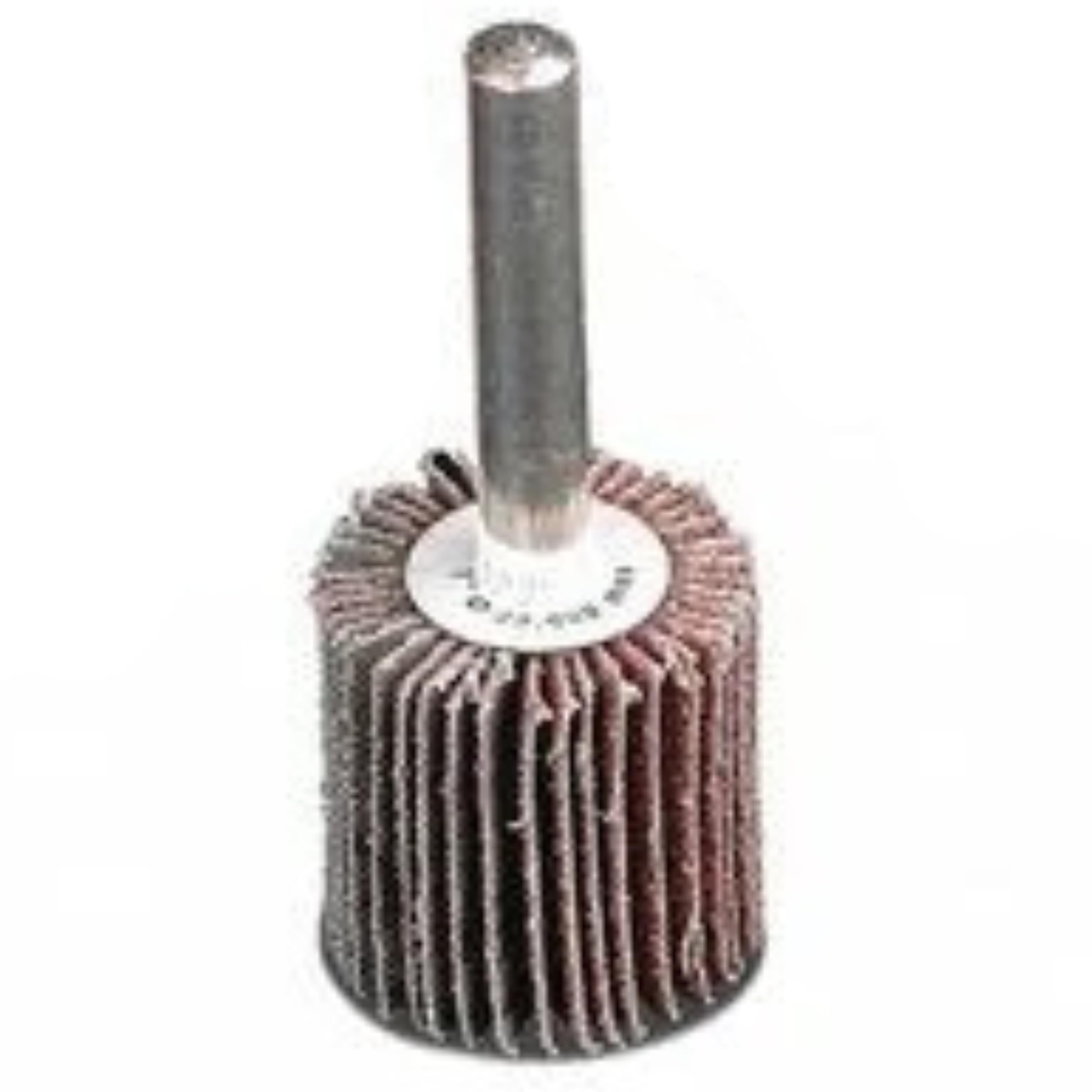

CGW 39908 flap wheels are aimed at compact grinding and blending work where a standard disc does not fit. The listed size is 1" x 1" with a 1/4" arbor, and the abrasive is aluminum oxide at 60 grit. For weld support teams, that combination points to practical use in weld cleanup, edge break, and light deburring on accessible surfaces. The buying question is not just whether the wheel is “good,” but whether it fits the tool, the work envelope, and the finish requirement.
This draft focuses on application checks and purchase verification. It does not replace machine, abrasive, or shop safety procedures. If the job is safety-critical, verify with the tool maker and the abrasive manufacturer before use.
Key Takeaways
- Use compact flap wheels when a larger disc cannot reach a joint, edge, or internal feature.
- 60 grit is a practical middle ground for material removal and surface blending, but finish expectations must be confirmed on the part.
- Verify arbor size, tool speed range, guard clearance, and support hardware before ordering in quantity.
- Inspect each wheel for damage before first use and again after any drop or impact.
- If the application involves stainless, coated steel, or a controlled finish, confirm the process against your internal work instruction.
Where This Wheel Fits
Compact flap wheels are useful when the operator needs controlled contact in a small area. Typical examples include inside corners, narrow openings, short weld transitions, and deburr work on small fabricated parts. A 1" x 1" wheel is small enough to reach into restricted areas, but that same size also means the operator must manage pressure carefully. Excess force can overload the wheel, shorten life, and create uneven scratch patterns.
Because the abrasive is aluminum oxide, the wheel is generally selected as a general-purpose metalworking option. That is a source reference, not a guarantee of suitability for every base metal, coating, or heat-sensitive part. For stainless, mixed alloys, or finish-critical parts, verify the expected scratch pattern on a sample piece before releasing the job.
Application Checks Before You Buy
Check 1: Tool fit. Confirm that your tool accepts a 1/4" arbor. Measure the spindle and any adapter stack-up. If the tool uses a collet, mandrel, or adapter system, verify the actual installed diameter, not just the nameplate. Unknown (Verify) for exact adapter compatibility if your setup is nonstandard.
Check 2: Speed range. Confirm the tool’s rated speed range is appropriate for the wheel and the intended duty. Do not assume all small rotary tools are appropriate. If the wheel or tool documentation is unclear, treat the speed rating as Unknown (Verify) until the manufacturer confirms it.
Check 3: Reach and clearance. Measure the work area. A compact wheel can still fail to reach if the surrounding geometry blocks the face of the abrasive. Verify clearance around guards, housings, and fixtures before committing to the part number.
Check 4: Surface target. Decide whether the job needs weld knockdown, edge blending, or a finer cosmetic finish. Sixty-grit can be too aggressive for final appearance work on thin material, but may be appropriate for initial cleanup. If the finish target is unclear, split the process into a roughing step and a finishing step.
Inspection Steps on Receipt
Inspect: check the pack count, carton damage, and any visible deformation of the wheels or arbors. Look for lifted flaps, cracks in the hub, missing layers, or contamination from oil or moisture.
Verify: confirm the wheel dimensions on the packaging against the purchase requirement. Compare the arbor size and the grit callout before the items are stocked or issued to the floor.
Check: spin-test by hand only after visual inspection and only if your internal procedure allows it. A wheel that wobbles, drags, or shows uneven layers should be rejected from service.
Document: if your maintenance or fabrication team tracks abrasives by lot or issue date, record the quantity received and any visible packaging issues. That helps when a production line reports premature wear or unusual finish quality.
Use Checks During the Job
Start with light pressure. Let the abrasive cut instead of forcing the tool into the work. If the wheel loads quickly, glaze forms, or the cut becomes erratic, stop and inspect the surface condition. Coating, scale, heat tint, or weld spatter can change the way the wheel behaves.
Check the workpiece temperature if the part is thin or distortion-sensitive. Small abrasive wheels can concentrate heat in a narrow zone. If discoloration or warping appears, reduce pressure, shorten passes, or change the process sequence.
Verify that the operator is using the wheel in the intended orientation. Side loading, excessive angle, or contact beyond the working face can shorten life and increase risk. If your shop requires a specific traverse pattern, follow that instruction rather than relying on a general grinding habit.
Troubleshooting Support
Problem: Wheel wears too fast.
Check whether the operator is using excessive pressure, whether the work material is harder than expected, and whether the wheel is being run at the right speed. Verify that the tool is not vibrating or misaligned. If wear remains abnormal, compare against a known-good wheel from the same lot.
Problem: Finish is uneven.
Inspect the wheel for loading, damaged flaps, or irregular wear. Verify that the workpiece was not already gouged or contaminated. If the application needs a controlled cosmetic finish, consider a separate finishing step after the initial cut.
Problem: Wheel does not fit the tool correctly.
Check the arbor diameter, any adapter, and the spindle length. Unknown (Verify) if the tool relies on a brand-specific mandrel or shoulder geometry. Do not force the fit.
Problem: Excess heat or chatter.
Inspect for loose mounting, bent adapters, or worn tool bearings. Verify that the wheel is not contacting a guard or fixture. Reduce pressure and reassess the approach before continuing.
Buying Checks for Maintenance and Fabrication Teams
Before adding this wheel to a stocked abrasive list, verify the following internally:
- Tool model numbers currently in service
- Required arbor size and mandrel style
- Primary materials processed in the shop
- Whether the wheel is for rough cleanup, blend work, or pre-finish preparation
- Any internal restrictions for stainless, coated parts, or customer-visible surfaces
If your operation handles multiple departments, keep the ordering description tied to the actual task. A small flap wheel for deburring is not the same as a finishing wheel for cosmetic work, even if both sit in the same storage cabinet.
Related Reference Links
If you are comparing compact flap wheel options, this related article may help frame sizing and grit selection: CGW Flap Disc 39910, 1″ x 1″ x 1/4″, Aluminum Oxide, 120 Grit, Pack of (10) (39910 – PK of 10). It covers a finer-grit comparison point for similar compact work.
Safety Notes
- Wear eye protection, hand protection, and any task-required face or body protection.
- Keep guards, tool rests, and shields in place unless the equipment instructions allow removal for the specific operation.
- Do not use a damaged, dropped, or visibly deformed wheel.
- Stop work if vibration, abnormal noise, or heat buildup appears.
- Follow your shop’s lockout, permit, and hot-work controls where applicable.
FAQ
Q: Is 60 grit suitable for final finishing?
A: Sometimes, but not by default. Sixty grit is usually more appropriate for material removal, blend work, and initial cleanup. If appearance matters, verify the finish on a sample part before production use.
Q: Will this fit any tool with a 1/4" spindle?
A: Not automatically. You still need to verify the actual mandrel, adapter stack, spindle length, and clearance. If any part of the setup is nonstandard, treat compatibility as Unknown (Verify).
Q: Can this be used on stainless steel?
A: The source summary indicates common metals and mentions stainless as a possible application, but you should verify the specific job requirement, contamination controls, and finish expectations with your internal procedure before use.
Q: What should I do if the wheel loads up quickly?
A: Stop and inspect the work surface, pressure, speed, and contamination. Loading can be a sign that the process is too aggressive for the material condition or that the wheel is being used outside its best range.
Sources Checked
- ArcWeld product summary for CGW 39908, 60 Grit Aluminum Oxide Flap Wheels, 1" x 1" x 1/4" Arbor, Pack of (10)
- Internal related article: CGW Flap Disc 39910, 1″ x 1″ x 1/4″, Aluminum Oxide, 120 Grit, Pack of (10) (39910 – PK of 10)
Related Arc Weld Part
[arcbox product=”cgw-39908-60-grit-aluminum-oxide-flap-wheels-1-x-1-x-1-4-arbor-pack-of-10″]
Leave a Reply