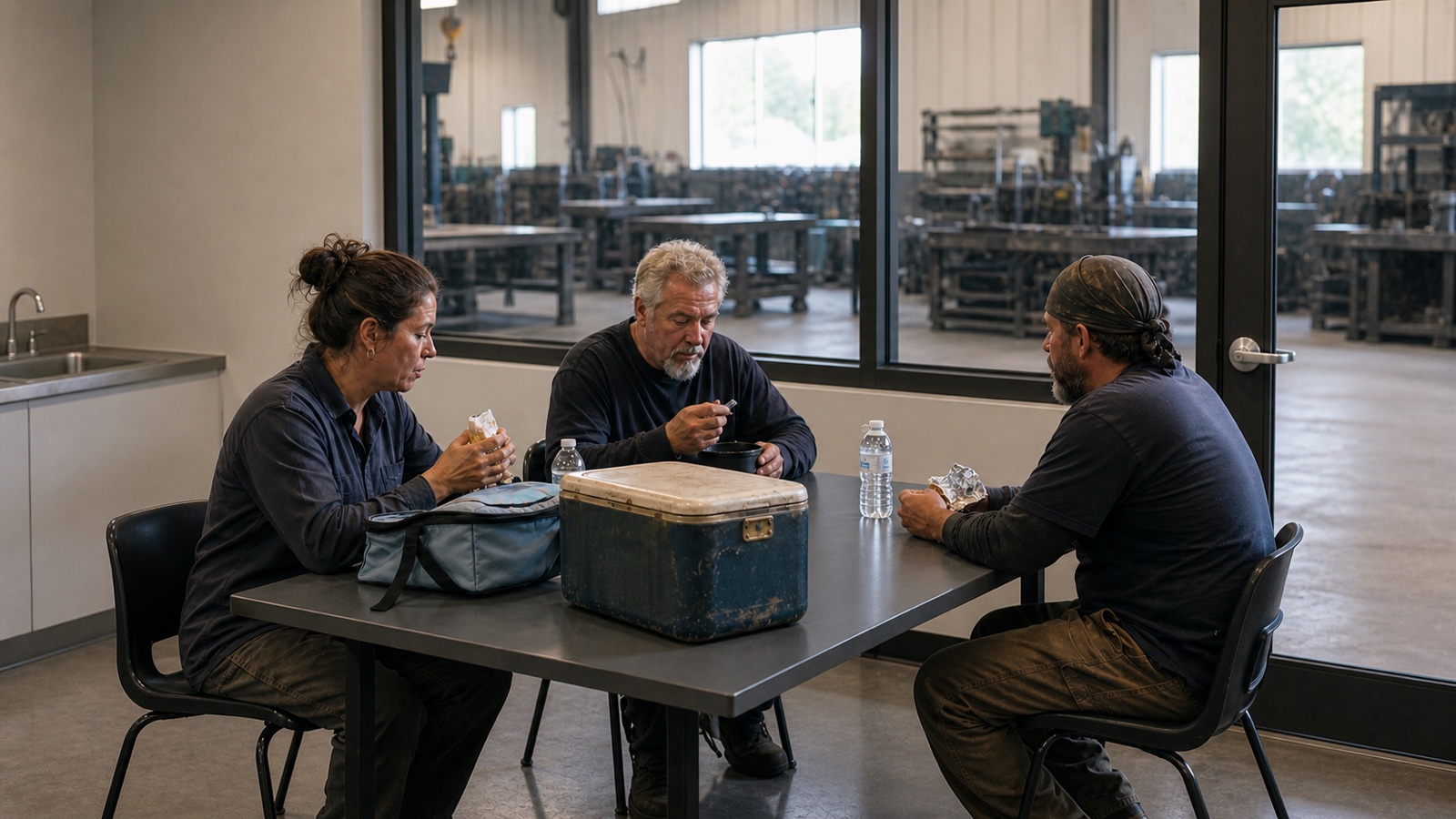
Before the hood goes down, before a machine gets turned on, before the first piece of steel moves across the table, a lunchbox usually gets parked somewhere.
It might be a hard cooler with one good hinge left, a soft bag wedged behind the truck seat, or a plain grocery sack in the break-room refrigerator. It is not the most impressive object in the shop. Nobody asks what amperage it can handle. Nobody compares duty cycles. Still, that lunchbox can tell you a surprising amount about the shift ahead.
A long day requires more than skill. It requires enough fuel, a place to reset, and a routine that can survive changing jobs, weather, overtime, and the occasional schedule that falls apart before 9 a.m. The lunchbox belongs to that less visible side of welding—the part that keeps the person behind the hood ready for the next pass.
A Small Piece of the Day You Can Control
Shop work is full of variables. Material arrives late. Fit-up takes longer than the drawing suggested. A repair reveals another problem underneath. The next department needs the part sooner than expected. Even a well-run day can turn quickly.
Packing a lunch is a modest counterweight to all that. It is one part of the shift decided before the first interruption. The food may be simple, but the act of bringing it says something practical: this day will ask for energy, and somebody thought ahead.
That kind of preparation is not glamorous. Neither is laying out extra gloves, checking consumables before a job, or filling a water bottle before the heat builds. Trades run on hundreds of ordinary decisions made before they become urgent. The lunchbox fits naturally among them.
There is also no single “welder’s lunch.” A night-shift fabricator, a pipe hand moving between sites, an instructor with twenty students, and a maintenance welder waiting on a shutdown all work different days. Some people pack carefully. Some grab whatever can be eaten in ten minutes. Some carry enough for unexpected overtime because experience has taught them that the promised quitting time is only a proposal.
The common thread is not what is inside. It is that the bag has been packed for the reality of the work.
Break Time Has Its Own Shop Language
The break area is one of the few places where the crew can see each other without a helmet, face shield, screen, or machine between them. The conversation changes there.
Sometimes it is shop talk: a strange print, a stubborn fit, a better way to stage the next assembly. Sometimes it has nothing to do with welding. There are ball scores, home projects, fishing reports, family logistics, and the kind of running jokes that would make no sense outside one particular crew.
That pause matters even when nobody says much. Sitting down for a few minutes can be a reset after a noisy morning. The apprentice who has been concentrating hard gets a chance to breathe. The experienced hand who has answered questions all shift gets a quiet minute. People who work different processes or stations share the same table.
The break does not erase rank, responsibility, or pressure. It does reveal the people carrying them. That is part of how a workplace turns into a community instead of a collection of job titles.
Keep the Lunch Away From the Work
There is one boundary worth stating plainly: the lunchbox does not belong beside the welding table, grinding dust, coatings, chemicals, or other contamination.
OSHA’s general-industry sanitation standard says food and beverages cannot be consumed or stored in areas exposed to toxic material. The same standard requires potable water for drinking and washing, sanitary washing facilities, and appropriate waste containers where employees eat. A designated clean area is not a fussy extra. It separates lunch from the dirt and hazards the job creates.
The practical version is familiar: wash up, leave contaminated gloves and work gear out of the eating area, and keep food and drink protected. The shop can be gritty without putting grit in somebody’s sandwich.
The Marks on the Outside Tell a Story Too
Lunchboxes age like other working objects. Corners wear white. Zippers get replaced with wire rings or short pieces of cord. Names are written in marker because three people bought the same model. Stickers fade. Handles get repaired instead of admired.
None of that makes the cooler sacred. It does make it recognizable.
A bag that has ridden to the same plant for five years carries a different kind of history than a welding hood or a favorite square. It has been present for early starts, long shutdowns, first days, last days, and the shifts that were completely ordinary. It may have held a note from home, an extra snack for a coworker, or the last cold drink at the end of a hot afternoon. Those details rarely make the job report, but they belong to the working life all the same.
The trade is often represented by its loudest moments: bright arcs, heavy steel, sparks, cranes, and finished structures. The lunchbox is a reminder that the work is also built around quieter things—planning ahead, taking care of yourself, sharing a table, and getting ready to go back out there.
Packed for the Next Half
After break, lids close and chairs scrape back. The crew separates. Hoods come down again. Machines start. Whatever was difficult before lunch is probably still waiting.
But the second half of the shift begins with a little more fuel and, on a good day, a clearer head.
That is the question for the Arc Life community: what is the one thing that always earns a place in your lunchbox on a long welding shift? Not the ideal answer—the real one. The dependable sandwich, the giant water bottle, the hot sauce, the piece of fruit that sometimes makes it home untouched, or the backup snack reserved for overtime.
Arc Life pays attention to the whole working life, not only the moment the arc is lit. Read more about the people and purpose behind the brand on About Arc Life, or explore the current Arc Life collection.

Leave a Reply