Shop Talk
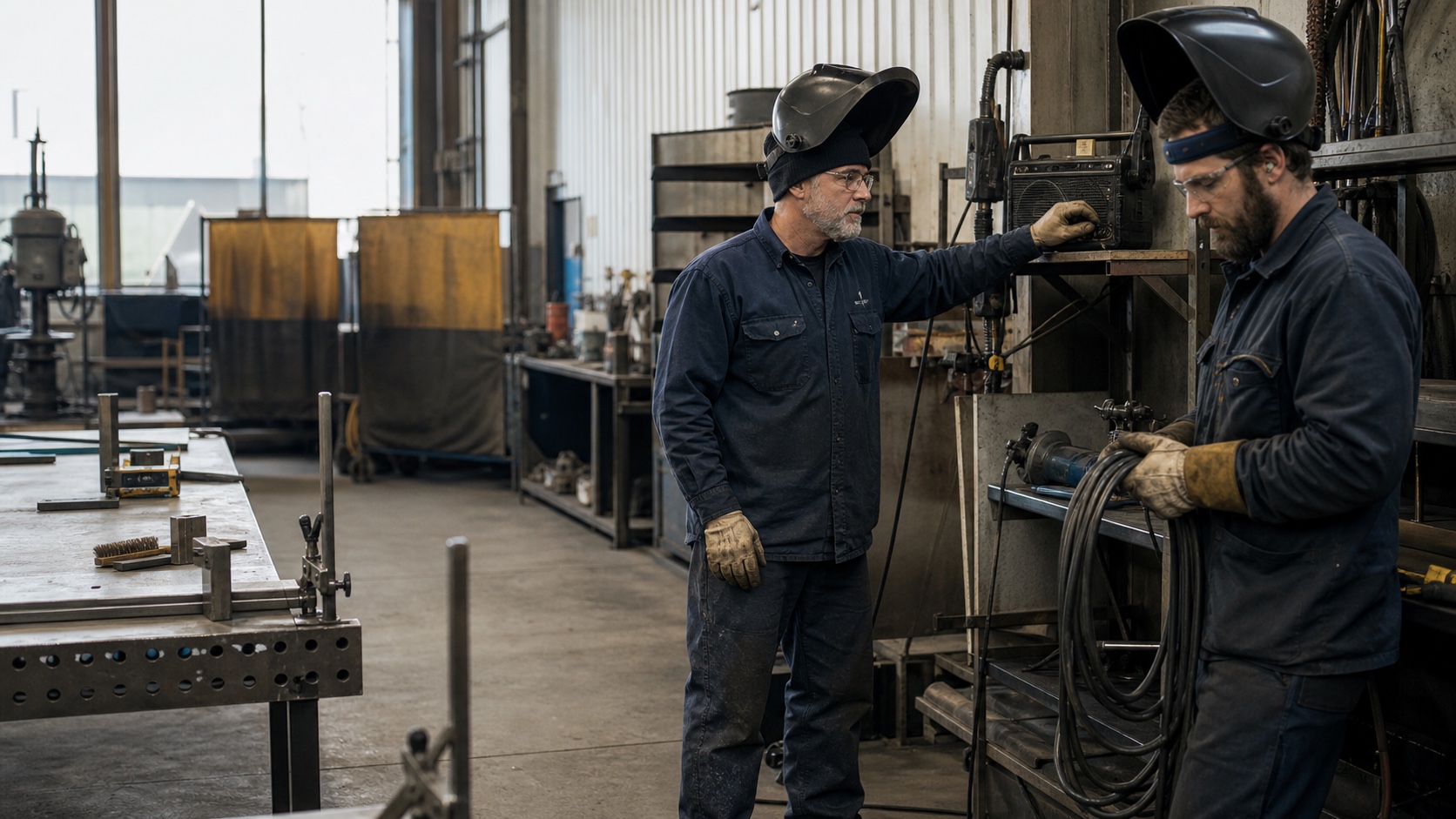
Before the first hood drops, somebody usually makes a decision that has nothing to do with voltage, wire speed, or fit-up: who gets the shop radio?
It sounds small until you spend ten hours in a space where grinders bark, fans run, carts rattle, and the same chorus comes around for the sixth time. Music can give a crew a pulse. It can make a long production run feel lighter and turn a quiet morning into a shared one. It can also become the fastest way to learn whether a shop understands respect.
The best shop-radio culture is not really about musical taste. It is about reading the room, leaving space for other people, and knowing when the work needs to be louder than the speakers.
The Radio Is a Piece of Shared Equipment
A shared shop is full of tools that belong to everybody and nobody at the same time. The radio fits that category. One person may turn the knob, but everyone works inside the sound it creates.
That changes the job. The person choosing the music is not performing for the room. They are setting part of the working environment. A good choice does not have to please every person on every song, but it should not make half the crew feel like a captive audience.
Strong crews develop their own systems. Some rotate by day or shift. Some keep a broad playlist. Some hand control to whoever has the longest repetitive job. The exact rule matters less than whether people understand it and get a turn. A radio becomes a culture problem when control quietly turns into ownership.
Volume Is Not the Same as Energy
Every shop has its own noise profile, and the radio sits on top of it. Turning music up to compete with tools can feel natural, but it adds sound instead of solving the problem. The line is simple: music should never make communication, alarms, instructions, or changes in the work harder to notice.
This is also where culture meets hearing health. The OSHA occupational-noise standard sets an action level of 85 dBA as an eight-hour time-weighted average for a hearing-conservation program. NIOSH likewise recommends an 85 dBA eight-hour limit and advises workers to keep personal listening volume low and use personal devices only in non-noisy areas. A speaker or earbud is not hearing protection, and active noise cancellation is not a substitute unless the device is actually rated for that purpose.
Those are safety-program facts, not a verdict against music. They are a reminder that the shop radio should support the day, not compete with it. Site rules, required hearing protection, and the ability to communicate always come first.
A Good Playlist Leaves Room for the Crew
Respect shows up in the details. Skip the song when somebody asks without turning it into a courtroom argument. Keep lyrics appropriate for the people actually sharing the space. Do not use music to needle the apprentice, the new hire, or the person with different taste. If the work changes and the crew needs to hear each other, turn it down before somebody has to shout.
The goal is not a sterile playlist with every rough edge sanded off. Shops have personality, and music is part of it. The goal is to make that personality big enough to include the crew. The difference between atmosphere and annoyance is often whether the person at the controls notices anyone else.
The Songs Become Time Stamps
Years later, people may forget the exact settings they ran on an ordinary Tuesday. They may not remember which cart was parked by the saw or what was written on the traveler. Then an old song comes on and the whole room returns: the job that would not fit, the night shift that finally caught up, the crew that could tell when a weld was going wrong from across the bay.
That is why the shop radio lasts in the memory. It is not background once it has been attached to enough real work. It becomes part of the place—alongside the scarred table, the names on the lockers, and the hood that has seen more jobs than anyone can count.
The Unwritten Rules Worth Keeping
- Treat control of the radio as a turn, not a title.
- Keep the volume below the point where it interferes with work or awareness.
- Respect the actual crew, not an imaginary audience.
- Follow the site’s hearing-protection and communication rules every time.
- Remember that a good shared soundtrack creates stories instead of arguments.
Arc Life is built around the parts of welding culture that live beyond the finished bead—the habits, humor, standards, and small rituals that make a crew feel like a crew. You can read more about that idea on the About Arc Life page, or explore the current Arc Life collection.
Shop question: What is the one rule every shared shop should have for the radio?

Leave a Reply