A welding respirator can have the right filter rating and still fail in the shop if it pushes the hood outward, breaks the face seal, fogs the lens, or blocks the view of the puddle. The best low-profile welding respirator is the one that fits the face, clears the helmet shell, and uses the correct filter for the hazard.
This guide narrows the buying decision to respirators that make sense under a welding hood, with practical checks for seal, filter profile, exhaust direction, helmet interference, and replacement filter availability. For a broader respirator comparison, see the existing WSP guide on welding respirators for under a welding helmet. If the issue is odor or fume breakthrough, start with why you smell fumes through your respirator.
Key Takeaways
- Low-profile shape matters, but seal quality matters more. A compact mask that leaks is not protective.
- P100 particulate filters are commonly used for welding fume particulate, but filter selection must match the actual hazard.
- Helmet clearance should be checked with the hood down, head turned, and chin tucked as if welding out of position.
- Downward-facing exhaust valves can reduce warm exhaled air toward the lens, but they do not replace correct helmet ventilation or lens maintenance.
- For workplace use, follow the site respiratory protection program, fit testing, filter change schedule, and applicable OSHA requirements.
Problem / Context
Welders often buy a respirator based on the filter rating, then find out the mask is too bulky once a hood is lowered. Common complaints include the filter hitting the helmet, the lower shell pressing on the mask, the nose bridge shifting during head movement, and the seal opening when the jaw moves.
This is why under-hood respirator selection should be treated as a fitment problem, not just a filter problem. The respirator, welding helmet, safety glasses, beard or stubble condition, headgear position, and work posture all affect whether the mask keeps a seal. If galvanized, stainless, flux-cored, or heavy grinding work is involved, also review the WSP safety guide on safe fume control tactics for welding galvanized material.
Root Causes of Poor Under-Hood Respirator Fit
- Filter cartridges are too tall or too wide for the helmet shell.
- The mask body contacts the inside of the hood when the chin is lowered.
- The headgear is adjusted too close to the face, reducing front clearance.
- The respirator size is wrong for the wearer’s face shape.
- Safety glasses, hood headgear, or straps disturb the face seal.
- Facial hair crosses the sealing surface.
- The welder uses the same respirator for grinding, painting, and welding without verifying filter compatibility.
- Filters are loaded, damaged, wet, or overdue for replacement.
Solution: How to Choose a Low-Profile Welding Respirator
Start with the hazard, then verify the fit. For welding fume particulate, many welders look for a NIOSH-approved P100 setup. For coatings, solvents, stainless, galvanized material, confined work, or unknown exposures, do not guess. Use the SDS, site safety plan, ventilation assessment, and competent safety guidance before selecting filters or cartridges.
- Choose a respirator size that seals on the face before considering helmet clearance.
- Pick a low-profile filter layout that does not hit the hood shell at the cheeks or chin.
- Check the exhaust valve direction. Downward exhaust can help reduce warm air toward the lens.
- Verify that replacement filters are easy to source before committing to the mask system.
- Test the setup with the exact hood, safety glasses, and headgear used in the shop.
- Perform a user seal check every time the respirator is worn.
Practical Under-Hood Clearance Test
- Put on the respirator and safety glasses.
- Perform the required user seal check.
- Lower the welding hood fully.
- Turn the head left and right as if checking bead position.
- Tuck the chin toward the chest to simulate awkward weld positions.
- Open and close the jaw slightly to check whether the seal shifts.
- Look down through the lens and confirm the mask does not block the puddle view.
- Repeat the check after adjusting the helmet headgear forward or back.
Specs / Verification Notes
| Respirator | Verified Notes | Best Use Case | Watch-Out |
|---|---|---|---|
| Miller LPR-100 Gen. II | Low-profile half mask; Miller lists S/M and M/L versions; Miller describes it as designed to fit under most welding helmets. | Welders who want a purpose-built under-hood welding respirator. | Confirm size and filter version before purchase. |
| 3M 7502 Half Facepiece | 3M lists silicone face seal, Cool Flow valve, dual-mode head harness, bayonet-style filter/cartridge compatibility, and NIOSH approval with approved 3M filters and cartridges. | Welders who already use 3M bayonet filters and want a reusable comfort-focused half mask. | Filter choice determines profile and hazard coverage; bulky cartridges may interfere with some hoods. |
| 3M 6200 Series Half Facepiece | Reusable half mask using 3M 6000 Series style filter/cartridge system. | Budget reusable setup where helmet clearance is verified before use. | Facepiece material and comfort differ from premium silicone models. |
Product Section
Check Arc Weld Store first for the Miller LPR-100 Gen. II respirator and replacement filters when available. Amazon fallback boxes are included only for verified ASINs.
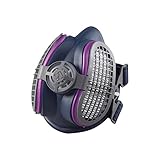
- Comfortable Breathing Experience: Breathe easier with Miller LPR-100 Half Mask Respirator with Nuisance & OV Relief; Our respiratory mask with carbon filters helps to minimize your exposure to harmful substances while reducing breathing resistance
- High Filtration Power: Our P100 respirator mask with filters boast an impressive 99.97 percent filtration of airborne particles, including oil-based & non-oil-based aerosols; From solid dust particles to metal fumes and mists, we’ve got you covered
- Low-Profile Design: Maximize your field of vision without sacrificing safety; Our low-profile welding respirator mask won’t interfere with your protective eyewear; Lets you work without interruptions so you can focus on amping up your productivity
- Ergonomic Half Mask Respirators: Engineered to fit under most welding helmets & our Weld-Mask 2, our filter mask’s design helps reduces heat buildup & user fatigue with minimal dead air space; Keeps you comfortable while maintaining its efficiency
- Safety You Can Trust: Crafted with medical-grade materials, our half face respirator P100 mask is free of latex & silicone to ensure that it is odor-free & non-allergenic; Wrap-around spark guard protects filter media from sparks & other debris.
Last update on 2026-09-27 / Affiliate links / Images from Amazon Product Advertising API
The Miller LPR-100 is the cleanest first choice when the main buying problem is under-hood clearance. Miller describes the LPR-100 Gen. II as a reusable respirator designed to fit comfortably underneath most welding helmets, and Arc Weld Store lists the 295274 M/L version with P100 nuisance organic vapor relief filters.

- APR Masks
- Manufacturer: 3M
- Made in: United States
Last update on 2026-09-27 / Affiliate links / Images from Amazon Product Advertising API
The 3M 7502 is a practical alternative when a shop already stocks 3M bayonet-style filters and cartridges. It should be treated as a system: the facepiece, selected filter, helmet shell, and headgear all determine whether it truly fits under a hood.
Comparison Table
| Selection Factor | Why It Matters Under a Hood | Recommended Check |
|---|---|---|
| Mask profile | Bulky masks push the hood outward or break the seal. | Lower the hood and turn the head before welding. |
| Filter profile | Filters often hit the helmet at the cheeks first. | Verify clearance with the exact filter installed. |
| Face seal | A leak defeats the filter rating. | Perform seal checks and follow fit-test requirements where applicable. |
| Exhaust direction | Warm exhaled air can contribute to lens fogging. | Look for downward exhaust and keep lenses clean. |
| Replacement filters | A good mask becomes useless if filters are unavailable. | Confirm filter part numbers before buying the facepiece. |
| Hazard match | Welding fume, paint, solvents, stainless, and galvanized work may require different controls. | Use SDS data, air monitoring, and the site safety plan. |
Related Failure Paths
- Respirator seal leaks and fume smell: Usually caused by poor face seal, facial hair, wrong size, or worn filters.
- P100 filter selection for welding fumes: Important when the mask fits but filter selection is unclear.
- Galvanized welding fume control: Requires more than a comfortable half mask; ventilation and process control matter.
- Welding helmet comfort and visibility: Hood fit, lens position, and headgear adjustment affect respirator clearance.
Safety Notes
Respirators are not a substitute for ventilation, local exhaust, process changes, or keeping the head out of the plume. AWS fume guidance emphasizes using ventilation or other controls whenever possible, and OSHA respiratory protection rules require proper selection, medical evaluation, fit testing, training, and use procedures when respirators are required in the workplace.
- Do not use a respirator in an oxygen-deficient or IDLH atmosphere unless it is specifically approved for that condition.
- Do not weld coated, galvanized, painted, plated, or unknown material without identifying the hazard.
- Do not rely on odor as a protection test. Some hazardous exposures may not provide a reliable warning smell.
- Do not wear tight-fitting respirators over facial hair that crosses the sealing surface.
- Use the manufacturer’s instructions for cleaning, storage, inspection, and filter replacement.
FAQ
What is the best respirator for welding under a hood?
For many welders, the Miller LPR-100 Gen. II is the strongest first pick because it is purpose-built as a low-profile welding respirator. The correct size and filter version still need to be verified for the wearer and hood.
Is P100 enough for welding fumes?
P100 filters are commonly used for welding fume particulate and are rated by NIOSH to filter at least 99.97% of airborne particles. They do not automatically cover every gas, vapor, coating, solvent, stainless, galvanized, or confined-space hazard.
Why does a respirator make the welding helmet fog?
Fogging is usually caused by warm exhaled air moving toward the lens, poor hood airflow, dirty lenses, cold shop conditions, or a mask exhaust path that points upward. A downward-facing exhaust valve can help, but it does not fix a poor seal or wrong helmet setup.
Can a 3M 7502 fit under a welding hood?
It can fit under some welding hoods, but clearance depends on the selected filters or cartridges, face size, hood shell, and headgear position. Always test it with the exact filter set installed.
Can welders use disposable N95 masks?
A disposable N95 may be inadequate for many welding fume tasks. Respirator selection should be based on the actual exposure, applicable standards, and the employer’s respiratory protection program. For welding fume particulate, many shops move to P100-rated reusable systems.
Next Step
Start with the Miller LPR-100 Gen. II if the main problem is respirator clearance under a welding hood. Choose the correct size, verify the filter version, perform a seal check, and confirm that the mask does not shift when the hood is lowered. If the mask fits but fumes or odors are still noticed, troubleshoot the seal and filter path before continuing to weld.
Sources Checked
- MillerWelds, LPR-100 Gen. II Half Mask Respirators: https://www.millerwelds.com/safety/respiratory/half-mask-respirators-m00469
- Arc Weld Store, Miller 295274 LPR-100 Gen. II Half Mask Respirator with P-100 Nuisance Organic Vapor Relief, M/L: https://www.arcweld.store/products/miller-lpr-100-p-100-nuisance-ov-relief-m-l
- Arc Weld Store, Miller 295273 LPR-100 Gen. II Half Mask Respirator with Nuisance OV Relief, S/M: https://www.arcweld.store/products/miller-lpr-100-half-mask-respirator-295273
- 3M, 3M Half Facepiece Reusable Respirator 7500 Series: https://www.3m.com/3M/en_US/p/d/b00039314/
- CDC/NIOSH, Respirators and Mask Types and Performance: https://www.cdc.gov/niosh/ppe/php/community-respirators-masks/types-of-respirators-and-masks.html
- CDC/NIOSH, Approved Particulate Filtering Facepiece Respirators: https://www.cdc.gov/niosh/ppe/niosh-approved-respirators/ffr-cel.html
- OSHA, 29 CFR 1910.134 Respiratory Protection: https://www.osha.gov/laws-regs/regulations/standardnumber/1910/1910.134
- OSHA, User Seal Check Procedures: https://www.osha.gov/laws-regs/regulations/standardnumber/1910/1910.134AppB1
- OSHA, Fit Testing Procedures: https://www.osha.gov/laws-regs/regulations/standardnumber/1910/1910.134AppA
- AWS Safety and Health Fact Sheet, Fumes and Gases: https://aws-p-001-delivery.sitecorecontenthub.cloud/api/public/content/Fact-Sheet-No.1

Leave a Reply