As an Amazon Associate, Weld Support Parts earns from qualifying purchases.
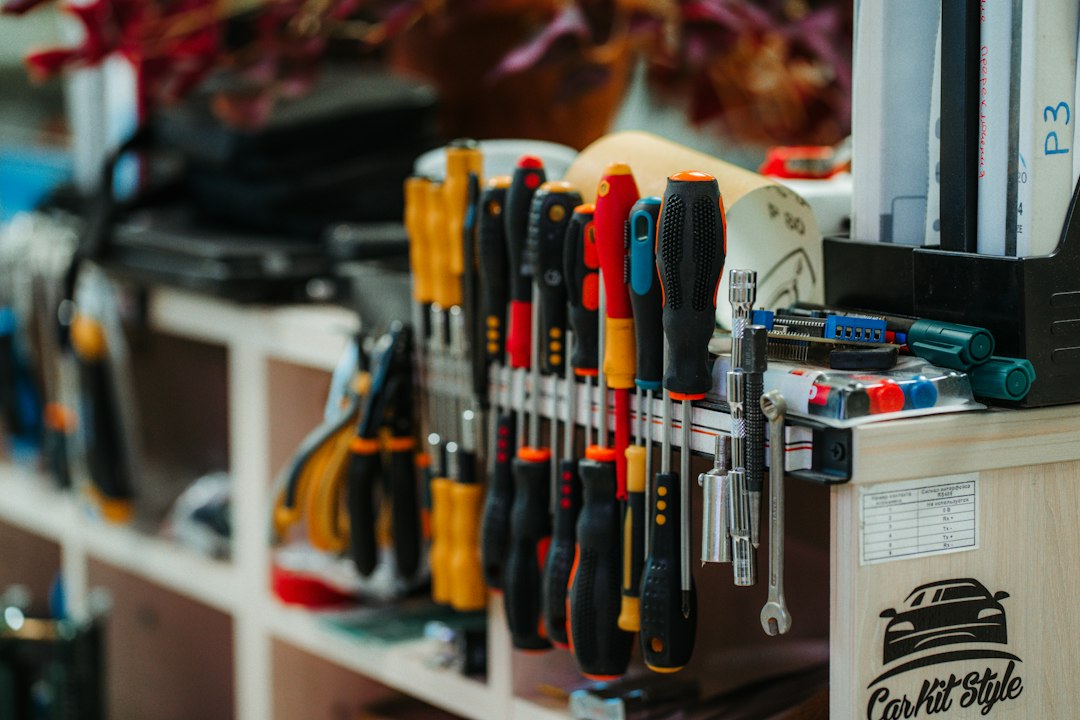
Featured image: contextual workshop hand tools; the KNIPEX model is not pictured.
When water-pump pliers keep slipping, stop and check the jaw position, the condition of the tool, and the surface you are trying to grip. A different pair can help, but only if its size and gripping surface suit the job.
The KNIPEX 87 01 250 Cobra is a useful option for shop maintenance involving round stock, pipe, and suitable nuts. Its main selling point is adjustment directly on the workpiece. This guide explains what that gives you, where toothed jaws can cause trouble, and what to check before ordering the exact 10-inch model.
What the 87 01 250 actually provides
KNIPEX identifies this model as a 10-inch Cobra with 25 adjustment positions, push-button adjustment, a box joint, and serrated gripping surfaces. The U.S. specification lists a maximum round-pipe opening of 2 inches and a maximum hex opening of 1-3/4 inches. The handles have a non-slip plastic coating. KNIPEX model specifications
The manufacturer's technical sheet describes a self-locking action on pipes and nuts, with gripping teeth hardened to approximately 61 HRC. The practical value is a jaw setting that fits the work without forcing your hand to span an unnecessarily wide handle opening. KNIPEX technical sheet
Treat those numbers as selection limits. A listed maximum opening does not tell you whether the head will fit behind a bracket, whether the handles can move through the required arc, or whether the part can tolerate tooth marks.
Diagnose the slipping before buying another tool
Start with a few questions:
- Are both jaws properly seated, or are you catching the part with just the tips?
- Is the adjustment close enough to the workpiece to give you a controlled grip?
- Is there oil, loose scale, or debris where the jaws need contact?
- Are the teeth or joint visibly damaged?
- Is the part moving because it lacks adequate support?
These checks help separate a poor setup from a poor tool match. If a small assembly is turning in your hand, stronger pliers do not solve the missing workholding. Secure the work appropriately before applying force.
Also identify what you are actually trying to turn. A round coupling, an undamaged hex fastener, and a decorative fitting present different surfaces. Write down the shape and measured size instead of shopping only by the handle length of your old pliers.
Set the jaws on the workpiece
For the Cobra's normal adjustment method, KNIPEX describes placing the upper jaw against the workpiece, pressing the adjustment button, and bringing the lower jaw into position. The joint then catches at the selected setting. Its tooth geometry provides the self-locking effect when used in the intended direction. KNIPEX technical sheet
Before applying substantial force, check that the setting has engaged and that the jaws are seated. Reposition when the angle is awkward. Plan where your hand will travel if the connection suddenly loosens.
The phrase “self-locking” should not be read as permission to use these pliers as an unattended fixture. This is still a hand tool. For holding a part during welding or machining, choose appropriate workholding and support for that operation.
If the grip still feels uncertain, stop. Repeated slips are a reason to inspect the tool and setup, rather than simply squeezing harder or extending the handle with an improvised lever.
Tooth marks matter on finished surfaces
A Cobra's grip comes with a surface-finish tradeoff. KNIPEX explains that its self-clamping teeth bite into the material and can scratch it. That is important around chrome-plated fittings, visible finished parts, and components that need to remain unmarred. KNIPEX guidance on protective jaws
Decide whether marks are acceptable before putting the teeth on the part. If they are not, select a suitable non-marring tool or a manufacturer-approved protective-jaw arrangement. Check accessory compatibility with the exact plier size and production version.
Do not assume a layer of tape turns serrated pliers into a rated non-marring tool. For an expensive or customer-facing part, the cost of a damaged finish may outweigh the convenience of using whatever is already in the toolbox.
Likewise, a fastener that requires a specified tightening torque still needs the correct torque-control method. A strong grip alone does not establish how tightly a connection has been assembled.
The red handles are not an electrical rating
KNIPEX explicitly marks the 87 01 250 as not 1000-volt insulated. Its plastic grip should not be treated as protection for energized electrical work. This is particularly worth checking when similar-looking versions appear together in search results. KNIPEX model specifications
Use the exact model number and the manufacturer's stated rating when choosing electrical tools. Color, brand, and a familiar handle shape do not establish that rating.
Check these details before ordering
Confirm the listing says 87 01 250 or 8701250 and describes a single 10-inch Cobra. Check the selected size, pack quantity, seller, delivery terms, and current price. A product family may include different lengths, handle types, and sets.
Then check the job itself: measured gripping size, available clearance, surface-finish requirements, and a stable way to support the work. If those conditions fit, the 87 01 250 is a practical choice for adjustable, toothed gripping in a maintenance toolbox.
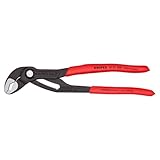
- 25 adjustment positions at the touch of a button directly on the workpiece
- Up to 2″ maximum jaw capacity grips variety of shape and sizes for broader application coverage
- Self-locking on pipes and nuts: no slipping on the work piece and low hand force required
- Gripping surfaces with special hardened teeth (61 HRC)
- Box-joint design: high stability because of the double guide, pinch guard prevents operators’ fingers from being pinched
Last update on 2026-10-09 / Affiliate links / Images from Amazon Product Advertising API
The buying decision is straightforward: choose it when the recurring problem is getting a well-adjusted grip on suitable pipe or hardware. Use a different tool when the work calls for a protected finish, precise torque, electrical insulation, or dedicated fixturing.
Leave a Reply