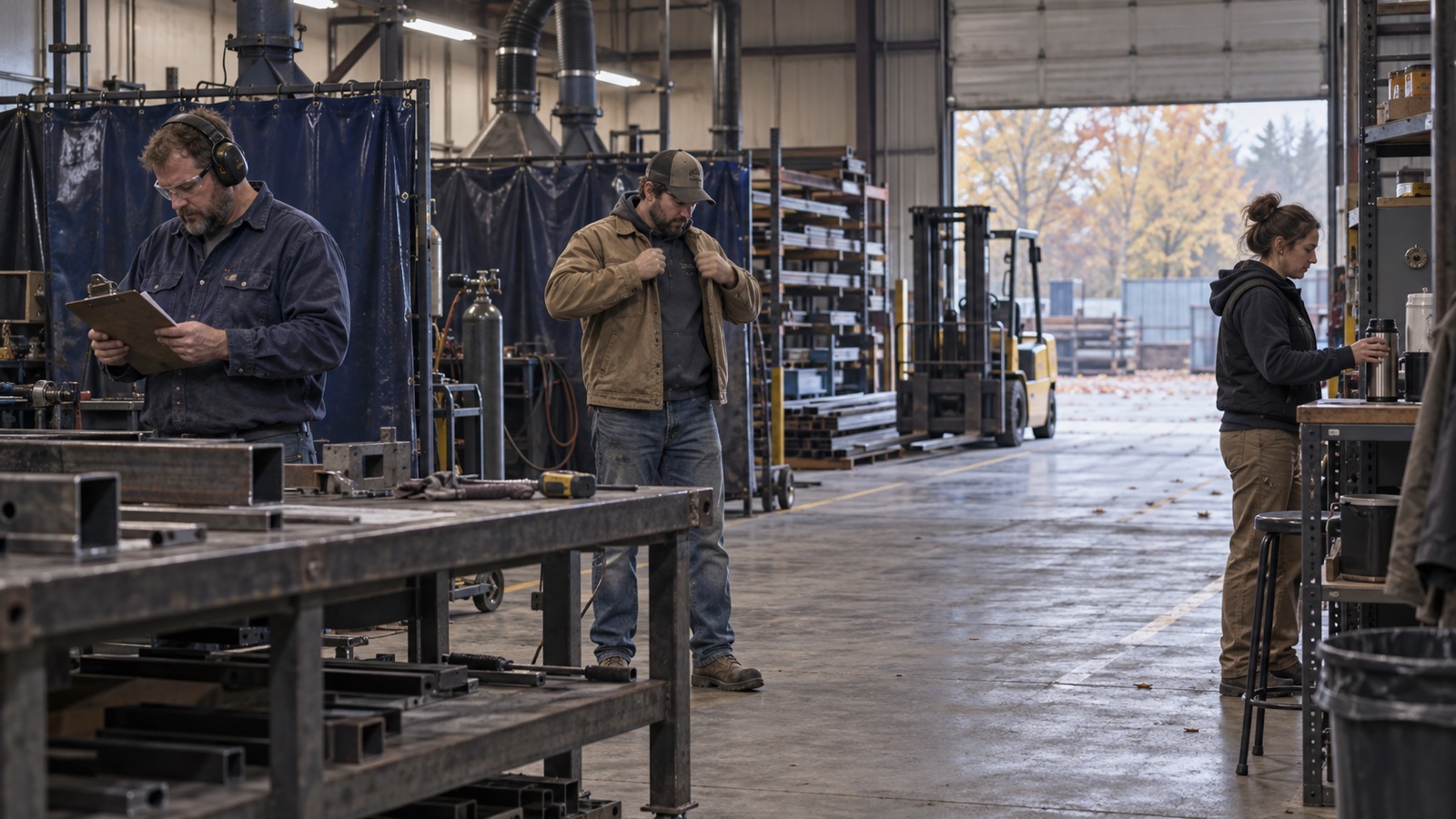
The first cool morning does not announce itself with a calendar.
It arrives through the open bay door. The concrete has lost the heat it carried all summer. Somebody brings the old thermos back. A work jacket appears on the hook, then another. For a few minutes before the machines begin, the shop feels bigger, quieter and slightly unfamiliar.
By noon, the weather may turn warm again. But the crew has noticed the change. Summer is giving up the building, one early shift at a time.
Seasonal change in a fabrication shop is not just a temperature reading. It changes routines, clothing, break habits and the small conversations that happen before work finds its pace. Those details are easy to miss because none of them looks important alone. Together, they mark a shop moving into a different part of the year.
The bay door becomes a daily decision
During summer, an open door can feel permanent. It frames deliveries, lets the morning in and makes the shop seem connected to the yard. When the air turns cool, that door becomes a negotiation.
Open it for the forklift. Close it after the material move. Open it again because a delivery is early. Close it because the draft has found the one workstation where somebody needs both hands steady. The person closest to the control becomes an unofficial weather station, listening to opinions from three directions.
This is ordinary shop life: a physical building shared by people doing different work at different levels of exertion. The welder under a jacket may be warm while the person measuring at a layout table feels the draft. The shipping crew may be moving constantly while someone at a stationary inspection task barely moves at all.
Good crews do not solve that perfectly. They make adjustments without turning the thermostat into a personality test.
The hooks start filling up
Cool weather brings more fabric into the shop. Hoodies, jackets, overshirts, knit caps and spare gloves begin collecting near lockers and break areas.
The cultural part is familiar. The same jacket may live on the same hook for years. A newer worker learns which coat belongs to the person who arrives first. Somebody keeps an extra layer in the truck and forgets it on the one morning it matters. The break-room chair becomes a temporary closet.
The safety boundary matters here. Clothing for active welding has to match the work and the employer’s requirements. Extra warmth should not introduce loose cords, open cuffs or materials that are not suitable around heat, sparks and molten metal. A comfortable layer at the coffee pot is not automatically the right layer at the arc.
Cold conditions can be more than discomfort for people working outdoors, in unheated spaces or around open bays. The National Institute for Occupational Safety and Health notes that cold risk varies with climate, exposure and the workplace. Its guidance includes appropriate clothing, warm break areas, training and monitoring physical condition. It also warns that some clothing can restrict movement, which creates its own risk.
That is a useful reminder even before winter arrives: the first cool morning is a prompt to inspect the routine, not a reason to improvise protection.
The shop develops an autumn pace
Fall changes the workday in quieter ways.
The water bottle may share bench space with a thermos. Morning conversations move from weekend heat to the first frost forecast. The sun reaches the bay door at a different angle. Outdoor fit-up, loading and material handling feel easier than they did in August—until a wet morning turns steel, gloves and concrete unpleasantly cold.
There is also a mental change. The long middle of the year begins to feel finite. Hunting season, school schedules, football, harvest, year-end jobs and holiday deadlines start appearing in the same conversations. People count backward from dates that still seem distant.
For some shops, fall is a busy season. For others, it is the stretch where the backlog becomes visible. Either way, the crew starts measuring the year by what remains on the rack.
That can create pressure to rush. It can also create focus. Cooler mornings have a way of making the first task feel deliberate: lights on, prints out, material checked, coffee finished, work started.
Small rituals hold a crew together
Trade culture is often described through big things—skill, pride, toughness, the finished structure. Most people experience it through smaller repetitions.
Who opens the shop. Who checks the weather before an outdoor move. Who has the spare dry gloves. Who remembers that the loading dock stays colder than the rest of the building. Who closes the bay door after the forklift clears it instead of leaving the draft for somebody else.
These habits are not heroic, and that is why they matter. They show that a shop is a shared place rather than a row of individual stations.
The first cool morning makes those relationships visible. A veteran tells the new person where the warmest break area is. Someone moves a jacket away from a work zone before it becomes a problem. The crew adjusts without a meeting because they have made the same seasonal turn together before.
New workers notice those cues. They learn that shop knowledge includes more than a process setting or a print symbol. It includes the building, the weather and the people working beside them.
A season is changing—pay attention
There is no need to romanticize cold concrete or a drafty bay. A well-run shop controls environmental hazards and gives people a safe way to do the job. Still, the first cool morning carries a feeling worth recognizing.
It marks the point when the year becomes physical again. The door does not stay open by default. The jacket has a purpose. The thermos returns. The shop closes in around the crew, and the workday develops a different shape.
So here is the Arc Life question: What is the first sign of fall in your shop—the jacket on the hook, the bay-door debate, the thermos, or something only your crew would recognize?
Share the ritual with the person at the next station, then visit Arc Life for more stories about the seasons, habits and people that shape a life in the trade.

Leave a Reply