Series: Shop Talk
A new welding hood has no history. The shell is clean. The lens is unmarked. The headgear still feels like it belongs to the box it came in.
Then work starts.
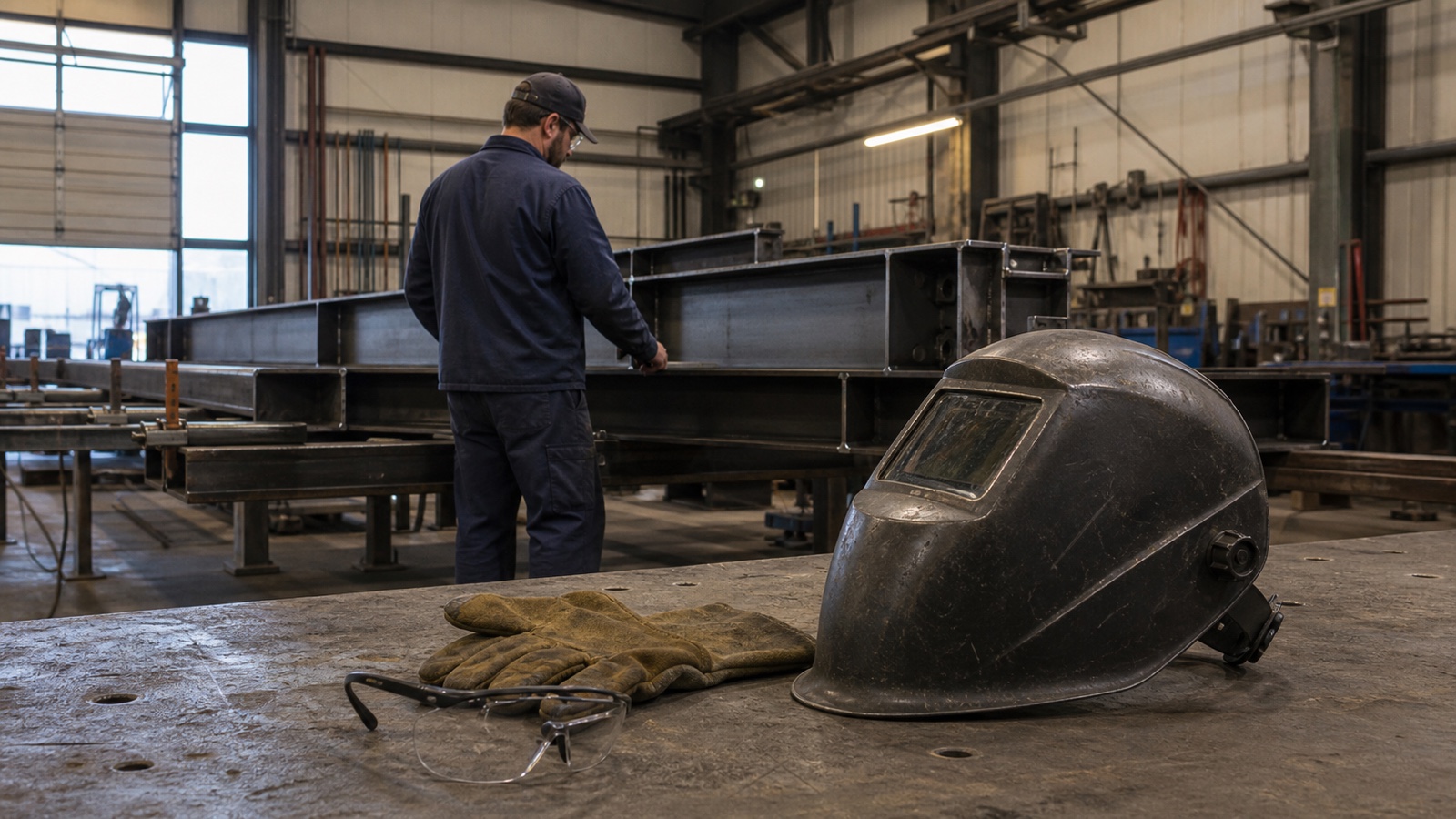
The hood gets set on a table that was not quite clean. A glove leaves a dark print near the lens. The first small scar appears along an edge. Someone adjusts the headgear three times before it finally lands in the right place. Nothing dramatic happens. The tool simply begins its working life.
Months later, that same hood can be recognized from across the shop.
Not because it is expensive, loud, or covered in somebody else’s logo. It is recognizable because use has given it a shape and a story. A welding hood is safety equipment first. It is also one of the few tools in the trade that sits close enough to the person to become part of how they work.
No Two Honest Hoods Age the Same Way
Look around a welding school, fab shop, maintenance department, or field trailer and the differences show up quickly. One hood stays almost factory-clean. Another carries careful paint marks, a name written where it will not interfere with safe use, or a small sticker from a place that mattered. Some are plain on purpose. Some have clearly been through years of tight corners and awkward positions.
None of that tells you who lays the best bead. A spotless hood is not proof of inexperience, and a beat-up shell is not proof of mastery. What the hood can reveal is habit.
You can see the welder who wipes the cover lens before putting it away. The person who knows exactly where the sensitivity control sits without looking. The student still searching for the headgear setting that will hold when they nod down. The veteran who keeps the outside plain because the work is enough decoration.
These are small choices, but welding culture is full of small choices that add up.
Protection Comes Before Personality
The romance has a limit. A cracked shell, damaged headgear, light leak, or lens that no longer works properly is not character. It is a reason to stop and inspect the equipment.
OSHA describes welding helmets as protection for the eyes and face from optical radiation, heat, and impact. Its guidance also says the helmet is not meant to replace primary eye protection; suitable safety glasses or goggles belong underneath it, and filter selection depends on the process and operating conditions. OSHA further calls for PPE to be maintained to the manufacturer’s specifications and damaged equipment to be removed from service. That is the line that matters: wear can tell a story, but the hood still has a job to do.
The best-looking helmet in the shop is the one that protects the person wearing it. Everything else is secondary.
The Small Window Changes the Work
Lowering a hood removes most of the room from view. The shop noise is still there, but the useful world becomes a joint, a line, a puddle, and the next few inches of travel.
That narrowed view is one reason the hood carries so much identity. It is where a welder learns to shut out the crowd and pay attention to evidence. Travel speed shows itself. Fit-up stops being an abstract measurement. A bad angle becomes obvious. The job answers back in real time.
Outside the hood, people can argue about process loyalty, machine color, or the right way to organize a cart. Under it, the metal is less interested in opinions. It responds to what the hand is actually doing.
That can be humbling. It can also be freeing. The hood creates a small private work space inside a busy trade—a place where skill is built one correction at a time.
Personal Does Not Have to Mean Loud
There is a whole market built around making welding hoods look aggressive. Flames, skulls, flags, slogans, and glossy graphics are easy to find. Some welders genuinely like that style. Others would rather wear a plain shell until every mark on it came from work.
Both can belong in the trade.
The stronger line is authenticity. A hood feels personal when the choices make sense for the person using it. Maybe that is a restrained paint job. Maybe it is a familiar flag sticker, a union decal where permitted, a school mark, or nothing at all. Maybe it is simply the headgear, lens setup, and shell profile that help someone work comfortably and see clearly.
Personalization should never cover controls, viewing areas, safety markings, vents, or damage that needs attention. Beyond that, the hood is one of the few places where a welder can carry a little identity directly into the job.
The Hood Is Not the Skill—But It Sees the Skill Being Built
A welding hood cannot make decisions. It cannot read a drawing, correct a wandering line, or know when a joint needs to be stopped and cleaned. Buying a better one does not transfer experience into the hands.
Still, the hood is present for nearly every lesson that sticks. It is there for the bead that finally ties in the way it should. It is there for the ugly pass that sends someone back to a practice plate. It is there for long production runs, one-off repairs, school booths, field work, and the first job that feels bigger than the person doing it.
That is why an old hood can be hard to throw away even after it has been retired from service. The useful life may be over, but the object still marks a stretch of a welder’s life: where they worked, what they learned, and how their standards changed.
What Does Yours Say?
Take a look at the hood you reach for now. Is it clean and deliberate, scarred from access work, marked by a school or crew, or plain because that is exactly how you want it? Which part is preference, and which part came from the work itself?
That is today’s shop question: what is the one mark, adjustment, or detail that makes your welding hood unmistakably yours?
Arc Life is built around details like these—the ordinary objects, habits, and stories that make welding more than a process. Read more about the community on About Arc Life, or see the current Arc Life collection.

Leave a Reply