Beyond the Booth
The workday ends, the boots come off, and a lot of welders still find themselves staring at something that could be built better.
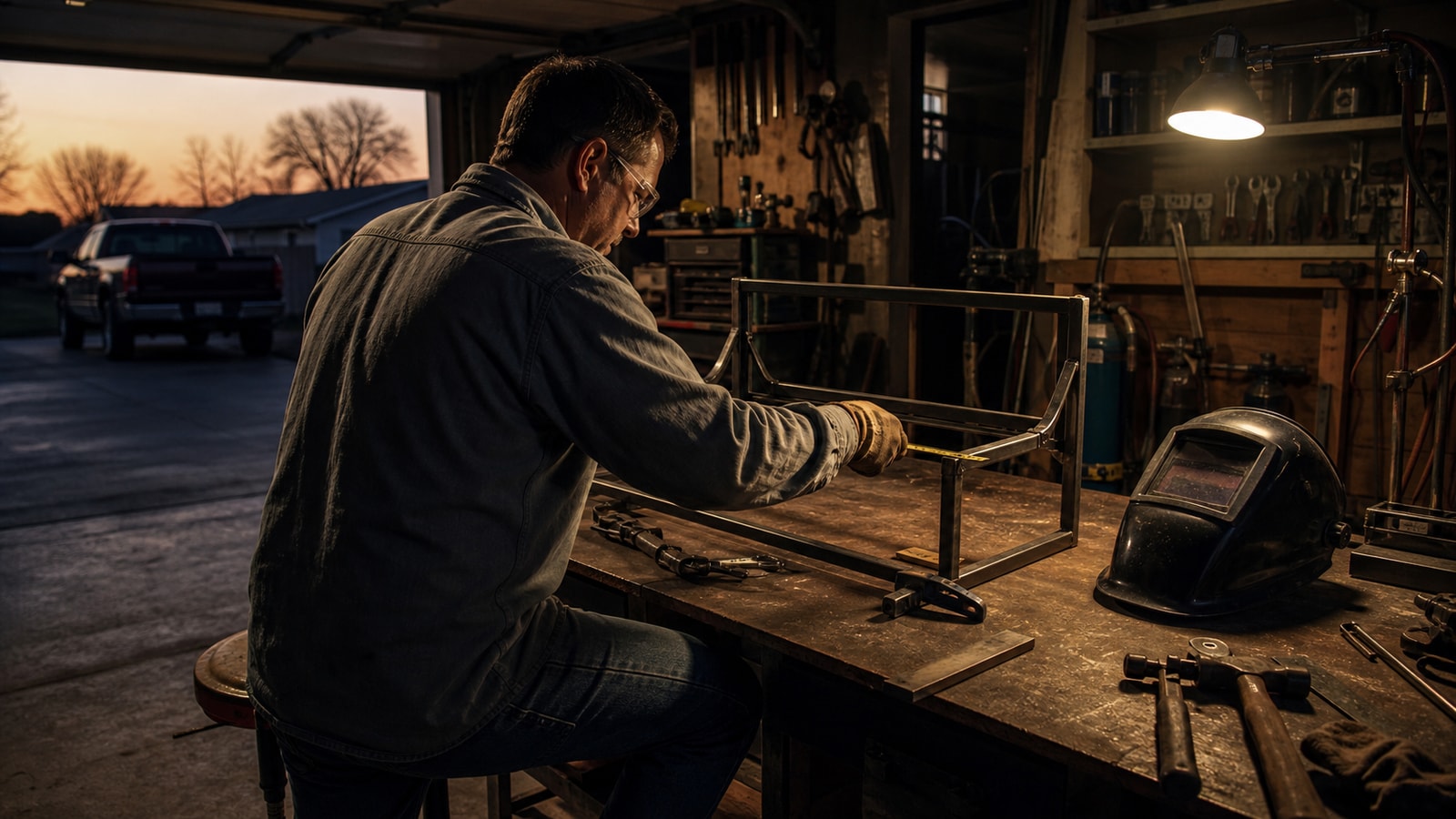
It might be a loose gate, a cracked mower deck, a firewood rack that exists only as a sketch, or a piece of scrap that has been waiting six months to become useful. Nobody assigned it. There is no traveler, inspection stamp, or production clock. Still, the tape measure comes out.
That is one of the quieter ways the trade follows people home. Welding is a job, but making can become a way of moving through the world. After enough time around steel, broken things stop looking finished. Empty corners start looking like project space. A pile of drops starts looking less like clutter and more like inventory with an uncertain future.
The freedom of a job without a traveler
Shop work has a purpose before the first tack. The material, dimensions, sequence, and deadline usually belong to someone else. That structure matters; it is how real work moves. But an off-hours project offers a different kind of satisfaction.
You get to decide what “done” means.
A backyard rack can be overbuilt because the extra gusset makes you happy. A small repair can take an hour because there is time to clean the old fracture properly. A practice piece can be cut apart and tried again without anyone asking why it is not on the next pallet. The pressure changes, and so does the attention.
That freedom does not always make the work easier. It can expose every habit the production pace normally hides. When there is nobody else to blame for the fit-up, the cut list, or the crooked caster, the project becomes an honest conversation between the builder and the material.
Small projects keep the eye awake
After-hours building is not automatically about side income. Sometimes it is simply a place to stay curious.
A production welder may spend a shift repeating a proven joint and then use a weekend project to think about proportion, movement, or finish. A pipe welder may build a plain shelf. An instructor may test a fixture idea before bringing it into class. An apprentice may finally have enough time to make the ugly bracket twice and understand why the second one sits square.
The object does not need to be impressive. In fact, the ordinary projects often say more: the cart that rolls without rattling, the repaired hinge that closes cleanly, the stand that puts a grinder exactly where the hand expects it. These are not showpieces. They are evidence that craft has worked its way into daily life.
The trade becomes part of the household
Off-clock projects also change how other people understand welding. A family member may never see a structural assembly leave the shop, but they will use the repaired chair, the garden trellis, or the smoker cart. A neighbor may not know the difference between processes, but they know who can look at a broken latch and see a path forward.
That visibility matters. Trades can look distant from the outside—specialized work behind curtains, inside plants, or on jobsites most people never enter. A useful object built at home makes the skill legible. It shows that welding is not only sparks and heavy plate. It is planning, patience, measuring, correcting, and taking responsibility for what will carry weight after you walk away.
Sometimes the best explanation of the trade is not an explanation at all. It is something solid that works.
Off the clock does not mean outside the rules
A home project may feel relaxed, but hot work does not become casual because the customer is yourself. The same sparks that behave predictably in a designated shop can find cardboard, fuel, dry grass, wall cavities, or a rag on a garage floor. OSHA’s hot-work guidance emphasizes controlling fire hazards and inspecting the work area, including adjacent spaces. NIOSH also notes that welding-fume exposure varies with the process, consumables, base metal, and environment, and that confined spaces can increase exposure.
The practical point is simple: bring the standards home with the skill. Clear the area. Think about what is on the other side of the wall or below the bench. Use appropriate PPE and ventilation. Keep cylinders, leads, hoses, and equipment in sound condition. If the space cannot support the work safely, the project can wait or move somewhere that can.
A project can be rest without being easy
There is a particular kind of rest in choosing your own difficult thing.
It is not the same as doing nothing. It is a change in ownership. The pace belongs to you. The mistakes cost material and time, but they also stay private long enough to teach something. The finished piece does not need to impress a foreman, an inspector, or the internet. It only needs to do its job and meet the standard you decided it should meet.
That is why some welders keep building after a full shift. The project gives the hands a familiar problem and the mind a different reason to solve it. It turns training into usefulness, leftovers into possibility, and a few free hours into an object that was not there before.
What are you still building?
Every shop has people who go home and keep making—sometimes for family, sometimes for practice, sometimes because a good piece of steel refuses to be ignored.
What is the best thing you have built off the clock, and what did it teach you that paid work did not?
Arc Life exists for the trade people carry beyond the booth. Read more about the community on About Arc Life, or explore the current Arc Life collection.

Leave a Reply