Introduction
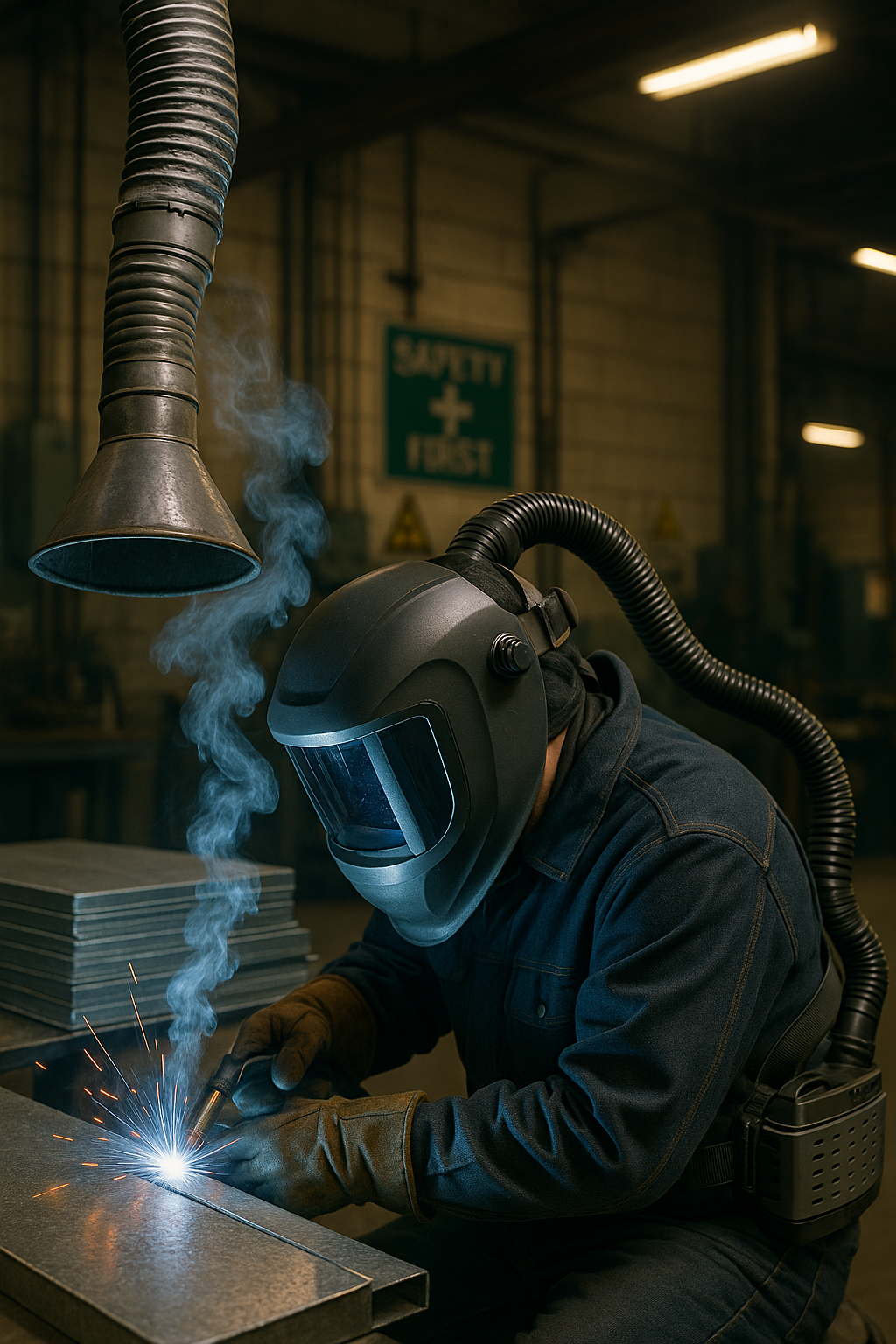
Welding galvanized steel presents a unique challenge: toxic fumes. The galvanizing process coats steel with a layer of zinc, which vaporizes when exposed to welding temperatures, releasing hazardous zinc oxide gas. Left uncontrolled, these fumes can lead to serious short- and long-term health effects, including metal fume fever and chronic respiratory issues.
Understanding safe fume control tactics isn’t just about compliance—it’s about protecting your lungs, your team, and the quality of your welds. Whether you’re a structural welder, pipefitter, fabrication shop operator, or welding student, mastering this topic is crucial when working with zinc-coated metals.
Galvanized Steel and Fume Hazards: What Are You Dealing With?
Galvanized steel is carbon steel that’s been hot-dip coated in zinc to resist corrosion. While excellent for long-term durability in outdoor and moist environments, that zinc layer becomes dangerous when melted.
Zinc fume hazards include:
- Zinc Oxide (ZnO): Formed when zinc vapor cools in air.
- Metal Fume Fever: Flu-like symptoms that appear within hours of exposure.
- Chronic Exposure Risks: Repeated inhalation can cause long-term lung damage and weaken immune function.
Additional risk factors:
- Galvanized coatings can include lead, cadmium, or hexavalent chromium, especially in older infrastructure or imported steel.
Fume Control Tactics: Types & Classifications
Controlling zinc oxide fumes isn’t a one-size-fits-all fix. Multiple strategies should be combined for safe welding on galvanized materials. Here are the primary categories:
1. Ventilation Systems
- Local Exhaust Ventilation (LEV):
- Fume hoods, extractor arms, or downdraft tables.
- Ideal for shop environments.
- Captures fumes at the source before they spread.
- General Shop Ventilation:
- Large-scale air movement and filtration.
- Supports LEV but isn’t effective on its own.
2. Personal Protective Equipment (PPE)
- Powered Air-Purifying Respirators (PAPRs):
- Offer higher protection than disposable masks.
- Positive airflow prevents fume ingress.
- Find PAPR Helmets Here
- Half/Full-Face Respirators:
- Use P100 or equivalent filters.
- Must be properly fitted and regularly maintained.

- Enhanced Protection with Nuisance OV Relief Filters: The Miller LPR-100 Gen. II Half Mask Respirator, Nuisance OV Relief M/L includes an added carbon layer feature to reduce nuisance-level organic vapor odors; Our respirator mask with filters helps ensure clean, breathable air for welders working in fume-intensive environments
- Up to 99.97% Filtration: Upgrade your welding gear with our respirator mask; Strongly resistant to oil, the filters of our respirators help provide reliable filtration of airborne particles, including solid dust, metal fumes and mists
- Compact Low-Profile Design for Welding Helmets: The slim design of our welding respirator under helmet offers a wide field of vision and fits easily under most welding helmets; Our respirator is designed to help provide full compatibility with your protective eyewear and headgear
- Ergonomic Half-Mask Respirator for Extended Comfort: Crafted for long welding shifts, our half face respirator features minimal dead air space to reduce heat buildup; It also comes with a large non-return exhaust valve to help minimize user fatigue during high-demand tasks
- Durable, Medical-Grade Materials: Made with latex- and silicone-free materials, this half mask face respirator is odor-free, hypoallergenic; It is also built to withstand demanding welding environments while providing user comfort and safety
Last update on 2026-04-07 / Affiliate links / Images from Amazon Product Advertising API

- Enhanced Protection with Nuisance OV Relief Filters: The Miller LPR-100 Gen. II Half Mask Respirator, Nuisance OV Relief S/M includes an added carbon layer feature to reduce nuisance-level organic vapor odors; Our respirator mask with filters helps ensure clean, breathable air for welders working in fume-intensive environments
- Up to 99.97% Filtration: Upgrade your welding gear with our respirator mask; Strongly resistant to oil, the filters of our respirators help provide reliable filtration of airborne particles, including solid dust, metal fumes and mists
- Compact Low-Profile Design for Welding Helmets: The slim design of our welding respirator under helmet offers a wide field of vision and fits easily under most welding helmets; Our respirator is designed to help provide full compatibility with your protective eyewear and headgear
- Ergonomic Half-Mask Respirator for Extended Comfort: Crafted for long welding shifts, our half face respirator features minimal dead air space to reduce heat buildup; It also comes with a large non-return exhaust valve to help minimize user fatigue during high-demand tasks
- Durable, Medical-Grade Materials: Made with latex- and silicone-free materials, this half mask face respirator is odor-free, hypoallergenic; It is also built to withstand demanding welding environments while providing user comfort and safety
Last update on 2026-04-07 / Affiliate links / Images from Amazon Product Advertising API
3. Coating Removal Techniques
- Mechanical Removal (grinding or sanding):
- Eliminates zinc coating at the joint area.
- Reduces fume production but adds prep time.
- Chemical Stripping:
- Effective, but may introduce other hazards.
- Requires strict disposal and PPE practices.
4. Welding Process Modifications
- Low-heat welding processes
- Reduce the vaporization of zinc.
- Can include pulsed GMAW or GTAW with tight control.
Key Characteristics and Safety Specs
Let’s break down why fume control is a non-negotiable when working with galvanized:
| Factor | Details |
|---|---|
| Zinc Vaporization Point | ~ 1650°F (899°C) — much lower than steel’s melting point |
| Toxicity Threshold (ZnO) | 5 mg/m³ TWA (OSHA limit) — easily exceeded without ventilation |
| Fume Production Rate | Increases with amperage, travel speed, and preheat |
| Affected Processes | All fusion welding processes can produce zinc fumes |
Example Scenario:
A welder using FCAW at 250 amps on a 3/8″ galvanized plate without ventilation can easily exceed safe fume thresholds within minutes. That same weld with LEV and a PAPR drastically reduces the inhaled fume load.
Process Considerations for Welding Galvanized
SMAW (Stick Welding):
- Pros: Portable, doesn’t require shielding gas.
- Cons: Produces heavy fumes; not ideal without strong ventilation.
- Tips: Use low-hydrogen electrodes (E7018), clean the joint first, and use a fan or LEV.
GMAW (MIG):
- Pros: Cleaner arc, better control with spray or pulsed transfer.
- Cons: Higher heat input can vaporize more zinc.
- Tips: Use short-circuit mode or pulsed spray with adequate fume extraction.
GTAW (TIG):
- Pros: Precise, low-fume process.
- Cons: Slower, more prep needed; zinc still poses risks near the arc.
- Tips: Remove coating at the weld zone, ensure good airflow.
FCAW:
- Pros: Great for thick steel and structural work.
- Cons: Very smoky—generates significant fumes.
- Tips: Use self-shielded wire with LEV and respirator.
Common Applications for Galvanized Welding
Welding galvanized materials is common in industries where corrosion resistance is critical:
- Construction: Fencing, walkways, structural beams, brackets.
- Agriculture: Livestock enclosures, irrigation systems.
- HVAC and Plumbing: Ducting, pipe systems.
- Automotive and Trailers: Frames, chassis, suspension components.
Why use it? Zinc prevents rust, extending metal lifespan in outdoor or moist environments, making galvanized a smart choice for long-term infrastructure. But only when fumes are properly managed.
Best Practices & Pro Tips from the Field
- Remove Zinc from Weld Zone Whenever Possible
- Grind or sand at least 1-2 inches beyond joint lines.
- Use flap discs for controlled removal without deep gouging.
- Always Ventilate at the Arc
- Keep extractor hoods within 6–10 inches of the arc.
- Don’t rely solely on room fans—they just push fumes around.
- Use Respirators Every Time
- Even outdoors, a breeze can’t compete with zinc vapor.
- P100 filters or PAPRs should be standard when welding galvanized.
- Mind Your Heat Input
- Lower amps reduce zinc vaporization.
- Stitch weld instead of full beads to reduce fume output.
- Watch for Metal Fume Fever Symptoms
- Fatigue, chills, cough, or nausea after welding could indicate overexposure.
- Rest, hydrate, and seek medical attention if symptoms persist.
- Post-Weld Cleaning Helps Too
- Remove burned zinc residues to prevent toxic smoke during rework or painting.
Conclusion
Welding galvanized steel demands more than skill—it requires awareness, preparation, and the right gear. Fume control isn’t optional. It’s a safety-critical component of every galvanized job. Whether you’re laying beads on a ranch gate or structural bracing in a warehouse, make sure you’re not trading your health for corrosion resistance.
Key takeaway: If you smell it, you’re breathing it. Use ventilation, PPE, and coating removal techniques in conjunction to stay safe while welding galvanized materials.

Leave a Reply