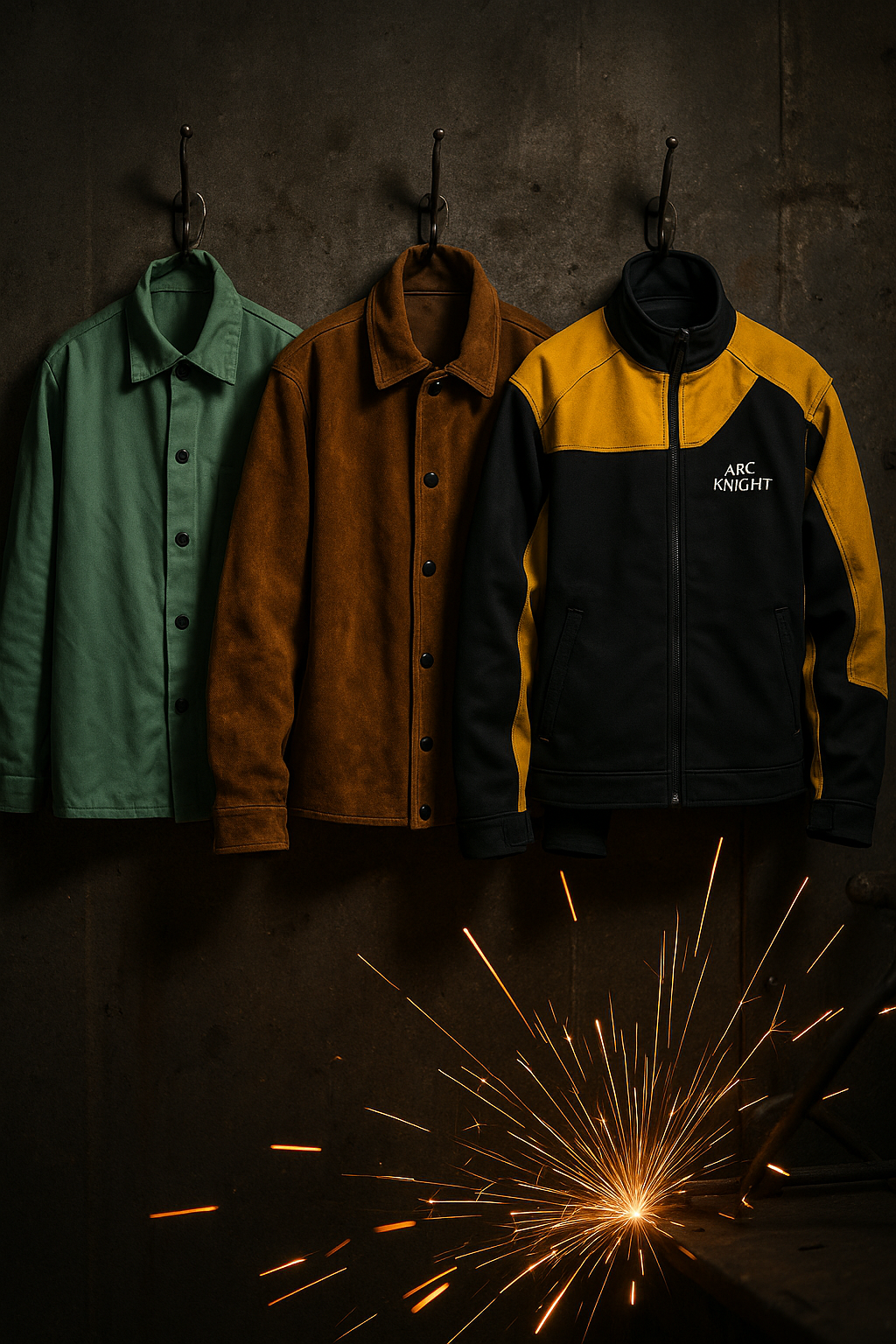
When it comes to welding safety, your jacket isn’t just part of the uniform—it’s your frontline defense. Sparks fly, UV rays burn, and slag splatters. That’s why flame-resistant welding jackets are a must on any job site. But with options like cotton, leather, and high-performance brands like the Weldas Arc Knight, which one’s best for you?
Here’s a breakdown of the three most popular materials for welding jackets, and which might be the best fit for your work style and budget.
Cotton Welding Jackets: Lightweight and Affordable
Best for: Light-duty welding, warm climates, and tight budgets.
Flame-resistant cotton jackets are treated with fire-retardant chemicals to resist ignition. They’re light, breathable, and comfortable to wear for extended periods—especially in hot shops or outdoor summer jobs.
Pros:
- Affordable (usually under $50)
- Light and breathable
- Great mobility and flexibility
- Easy to wash
Cons:
- Not ideal for heavy spatter or high amperage work
- May lose flame resistance over time with washing
- Lower durability compared to leather
No products found.
Good Fit: DIY welders, auto repair, and maintenance crews who want protection without the bulk.
Leather Welding Jackets: Heavy-Duty Protection
Best for: High-amp welding, overhead work, and job sites where spatter is constant.
Leather is naturally flame- and heat-resistant. Cowhide and pigskin are the most common types used in welding jackets. Though heavier, leather offers top-tier protection against sparks, slag, and grinding debris.
Pros:
- Superior protection and durability
- Naturally flame-resistant without treatment
- Long lifespan with proper care
Cons:
- Heavy and less breathable
- Can be stiff, especially when new
- Pricier than cotton jackets
No products found.
Good Fit: Structural welders, industrial settings, and fabrication shops where safety trumps comfort.
Weldas Arc Knight: Premium Hybrid Performance
Best for: Professionals who want the best of both worlds—comfort and protection.
The Weldas Arc Knight jacket combines the flexibility of cotton with the durability of leather. Typically, it features a flame-resistant cotton body for airflow and comfort, with leather sleeves and shoulders for high-wear protection. This makes it a go-to for all-day wear in demanding environments.
Pros:
- Cotton body reduces heat and improves mobility
- Leather arm shields high-impact zones
- Stylish, pro-grade construction
- High collar and wrist closures for added coverage
Cons:
- Mid-to-high price range
- Not ideal for constant grinding or overhead work without additional gear
No products found.
Good Fit: Experienced welders who want one jacket to do it all—without compromising safety or comfort.
Final Thoughts: Which One’s Right for You?
Choosing the right welding jacket depends on your typical job, climate, and personal comfort preferences:
| Material | Best For | Budget Range |
|---|---|---|
| Cotton | Light-duty, hot climates | $30–$60 |
| Leather | Heavy-duty, all-around protection | $80–$150 |
| Weldas Arc Knight | Mixed-use, professional welders | $70–$120 |
No matter your choice, make sure your jacket fits snugly, offers neck and wrist coverage, and is certified flame-resistant.
We may earn a commission through affiliate links in this post at no extra cost to you. Your support helps keep the sparks flying here at Weld Support Parts.

Leave a Reply