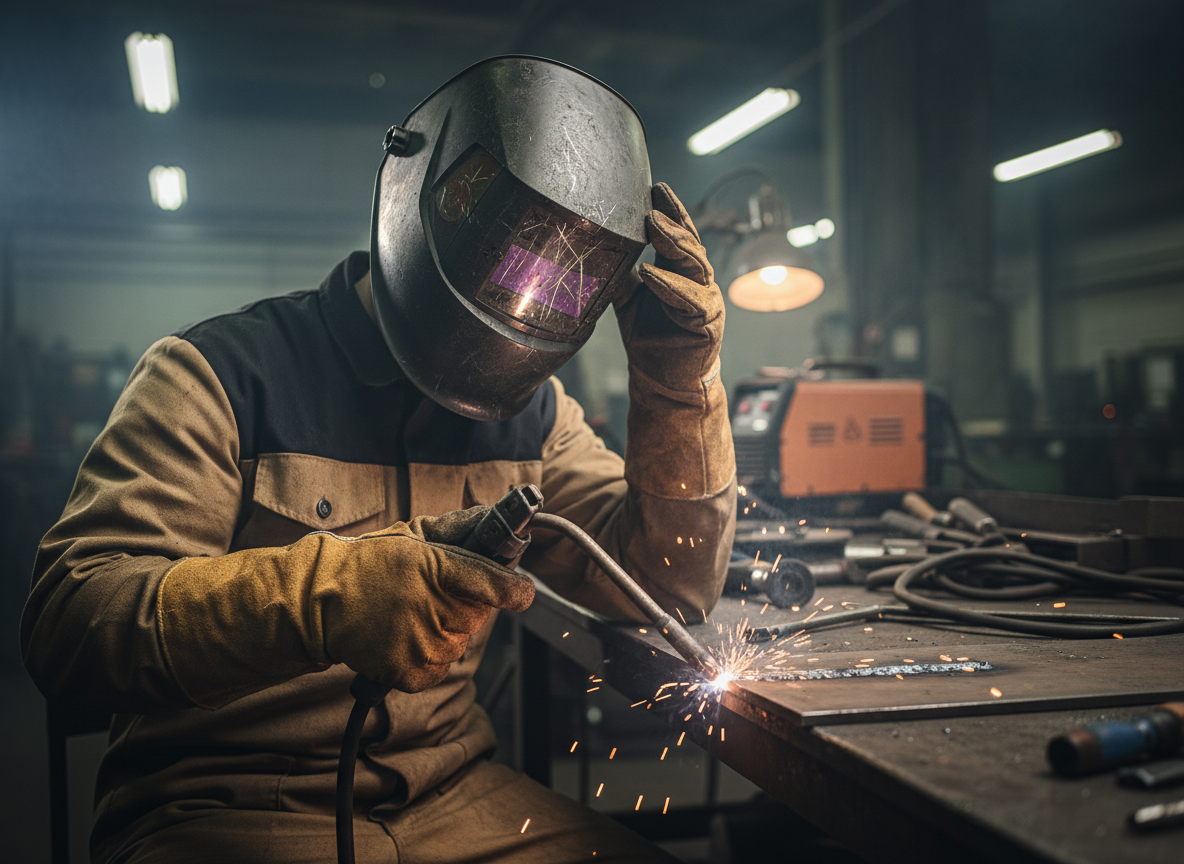
Welding with 7018 rods can be challenging, especially when they start sticking during operation. This issue not only affects the quality of the weld but also disrupts workflow. Understanding the underlying causes and solutions can help welders achieve more efficient results.
Key Takeaways
– 7018 rods are prone to sticking due to improper technique or settings.
– Correct amperage and angle can reduce sticking.
– Proper rod storage is crucial for optimal performance.
– Using the right equipment can significantly improve weld quality.
Problem / Context
Sticking occurs when the electrode fuses to the workpiece, interrupting the arc and making it difficult to complete the weld. This is a common issue with 7018 rods, which require precise conditions to function correctly.
Causes
Low Amperage
– Inadequate amperage fails to sustain the arc, causing the rod to stick.
Incorrect Angle
– Holding the rod at an incorrect angle reduces arc stability.
Poor Rod Condition
– Moisture absorption in 7018 rods can lead to sticking.
Fixes
Step 1: Adjust Amperage
– Increase Amperage: Slowly increase amperage until the arc is stable and the rod flows smoothly without sticking.
Step 2: Correct Angle
– Maintain a 10-15 Degree Angle: Keep the rod at a consistent angle to ensure smooth arc movement.
Step 3: Ensure Dry Storage
– Proper Storage: Store rods in a dry, sealed container or rod oven to prevent moisture absorption.
Step 4: Consistent Movement
– Steady Motion: Employ a steady, consistent movement along the weld joint to reduce sticking.
Product Section
No products found.
Safety Notes
– Eye Protection: Follow ANSI Z87.1 standards for eye protection.
– Welding Codes: Adhere to AWS D1.1 and D1.3 for safe and effective welding practices.
FAQ
What amperage should be used for 7018 rods?
Amperage settings typically range from 90 to 160 amps, depending on the rod diameter. Adjust based on welding parameters and practice.
How should 7018 rods be stored?
Store in a temperature-controlled rod oven at 250°F (121°C) to keep them dry and prevent moisture absorption.
Can rod sticking damage my welding machine?
Prolonged sticking can overheat and damage your welding machine, so it’s vital to address issues promptly.
Conclusion / Next Step
Addressing 7018 rod sticking involves proper technique and equipment adjustments. By implementing these solutions, welders can enhance their welding performance and minimize disruptions. For more tips on stick welding, explore additional resources and comparisons of welding rods like 7018 vs 6011.
Silicone facepieces seal better than rubber and last longer
Half-face respirators are lighter and more comfortable than full-face for all-day wear
Size matters—small, medium, large; wrong size = seal failure
Replace filters every 40 hours of use or when hard to breathe through
Comparison Table
Model
Type
Size Range
Filter Type
Best For
Price Range
3M 6502QL
Half-face, reusable
Small/Medium/Large
Bayonet P100
Daily welding, MIG/TIG
$35–$50
Honeywell 5500
Half-face, reusable
Small/Medium/Large
Bayonet P100
General welding, grinding
$30–$45
3M 6391
Half-face, reusable
Large only
Bayonet P100
Larger faces, high-volume use
$40–$55
3M 2097 Filters
Replacement filters
Universal fit
P100 + organic vapor relief
Filter replacement
$8–$12 per pair
Product Sections
3M 6502QL Rugged Comfort Quick Latch Respirator
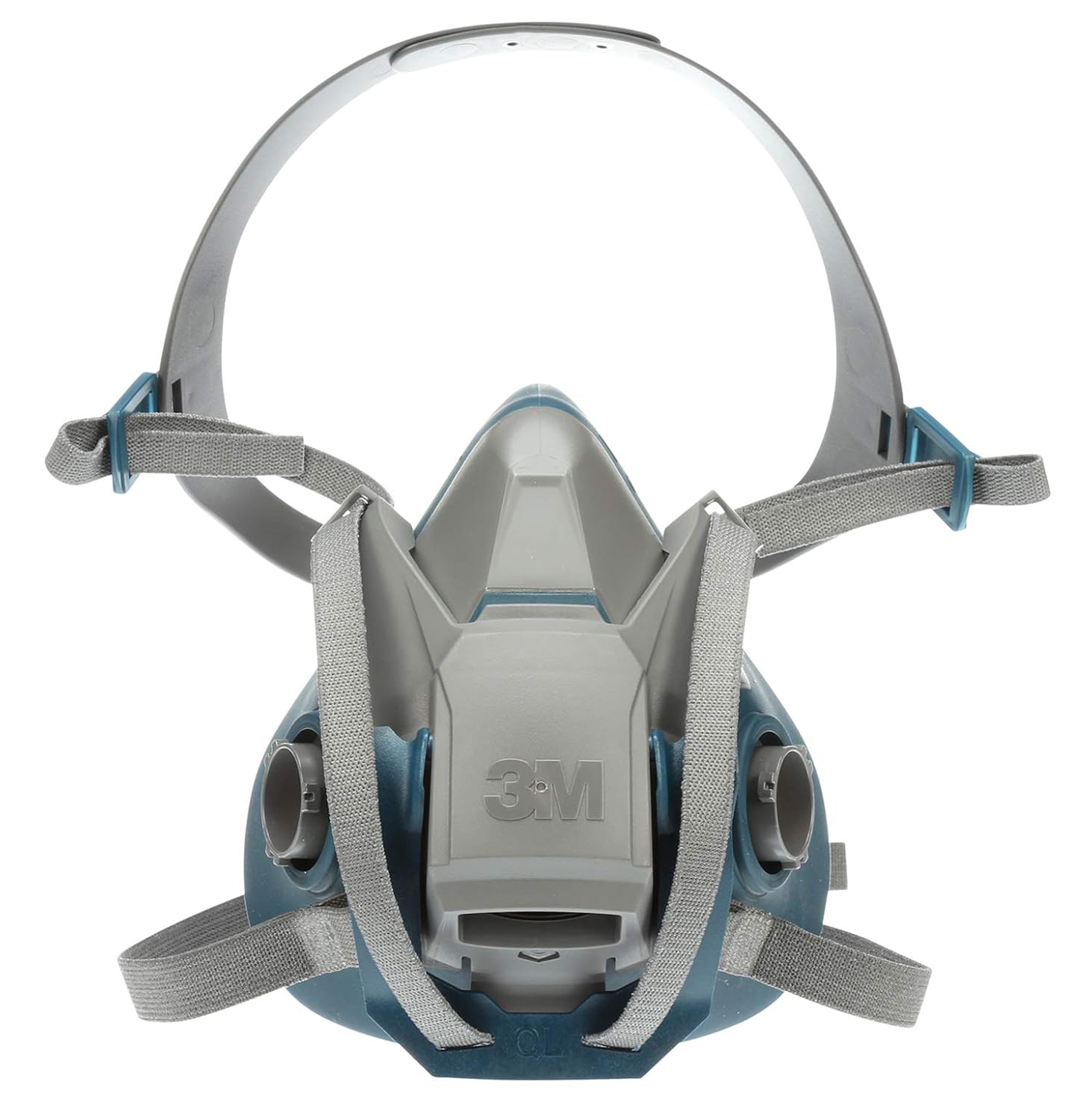
The 3M 6502QL is the gold standard for welding shops. Quick Latch design means you can snap cartridges on and off without twisting, saving time between jobs. Silicone facepiece seals tight and won’t degrade like rubber. Cool Flow exhalation valve reduces fogging and heat buildup.
Key Specs:
Facepiece: Silicone, soft and durable
Filter connection: Bayonet (quick-click)
Sizes: Small, Medium, Large
Exhalation valve: Yes (reduces heat/moisture)
Reusable: Yes (lasts 5+ years with care)
NIOSH certified: Yes (ANSI Z87.1)
Best for: Daily MIG/TIG welding, confined spaces, high-fume environments.
Amazon:
No products found.
Honeywell North 5500 Series P100 Half Mask
The Honeywell 5500 is the budget-friendly alternative that doesn’t sacrifice protection. Direct cartridge-to-face seal (no valve) makes it simple and reliable. Soft elastomer facepiece is comfortable for 8-hour shifts. Compatible with a wide range of filter types.
Key Specs:
Facepiece: Elastomer (soft, durable)
Filter connection: Direct bayonet
Sizes: Small, Medium, Large
Exhalation valve: No (simpler design)
Reusable: Yes (lasts 3–5 years)
NIOSH certified: Yes
Best for: Budget-conscious shops, occasional welding, grinding and sanding.
Amazon:
No products found.
3M 6391 Half Facepiece Respirator (Large)
The 3M 6391 is the large-size version of the 6502, designed for welders with bigger faces or those who need maximum comfort. Same silicone quality and Cool Flow valve as the 6502. Wider straps distribute pressure evenly.
Key Specs:
Facepiece: Silicone, large fit
Filter connection: Bayonet
Sizes: Large only
Exhalation valve: Yes (Cool Flow)
Reusable: Yes (lasts 5+ years)
NIOSH certified: Yes
Best for: Large-face welders, all-day high-volume welding, TIG work.
Amazon:
No products found.
3M 2097 P100 Particulate Filters (Replacement)
Fresh filters are critical. The 3M 2097 includes organic vapor relief, which helps with the smell of welding fumes. Magenta color makes it easy to spot when they’re saturated (turn dark brown). Compatible with 3M 6500 series respirators and most half-face masks.
Lifespan: 40 hours of use or until hard to breathe through
Quantity: 2 pairs (4 filters) per box
NIOSH certified: Yes
Best for: Replacing worn-out filters, maintaining seal integrity, reducing fume odor.
Amazon:
No products found.
Still Deciding? Compare These Options Below
No products found.
How to Choose the Right Respirator
1. Get the Right Size Try on small, medium, and large. The mask should feel snug but not painful. You should feel gentle suction when you inhale. If it shifts or gaps appear, try the next size.
2. Check Your Filter Type Most modern half-face respirators use bayonet cartridges (click-on). Older models use threaded cartridges (screw-on). Know which one you have before buying filters.
3. Consider Comfort Silicone facepieces (3M 6502, 6391) are more comfortable for all-day wear. Elastomer (Honeywell 5500) is cheaper but less comfortable. Cool Flow valves reduce heat buildup.
4. Plan for Filter Replacement P100 filters last 40 hours of use. If you weld 8 hours a day, 5 days a week, you’ll need new filters every 1–2 weeks. Budget accordingly.
5. Check Compatibility Not all filters fit all masks. 3M 6500 series uses bayonet cartridges. Honeywell 5500 uses direct bayonet. Verify before buying.
FAQ
Q: Can I use an N95 for welding? A: No. N95 masks are for dust and pollen, not welding fumes. Welding fumes contain toxic metals (manganese, chromium, nickel). You need a P100 respirator.
Q: How long do P100 filters last? A: 40 hours of use or until they become hard to breathe through. If your filters are dark brown, replace them. Don’t guess—replace them.
Q: Can I reuse a P100 filter? A: No. Once saturated, they lose efficiency. Throw them away and install fresh filters.
Q: What if I have a beard? A: Shave the area where the mask contacts your face. Even 1/8 inch of beard hair breaks the seal. A leaking mask doesn’t protect you.
Q: Do I need a fit test? A: OSHA recommends annual fit testing in high-risk environments. For shop use, do a quick seal check: cover the cartridges, inhale hard, and feel for leaks around the edges.
Safety Notes
Welding fumes contain manganese, chromium, nickel, and other toxic metals. Chronic exposure causes neurological damage, respiratory disease, and kidney problems. ANSI Z87.1 requires proper respiratory protection in confined spaces or high-fume environments. A proper seal is critical—a leaking mask gives false confidence and exposes you to harmful particulates.
Always wear a properly sealed P100 respirator when welding in enclosed or poorly ventilated spaces.
You’re wearing a P100 respirator. You’ve got fresh filters. But you can still smell the fumes.
That’s not normal—and it means your mask isn’t protecting you.
Here’s why it happens and how to fix it.
Symptoms You Have a Seal Problem
Fume smell inside the mask during welding
Visible fumes leaking around the mask edges
Filters turn dark/brown faster than expected
Lip tingling or throat irritation despite wearing the mask
Fogging inside the mask (moisture escaping, not just condensation)
Root Cause: Poor Mask Seal
A P100 filter only works if air passes through the filter, not around it.
If you smell fumes, one of these is happening:
1. Facial Hair Breaks the Seal Beards, stubble, and sideburns create gaps between your face and the silicone facepiece. Even 1/8 inch of beard hair defeats the seal. Air (and fumes) bypass the filter entirely.
2. Wrong Size Mask Half-face respirators come in small, medium, and large. A loose mask won’t seal; a too-tight mask causes discomfort and users remove it. Either way, you get leakage.
3. Damaged Facepiece Cracked silicone, worn straps, or a loose exhalation valve let unfiltered air in. Silicone degrades over time, especially if stored in sunlight or heat.
4. Filters Not Seated Properly Cartridges must click or screw in fully. Partial insertion leaves gaps. Dirty filter threads prevent a tight seal.
5. Exhalation Valve Failure The one-way valve lets breath out but keeps fumes out. If it’s stuck open or damaged, fumes flow straight in.
Per NIOSH and ANSI Z87.1, a proper seal is non-negotiable for respiratory protection.
The Fix: 5 Steps to Stop Fume Leakage
1. Shave Your Face Trim or shave facial hair where the mask contacts your skin. This is the #1 reason for seal failure. Check the mask fit line—anything touching that area must go.
2. Verify Your Size Try on multiple sizes. The mask should feel snug but not painful. You should feel gentle suction when you inhale. If it shifts or gaps appear, try the next size up or down.
3. Check Filter Seating Remove and reinstall cartridges. They should click (bayonet) or screw (threaded) until snug. Don’t force—just firm pressure. Wipe threads clean if they’re dusty.
4. Inspect the Facepiece Look for cracks, tears, or discoloration in the silicone. Check the exhalation valve for cracks or debris. If damaged, replace the facepiece (most respirators have replaceable parts).
5. Replace Old Filters P100 filters last 40 hours of use or until they become hard to breathe through. If your filters are dark brown or you’ve been using them for weeks, replace them. Clogged filters don’t seal well and reduce airflow.
Real-World Tip
Experienced welders do a fit test before every shift: put on the mask, cover the filter cartridges with your hands, and inhale hard. If you feel air being sucked in around the edges, the seal is broken. If it holds vacuum, you’re good.
This takes 5 seconds and catches seal problems before you start welding.
Welding fumes contain manganese, chromium, nickel, and other toxic metals. ANSI Z87.1 requires proper respiratory protection in confined spaces or high-fume environments. A proper seal is critical—a leaking mask gives false confidence and exposes you to harmful particulates.
If your weld puddle looks hazy or washed out, your helmet lens is usually the problem—not your settings. Replacing the outer cover lens is the fastest, cheapest fix (and it’s a consumable in any busy shop).
Speedglas lenses are helmet-specific. If you’re on a 9100 series hood, start by replacing the outer cover lens before assuming your auto-darkening filter is failing.
Key specs: Unknown (Verify)
Best for: Speedglas 9100 series owners who want OEM clarity.
Buy:
No products found.
Top Pick Callout
Top pick (best overall for most welders):OEM outer cover lenses for your exact helmet model.
Reason: outer lenses are the part that gets destroyed first, and replacing them restores visibility immediately with minimal cost.
Buying Guide: How to Choose
Confirm your helmet model (inside label or manual). Don’t guess.
Confirm lens type: outer cover lens vs inner lens vs ADF. This page is for outer cover lenses.
Check the pack quantity, so you’re not re-ordering every month.
Replace on a schedule if you weld daily (or whenever you notice haze).
FAQ
Do I need to replace the auto-darkening filter (ADF) if I can’t see?
Usually no. Replace the outer cover lens first. If the view is still hazy, then inspect the ADF and inner lens.
How often should I replace the outer cover lens?
As needed. In high-spatter work, it can be monthly. In cleaner TIG work, it can last much longer.
Will any 4.5″ x 5.25″ lens fit my helmet?
Not always. Many helmets share sizes, but fitment varies by brand and series. Verify before ordering.
Why does my lens look cloudy right after I replace it?
Check for protective film you forgot to peel, dust inside the helmet, or a scratched inner lens.
Safety Notes
Wear safety glasses under the hood.
Replace lenses that are cracked or heavily scratched.
Your helmet lens is probably dirty, scratched, or damaged—and it’s costing you quality welds.
If you’re squinting through your helmet or struggling to see the puddle clearly, the problem isn’t your eyesight. It’s your lens. Dirty, scratched, or worn lenses block light and create a hazy view that makes precision impossible. The good news: this is an easy fix.
Symptoms of a Bad Helmet Lens
Hazy or cloudy view even in good light
Scratches or scuffs visible on the lens surface
Difficulty seeing the weld pool or joint
Lens feels sticky or has residue buildup
Darkening is uneven or inconsistent across the lens
You’re lifting your helmet more often to see clearly
Why This Happens
Welding helmets take a beating. Spatter, grinding dust, and UV exposure degrade the lens over time. The outer clear lens (the protective layer) scratches easily from handling and contact with metal. The inner auto-darkening filter (if you have one) can accumulate dust and residue, especially in high-spatter processes like MIG.
Even small scratches refract light and reduce contrast, making it harder to follow your bead. Residue from flux, spatter, or shop dust acts like a filter, dimming your view and forcing you to compensate by tilting your head or adjusting your shade—both bad habits that slow you down.
AWS D1.1 welding standards don’t specify lens cleanliness, but they do require clear, undamaged optics for safe, quality welds. A damaged lens compromises both.
The Fix (Step-by-Step)
Step 1: Clean the lens thoroughlyStart with the outer clear lens. Use a soft, lint-free cloth and warm water with a drop of mild soap. Wipe gently—don’t scrub. Dry completely. For the inner auto-darkening filter, use a dry cloth only (water can damage the LCD).
Step 2: Inspect for damageHold the lens up to light. Look for scratches, cracks, or discoloration. If you see deep scratches or cracks, the lens needs replacement. Small surface scratches won’t affect visibility much, but they’ll get worse.
Step 3: Replace if necessaryIf cleaning doesn’t help, order replacement lenses. Most helmets use standard sizes: outer clear lenses (usually 4.5″ x 5.25″ or similar) and inner filters (if auto-darkening). Check your helmet model or measure the lens.
Step 4: Install the new lensMost helmets have a simple snap-in or screw-on design. Remove the old lens, snap or screw in the new one. Takes 30 seconds.
Step 5: Test before weldingStrike a test arc or wave the helmet at a light source. The lens should darken instantly and evenly. If it doesn’t, check the battery (for auto-darkening) or reinstall the lens.
Real-World Tip
Experienced welders replace outer clear lenses every 2–3 months in high-spatter environments (MIG, flux-core). It’s cheap insurance. Keep a spare pack of lenses in your toolbox. When visibility drops, swap them out immediately instead of fighting through a bad lens. You’ll weld faster and straighter.
Safety Note
ANSI Z87.1 requires helmets to have impact-resistant lenses and proper UV/IR protection. A cracked or heavily scratched lens fails this standard and puts your eyes at risk. Replace damaged lenses before your next weld.
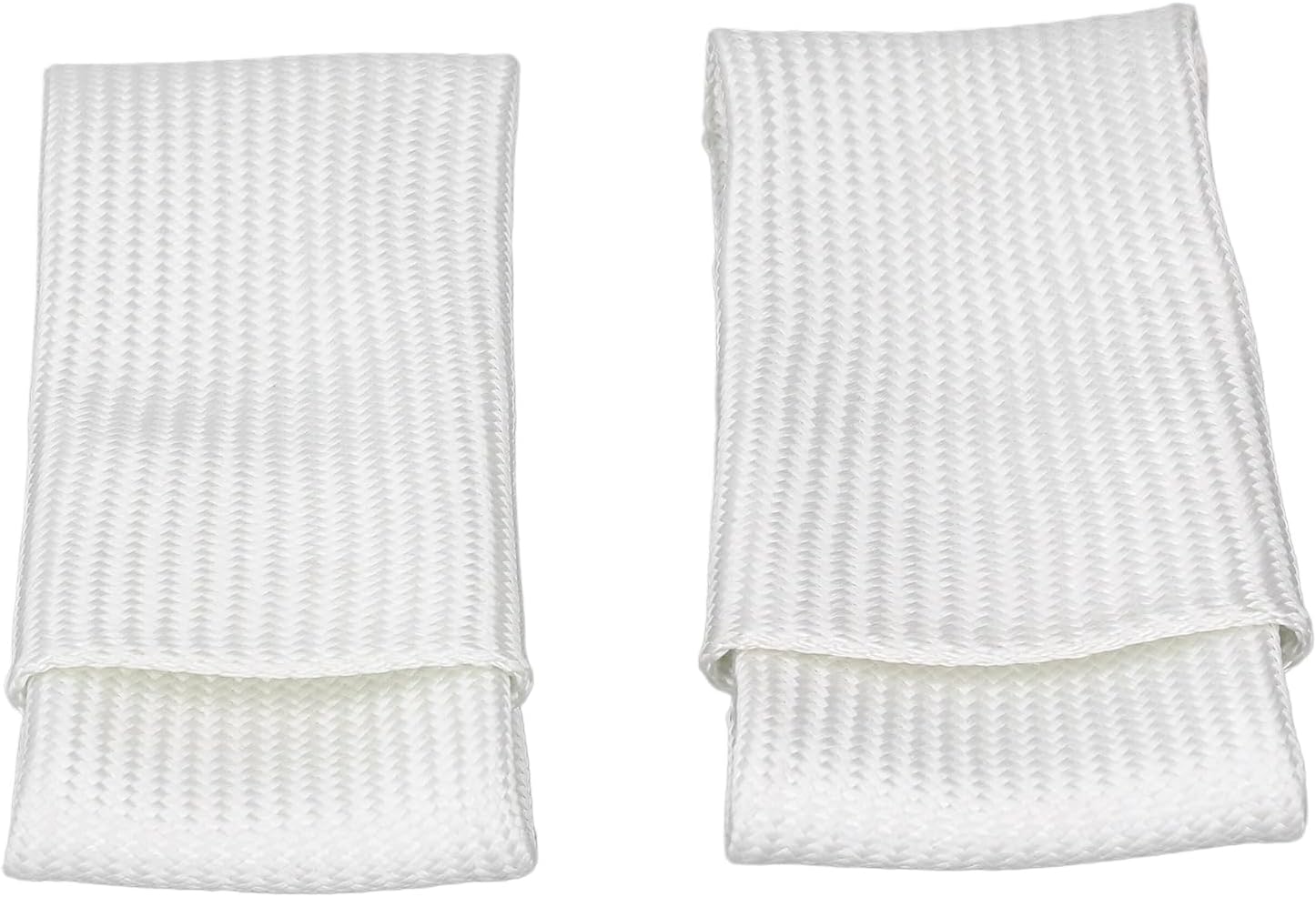
TIG is slow, close, and heat-soaked. Even with good gloves, the index finger is usually the first place you feel it—especially when you’re steadying the torch, walking the cup, or doing long beads where heat builds in the glove. A fingertip heat shield is a small accessory, but it can meaningfully reduce glove wear and finger heat exposure when used correctly.
This post is built around one specific Amazon listing with a verified ASIN so you can avoid “looks the same” swaps.
This is a set of fingertip covers intended to be worn over or on the fingertip area (often over a glove finger) to reduce heat transfer and abrasion at the point where TIG welders tend to “ride” the work.
Unknown (Verify): exact material composition beyond “glass fibre” wording, temperature rating, and whether the product is intended to be worn directly on skin vs over a glove. Confirm on the listing before use.
Where it helps (real use cases)
Walking the cup / steadying the torch: reduces hot-spot burn-through on glove fingertips.
Long beads on warm parts: helps when heat soak builds and your glove starts to feel “thin.”
Bench TIG on stainless: when you’re close to the puddle and repositioning frequently.
Where it won’t help
If your glove choice is wrong for the amperage, or you’re resting your hand too close to the arc, a finger cot won’t fix the underlying technique or PPE mismatch. Treat it as a wear item, not primary protection.
Performance & Use
The value is simple: less glove damage and less fingertip heat, which can improve control because you’re not constantly backing off due to discomfort.
What to compare before you buy
Sizing and fit: too loose slips; too tight kills dexterity (Unknown—Verify sizing guidance).
How you’ll wear it: over-glove vs under-glove (verify intended use on listing).
Dexterity impact: if it changes your torch angle control, it may not be worth it.
Durability expectations: these are typically consumable wear items—plan to replace.
Your amperage and duty cycle: higher heat work may require heavier gloves first.
If you’re burning through glove fingertips weekly, this is a low-cost experiment that can reduce consumable spend.
If you rarely feel fingertip heat, spend the money on better gloves or better bench setup first.
Safety note
Do not treat a fingertip cover as “heat proof.” Maintain safe hand distance from the arc, and keep gloves appropriate to the process. If a product has no clear rating or instructions, assume conservative limits and verify before relying on it.
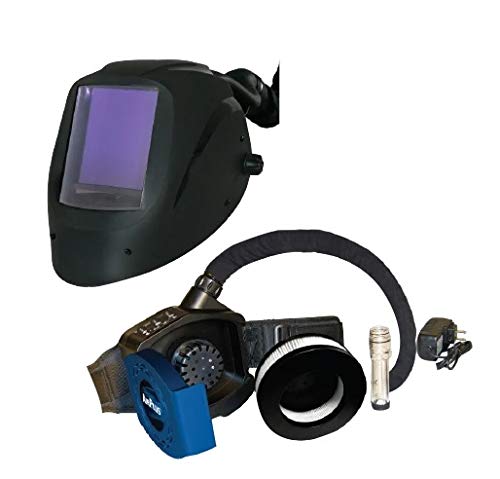
Intro If you’re looking at a PAPR kit, you’re usually solving one of two problems: fume exposure in real-world shop conditions, or comfort that keeps you wearing protection consistently. The ArcOne AirPlus w/Vison BFFVX kit is a packaged option on ArcWeld.store, but the smart buy depends on verifying what’s included and how it fits your workflow.
Key Takeaways
Treat this as a system purchase: helmet/facepiece + blower + filters + battery (contents: Unknown (Verify)).
Fit, seal, and maintenance are the difference between “owned” and “used.”
Verify replacement filter availability and part numbers before you commit (Unknown (Verify)).
Performance & Use PAPR setups are about delivering filtered air to reduce exposure and improve comfort during long welding or grinding sessions. The practical performance questions are: does it fit with your hood/helmet setup, does it stay comfortable for a full shift, and can you keep it maintained with readily available consumables.
What to compare before you buy
Included components in the kit (blower unit, battery, charger, hose, headtop/visor) — Unknown (Verify)
Filter type and replacement part numbers — Unknown (Verify)
Airflow settings and indicators — Unknown (Verify)
Compatibility with welding helmet/hood configuration — Unknown (Verify)
Weight and belt/strap system comfort — Unknown (Verify)
Cleaning procedure and replacement schedule — Unknown (Verify)
Durability & Build PAPR kits live in harsh environments: grinding dust, spatter, and daily handling. Look for protected hose routing, robust connectors, and a battery mount that doesn’t loosen over time. If you can’t confirm these details from manufacturer documentation, mark them Unknown (Verify) and verify before purchase.
Power / Specs ArcWeld.store does not display detailed specs in the scraped view for this listing. Treat all technical specs as Unknown (Verify) until you confirm from ArcOne documentation or the included manual:
Battery type/capacity: Unknown (Verify)
Runtime: Unknown (Verify)
Rated airflow: Unknown (Verify)
Filter classification: Unknown (Verify)
Applicable standards/compliance: Unknown (Verify)
Who It’s For
Welders doing frequent MIG/flux-core work where fume volume is a daily reality
Shops that want a more consistent “wear rate” than disposable masks typically achieve
Anyone who needs a reusable system and is willing to maintain filters and clean components
Quick FAQ Q: Is this a respirator replacement for every environment? A: Unknown (Verify). Respiratory selection depends on hazards present. Verify with your safety program requirements and manufacturer guidance.
Q: How often do filters need replacement? A: Unknown (Verify). Replacement depends on exposure and filter type. Confirm the exact filter model used in this kit and follow manufacturer guidance.
Q: Will it work with my current welding helmet? A: Unknown (Verify). Confirm the headtop/visor configuration and compatibility with your helmet/hood setup.
Safety Notes (include verbatim closing line) PAPR systems still require correct use, correct filters, and routine inspection. If the system doesn’t fit right or isn’t maintained, protection drops fast. Align selection with your shop’s hazard assessment and follow the manufacturer’s maintenance schedule. Always follow the manufacturer’s instructions and your shop’s safety procedures. If you’re unsure about fitment or ratings, verify before you buy or install.
Where to Buy (ArcWeld.store link + optional Amazon fallback)
Welding fumes are a real risk—especially in tight shops or on stainless. The 3M 6502QL half-mask respirator delivers comfort and proven protection for serious welders
Key Takeaways
NIOSH-approved for welding fumes (with correct filters)
Quick Latch design: easy on/off with gloves
Durable, silicone face seal for all-day use
Adjustable head straps for a secure fit
Compatible with 3M bayonet filters/cartridges
Performance & Use
The 6502QL is designed for welders who need to remove their respirator quickly between welds. The Quick Latch system allows for fast donning/doffing even with gloves. Pair with 3M 2097 or 60921 filters for fume, particulate, and organic vapor protection (filters sold separately).
Durability & Build
Built with resilient silicone and a sturdy exhalation valve, this mask handles shop abuse and frequent cleaning. Adjustable straps maintain fit through long shifts. Facepiece resists heat and sweat.
Power / Specs
Size: Medium (verify fit; S/L available)
Approval: NIOSH
Compatibility: 3M bayonet filters/cartridges
Quick Latch: Yes
Included: Mask only (filters sold separately)
Weight: ~0.5 lbs
Who It’s For
Best for welders in confined spaces, stainless, or galvanized work. Also suitable for grinding or plasma cutting. Not for users with facial hair or those needing supplied-air.
Quick FAQ
Does this mask protect against all welding fumes? With correct filters—use 3M 2097 or 60921 for most welding.
Are filters included? No, sold separately.
Is it comfortable for long shifts? Yes, silicone seal and adjustable straps.
Can I wear it with a welding helmet? Yes, fits under most standard helmets.
Is it OSHA compliant? Yes, when used with proper filters.
Safety Notes
Always use the correct filter for your welding process. Replace filters per manufacturer guidelines. Perform fit checks before each use. Always follow the machine manual, SDS, and applicable code requirements. If unsure, verify with the manufacturer.
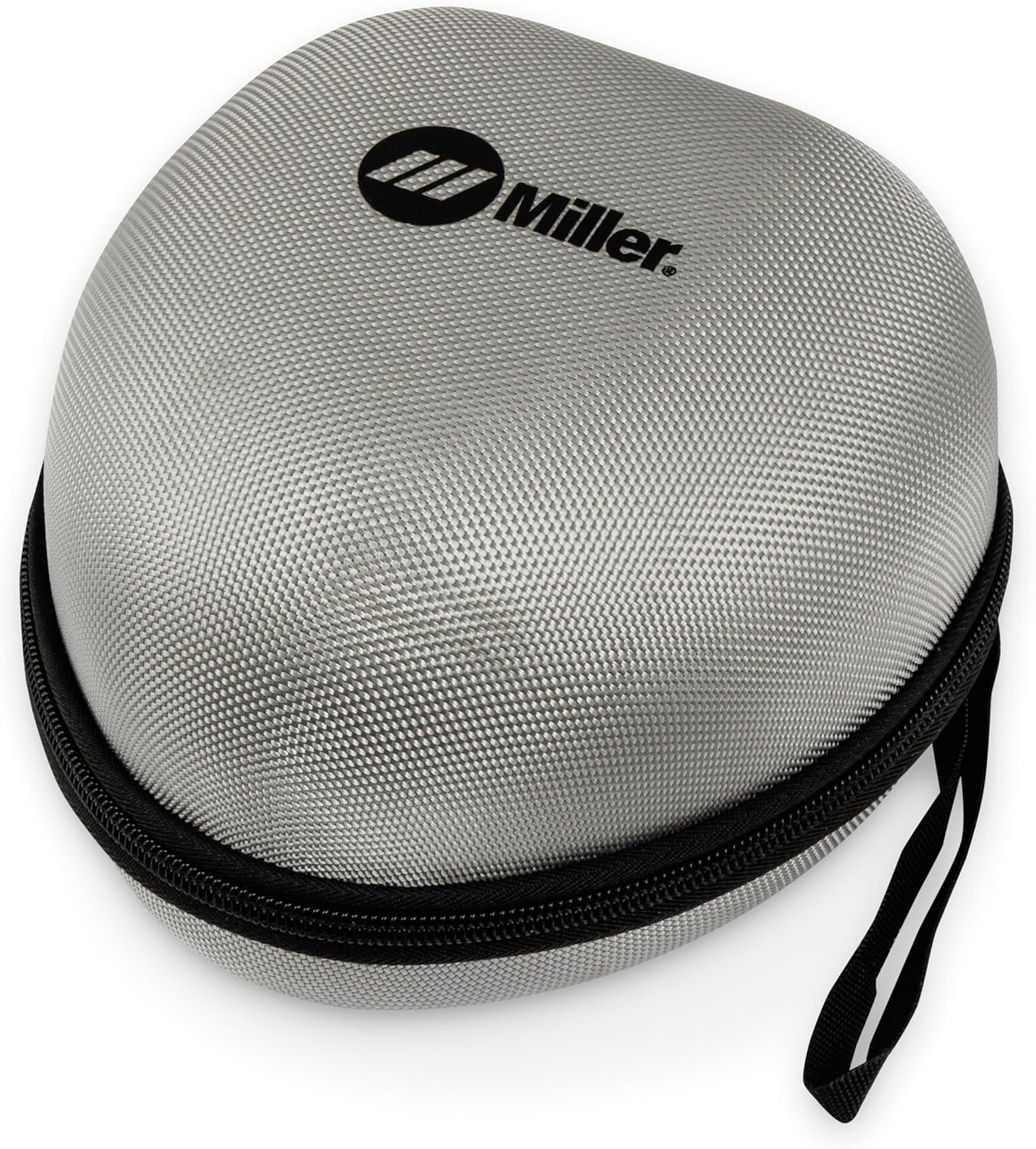
Intro If your respirator gets tossed in a toolbox or left on a bench, it’s more likely to get dirty, damaged, or “forgotten.” A dedicated case keeps your LPR-100 setup protected and ready to use.
Key Takeaways
Protects the respirator from dust, grinding grit, and shop damage between uses
Helps keep sealing surfaces and filters cleaner than open-air storage
Makes it easier to transport PPE to job sites without crushing the mask
Good fit for welders who actually wear a respirator daily
What’s included inside the case: Unknown (Verify)
Performance & Use
A respirator case is simple, but it solves a real problem: PPE that isn’t protected tends to get contaminated or beat up, and then it stops getting used. This case is intended for the Miller LPR-100 Gen II system (verify exact compatibility on the listing if you’re using a different mask).
Use it as “clean storage” after your shift: wipe down the mask body, let moisture dissipate, then store it so the face seal and straps aren’t getting crushed. If you’re moving between weld bays or traveling to a site, a case also reduces the chance of filters getting loaded with shop dust before you even put it on.
Durability & Build
A good respirator case should resist cracking, close securely, and protect the mask from being compressed. Exact material, latch style, and impact resistance for this specific case: Unknown (Verify).
Power / Specs
Product type: Respirator case (storage/transport)
Intended system: Miller LPR-100 Gen II (Verify)
Dimensions: Unknown (Verify)
Material: Unknown (Verify)
Included components (mask/filters vs case-only): Unknown (Verify)
Who It’s For
For welders and fabricators who want their respirator to stay clean, protected, and easy to grab—especially if you move between work areas or travel. Skip it if you never transport your respirator and already have a clean, dedicated storage spot.
Quick FAQ
Q: Is this the respirator or just the case? A: This listing is for the case. Whether it includes a mask/filters depends on the exact listing contents—verify before buying.
Q: Will it fit the original LPR-100 (Gen I)? A: Unknown (Verify). Confirm compatibility on the listing.
Q: Does a case replace filter change practices? A: No. It helps keep the respirator cleaner, but filters still need replacement based on exposure and manufacturer guidance.
Q: Can I store the respirator right after welding? A: Let it cool/dry first. Storing a damp mask can accelerate odor and contamination.
Q: Is this airtight? A: Unknown (Verify). Most cases protect from damage/dust but are not truly airtight.
Safety Notes
A case helps keep PPE cleaner, but it does not guarantee contamination-free storage
Keep respirators away from grinding dust, paint/solvent vapors, and welding spatter
Inspect face seal, valves, and straps before each use; replace damaged parts Always follow the machine manual, SDS, and applicable code requirements. If unsure, verify with the manufacturer.
Undersized or damaged welding cables kill performance and create safety hazards. The right cable kit ensures full power delivery and reliable connections.
Key Takeaways
Heavy-duty welding cables carry full amperage without voltage drop.
Proper gauge and length matter—undersized cables reduce power and create heat.
Dinse-style connectors are industry standard for quick, secure connections.
Check amperage rating and cable length for your machine and workspace.
Inspect cables regularly for damage; replace worn connectors immediately.
Performance & Use
Welding cables deliver current from your machine to the torch and ground clamp. Performance depends on proper gauge (AWG), length, and connector type. A 25–50ft kit works for most shop setups; longer runs require thicker gauge to prevent voltage drop. Dinse-style connectors (10–25mm) are standard for MIG, TIG, and stick machines (Unknown: verify connector compatibility with your specific machine).
Durability & Build
Look for cables with rubber or silicone jackets rated for welding heat. Copper conductors resist corrosion. Quality connectors should have secure threads or twist-lock designs. Inspect regularly for cuts, burns, or exposed wire.
Power / Specs
Cable Length: 25–50 ft
Gauge: #2 to #6 AWG (Unknown: verify for your amperage)
Amperage Rating: 50–200 amps (Unknown: confirm for your machine)
Connector Type: Dinse-style (10–25mm) or proprietary
Jacket Material: Rubber or silicone
Temperature Rating: 60°C+ typical
Who It’s For
Essential for any welder upgrading cables, extending workspace, or replacing damaged connectors. Not for indoor-only, low-amperage hobby setups without proper grounding.
Quick FAQ
Q: What gauge cable do I need? A: Depends on amperage and distance. Longer runs need thicker gauge—check your machine manual.
Q: Are Dinse connectors universal? A: Most are, but verify compatibility with your machine before purchase.
Q: Can I use a regular extension cord? A: No—welding cables must be rated for high amperage and heat. Regular cords will fail.
Q: How often should I replace cables? A: Inspect regularly; replace if you see cuts, burns, or exposed copper.
Q: Do I need both a work cable and ground cable? A: Yes—ground cable completes the circuit. Both are essential.
Safety Notes
Always inspect cables before use. Never weld with damaged or undersized cables—they overheat and create fire hazards. Ensure connectors are tight and secure. Keep cables away from sharp edges and hot surfaces.
Always follow the machine manual, SDS, and applicable code requirements. If unsure, verify with the manufacturer.
To provide the best experiences, we use technologies like cookies to store and/or access device information. Consenting to these technologies will allow us to process data such as browsing behavior or unique IDs on this site. Not consenting or withdrawing consent, may adversely affect certain features and functions.
Functional
Always active
The technical storage or access is strictly necessary for the legitimate purpose of enabling the use of a specific service explicitly requested by the subscriber or user, or for the sole purpose of carrying out the transmission of a communication over an electronic communications network.
Preferences
The technical storage or access is necessary for the legitimate purpose of storing preferences that are not requested by the subscriber or user.
Statistics
The technical storage or access that is used exclusively for statistical purposes.The technical storage or access that is used exclusively for anonymous statistical purposes. Without a subpoena, voluntary compliance on the part of your Internet Service Provider, or additional records from a third party, information stored or retrieved for this purpose alone cannot usually be used to identify you.
Marketing
The technical storage or access is required to create user profiles to send advertising, or to track the user on a website or across several websites for similar marketing purposes.