Tag: MIG welding

  • Worn MIG Contact Tips Causing Porosity? Here’s the Fix

    Intro

    Your MIG welds are coming out porous, weak, or with inconsistent penetration. You’ve checked your gas flow, wire speed, and voltageโ€”everything looks right. The culprit? A worn contact tip.

    A degraded contact tip creates poor electrical contact with the wire, causing arc instability and incomplete fusion. This is one of the most overlooked failure points in MIG welding, and it’s costing you time and rework.

    Key Takeaways

    • Worn contact tips cause porosity, spatter buildup, and weak welds
    • Signs: Pitting, erosion, or a loose fit on the wire
    • Replace every 50โ€“100 hours of welding or when you notice performance drop
    • Proper fitment matters: match your wire size (.023″, .030″, .035″, .045″)
    • Quality replacement tips prevent downtime and improve weld quality

    The Problem

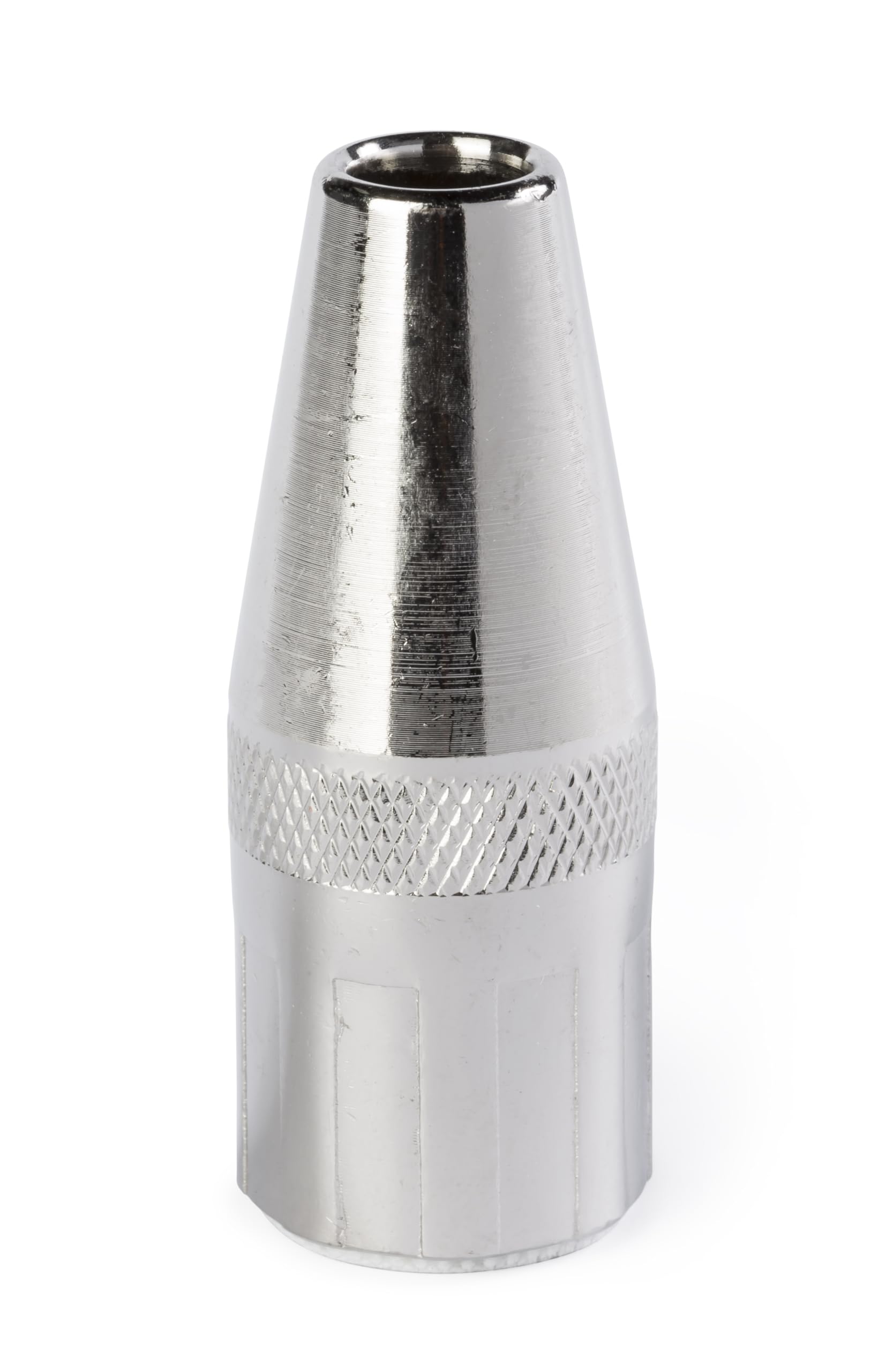
    A contact tip is a consumable that wears with every pass. As current flows through it to the wire, the tip gradually erodes and pits. When it gets too worn, it can’t maintain consistent electrical contact, causing:

    • Arc instability: Erratic arc behavior, spatter, and poor fusion
    • Porosity: Gas pockets trapped in the weld due to arc interruption
    • Weak beads: Inconsistent penetration and bead profile
    • Spatter buildup: Excess spatter around the nozzle area

    Most shops don’t replace tips until they fail completelyโ€”by then, you’ve already scrapped parts.

    Why It Matters

    Worn contact tips don’t just make bad welds; they cost money:

    • Rework: Porosity and weak fusion mean cutting out bad sections and re-welding
    • Downtime: Troubleshooting a worn tip wastes 30 minutes to hours
    • Material waste: Scrap parts and wasted filler material add up fast
    • Safety: Weak welds on structural or pressure-bearing work are a liability

    A $5โ€“$15 contact tip replacement takes 2 minutes and prevents all of this.

    The Fix

    Replace your contact tip as part of routine maintenance:

    1. Stop the welder and let it cool for 30 seconds
    2. Unscrew the nozzle (usually 1/2″ or 5/8″ wrench)
    3. Remove the old tip by hand or with a tip puller
    4. Install the new tip hand-tight, then snug with the nozzle
    5. Re-install the nozzle and resume welding

    That’s it. Total time: under 2 minutes.

    Why This Product Solves It

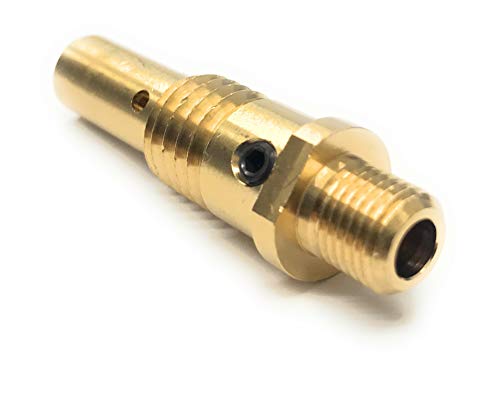
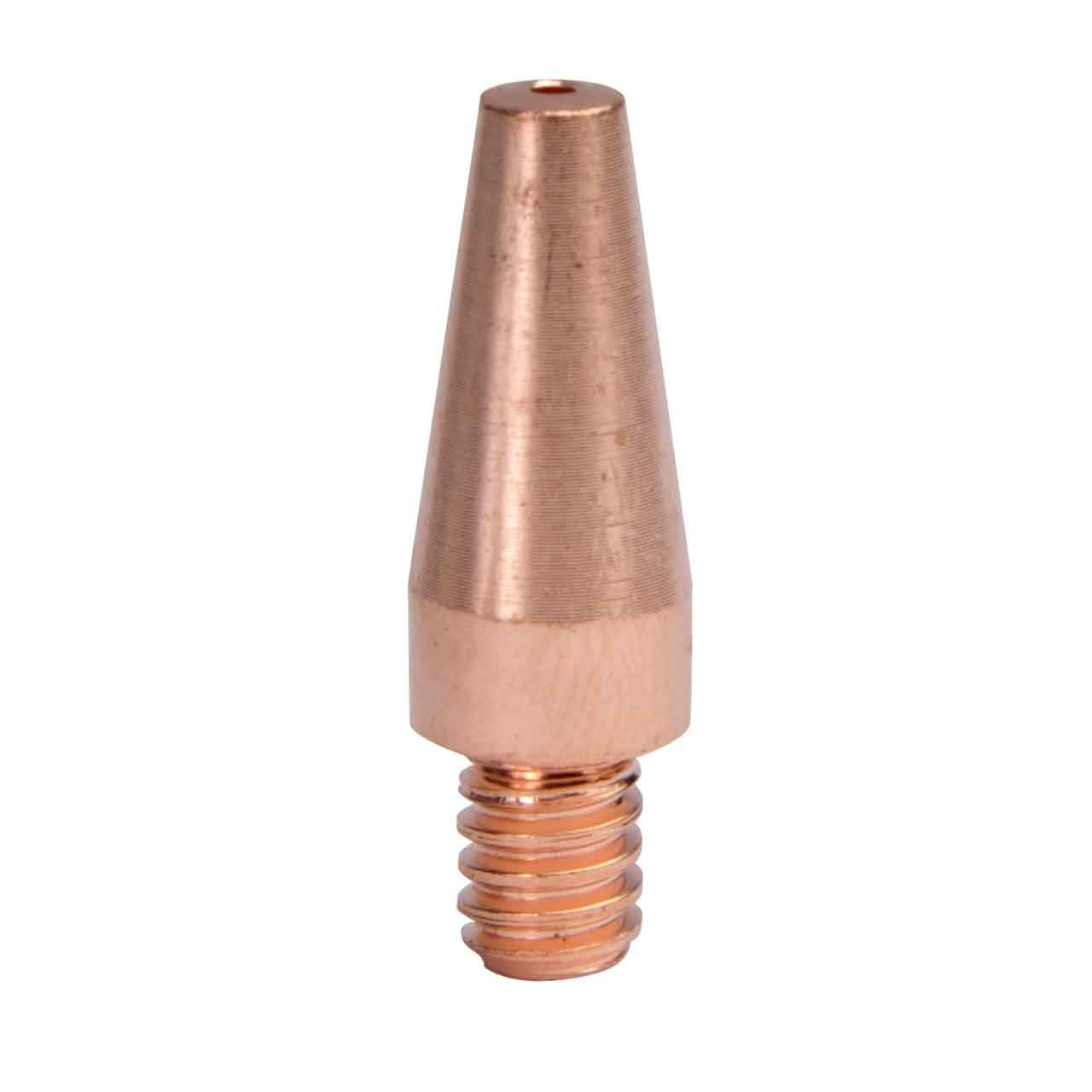
    The Bernard AccuLock S Contact Tip is a direct replacement for Miller AccuLock S guns (MDX-100, MDX-250, and compatible systems). It maintains precise electrical contact with the wire, delivering stable arc and consistent penetration.

    Key benefits:

    • Exact fitment: Engineered for AccuLock S gunsโ€”no guessing
    • Reliable contact: Precision-molded for tight wire fit and stable arc
    • Affordable: Pack of 10 tips covers months of welding
    • Compatible: Works with .030″, .035″, and .045″ wire (check your size)

    Replace every 50โ€“100 hours or when you notice spatter or porosity. Preventive replacement beats troubleshooting a failed tip mid-job.

    What to Check Before You Buy

    • Your gun type: This is for Miller AccuLock S guns (MDX-100, MDX-250). If you use a Lincoln, ESAB, or Tweco gun, you need a different tip
    • Wire size: Available in .030″, .035″, and .045″โ€”match your setup
    • Quantity: Pack of 10 is standard; one tip lasts 50โ€“100 hours depending on duty cycle
    • Fitment: Unknown (Verify) โ€” confirm your gun model before ordering

    Real-World Use

    A fabrication shop running steady MIG work replaces contact tips every 2โ€“3 weeks. One worn tip caused 4 hours of rework on a structural assembly before they realized the problem. Now they replace tips every 50 hours as preventive maintenance. No more porosity, no more downtime.

    Common Mistakes

    • Waiting too long to replace: Worn tips degrade weld quality for days before failing completely
    • Wrong size: Installing a .035″ tip in a .045″ gun (or vice versa) causes loose fit and arc instability
    • Not cleaning the nozzle: Spatter buildup on the nozzle can also cause arc issuesโ€”clean it when you replace the tip
    • Over-tightening: Hand-tight is enough; over-tightening can crack the tip
    • Ignoring porosity: If you see porosity, replace the tip immediatelyโ€”it’s the first thing to check

    Safety Notes

    • Always wear ANSI Z87.1-rated safety glasses or a helmet when welding
    • Let the gun cool for 30 seconds before removing the nozzleโ€”contact tips can retain heat
    • Ensure proper ventilation; MIG welding produces fumes that require respiratory protection (OSHA guidelines)
    • Never touch the tip or nozzle immediately after weldingโ€”they will cause burns

    Always follow the manufacturer’s instructions and your shop’s safety procedures. If you’re unsure about fitment or ratings, verify before you buy or install.

    Where to Buy

    Available at ArcWeld.store (stock and shipping: Unknown โ€“ verify)

  • MIG Wire Feed Bird Nesting: Causes, Fixes & Roller Replacement Guide

    Cluster: MIG Troubleshooting & Wire Feed Systems

    Quick Diagnosis

    You’re feeding wire, but it bunches up inside the gun or linerโ€”a tangled mess that stops the arc cold. This is bird nesting, and it kills productivity fast.

    Most likely causes (in order):

    1. Feed roller tension too tight โ€” squeezes wire, causes backpressure
    1. Dirty or worn feed roller โ€” grooves clogged with spatter, wire slips
    1. Kinked or damaged liner โ€” restricts wire path
    1. Wrong wire size for roller โ€” .023″ wire in a .030″/.035″ groove
    1. Spool cast โ€” wire coiled too tight, won’t feed straight

    Safety Notes

    • Disconnect the gun from the feeder before adjusting rollers or removing wire.
    • Relieve tension on the feed knob before servicingโ€”don’t let it snap back.
    • Always inspect the liner for cracks; damaged liners can cause wire drag and poor contact.

    Step-by-Step Troubleshooting Checklist

    Step 1: Check Feed Roller Tension

    1. Locate the feed knob (usually a thumbscrew or lever on the side of the feeder).
    1. Loosen it slightly โ€” you should be able to stop the wire by pinching it between your fingers without it feeding.
    1. Test: Spin the roller by hand; wire should slip smoothly, not bind.
    1. If still nesting: Move to Step 2.

    Step 2: Clean the Feed Roller

    1. Remove the spool of wire.
    1. Inspect the knurled grooves โ€” look for spatter buildup, rust, or debris.
    1. Clean with a wire brush or cloth; wipe dry.
    1. Check for flat spots or wear โ€” if grooves are smooth/shiny, the roller is worn and needs replacement.
    1. Reinstall and test.

    Step 3: Inspect the Liner

    1. Disconnect the gun from the feeder.
    1. Look inside the liner with a flashlight โ€” check for kinks, cracks, or blockages.
    1. Try to feed wire by hand through the liner without the gun attached; it should slide freely.
    1. If resistance: The liner is damaged and must be replaced.

    Step 4: Verify Wire Size Matches Roller Groove

    1. Check your wire diameter โ€” .023″, .030″, .035″, or .045″.
    1. Check the roller groove โ€” it’s usually marked on the feeder or roller itself (e.g., “K .030/.035”).
    1. If they don’t match: You’re using the wrong roller. Replace it.

    Step 5: Check Spool Cast

    1. Cut 2โ€“3 feet of wire from the spool.
    1. Lay it flat on a table โ€” it should lie nearly flat.
    1. If it coils tightly: The spool has excessive cast. Try a different spool or wire brand.

    Fix Options (Ranked by Cost & Effort)

    Free / Adjustment (Try First)

    • Loosen feed tension โ€” 80% of bird nesting stops here.
    • Clean the roller โ€” removes spatter that causes slipping.
    • Straighten the liner โ€” gently unbend kinked sections.

    Low Cost (~$10โ€“$20)

    • Replace the liner โ€” if kinked or cracked, a new liner solves drag issues.
    • Clean nozzle dip โ€” apply anti-spatter gel to reduce buildup inside the gun.

    Medium Cost (~$15โ€“$30)

    • Replace the feed roller โ€” if worn smooth or grooves are damaged, a new roller restores grip and eliminates slipping.

    Product Recommendation: Drive Roll K.023 K.030 K.035 K.045 Knurled V U Groove Wire Feed for MIG Welders

    Why it helps:

    • Multiple groove options โ€” choose K (knurled), V, or U groove to match your wire size and feeder type.
    • Bearing steel construction โ€” durable, resists spatter buildup better than soft rollers.
    • 15 size variants โ€” covers .023″ through .045″ wire, fits Clarke, SIP, and most hobby/pro MIG welders.
    • Direct replacement โ€” no special tools needed; swap in 2 minutes.
    • Affordable โ€” costs less than a service call.

    What to compare before you buy:

    • Your feeder model โ€” check the manual or feeder nameplate (Clarke, SIP, Lincoln, Hobart, etc.).
    • Wire size you run โ€” .023″, .030″, .035″, or .045″.
    • Groove type โ€” K (knurled for steel), V (V-groove for aluminum), or U (universal).
    • Roller diameter โ€” 1″ or 1.2″ OD (outer diameter); check your feeder.
    • Condition of your current roller โ€” if it’s smooth/shiny, replacement is overdue.
    Drive Roll K.023 K.030 K.035 K.045 Knurled V U Groove Wire Feed for MIG Welders, MIG Welding Equipment Drive Roller Replacement(#4)
    • ใ€Compatibleใ€‘Made of high-quality materials, this Drive Roll is designed to be sturdy and long-lasting. It is compatible with many standard build MIG welders such as for Clarke, SIP, MIG100/130/160/180/200, etc.
    • ใ€Versatile Wire Feedใ€‘The Drive Roller is designed with a knurled V U groove, allowing it to feed wires of various sizes. It is compatible with wire sizes .023, .030, .035, and .045, providing versatility for different welding applications.
    • ใ€Convenient and Practicalใ€‘This drive roll is a practical welding accessory that is very convenient to use. It is easy to install and ensures smooth wire feeding, enhancing the overall welding experience.
    • ใ€Wide Range of Model Optionsใ€‘ This Drive Roll is available in 15 different model options, allowing you to choose the perfect fit for your specific welding needs. Each model is designed with different dimensions and specifications to accommodate various wire sizes.
    • ใ€High-Quality Materialใ€‘The Drive Roll is made of bearing steel, ensuring its strength and durability. It is built to withstand the demands of welding, providing reliable performance and ensuring long-term usage.

    Last update on 2026-04-21 / Affiliate links / Images from Amazon Product Advertising API

    Common Mistakes

    • Tightening tension to stop nesting โ€” this makes it worse. Loosen instead.
    • Ignoring a kinked liner โ€” you’ll keep having feed problems until you replace it.
    • Using the wrong wire size for your roller โ€” .023″ wire will slip in a .030″ groove every time.
    • Not cleaning the roller โ€” spatter buildup is invisible but deadly for feed consistency.
    • Replacing the roller without checking tension โ€” you’ll bird nest again in a week.

    FAQ

    Q: How do I know if my roller is worn? A: If the grooves look shiny/smooth instead of knurled (bumpy), it’s worn. Worn rollers slip and cause bird nesting even with correct tension.

    Q: Can I use a .030″ roller with .023″ wire? A: No. The wire will slip in the larger groove. Always match wire size to groove size.

    Q: How often should I replace my liner? A: Every 50โ€“100 spools of wire, or sooner if you notice drag or bird nesting. Liners wear out faster than rollers.

    Q: What’s the difference between K, V, and U grooves? A: K (knurled) grips steel wire best; V is for aluminum (softer); U is universal. Check your feeder manual.

    Q: Can I clean a worn roller instead of replacing it? A: Cleaning helps, but if grooves are smooth, replacement is the only fix. Worn rollers can’t grip wire properly.

    Next Steps

    1. Loosen your feed tension and test โ€” this solves most bird nesting.
    1. Clean your roller with a wire brush if it’s clogged with spatter.
    1. If nesting persists: Check your liner for kinks and verify wire size matches your roller groove.
    1. If your roller is worn smooth: Replace it with a bearing-steel roller that matches your wire size and feeder type.
    1. Check our MIG troubleshooting guides for arc length, spatter, and contact tip issues โ€” common companions to feed problems.

  • Strong Hand Tools MET11 Mini MagTab Review (2025)

    Strong Hand Tools MET11 Mini MagTab Review (2025)

    The Strong Hand Tools MET11 Mini MagTab is one of those small, under-$20 fixtures that ends up earning a permanent place on the bench. Itโ€™s a compact magnetic clamp designed for holding tabs, flat bar, flanges, and small brackets square during tack welding. For layout, light fab, and repeated parts alignment, the Mini MagTab solves a real problem: securing small pieces accurately without bulky clamps.


    Key Takeaways

    • Holds small brackets, tabs, and flat bar square during fit-up.
    • Compact design fits places larger magnets canโ€™t.
    • Adjustable V-shaped face for tubing and irregular parts.
    • Replaceable pads extend service life.
    • Ideal for TIG and MIG layout work where speed and accuracy matter.

    What the Mini MagTab Solves

    Regular welding magnets struggle with:

    • Small parts
    • Tight spaces
    • Consistent 90ยฐ alignment
    • Thin materials that shift under clamp pressure

    The MET11 addresses these issues by combining a precision 90ยฐ face, a pivoting V-block, and a low-profile body that doesnโ€™t fight you during tack welding. Itโ€™s built for repetitive work and small-part fabrication โ€” handrails, brackets, gussets, race-car tabs, control-arm brackets, or anything where placement accuracy matters.


    Features & Build

    Body: Steel housing with replaceable pads
    Magnet Type: Permanent magnet
    Faces: 90ยฐ fixed face + adjustable V-face
    Adjustment: Slotted hardware for micro-alignment
    Applications: Brackets, tabs, 1/2″โ€“1-1/2″ tube, flat bar, sheet fab
    Heat Considerations: As with all magnetic fixtures, avoid excessive heat exposure; remove before completing full welds.


    Performance in the Shop

    The MET11 shines when:

    • Holding two small parts at 90ยฐ
    • Aligning tabs on round tube
    • Keeping parts from drifting while tacking
    • Doing repetitive work where speed matters

    The magnet strength is balanced โ€” strong enough to hold parts reliably, but not so aggressive that it โ€œsnapsโ€ pieces out of alignment.


    Best Use Cases

    • Tube-frame tabs
    • Brackets on square or round tube
    • Jigging small assemblies
    • Motorcycle fabrication
    • Sheet metal fit-ups
    • Fixture work on limited-space tables

    Where to Buy

    Strong Hand Tools, MagTab 2.0, Adjustable Magnetic Tab Holder, 6 x Replaceable Magnets, Knurled Knob, Slotted Bracket, Adjustable Magnetic V-Pad Base, Magnetic Tack Welding Tool, MET11
    • 6 replaceable magnets for 3x STRONGER magnetic holding force than the Standard MagTab
    • Magnetic pull force from 22 ~ 44 lb. (10 ~ 20 kg) based on flat surface with the two larger magnets
    • Knurled knob provides comfrotable and easy grip
    • Slot on hte bracket for workpiece alignment
    • Dim: 4.5โ€ณ x 2.6โ€ณ x 2โ€ณ

    Last update on 2026-04-20 / Affiliate links / Images from Amazon Product Advertising API


    Comparison Table

    FeatureStrong Hand MET11 Mini MagTabStandard Magnet Square
    SizeCompact, fits small partsBulky for small fab
    AlignmentPrecise 90ยฐ + adjustable VFixed 90ยฐ only
    PadsReplaceableUsually not replaceable
    Tube SupportYes (V-block)Limited
    Best ForTabs, brackets, tube workGeneral layout

    Safety Notes

    • Keep magnets away from high heat; prolonged exposure can weaken magnetic force.
    • Do not rely on magnets for load-bearing support โ€” use mechanical clamping when welding beyond tacking.
    • Maintain clean surfaces; metal dust reduces holding strength.
    • Always follow ANSI Z49.1 welding safety guidelines.

    FAQ

    Can the Mini MagTab hold heavy parts?
    Itโ€™s designed for small and medium-light parts. For thicker brackets, pair it with a mechanical clamp.

    Can it be used on stainless or aluminum?
    The magnet wonโ€™t stick directly to non-ferrous metals, but it can support steel fixtures that hold stainless/aluminum parts in place.

    Does the heat from TIG arcs damage it?
    Prolonged heat will weaken any magnet. Remove the MagTab after tack welding.

    Are the pads useful long term?
    Yes โ€” the replaceable pads extend life and keep the faces accurate.


    Sources Checked

    • Strong Hand Tools product materials
    • Manufacturer datasheets

  • ArcOne Vision X81VX Welding Helmet Review (2025): Premium Clarity for Pros

    ArcOne Vision X81VX Welding Helmet Review (2025): Premium Clarity for Pros

    Intro
    The ArcOne Vision X81VX is a professional-grade auto-darkening welding helmet designed for fabricators who spend long hours under the hood. It delivers wide viewing, fast switching, and rugged comfort that meets ANSI Z87.1 and CSA Z94.3 safety standards. Hereโ€™s how it stacks up for industrial and pipe work.


    Key Takeaways

    • Large View: 3.85 ร— 2.44 in (98 ร— 62 mm) viewing area for precise weld puddle control.
    • 4 Arc Sensors: Reliable switching < 1/25,000 s for SMAW, GTAW, GMAW, and Plasma.
    • Variable Shade: DIN 9 โ€“ 13 with grind mode and sensitivity/delay adjustments.
    • Comfort Fit: Balanced shell design and adjustable headgear reduce neck fatigue.
    • Durability: Meets ANSI Z87.1 + CSA Z94.3; ideal for shop and field environments.

    Performance and Build

    ArcOne engineered the X81VX for welders who need both optical clarity and long-term comfort. The XTREME series uses a lightweight polycarbonate shell that resists spatter and impact while keeping total weight manageable for multi-hour jobs. With true color filters and a fast reaction speed, arc starts and transitions are crisp, reducing eye strain throughout a shift.


    Applications

    • Structural steel and pipe fabrication
    • TIG and MIG precision work
    • Industrial maintenance and repair
    • Long-duration shop projects requiring wide view and comfort

    Comparison Table

    ModelKey SpecsBest ForArcWeld StoreAmazon
    ArcOne Vision X81VX (Black XTREME)3.85 ร— 2.44 in view โ€ข Shade 9โ€“13 โ€ข 4 Sensors โ€ข ANSI Z87.1 โ€ข True ColorPro-level MIG/TIG and pipe welding where clarity and comfort matter ArcOne Vision X81VX Black XTREME Auto Darkening Welding Helmet X81VX-1500 “>View at Arc Weld StoreAmazon Listing (disclosure) if out of stock

    Safety Notes

    Always verify that auto-darkening helmets meet ANSI Z87.1 and CSA Z94.3 for eye and face protection. Inspect lenses and batteries regularly, and store the helmet in a cool, dry place to protect sensors and optics. Replace lens covers as needed to maintain clarity.


    FAQ

    Q: Can the X81VX be used for low-amp TIG work?
    A: Yes. Its sensitivity control detects arcs as low as 5 amps, suitable for GTAW applications.

    Q: Does it support grind mode?
    A: Yes. Switch to grind mode for surface prep without filter darkening.

    Q: What is the power source?
    A: Solar assisted with replaceable lithium batteries.

    Q: Is the helmet compatible with cheater lenses?
    A: Yes โ€“ standard clip-in magnifiers fit inside the frame.


    Where to Buy

    ArcOne Vision X81VX Black XTREME Auto Darkening Welding Helmet X81VX-1500

    “>
    ArcOne Vision X81VX Black XTREME Auto Darkening Welding Helmet X81VX-1500

    ArcOne Vision X81VX Black XTREME Auto Darkening Welding Helmet X81VX-1500

    $327.82

    In Stock

    View Product

    (If out of stock, available:

    Last update on 2026-04-21 / Affiliate links / Images from Amazon Product Advertising API

    Disclosure: We may earn a small commission at no extra cost to you.)

  • Welding Science: MIG vs TIG vs Stick Cost per Foot

    Welding Science: MIG vs TIG vs Stick Cost per Foot

    The Science of Welding: MIG, TIG, and Stick Compared โ€“ Plus the Real Cost Per Foot of Weld


    Introduction

    In the world of metal fabrication, welding is both art and a science. Understanding not just how to weld but why certain processes work betterโ€”and cost lessโ€”in specific scenarios is essential for:

    • Welders are optimizing efficiency in the booth.
    • Engineers and designers make process-specific decisions during material selection.
    • Fabrication buyers and project managers estimate costs accurately and competitively.

    From the molecular thermodynamics of arc formation to the economic reality of consumables, each welding processโ€”MIG (GMAW), TIG (GTAW), and Stick (SMAW)โ€”brings trade-offs that can dramatically affect weld quality and cost per foot.

    In this guide, weโ€™ll break down:

    • The science behind MIG, TIG, and Stick welding.
    • How variables like speed, consumable use, and labor affect cost per linear foot.
    • Real-world cost breakdowns and comparisonsโ€”to help you make informed decisions and reduce waste.

    The Science of Welding Processes


    ๐Ÿ”Œ MIG Welding (GMAW) โ€“ High Speed, Low Cost

    Science Behind the Process:

    • Arc Formation: A continuous solid wire is fed through a MIG gun, producing an electric arc between the wire and base metal.
    • Shielding Gas: Typically a mix of argon and COโ‚‚ to protect the weld zone from atmospheric contamination.
    • Filler Metal Transfer: Spray or short-circuit transfer, depending on settings and thickness.

    Molecular Level Insight:

    • The arc melts both the electrode and base metal, fusing them at a localized point as electrons bombard the joint.
    • Shielding gas prevents oxygen and nitrogen from contaminating the weld pool, which is crucial for metallurgy.

    Strengths:

    • High deposition rate and travel speed.
    • Easy to learn and automate.
    • Ideal for production shops and thin to mid-thickness steel.

    Weaknesses:

    • Requires shielding gas, limiting portability.
    • Less suitable for windy outdoor environments or dirty/oxidized metal.

    TIG Welding (GTAW) โ€“ Precision and Cleanliness

    Science Behind the Process:

    • Non-Consumable Tungsten Electrode creates the arc without melting itself.
    • Filler rod is added manually (or autogenously).
    • Shielded with pure argon (and sometimes helium blends).

    Precision Metallurgy:

    • Arc is extremely focusedโ€”ideal for very thin materials and dissimilar metals.
    • Allows precise control of heat input, reducing heat-affected zones (HAZ) and distortion.

    Strengths:

    • Produces the highest quality and cleanest welds.
    • Ideal for aluminum, stainless steel, nickel alloys, and precision aerospace components.

    Weaknesses:

    • Slowest processโ€”low deposition rate.
    • Skill-intensive; long arc-on time per weld.
    • Highest cost per foot.

    Stick Welding (SMAW) โ€“ Versatility and Ruggedness

    Science Behind the Process:

    • Uses a flux-coated consumable electrode.
    • An arc is created between the electrode tip and the base metal.
    • Flux burns off to create shielding gas and leaves a protective slag layer.

    Molecular Dynamics:

    • Flux deoxidizes and scavenges impurities in the weld pool.
    • Slag forms a protective crust, improves cooling rates, and must be chipped away after the weld.

    Strengths:

    • Works in windy/outdoor settings without shielding gas.
    • Lower upfront equipment costs.
    • Suitable forย structural steel, piping, andย field repairs.

    Weaknesses:

    • Slower than MIG, more cleanup.
    • Stub loss and slag introduce waste.
    • Arc-on time is lower than GMAW.

    Welding Variables That Impact Cost

    To get to the real cost per foot, consider these key variables:

    Variable MIG (GMAW) TIG (GTAW) Stick (SMAW)
    Travel Speed Fast Slow Medium
    Deposition Rate High Low Medium
    Consumable Efficiency High (~90โ€“95%) Moderate (~75%) Lower (~60% with stub loss)
    Power Usage Moderate High Moderate
    Labor Skill Level Moderate High Moderate
    Cleanup/Rework Minimal Minimal Significant (slag chipping)

    Cost Breakdown Per Foot of Weld

    Letโ€™s compute the average cost per linear foot using common practices, consumables, and hourly wage estimates.

    ๐Ÿ“Œ Assumptions:

    • Labor rate: $40/hour
    • Electricity: $0.12/kWh
    • Mild steel or stainless steel applications
    • Weld size: 1/4โ€ fillet weld, 12โ€ long

    ๐Ÿงฎ MIG Welding Cost Example

    Consumable & Indirect Costs:

    Item Cost Estimate
    Wire (ER70S-6) $2.50/lb; ~0.035 lb/ft = $0.09
    Shielding gas $1.00/CFH; ~35 CFH โ‰ˆ $0.12/ft
    Power 4 kW/hr @ 12 in/min = ~0.067 kWh = $0.01
    Labor 12 in/min = 1 ft/min = $0.67/ft
    Total per Foot โš™ $0.89/ft

    ๐Ÿงฎ TIG Welding Cost Example

    Consumable & Indirect Costs:

    Item Cost Estimate
    Filler (ER308L rod) $12/lb; ~0.045 lb/ft = $0.54/ft
    Argon (pure) $1.10/CFH @ 20 CFH = $0.18/ft
    Power 5 kW/hr @ 6 in/min = ~0.167 kWh = $0.02
    Labor 6 in/min = 2 min/ft = **$1.34/
  • Read with Kindle Unlimited