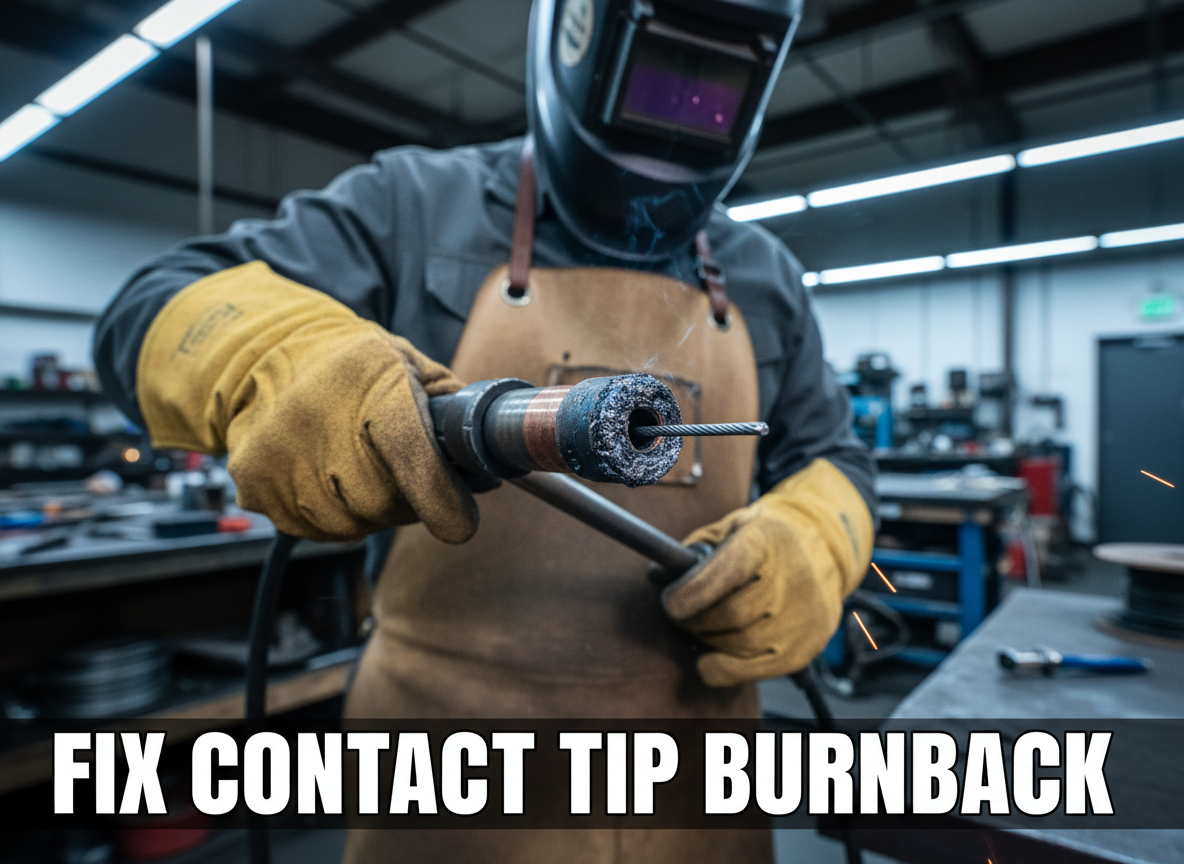
Tag: contact tips

  • Why does my MIG wire keep birdnesting? (Fast fix in 10 minutes)

    You pull the trigger, the drive rolls spin, and suddenly you’ve got a tangled mess behind the rollers. That’s birdnesting. This guide gives you a fast diagnosis and a clean troubleshooting flow that fixes it without over-adjusting your machine.

    Where to Buy (Quick Fix Parts)

    Most birdnesting comes from wire drag (liner/tip) or wire being crushed (drive roll tension/incorrect rolls). Start with the parts that fail most often.

    Top Pick (Primary Fix)

    If the wire is hanging up, a fresh liner is the quickest “real fix” on a worn gun.

    Disclosure: As an Amazon Associate, I earn from qualifying purchases.

    Backup / Consumable Option

    If the wire is sticking at the end of the gun, a new contact tip is the fastest low-cost test.

    Key Takeaways

    • Birdnesting is usually wire drag (liner/tip) or too much drive roll tension.
    • If it’s not fixed in 2–3 minutes, replace the consumable instead of chasing settings.
    • Keep the gun lead as straight as possible while testing—tight coils create false problems.
    • Verify you’re using the correct drive rolls for the wire type (solid vs flux-core).

    Symptoms (Fast Diagnosis)

    • Wire piles up behind the drive rolls (classic “nest”)
    • Drive rolls slip, chatter, or grind a flat spot into the wire
    • Wire feeds fine with the gun straight, but birdnests when you bend the lead
    • Wire stubs into the puddle, arc gets erratic, then the feeder jams
    • You see copper shavings or heavy dust near the drive rolls (wire being crushed)

    Root Causes (Mapped to Symptoms)

    • Birdnest happens immediately when you pull the trigger
      • Likely cause: wire is blocked at the contact tip (spatter, wrong size tip, worn tip) or liner is plugged/kinked
    • Birdnest happens when the gun lead is bent or coiled
      • Likely cause: liner friction (dirty/worn liner, wrong liner size, kinked lead)
    • Wire has deep grooves / flattened sides
      • Likely cause: drive roll tension too tight or wrong drive roll style (knurled vs V-groove mismatch)
    • Drive rolls spin but wire doesn’t move
      • Likely cause: tension too loose or wire is stuck at the front end (tip/liner), causing slip
    • Inconsistent feed + popping arc before the nest
      • Likely cause: drag at tip/liner, plus poor wire path (spool drag, sharp inlet guide angle)

    Quick Fix (Do This First)

    Replace the common failure parts first. Don’t start by cranking tension or changing voltage.

    1. Install a new contact tip (correct size for your wire).
    2. Blow out or replace the liner if the lead is old, kinked, or contaminated.
    3. Set drive roll tension using the “gloved pinch test”: with welding gloves on, pinch the wire as it exits the gun and pull the trigger.
      • If the rolls instantly birdnest: tension is too tight or the wire is blocked at the tip/liner.
      • If the rolls slip smoothly: tension is closer to correct.

    Safety note: Wear safety glasses that meet ANSI Z87.1 when clipping wire, blowing out liners, or handling wire ends. Gloves recommended. Ensure adequate ventilation when welding.

    Step-by-Step Fix

    Follow this in order. Change one variable at a time.

    1. Stop and cut the wire clean
      • Cut off the kinked section. A bent wire end will snag the liner/tip.
    2. Check the contact tip first (fastest test)
      • Remove the tip and try feeding wire through the gun.
      • If it feeds better with the tip removed, your tip is worn, clogged, or mismatched.
    3. Straighten the gun lead
      • Lay the lead straight on the floor/bench and test feed again.
      • If it only fails when bent, suspect liner friction or a kinked lead.
    4. Inspect drive rolls and wire path
      • Confirm roll type matches wire:
        • Solid wire typically uses V-groove rolls.
        • Flux-core often uses knurled rolls (verify your machine’s recommendation).
      • Make sure the wire is centered through the inlet guide and into the liner.
    5. Set spool tension (don’t overtighten)
      • Too much spool drag increases load and encourages slipping/crushing.
    6. Set drive roll tension last
      • Increase only until the wire feeds reliably without crushing.

    Parts That Actually Fix This

    • Liner
      • Replace when: feed worsens with bends, liner is old/dirty, you see rust/dust, or the lead has been kinked.
      • Adjust when: lead routing is the issue (tight loops, sharp bends).
    • Contact tips
      • Replace when: wire sticks, arc is unstable, tip is visibly worn/oval, or spatter blocks the bore.
      • Adjust when: you’re running the wrong size tip for the wire (verify).
    • Drive rolls
      • Replace when: grooves are worn smooth, wire slips constantly, or rolls are the wrong profile for the wire.
      • Adjust when: tension is simply mis-set.
    • Diffuser / nozzle
      • Replace when: spatter buildup interferes with tip seating or you can’t keep the tip tight/centered.

    Replace vs Adjust (Fast Decision Table)

    ProblemAdjust FirstReplace
    Birdnest happens only when lead is bentStraighten lead / reroute cableLiner (if still drags)
    Wire is flattened or shaved by rollsReduce drive roll tensionDrive rolls (if worn/wrong type)
    Wire sticks or feeds better with tip removedConfirm tip size / clean spatterContact tip

    Rule: If it’s not fixed in 2–3 minutes, replace the consumable.

    Prevention Tips

    • Keep the gun lead as straight as practical; avoid tight coils on the floor.
    • Clip wire clean every time you change spools; don’t feed a kinked end into the liner.
    • Store wire dry; rust and dust increase liner friction.
    • Routine intervals (general guidance): replace tips when feed/arc becomes inconsistent; replace liners when feed becomes bend-sensitive or contamination is visible. Exact intervals are Unknown (depends on usage and environment).

    FAQ

    Why does my MIG wire birdnest when I increase wire speed?

    Higher wire speed increases push force. If there’s any restriction (tip/liner drag) or tension is too tight, the rolls will overpower the wire path and it will pile up.

    Can a bad contact tip cause birdnesting?

    Yes. A worn, spattered, or mismatched tip can grab the wire. A quick test is feeding with the tip removed (power off, safe handling).

    Should I tighten the drive rolls to stop birdnesting?

    Not as a first move. Too much tension crushes the wire, increases drag, and can make birdnesting worse. Replace/verify the tip and liner first.

    Why does it birdnest with flux-core more often?

    Flux-core wire can be softer and more sensitive to crushing, and it’s often run through knurled rolls. Wrong roll type or too much tension is a common cause (verify your machine’s recommendation).

    Internal Links

    • For a broader workflow, see our complete MIG wire feed troubleshooting guide.
    • If your wire is sticking to the tip instead of nesting, use this burnback troubleshooting guide.
    • If you’re getting tangles at the feeder, this breakdown of birdnesting causes and fixes helps you isolate the exact failure point.
  • Worn MIG Contact Tips Causing Porosity? Here’s the Fix

    Intro

    Your MIG welds are coming out porous, weak, or with inconsistent penetration. You’ve checked your gas flow, wire speed, and voltage—everything looks right. The culprit? A worn contact tip.

    A degraded contact tip creates poor electrical contact with the wire, causing arc instability and incomplete fusion. This is one of the most overlooked failure points in MIG welding, and it’s costing you time and rework.

    Key Takeaways

    • Worn contact tips cause porosity, spatter buildup, and weak welds
    • Signs: Pitting, erosion, or a loose fit on the wire
    • Replace every 50–100 hours of welding or when you notice performance drop
    • Proper fitment matters: match your wire size (.023″, .030″, .035″, .045″)
    • Quality replacement tips prevent downtime and improve weld quality

    The Problem

    A contact tip is a consumable that wears with every pass. As current flows through it to the wire, the tip gradually erodes and pits. When it gets too worn, it can’t maintain consistent electrical contact, causing:

    • Arc instability: Erratic arc behavior, spatter, and poor fusion
    • Porosity: Gas pockets trapped in the weld due to arc interruption
    • Weak beads: Inconsistent penetration and bead profile
    • Spatter buildup: Excess spatter around the nozzle area

    Most shops don’t replace tips until they fail completely—by then, you’ve already scrapped parts.

    Why It Matters

    Worn contact tips don’t just make bad welds; they cost money:

    • Rework: Porosity and weak fusion mean cutting out bad sections and re-welding
    • Downtime: Troubleshooting a worn tip wastes 30 minutes to hours
    • Material waste: Scrap parts and wasted filler material add up fast
    • Safety: Weak welds on structural or pressure-bearing work are a liability

    A $5–$15 contact tip replacement takes 2 minutes and prevents all of this.

    The Fix

    Replace your contact tip as part of routine maintenance:

    1. Stop the welder and let it cool for 30 seconds
    2. Unscrew the nozzle (usually 1/2″ or 5/8″ wrench)
    3. Remove the old tip by hand or with a tip puller
    4. Install the new tip hand-tight, then snug with the nozzle
    5. Re-install the nozzle and resume welding

    That’s it. Total time: under 2 minutes.

    Why This Product Solves It

    The Bernard AccuLock S Contact Tip is a direct replacement for Miller AccuLock S guns (MDX-100, MDX-250, and compatible systems). It maintains precise electrical contact with the wire, delivering stable arc and consistent penetration.

    Key benefits:

    • Exact fitment: Engineered for AccuLock S guns—no guessing
    • Reliable contact: Precision-molded for tight wire fit and stable arc
    • Affordable: Pack of 10 tips covers months of welding
    • Compatible: Works with .030″, .035″, and .045″ wire (check your size)

    Replace every 50–100 hours or when you notice spatter or porosity. Preventive replacement beats troubleshooting a failed tip mid-job.

    What to Check Before You Buy

    • Your gun type: This is for Miller AccuLock S guns (MDX-100, MDX-250). If you use a Lincoln, ESAB, or Tweco gun, you need a different tip
    • Wire size: Available in .030″, .035″, and .045″—match your setup
    • Quantity: Pack of 10 is standard; one tip lasts 50–100 hours depending on duty cycle
    • Fitment: Unknown (Verify) — confirm your gun model before ordering

    Real-World Use

    A fabrication shop running steady MIG work replaces contact tips every 2–3 weeks. One worn tip caused 4 hours of rework on a structural assembly before they realized the problem. Now they replace tips every 50 hours as preventive maintenance. No more porosity, no more downtime.

    Common Mistakes

    • Waiting too long to replace: Worn tips degrade weld quality for days before failing completely
    • Wrong size: Installing a .035″ tip in a .045″ gun (or vice versa) causes loose fit and arc instability
    • Not cleaning the nozzle: Spatter buildup on the nozzle can also cause arc issues—clean it when you replace the tip
    • Over-tightening: Hand-tight is enough; over-tightening can crack the tip
    • Ignoring porosity: If you see porosity, replace the tip immediately—it’s the first thing to check

    Safety Notes

    • Always wear ANSI Z87.1-rated safety glasses or a helmet when welding
    • Let the gun cool for 30 seconds before removing the nozzle—contact tips can retain heat
    • Ensure proper ventilation; MIG welding produces fumes that require respiratory protection (OSHA guidelines)
    • Never touch the tip or nozzle immediately after welding—they will cause burns

    Always follow the manufacturer’s instructions and your shop’s safety procedures. If you’re unsure about fitment or ratings, verify before you buy or install.

    Where to Buy

    Available at ArcWeld.store (stock and shipping: Unknown – verify)

Listen with Audible