A locomotive on display tells one story. A building that still supports locomotive maintenance tells another. At Steamtown National Historic Site, the roundhouse is not simply scenery around old machinery. The National Park Service describes a historic structure adapted for light-duty maintenance and repairs, within a complex that combines a working railroad yard with museum exhibits. For anyone interested in fabrication, that relationship is worth noticing: preserving a machine can also mean preserving a place where people can care for it.
This is a source-based look at the roundhouse and the culture of repair, not a firsthand visit or a locomotive-repair guide. It does not describe a particular repair now underway, certify any equipment for operation, or suggest that visitors enter work areas. The point is to look beyond the finished object and recognize the space and judgment that maintenance requires.
A historic building with more than one job
According to the National Park Service’s roundhouse description, the park incorporated existing portions dating from 1902, 1917 and 1937 into its museum complex. It also added a visitor center, theater, technology museum and history museum. Those dates describe retained portions of the building, not a claim that every surface or fitting a visitor sees is original.
The same source says the roundhouse was adaptively rehabilitated so Steamtown’s mechanics could perform light-duty maintenance and repairs. That is a useful distinction. A historic place does not have to be either an untouched relic or a completely modern replacement. Here, the stated purpose includes both interpreting railroad history and accommodating work on locomotives.
For a shop-minded reader, the interesting question is not only what the building looks like. It is what the building allows people to do. Space around a large machine, access to its different sides and a separation between visitors and work all affect how a place functions. Those are observations to consider, not measurements or engineering conclusions drawn from a museum photograph.
Read the photograph without inventing the work
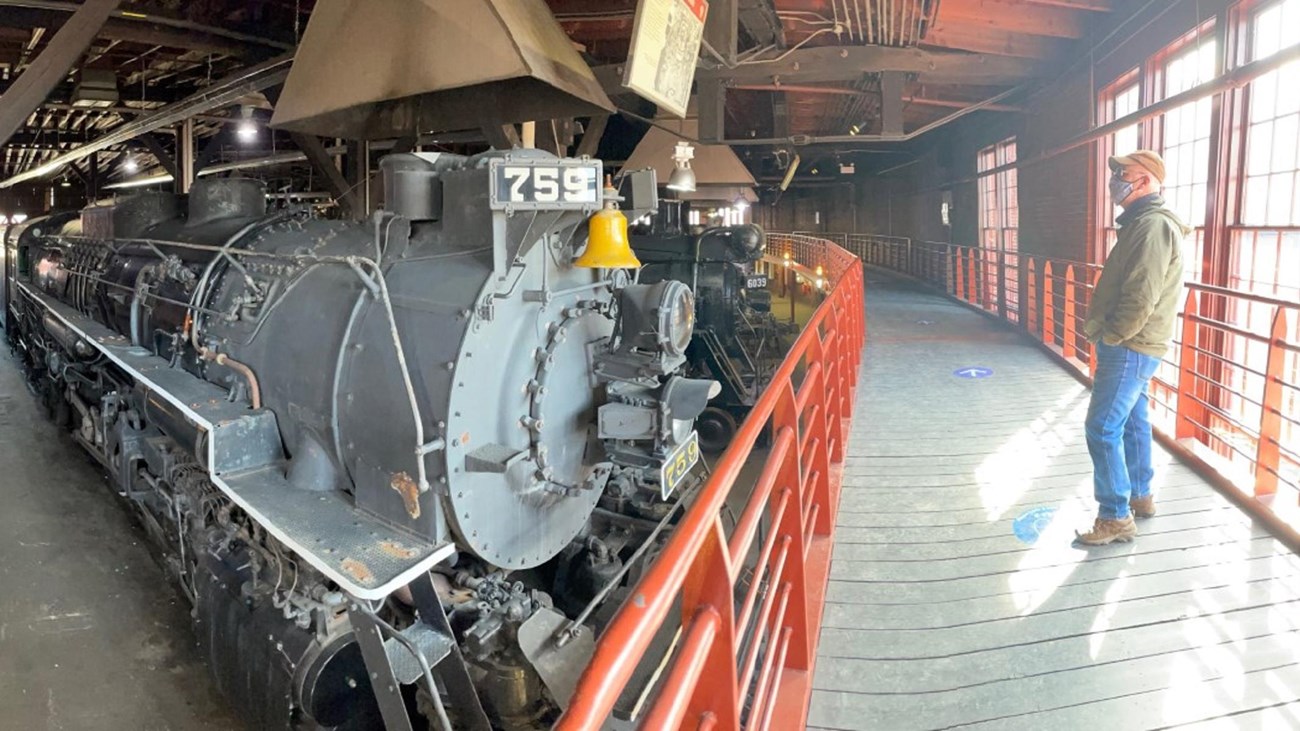
The National Park Service photograph accompanying its roundhouse page shows a visitor on an elevated walkway beside a locomotive. Railings separate the walkway from the equipment. The photograph makes scale easier to understand: the locomotive occupies a substantial space, while the visitor has a defined route through the building.
It does not show a documented repair operation. We cannot identify a welding procedure, judge the condition of a boiler or establish whether that locomotive is ready to run from the image. Treating the photograph honestly makes it more useful. It shows the relationship between a visitor, a machine and the surrounding structure, rather than serving as proof for technical claims it cannot support.
That is a good habit when reading any old-shop image. Start with what is visible. Separate the source’s caption from your own interpretation. If a label, date or location matters, find its record rather than filling the gap with a plausible story. Respect for the trade includes respect for the evidence left behind.
Repair deserves a place in the story
New construction is easy to celebrate because it has an obvious milestone: something exists that did not exist before. Maintenance has a less dramatic result. An object remains understandable, cared for or usable within the limits established by the people responsible for it. That quieter work can disappear from a story focused only on the finished machine.
A working repair setting pushes against that omission. It reminds the viewer that a machine is not a single achievement frozen at the date of manufacture. It also has a later history of attention. This does not mean every repair is historically appropriate or every old machine should operate. It means the decisions about preservation, repair and display belong in the discussion alongside the original construction.
Fabricators can recognize that distinction without pretending their own work is identical to locomotive preservation. Making a replacement, retaining an existing component and leaving an object alone are different decisions. Understanding why a particular choice was made is often more informative than admiring the appearance of the result.
The roundhouse and locomotive shop are not interchangeable
The park describes a self-guided roundhouse route along an elevated platform. Its separate locomotive-shop tour page says access to that shop is by guided tour, dependent on staff and volunteer availability. The tour addresses how the Delaware, Lackawanna and Western Railroad Company adapted to the demands of the railroad industry and its customers.
Those descriptions should not be collapsed into a promise that visitors can wander through an active shop. If you plan a visit, check the park’s current information and ask its staff about access. A webpage or an older photograph cannot guarantee that a particular area, tour or demonstration will be available when you arrive.
Questions that make an industrial visit more useful
- Which parts of the building are historic, and which were adapted for present use?
- What work is this area intended to support, according to the museum or responsible staff?
- Which details are established by records, and which remain an interpretation?
- How does the visitor route let people understand the equipment without entering its work space?
These questions turn a stop beside a large machine into a closer look at how work is organized and remembered. The lesson is not that modern shops should copy a historic roundhouse. It is that the buildings, access arrangements and less-visible care behind a machine deserve attention, too.
For related perspectives, read Railroad Welding: The Craft Beyond the Shop Floor and Before the Casting: A Pattern Shop’s Place in the Trade. For welding-inspired gear and practical shop-paperwork resources, explore Arc Life.
Photograph source: National Park Service, Explore the Roundhouse. The source credits it as “NPS Photo.” No claim to original U.S. Government works. The photograph documents a visitor display setting, not a repair procedure or an endorsement of WSP or Arc Life.
Leave a Reply