Hoover Dam needed more than a place to pour concrete. It needed a place to turn enormous steel plates into pipe close enough to the finished dam that those pipes could actually reach their destination.
That is the fabrication story worth stopping over. Before choosing where to make a component, someone has to answer a question that a perfect drawing cannot settle by itself: how will the finished thing get there?
For a small shop, the problem might be a doorway, a loading area or the dimensions of a delivery vehicle. At Hoover, the scale made the connection between manufacturing and transportation impossible to ignore. The solution was not simply to build bigger pipe. It was to put a fabrication plant near the job.
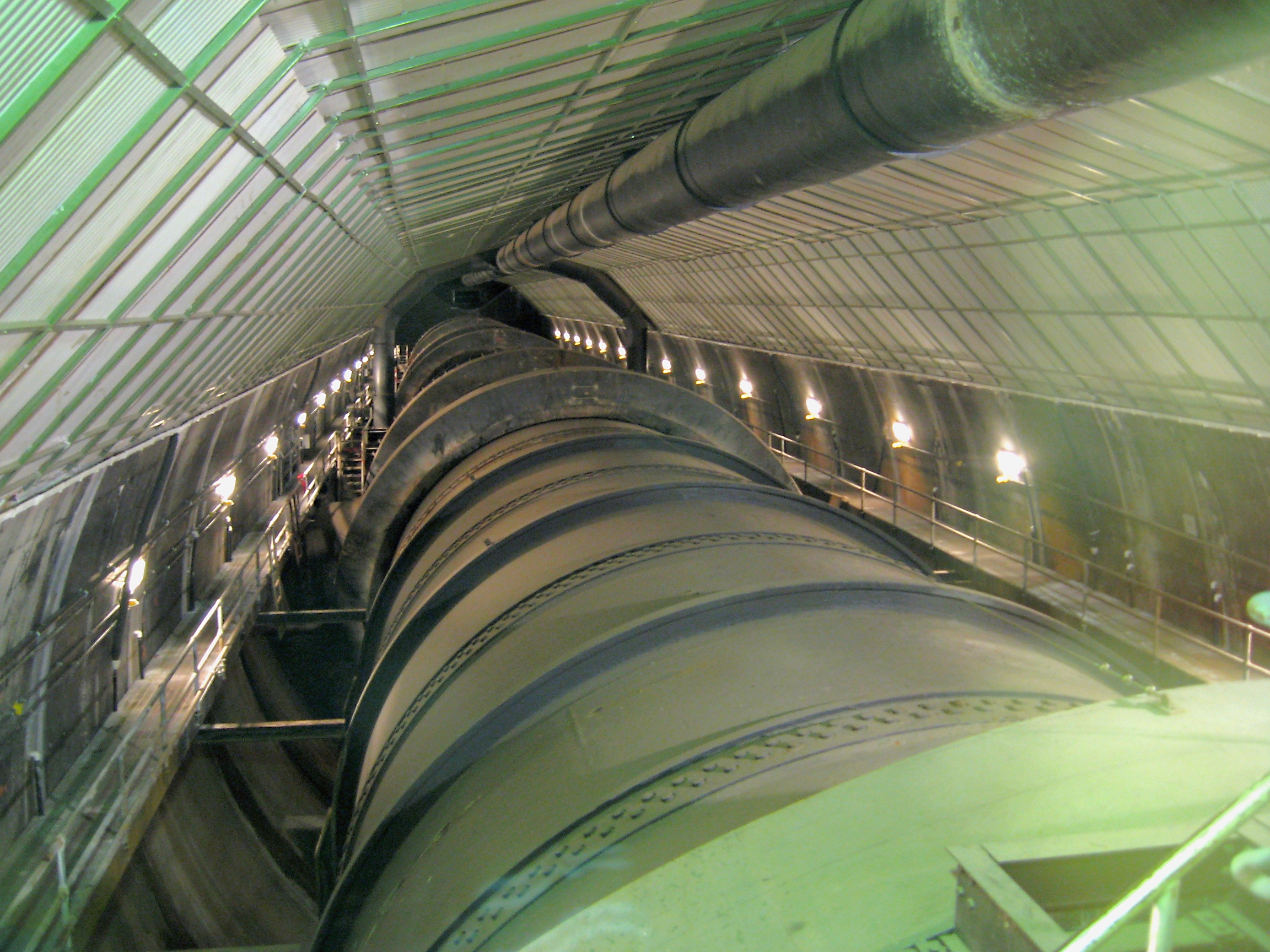

The pipe behind the familiar concrete
The Bureau of Reclamation describes Hoover’s penstocks as the pipes connecting the intake towers with the powerplant and canyon-wall outlet works. Its tunnel FAQ identifies 30-foot-diameter main pipes and smaller branches serving the turbines. These were major pieces of infrastructure, not incidental plumbing tucked behind the dam. Read Reclamation’s tunnel and penstock explanation.
A photograph of that pipe inside a tunnel makes the scale easier to understand. It also changes where the eye goes. Instead of looking only at the finished landmark, a fabricator can start asking about the equipment and people required to bring its less visible components into being.
That is a useful way to look at industrial history. The most recognizable object is rarely the whole job. Hidden components can carry their own demanding stories of layout, forming, joining, checking and delivery.
When the factory had to move closer
According to Wm. Joe Simonds’s history published by the Bureau of Reclamation, Babcock & Wilcox received the penstock and outlet-pipe contract in 1932. The finished sections were too large to transport from existing factories, so the company established a fabrication plant near the Nevada rim of the canyon.
Steel plate arrived by rail from Gary, Indiana. Near the dam, that material became the pipe the project required. Reclamation’s Hoover Dam history documents the plant and its work.
The distinction matters: the material could travel in one form, but not conveniently in its final form. Moving the work closer to the destination changed what had to make the long journey.
For a present-day reader, that is a planning lesson rather than a prescription. A shop does not need a dam-sized order to encounter the same basic conflict. An assembly may fit the drawing and still create a delivery problem. A decision about where to complete it can affect the rest of the job.
Think beyond the finished dimensions
A drawing tells the shop what a component must become. A production plan also has to account for the conditions under which it becomes that object.
There is value in discussing the delivery route before treating the manufacturing sequence as settled. Where will the assembly be received? Which dimensions become difficult after joining? What information does the receiving crew need? Who is responsible for resolving an access problem before it reaches the floor?
Those questions do not replace engineering, qualified lifting plans or transportation requirements. They help identify the people who need to resolve them.
The avoidable mistake is treating delivery as a separate concern that begins only after fabrication ends. A finished component is not a successful handoff if the next crew cannot receive it as intended. WSP’s look at the shipping crew’s role after inspection follows that same practical connection.
A welding story with more than welders
Reclamation’s account describes plate preparation, rolling, assembly and welding, followed by radiographic examination, heat treatment and end machining. The history records a sequence of specialized work rather than one spectacular operation.
It is tempting to reduce a fabrication achievement to the process that makes the most visible sparks. That leaves out much of what makes the result possible.
Someone has to understand the material before forming begins. Someone has to establish what will be checked and how the results will be recorded. Someone has to know what the next operation requires. The person completing one stage depends on decisions made elsewhere, sometimes long before the piece arrives.
Respect between trades grows from recognizing those dependencies. A welder does not become less important when a machinist’s requirements enter the conversation. The job becomes more understandable. WSP’s discussion of what welders can learn from machinists explores that exchange without pretending the trades are interchangeable.
Read the history without copying the procedure
An old project account can explain how people organized a difficult undertaking. It is not a current welding procedure, inspection plan or equipment manual.
That distinction protects the usefulness of the story. We can appreciate the planning and coordination without borrowing historical process settings or assuming that past methods satisfy today’s requirements.
It also keeps admiration honest. A finished landmark is not evidence that every working condition of its construction era deserves imitation. The worthwhile question is what the record helps us notice about our own work, not whether an earlier generation should become an all-purpose model.
The craft includes the journey
The Hoover penstock story suggests a simple habit: ask about the component’s next home while there is still time to influence the plan.
That means treating access, receiving and handoff information as part of making the job understandable. It means giving the next trade a chance to explain what it needs. It means noticing that the best place to perform an operation may depend on more than the machine available in the current shop.
At Hoover, those questions helped shape the location of an entire plant. In a smaller shop, they may produce a better conversation before the first piece is cut.
For more stories about the people and working culture behind metalwork, explore Arc Life.
Leave a Reply